Last March, a young woman running her own women's clothing website walked into my 3,000-square-foot warehouse in California and asked if we could take over her fulfillment. I was delighted. Clothes, I figured — light, compact, unbreakable. Way easier than the auto parts we'd been wrestling with. I signed the contract on the spot.
That was the moment I met the hidden final boss of the apparel ecommerce warehouse world. Apparel looks harmless. It hits like a truck.
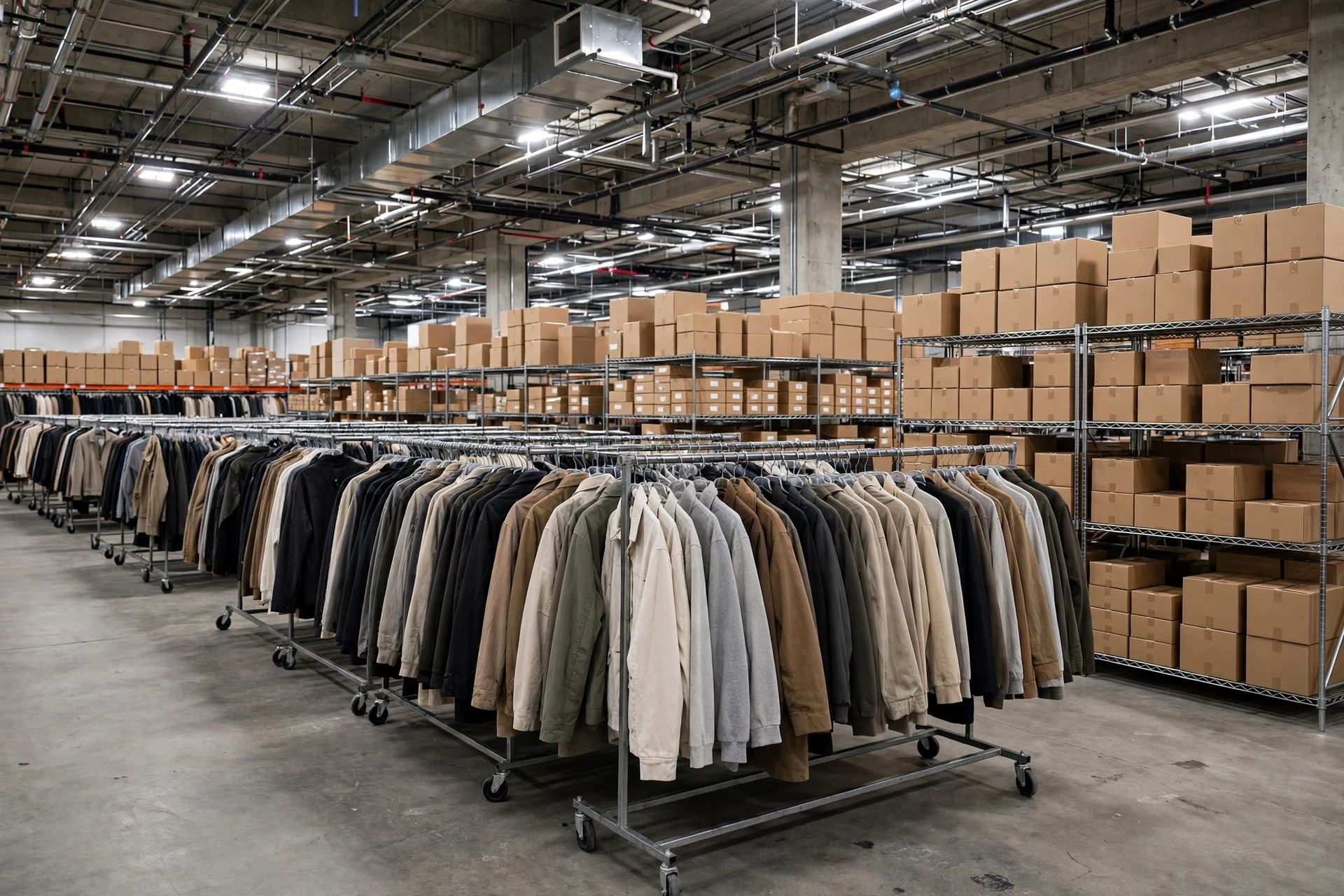
Our first shock was the SKUs. With our old clients, one product meant one SKU. Simple. Apparel doesn't work that way. One style comes in 6 colors and 5 sizes — that's 30 SKUs from a single design. Her first shipment had 180 styles. When I glanced at our system on inbound day, the SKU count read 5,400 and change. My inventory guy, Jie, stared at the screen for a long moment and asked, "Boss, what's our system's SKU limit?" I told him not to ask. Whatever it was, it wasn't enough.
The First Wall in Apparel Ecommerce Warehousing: SKUs Don't Multiply, They Shatter
Here's how bad the fragmentation gets: size S in red sells out, while size M in red still has 200 units sitting on the shelf. The system says you're in stock. Customer service still gets yelled at for being "out of stock." In an apparel warehouse, size-level stockouts are a daily show. You get used to it — or else.
Our first week was a proper disaster. 180 styles arrived with carton labels showing only the style number — no color, no size. We opened every carton and sorted piece by piece. Three people, four full days, to receive and put away 5,400-plus SKUs. Jie's fingers were covered in little paper cuts from the cardboard; he ran out of bandages. Over barbecue that night he said, "Boss, next time we take an apparel client, we raise the price first." He was right. Completely right.
That disaster bought us a house rule, enforced with zero exceptions: apparel clients must code every SKU as style-color-size before shipping to us, and carton labels must show all three. No compliance, no problem — we just add a sorting surcharge. It sounds harsh. It saves both sides. Get the coding right and ninety percent of future arguments never happen.
The Second Wall: Quality Inspection — There Is No "Fast" in an Apparel Warehouse
Standard goods inbound: scan, count, done. Apparel: loose threads, color variance, wobbly buttons, sticky zippers, missing hang tags — every single piece gets eyeballed. Our homegrown method: full inspection on the first shipment, then set the sampling rate based on the defect rate we actually see.
In August 2025, the client sent 500 dresses. During full inspection, Jie found that 60-plus pieces shared the same bad zipper batch — they jammed on the first pull. We photographed everything and quarantined the lot. The client later told us that if those 60 pieces had shipped, the one-star reviews would have buried her store — and the return shipping plus handling on each would have bled her dry.
After that she volunteered for full inspection on every batch. And we learned our lesson too: our apparel inbound rate runs roughly double our standard rate. Expensive? Not really. You want fast, you accept an after-sales explosion. You want stable, you put the inspection cost on the table where everyone can see it. A warehouse our size can't afford the "we'll fix it later" game.
The Third Wall: Returns — the Real Boss Fight of an Apparel Ecommerce Warehouse
Everybody in the industry knows apparel return rates run several times higher than standard goods. Buy three, keep one, send two back — "fitting-room ordering" is just normal behavior in women's fashion. Our client sold 9,000-plus pieces over Black Friday 2025. December brought 2,800-plus back. A thirty-percent return rate sounds terrifying. In women's apparel, it's honestly unremarkable.
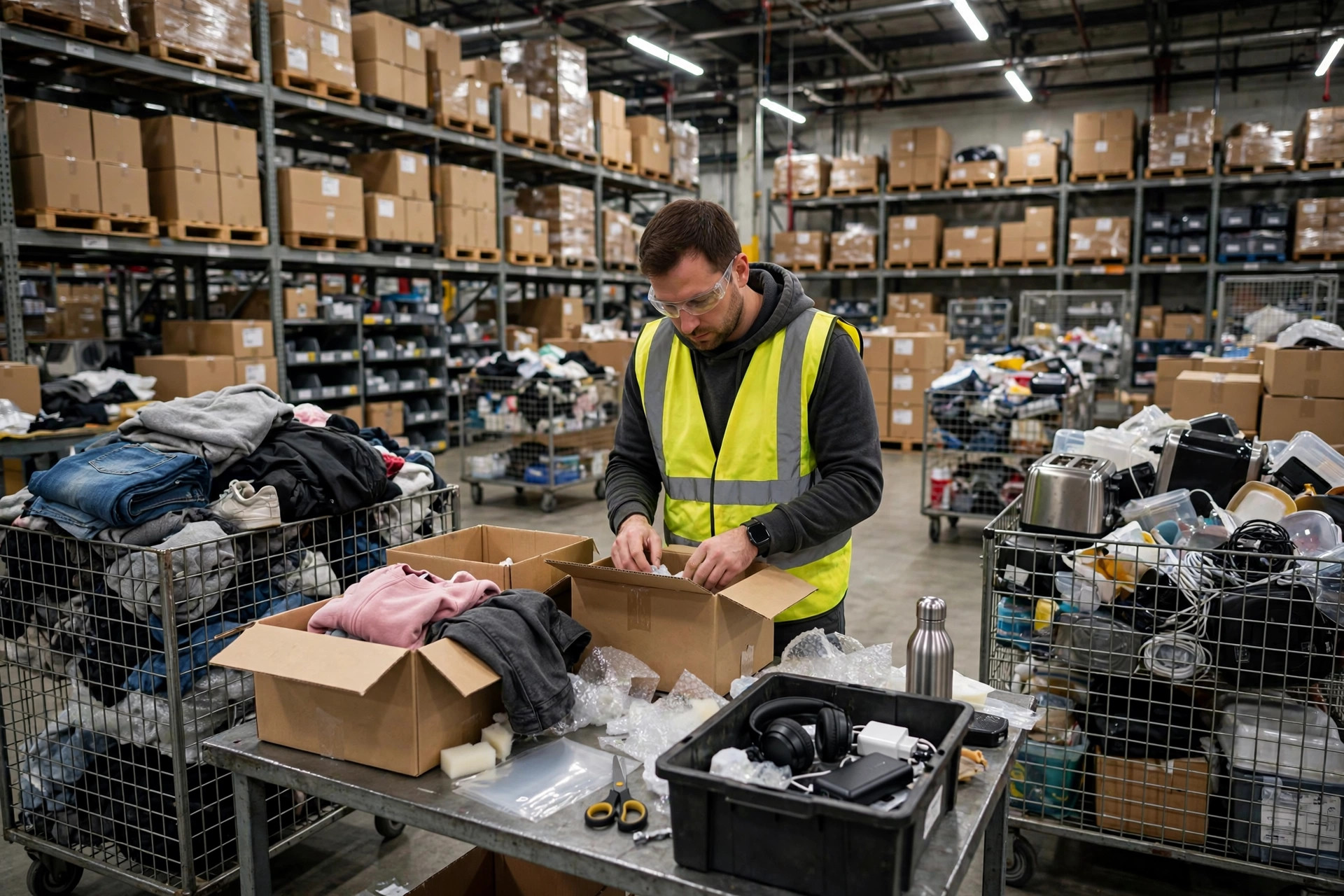
For two weeks, the returns corner of our little warehouse became a small mountain. How big can two folded garments be? Multiply by 2,800 and you get a mountain. Two people, eight solid days: unbox, inspect, deodorize, steam, refold, restock. About sixty percent could go back on sale. The other forty — missing hang tags, signs of wear, washed once — got packed up and sent back to the client, or liquidated per her instructions.
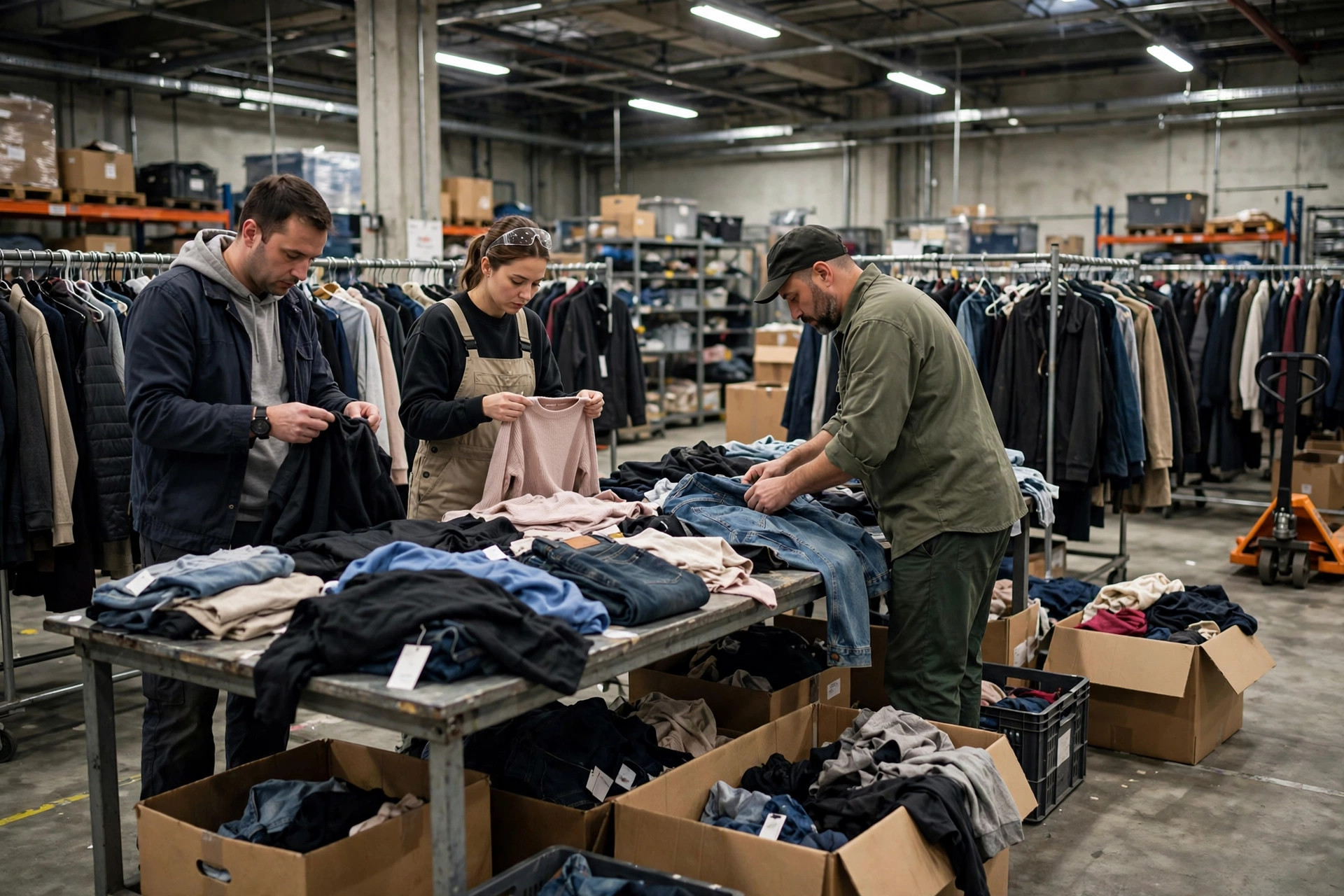
I ran the numbers. Processing one apparel return costs us three times or more what a standard-goods return costs. Standard return: open the box, glance, restock. Apparel return: every piece is minor surgery. Here's our real-world cost comparison — the multiples are approximate, but the direction is dead right:
| Step | Standard goods | Apparel | Why it differs |
|---|---|---|---|
| Inbound and putaway | Baseline | About 2x | Full inspection plus sort by color and size |
| Inventory management | Per SKU | Style-color-size, three dimensions | Size-level stockout alerts, daily |
| Returns processing | Open box, restock | 3x and up | Steam, deodorize, refold, restock |
| Consumables | Cartons | Cartons plus moisture bags plus desiccant | One moldy batch ruins everything |
| Disputes | Rare | Constant | Sizing and color complaints need photo evidence |
The takeaway: apparel clients need their own pricing model. Quote them standard rates and the more you work, the more you lose. Anyone running an apparel ecommerce warehouse learns this the hard way: the rate card is the lifeline. Our apparel rate card lists inbound, inspection, and returns as separate line items — no bundling, no fine print. Clients flinch at first. Two months in, they get it — because the cheaper quotes elsewhere are just hiding the add-ons.
The Counterintuitive Part: High Return Rates Are a Small Warehouse's Opportunity
Most people hear "high returns" and decide apparel clients are a trap to avoid. I see it backwards: high return rates are exactly where small warehouses win.
Big warehouses process apparel returns by the piece at a steep per-unit price, and their process is carved in stone — one inspection standard for everyone, their call. A small warehouse? We negotiate every line with the client: what counts as Grade A and goes straight back on the shelf, what gets downgraded, what gets photographed and sent back. She sets the standard; we execute it. She changes her mind on Tuesday, we update a note — no three layers of approval. That flexibility is something big operations can't offer, and it's the only moat a small warehouse has.
But there's a trade-off you have to respect: apparel clients devour labor. When the post-holiday return wave hits, it can swallow your whole crew. Those two weeks in December 2025 nearly derailed our normal outbound. So here's our homegrown rule: never more than two apparel clients at once, and their promo calendars must not overlap — one does summer collections, the other does winter. Peak seasons complement each other. Call it position sizing for warehouses. I learned it from stock trading.
Finally, some honest advice for fellow small warehouses:
First, build a separate rate card. List inbound, inspection, and returns as separate items. Don't bundle. When every apparel cost is visible, clients actually trust you more.
Second, lock the SKU coding rule into the contract. Style-color-size, three segments, on every carton label. Non-compliance triggers a sorting surcharge. This one clause kills half your future arguments.
Third, grade every return: Grade A goes straight back to stock, Grade B gets light reconditioning (deodorize and steam) then stocks, Grade C gets photographed and shipped back to the client. Make the client sign off on the grading standard. In writing. It ends the "but this one was sellable" debates before they start.
Fourth, keep photo evidence. Color variance, damage, signs of wear — photograph and archive. Apparel generates an order of magnitude more disputes than standard goods. Without photos, you're the one eating the loss.
Fifth, cap your client count. Two apparel clients max, promo seasons staggered. A small warehouse has fixed headcount. Take on more and you're just signing yourself up for punishment.
Here's the thing: big warehouses find apparel fragmented and annoying. But once a small warehouse gets the pricing model right and the process tight, apparel clients become the stickiest accounts you'll ever have — switching warehouses means recounting thousands of SKUs, which costs the client half a life. Do it well and she's your client for life.
Small warehouses have their own way of surviving. The big guys compete on scale; we compete on meticulousness. They compete on standardization; we compete on flexibility. Apparel warehousing is a tough bone to chew — but once you crack the apparel ecommerce warehouse game, it's a moat.
By Xiao Ma, Small Warehouse Owner