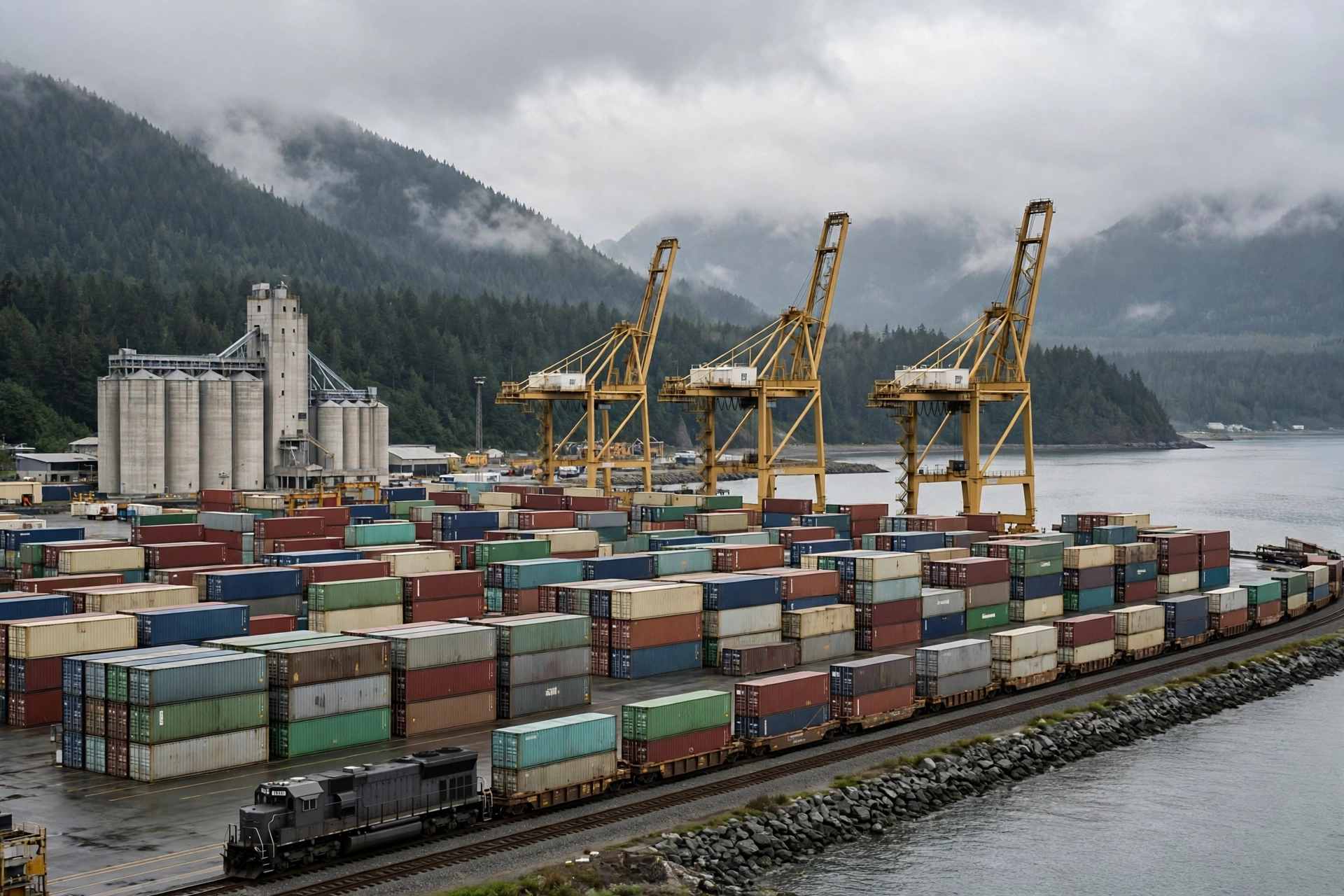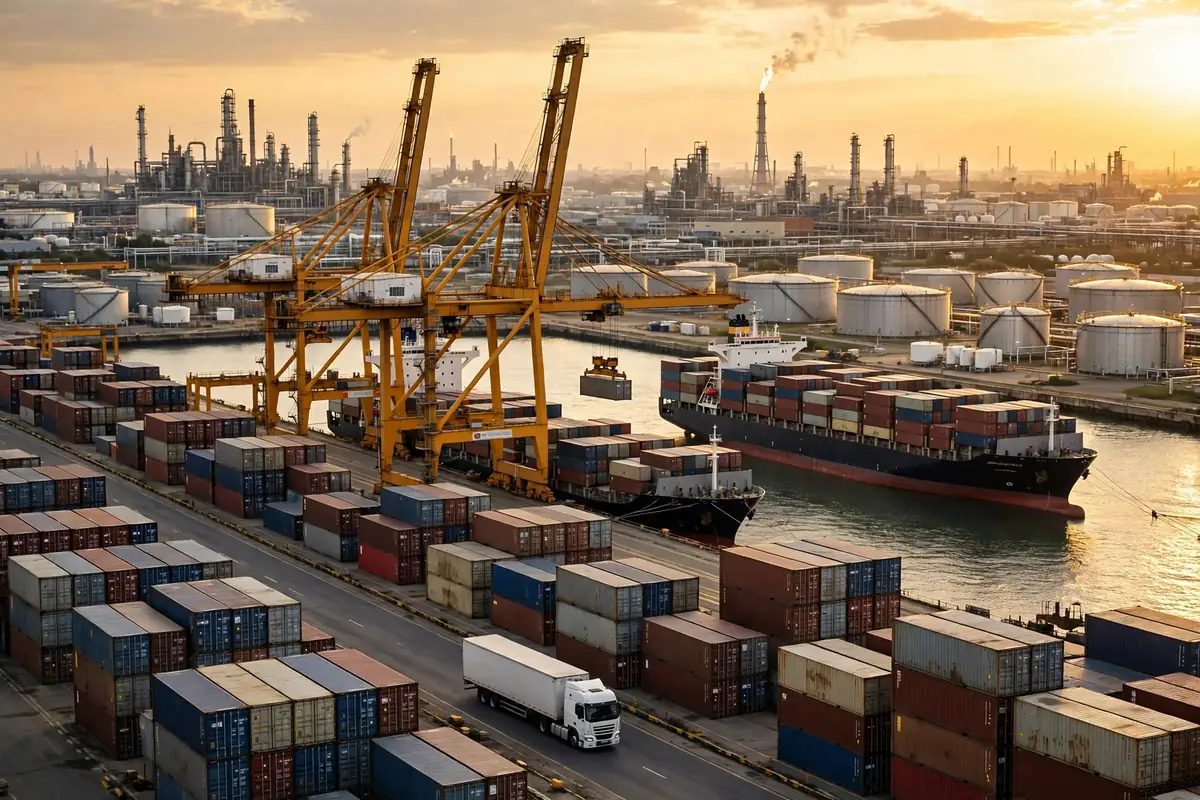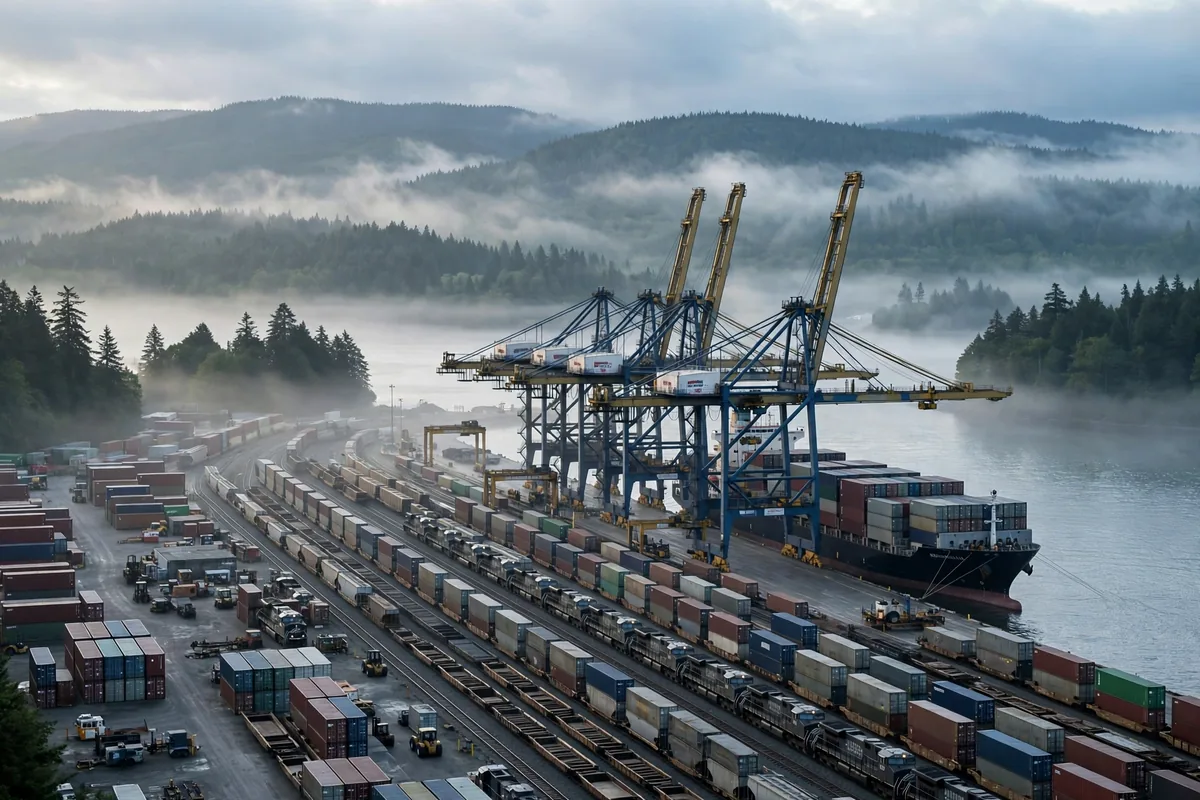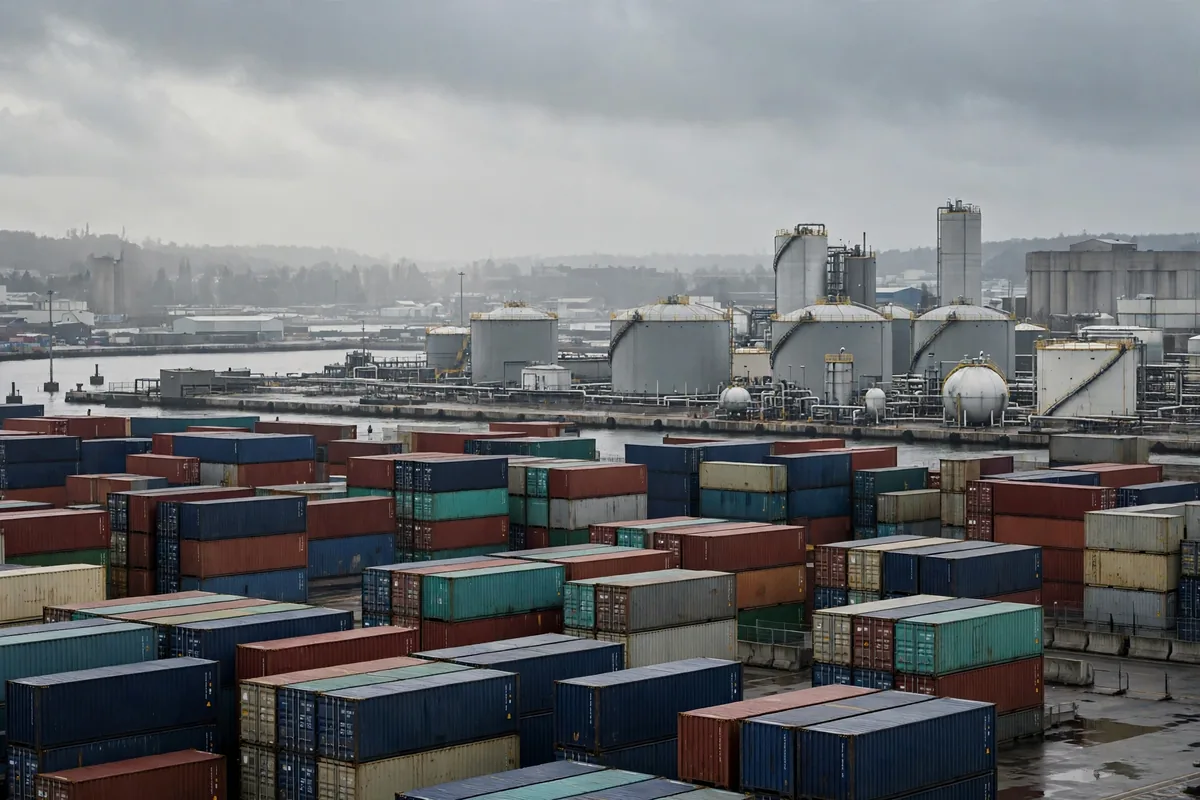
Half past five in the morning, still dark outside. The night shift hands over its last chemical shipment, the yard lights are still on, and the gantry cranes are already moving. In peak season the warehouse is full of people by this hour. That is the Antwerp port for you: the cargo always arrives before the people do.
To be honest, the first thing anyone says when they get here is how big it is. In 2024 the Port of Antwerp-Bruges handled about 13.5 million TEU, up 8.1 percent, making it Europe's second-largest container port. Rotterdam did 13.82 million TEU the same year. Total throughput for the port was about 278 million tonnes. The numbers are on the table. Whether a warehouse has a good year depends half on those numbers and half on how you take the work.
Antwerp Port in the Morning: Chemicals and Containers Take Different Roads
What makes Antwerp different is chemicals. In 2024 chemical volumes grew 14.8 percent, the fastest-growing cargo in the port. Behind the quays sits one of Europe's largest chemical clusters: tank farms, pipe racks and dedicated terminals all wired together. Chemical cargo and container cargo stop sharing a road the moment they enter the port. Chemicals move by pipeline and tank truck, and the whole game is safety and separation. Containers move through the yard and under the cranes, and the whole game is turnaround and density.
In 2022 Antwerp merged with Zeebrugge into a single port. After the merger, container business concentrated at Antwerp, and Zeebrugge took more of the roll-on/roll-off and car traffic. The guys on the floor put it plainly: the merger was a division of labour, one port for boxes, one port for cars. Once the split was clear, the warehouse knew which way the cargo would go, and the receiving rhythm fell into place.
Last peak season, a chemical truck arrived at eleven at night, and the product name on the paperwork did not match the goods. Lao Zhang on the night shift would not let the truck into the warehouse. He rang the cargo owner, woke him up, and they went back and forth until one in the morning, when it turned out to be a single wrong letter on the document. Lao Zhang told me afterwards that you would rather lose two hours than let one wrong truck into a chemical warehouse. That is the rule in chemical storage: one wrong shipment costs more than one slow night.
Across the Hamburg-Le Havre range, Antwerp holds about a 30.6 percent market share. That number says something simple: shipping lines choose a port not only for the cranes, but for whether the hinterland can take the cargo. If the port can take it, the warehouse gets work. If the warehouse cannot take it, the line berths somewhere else next time.
The Warehouse Math: Barge, Rail and Road
Cargo leaving a port warehouse has three ways out: barge, rail and road. The barge is the cheapest, running the inland waterway network and carrying hundreds of boxes at a time, but it depends on water levels and sailing schedules. Rail is the steadiest, with fixed timetables, and it suits cargo that moves as a full train. Road is the fastest and the most expensive, and it suits urgent orders and small batches. To be honest, none of the three does everything. The skill in this job is looking at all three every morning and deciding which way today's cargo goes.
The table below is a worked illustration, and the figures are assumptions for comparing structures, not real quotations.
| Inland mode | Suits | Illustrative cost per container | Illustrative timing |
|---|---|---|---|
| Inland barge | Large volumes, time-insensitive containers | Lowest | Slow, depends on schedule and water level |
| Rail shuttle | Full trains, concentrated directions | Middle | Steady, runs to timetable |
| Truck | Urgent orders, small batches, door to door | Highest | Fastest, most flexible |
What really has to be calculated is not the unit price but the whole account: does the money saved by sending a shipment on a barge cover two extra days of storage, and does the money spent on a truck buy a customer who does not walk away? Once the account reaches that level, the split is real.
Rostering in peak season is a craft of its own. A schedule change means extra hands on the night shift. A chemical shipment arrives and only a certified forklift driver can touch it. The roster hangs on the wall, and one change means the whole team has to check their hours again. In this line of work, if the roster is wrong, no amount of cargo saves you.
Most people think the bigger the port, the closer to the quay a warehouse should sit. Work here long enough and you learn the opposite. Close to the quay means expensive rent and trucks queuing out onto the highway. The port warehouses that actually make money often sit beside an inland barge terminal or a rail yard, where barges and trains come straight into the warehouse and the cargo never has to loop around on the road. A little further from the sea, a little closer to the cargo. Plenty of people get that sum backwards.
Working Next to the Antwerp Port: What Actually Wins
What wins is not floor space. It is the ability to take cargo in. A schedule change rewrites the whole yard plan. A chemical shipment arrives and inspection, separation and paperwork all have to happen, none of them skippable. The most valuable people in the warehouse are the veterans with ten or fifteen years in: one look at a document tells them whether this shipment can sit in the same zone as that one. A new hire shadows them for three months before he really gets it.
Then there is the arguing with drivers. Drivers want to unload fast and go. The warehouse wants to put things away by zone, slowly. We argue, but the rules do not bend: trucks arrive in their booked slot, late ones queue, and anyone who jumps the queue goes to the back of the line next time. Once the rule holds, peak season stays under control.
One reminder for fellow operators: working beside a port this big, do not only watch the cranes at the quay. Watch the hinterland too: when the barge arrives, when the train leaves, whether the chemical paperwork is complete. The quay decides whether the cargo comes. The hinterland decides whether it leaves. And cargo that leaves is what gives a warehouse a tomorrow.
By Chen Feng, Warehouse Operations Manager