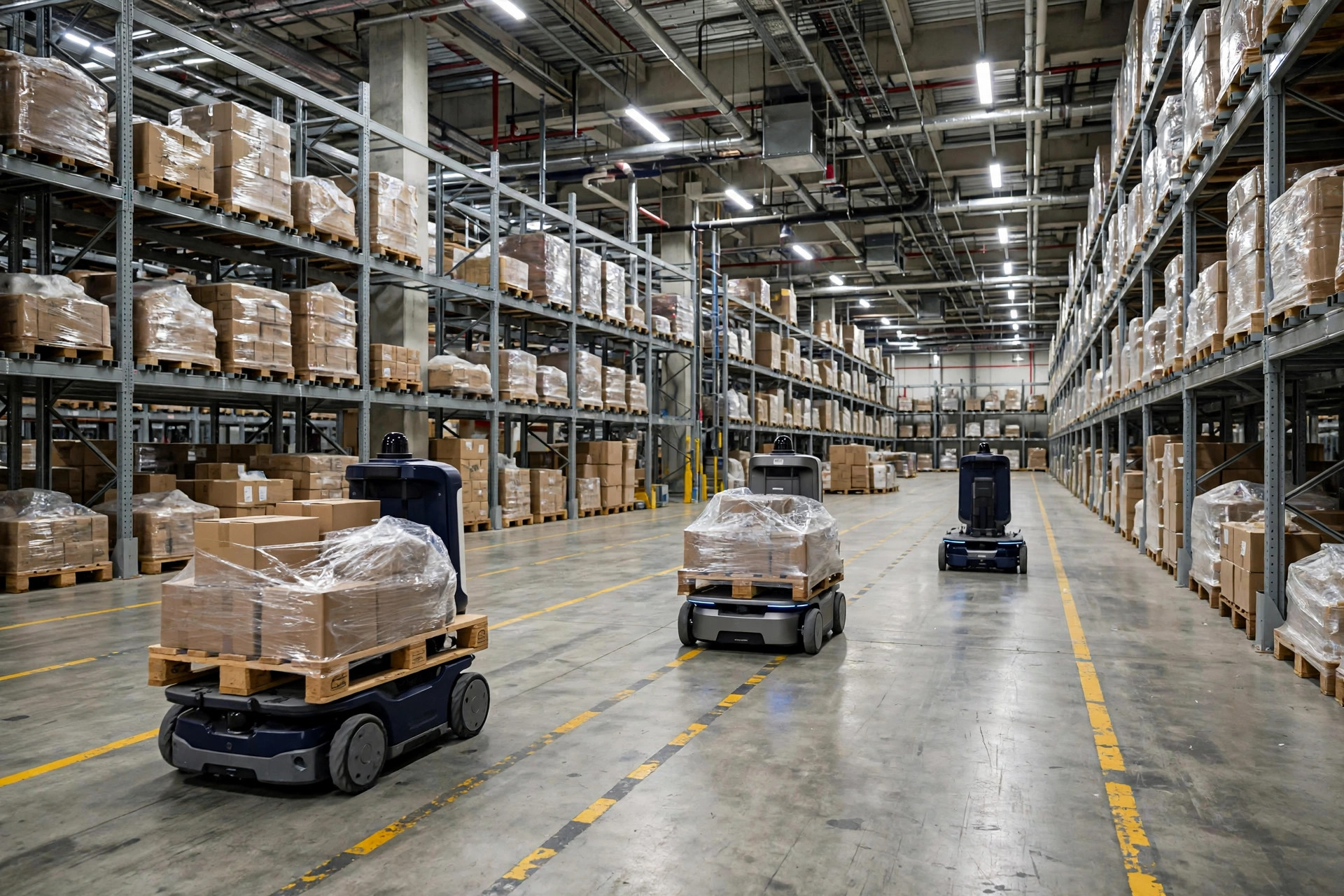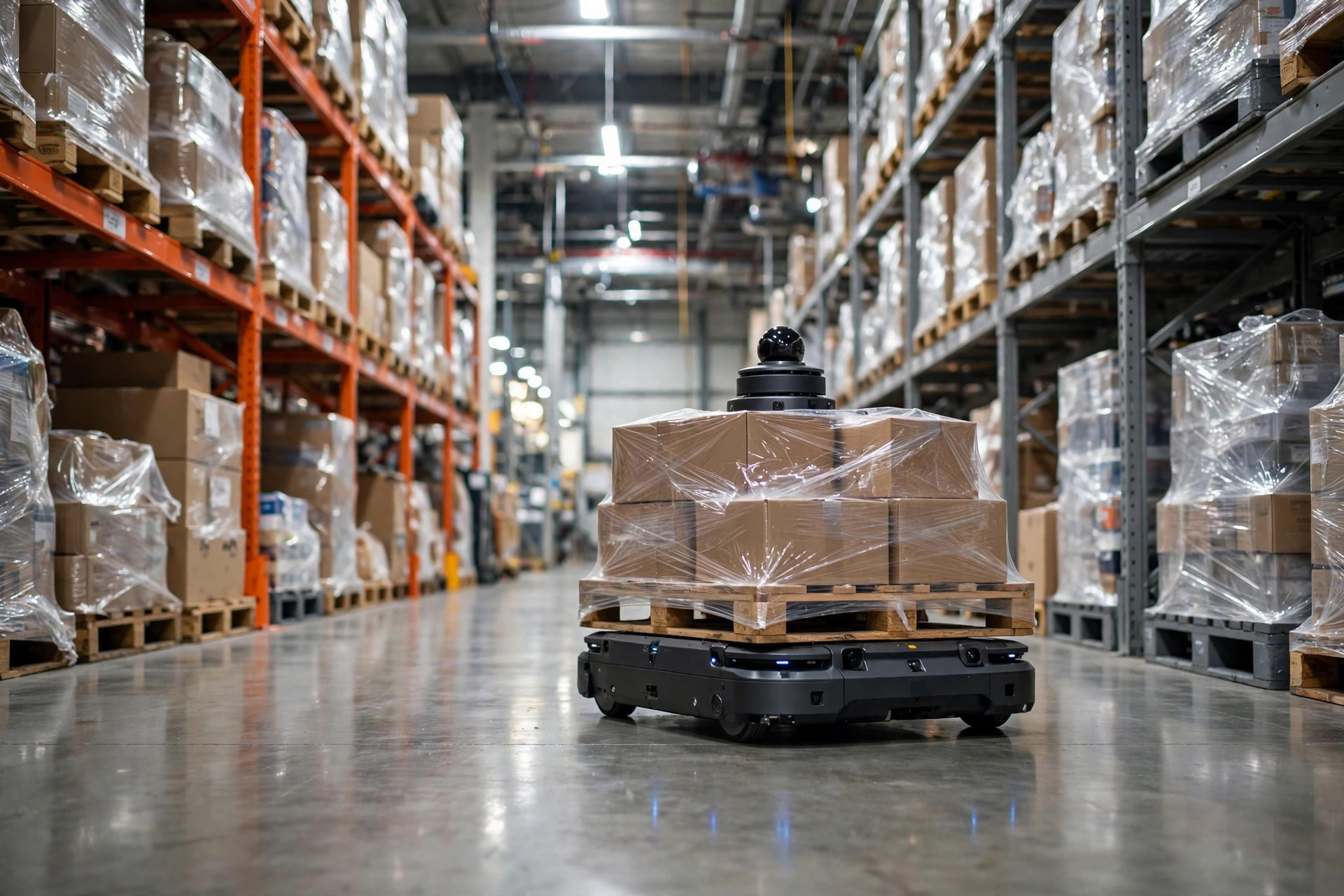
Last fall I walked into a 3PL warehouse in Ontario, California. A couple hundred thousand square feet, a fresh fleet of AMRs running pallet transfers. The project manager was proud — until three robots froze solid in the dock area that afternoon. "Localization lost" on every screen. The bots just sat there spinning in place while forklifts honked around them. He turned to me and said, "It ran perfectly in their demo room. What happened?"
I crouched down and looked at the floor. That told me most of the story. The dock area had polished concrete — shiny enough to see your reflection in. Laser scanners hate that. The reflections feed the robot walls that don't exist. Then I looked around the dock: the pallet stacks changed every single day. One day a wall of freight, the next day open floor. The robots navigated by matching contours against a map, and the map never matched. Two failure modes stacked on top of each other. No algorithm was going to save that deployment.
That's what this piece is about. When you're selecting AMRs, the navigation technology decides whether your go-live is boring or a daily fire drill. There are three mainstream options — LiDAR-based, vision-based, and natural-feature navigation. Sales reps will talk about accuracy numbers and fancy algorithms. Almost nobody will tell you what each one is actually afraid of.
What Each Navigation Type Is Secretly Afraid Of
LiDAR navigation is the one with the spinning sensor puck on top. The concept is simple: the laser sweeps the surroundings, builds a map of walls, columns, and rack faces, then localizes by matching what it sees against that map. Its real strength is that it doesn't care about light. Day shift, night shift, lights on, lights off — it drives the same. That's why a lot of 24/7 operations default to it.
But it has two Achilles' heels. The first is reflective floors. Polished concrete, standing water, stainless steel dock plates — the laser bounces and the robot "sees" phantom walls. Light slowdowns at best, wrong turns at worst. I once saw a food-grade warehouse where the floor gets washed down daily; the LiDAR bots behaved fine in the morning and started hallucinating every afternoon once the floor got damp. They ended up geofencing half the building, which meant half the investment was dead on arrival. The second weakness is big open spaces. In a wide-open staging area with nothing to scan for dozens of meters, localization drifts. You can bolt on artificial landmarks, but at that point you've lost the whole appeal of a flexible AMR.
Vision-based navigation uses cameras and feature points instead. The big draw is cost — cameras are far cheaper than LiDAR units — and as a bonus the same cameras can identify pallets and read load conditions. It's a popular entry point for smaller operations watching their budget.
What it fears is light doing unexpected things. A dock door rolling open, afternoon sun angling through a skylight, someone killing the lights for a shift change — the feature points the camera memorized suddenly look different, and the robot effectively goes blind. There's a subtler trap too: long corridors of identical racking. Ten aisles that all look the same confuse the matcher, and the robot convinces itself it's somewhere it isn't. Freight ends up in the wrong aisle. Seasonal replenishment makes this worse — a wave of putaway changes the feature landscape overnight. So the first question for any vision-based deployment is light stability. Map every skylight and dock door before you sign anything.
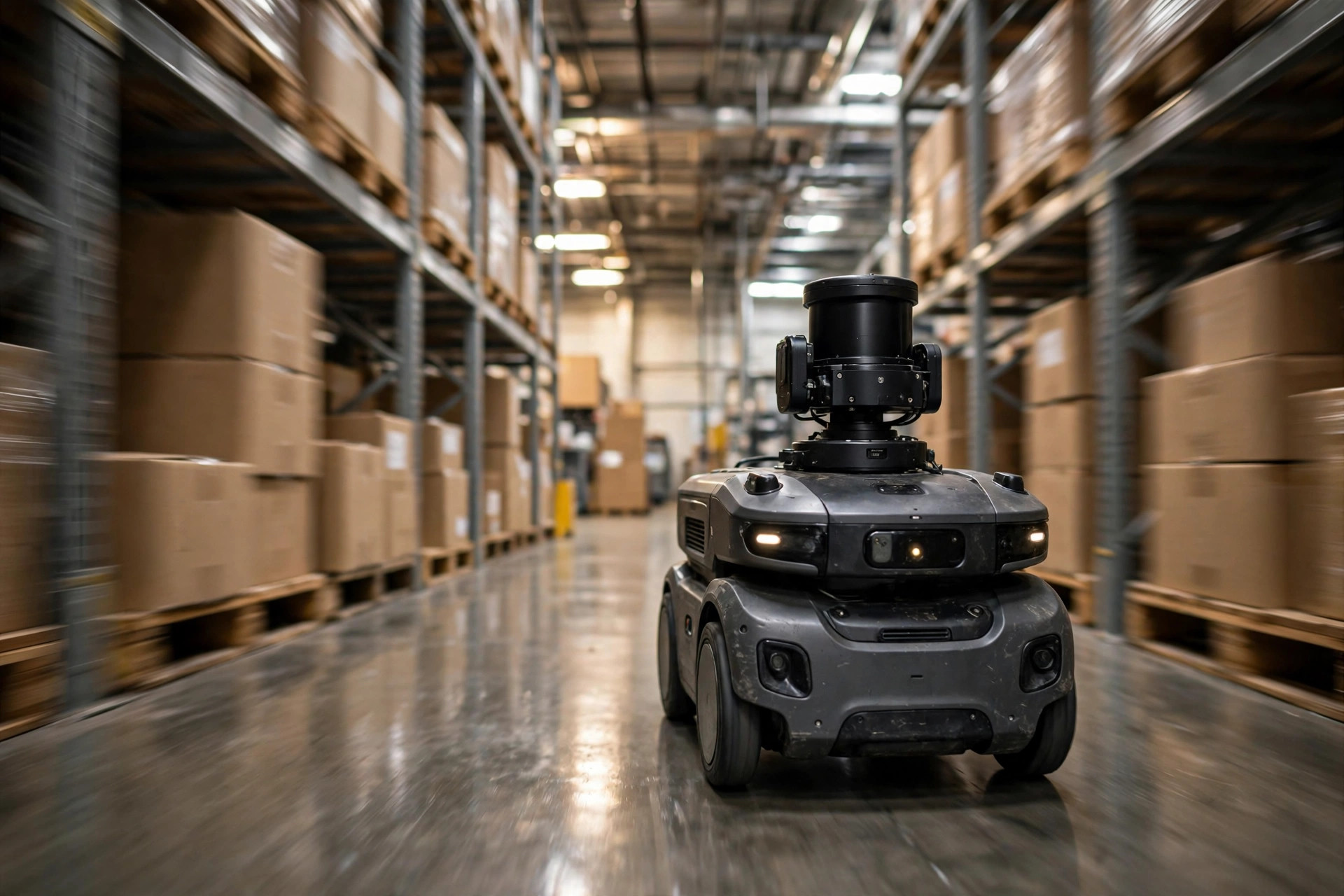
Then there's natural-feature navigation. No reflectors on the walls, no magnetic tape on the floor — it just uses the building itself: walls, columns, rack uprights. Deployment is fast, zero floor modifications, and retrofit projects love it because "no construction required" sounds great in a proposal.
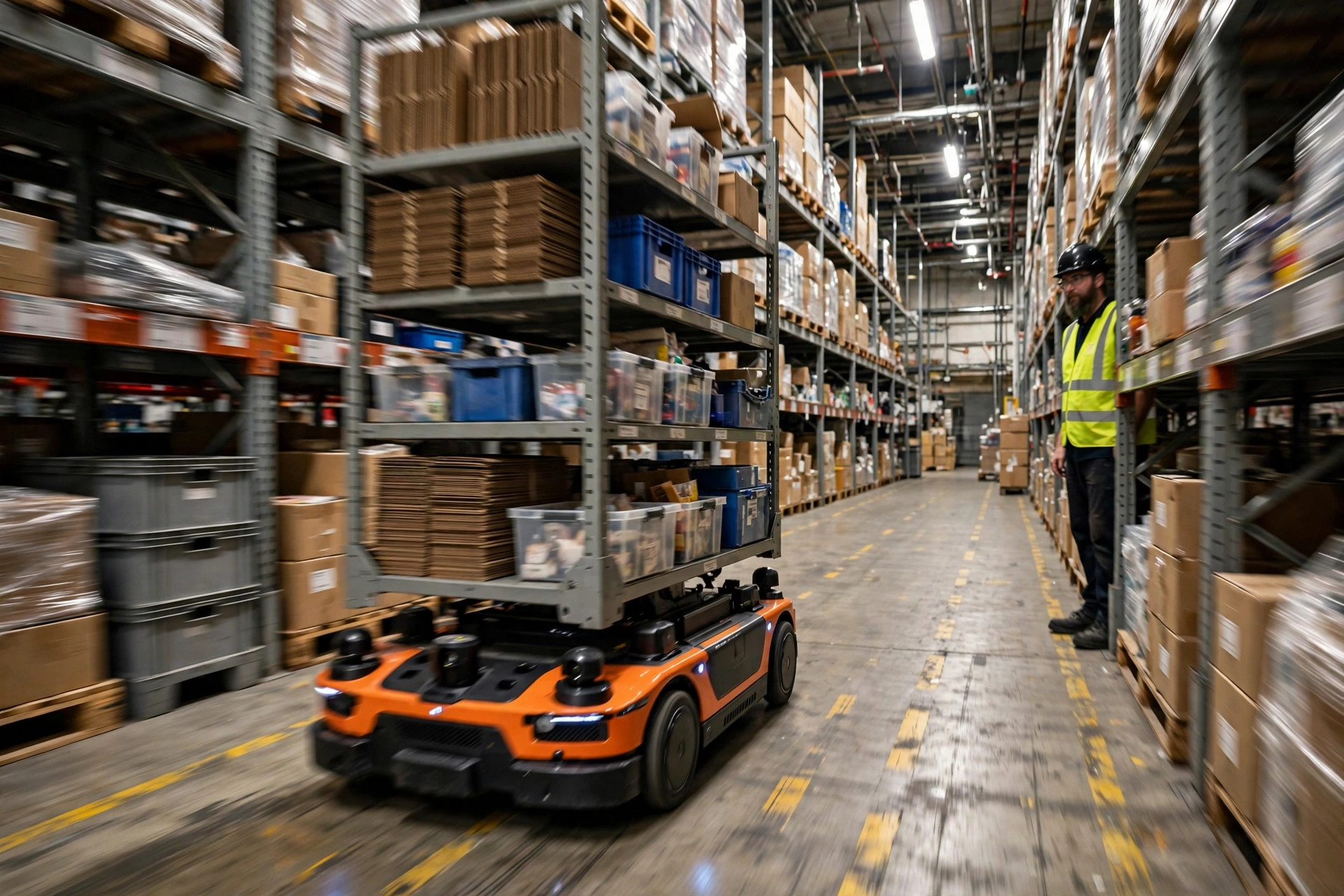
Its weakness is change. Seasonal warehouses, cross-dock staging areas, dock zones — anywhere pallets move daily. The landmarks it memorized disappear overnight. The Ontario site I opened with was hit by exactly this, stacked on top of the reflective-floor problem. Another classic: peak-season overflow staging blocks the walls and columns the robot used as landmarks, and the whole fleet gets lost on day one. Before choosing natural-feature navigation, ask yourself one question: how many times a year does my layout change? If the answer is more than a couple, get the vendor to put the map-update process in the contract — how often, automatic or engineer visit — not a verbal promise.
Notice the pattern: no navigation type wins everywhere. LiDAR fears reflections and emptiness, vision fears light swings and sameness, natural-feature fears change. Selection is about matching your building against those three fear lists — not about comparing accuracy decimals on a spec sheet.
Walk Your Building With This Checklist Before You Sign
The biggest selection mistake I see is deciding in a conference room from a slide deck. Here's my concrete recommendation: before signing, print this checklist and walk your own building — dock area, staging zones, main aisles. Write down the answers.
First, get low and look at the floor. Polished, frequently wet, heavy forklift traffic — put a question mark on LiDAR right away. When the rep says "our algorithm filters reflections," ask them to prove it on your floor, in your dock, on a wet afternoon. No demo-room data counts.
Second, look up at the light. Skylights, big dock doors, direct afternoon sun — vision-based navigation must be tested during those exact conditions. A 10 a.m. test and a 3 p.m. test can be two completely different robots.
Third, check how stable your racking is. Seasonal re-slotting, temporary floor stacking, big cross-dock areas — be cautious with natural-feature navigation. Ask the vendor directly: how fast does the map update after the environment changes, and does it happen automatically? Get it in writing.
Fourth, watch the moving obstacles. Dense forklift traffic and mixed pedestrian zones stress all three navigation types. Here the question isn't localization accuracy, it's the safety stack: safety laser coverage, how the robot slows for people, and whether the system has been assessed against mobile robot safety standards like ANSI/RIA R15.08 and ISO 3691-4. The most accurate navigator in the world is worthless if it can't share space with humans safely.
Fifth, insist the vendor maps your actual building. A demo room proves nothing — new floors, staged racks, perfect lighting. The real test is your dock, your staging area, your 3 p.m. sun. That sentence is worth real money. Remember it.
Most AMR failures I've seen weren't bad robots. They were bad matches — the navigation stack never suited the building, and nobody checked before the purchase order went out. Tomorrow morning, take this checklist and walk your floor. Answer three questions: does your floor reflect, does your racking move, does your light change? Then go talk to vendors. Get the match right and everything downstream is manageable. Get it wrong, and you'll be out in the dock area directing traffic for your own robots — like that project manager in Ontario still is.