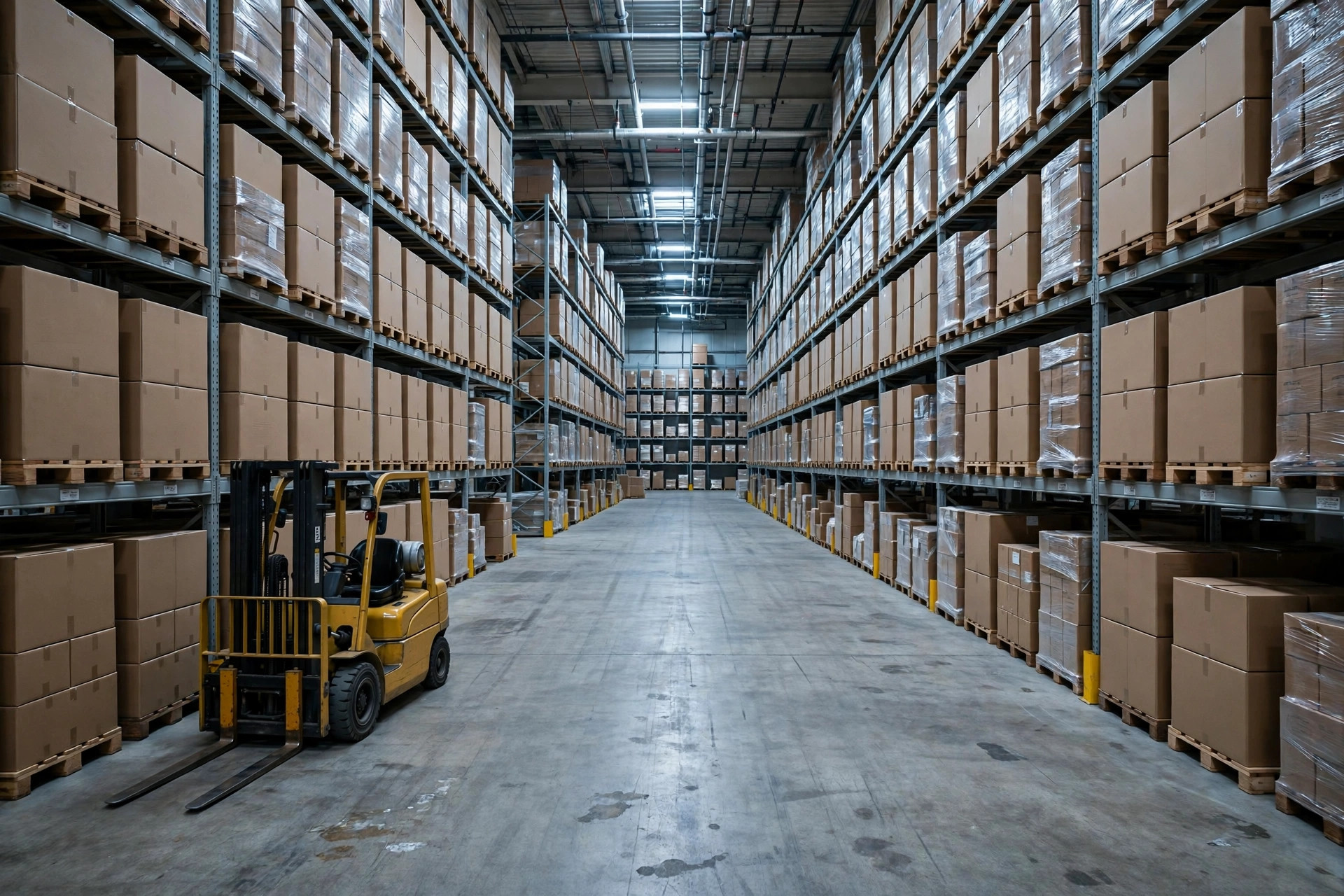
Alcohol warehouse storage looks, on the surface, like any other warehousing business: receive, put away, pick, ship. Yet according to the publicly documented design of alcohol distribution in the United States, alcohol moves from producer to consumer through a three-tier system — producer, wholesaler, retailer — with licenses and records separating each tier. The warehouse sits in the middle: it does not own the alcohol, but answers for the legality, quality, and integrity of every case it handles. The process is generic; the threshold is specific.
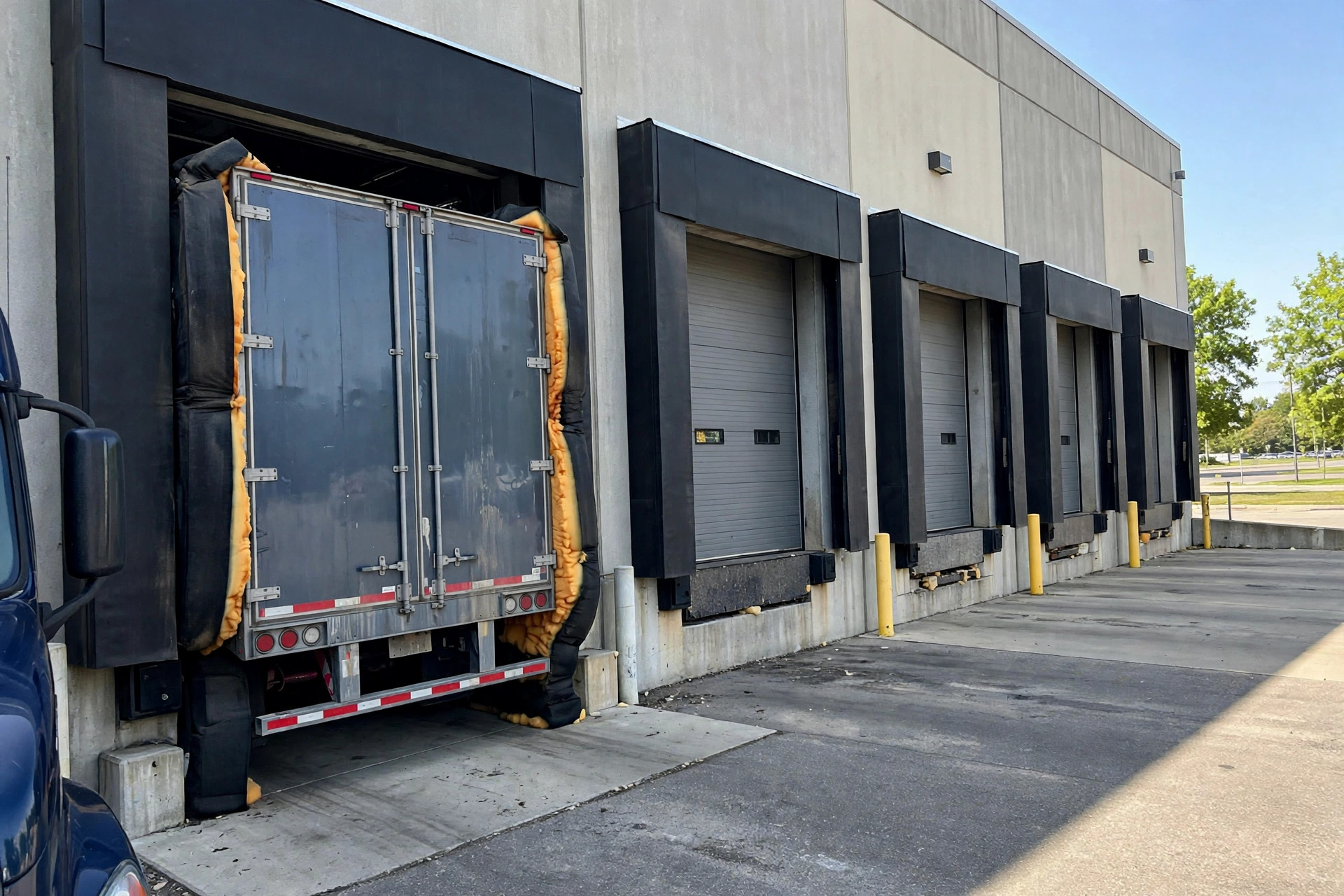
Consider two scenes that play out regularly. The first took place in July 2024 at a third-party warehouse in California, where a shipment of red wine arrived on a Friday afternoon. With receiving short-staffed, the wine sat on an uncovered dock for two days. On Monday, the customer found signs of heat exposure on some outer packaging. The two sides argued at length over whether the wine had deteriorated and who bore responsibility. In the end, the shipment was sold at a discount, and the warehouse absorbed a goodwill loss. The second unfolded during a cold snap that same winter at a distribution warehouse in the Midwest. The beer section sat close to the dock doors, and overnight cold air seeped in. Several cases nearest the doors suffered cracked bottles, and during cleanup, glass shards found their way into neighboring intact cases, forcing an entire bay to be sealed off for inspection. Neither scene involved a dramatic catastrophe, yet both point to the same conclusion: the risks here rarely come from a single major disaster, but from small gaps in everyday operations that nobody noticed.
Alcohol Warehouse Storage, First Gate: Licensing
Alcohol storage licensing in the United States operates on two levels: federal and state. At the federal level, the Alcohol and Tobacco Tax and Trade Bureau handles the relevant permits; at the state level, each state's alcohol control authority sets its own requirements, and the two layers do not substitute for each other. The differences between states are substantial. Some treat warehousing relatively simply; others draw the boundaries between storage, wholesaling, and distribution finely, so the warehouse's exact role determines the license.
This leads to a counterintuitive judgment: the first gate is not equipment, but paperwork. Many warehouses first ask whether they have a temperature-controlled room. They should first ask whether their licenses cover this line of business at all. If the license scope does not match the actual operation, no later investment in temperature control or procedures can make the business stand on solid ground. Nor is licensing a one-time task: changes in business scope, address, or ownership can all trigger re-filing or updates, and the specifics vary by state.
Regulatory granularity is only moving in one direction. According to enforcement activity various states have made public, record-keeping requirements for alcohol distribution are gradually tightening, and a warehouse's receiving and shipping records and batch traceability are shifting from a nice-to-have to a must-have. Before taking on an alcohol client, the licensing review should come first.
Second Gate: Temperature Control — The Fear Is Not Heat, but Fluctuation
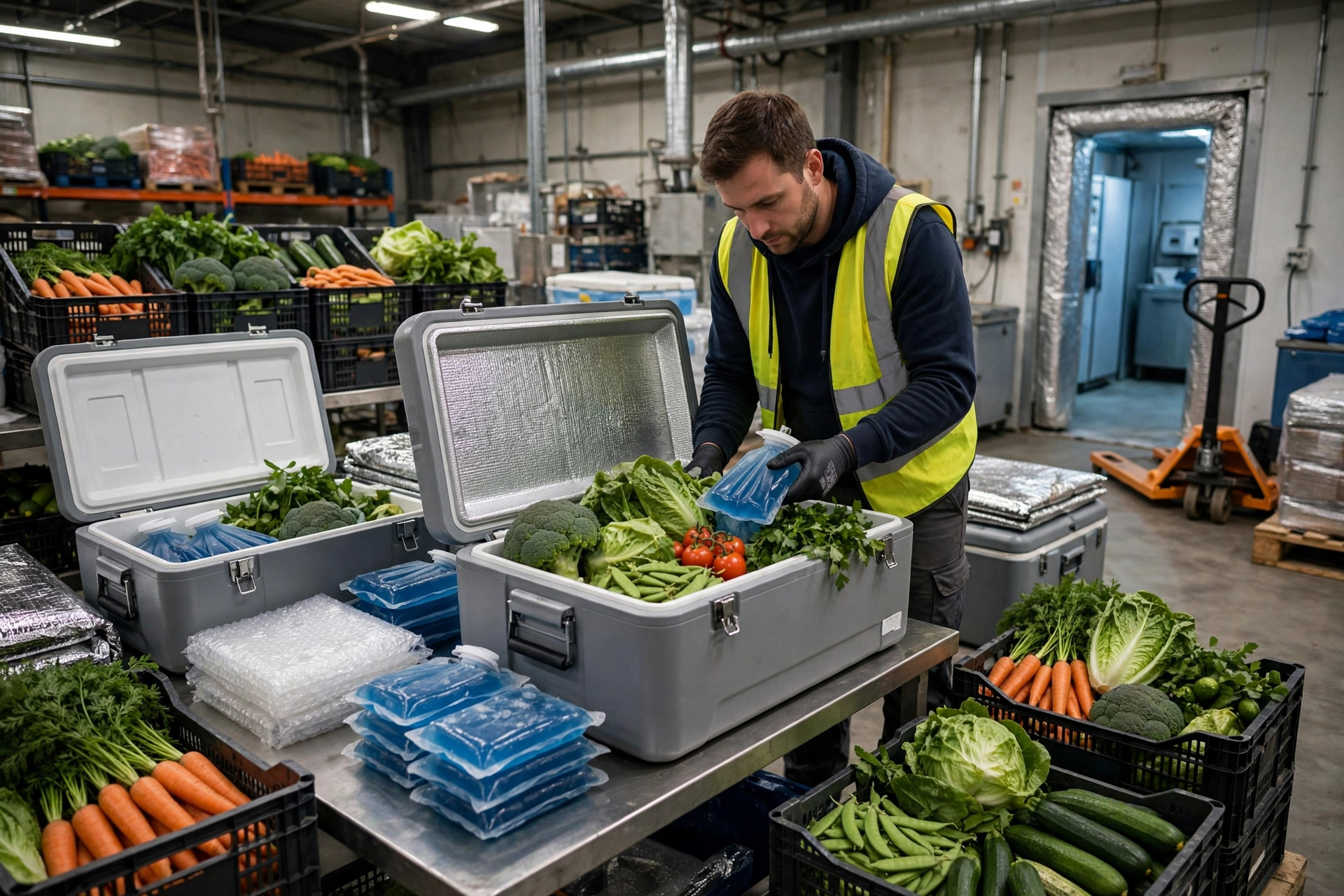
Temperature sensitivity depends on the type. Red wine is most vulnerable to heat; prolonged exposure to elevated temperatures accelerates changes in flavor. Beer fears freezing: once the liquid freezes, it expands and can crack the bottle. Spirits are comparatively tolerant, but temperature swings still age packaging and damage labels.
Here is a counterintuitive judgment: for red wine, a stable but slightly elevated temperature often does less harm than repeated hot-cold cycles. Wine in the bottle is a slow-moving chemical system; every large swing forces it through acceleration and stagnation, while the cork's expansion and contraction gradually weakens the seal. Pushing temperatures as low as possible is therefore not necessarily the most cost-effective investment; spending modestly to limit swings often delivers a better return. This is the most common trade-off in temperature-control spending: chasing extreme cold is expensive, and if the equipment fails and temperatures rebound, the earlier investment looks fragile. Insulation, shading, and minimizing dwell time on the dock tend to produce more stable returns.
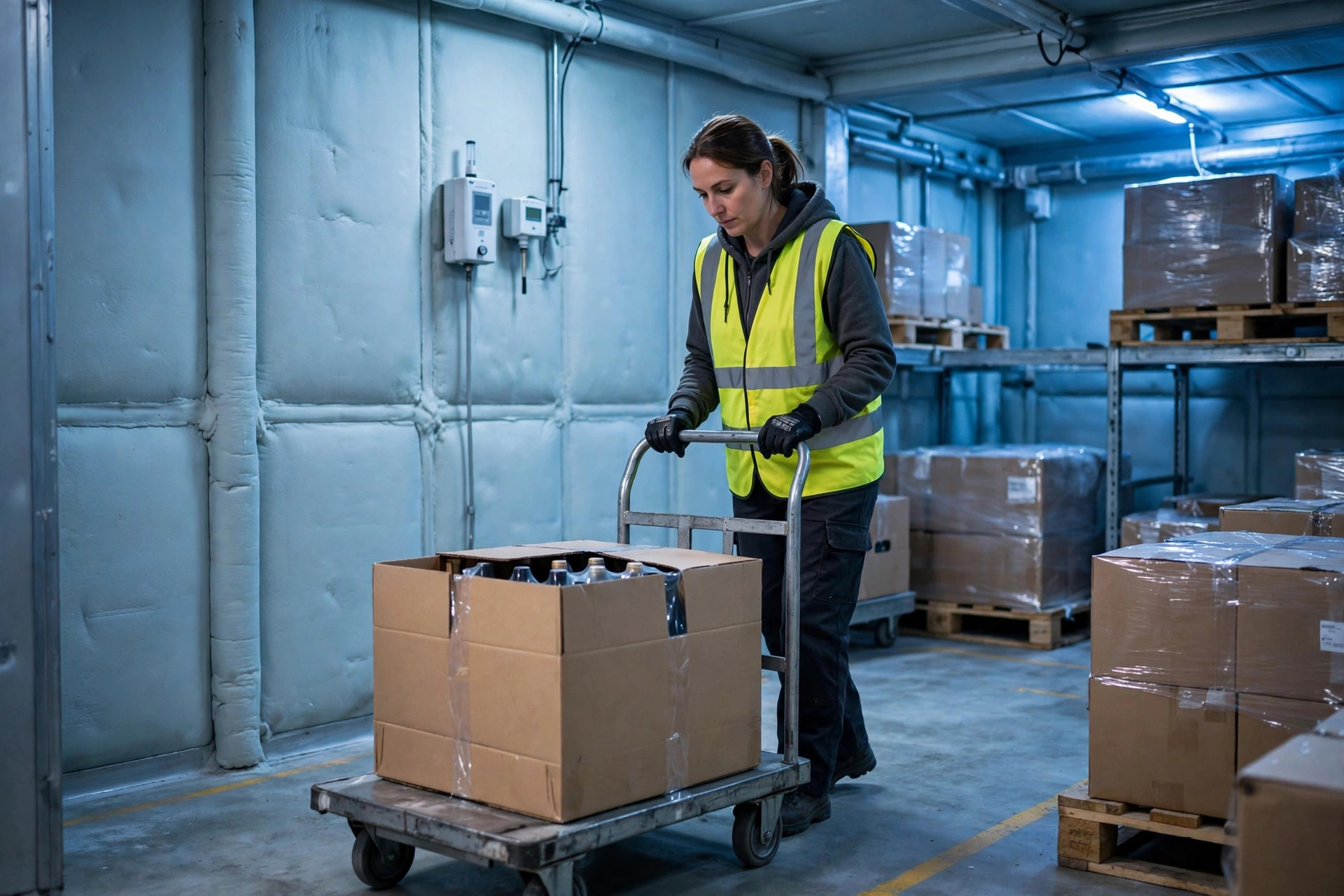
Operationally, the key is not any single device's specification, but whether the temperature curve stays smooth. Avoid leaving alcohol on the dock during receiving, placing it near large doors or in direct sunlight, or pulling it out early into a staging area of a very different temperature before loading. None of these steps requires sophisticated equipment, yet they are precisely where the two opening scenes went wrong. A temperature logger's value is not precise numbers, but reconstructing what a shipment went through at each step. In a quality dispute, a complete temperature record is the warehouse's most important evidence.
Third Gate: Breakage — Do the Math on Glass Bottles Beforehand
Breakage in alcohol storage differs fundamentally from breakage in general merchandise. When an ordinary product breaks, the loss is usually the product's value. When alcohol breaks, the loss includes cleanup costs, collateral damage to neighboring goods, and the time cost of claims and disputes. Once a glass bottle shatters, liquid seeps into the cartons below, glass shards mix into adjacent packaging, and cleanup must prevent injuries and stop contamination from spreading. A single bay can be out of service for half a day.
When doing the math, it helps to break one breakage incident into three parts. The table below puts the three gates side by side.
| Gate | Main risk | How much the warehouse can control | Cost of getting it wrong | Where upfront investment belongs |
|---|---|---|---|---|
| Licensing | License scope does not match the business | High — can be verified in advance | Business interruption, hard to recover | License review, scope confirmation |
| Temperature control | Temperature swings damage quality | Medium — requires daily discipline | Quality disputes, loss of client trust | Insulation, process, temperature records |
| Breakage | Glass breakage and collateral contamination | Medium — needs procedures plus insurance alignment | Cleanup, claims, bay downtime | Handling standards, packaging, insurance terms |
Take breakage as an example. Suppose a pallet of alcohol topples during handling. On the surface, the loss is a few cases of wine. But the real ledger must add cleanup labor, inspection of neighboring cases, bay downtime, and staff time spent with the client and the insurer. Once that calculation is laid out, many warehouses discover the true cost of breakage is not in the bottles that broke, but in the disputes that follow. That is why experienced alcohol warehouses write the breakage standard, photo-documentation procedure, claim deadline, and insurance handoff into the contract in advance. In good times those clauses look like unnecessary legal text; when something goes wrong, they are the only basis for allocating costs.
Before Accepting an Alcohol Client, Work Through This Self-Check List
Combining the three gates, a warehouse can run through this checklist before accepting an alcohol client. Every item traces back to a lesson from one of the earlier scenes.
| Self-check item | What to confirm |
|---|---|
| License coverage | Federal and state licenses cover this business; scope, address, entity consistent |
| Record capability | Records and batch traceability are complete and can reconstruct the full process in a dispute |
| Temperature process | Temperature swings across receiving, storage, shipping are controlled; records are continuous |
| Storage layout | Alcohol kept away from large doors, sunlight, warm-cold boundary zones, odorous goods |
| Handling standards | Handling, stacking height, forklift operation for glass bottles follow written standards |
| Breakage plan | Breakage cleanup, photo documentation, isolation procedures are written down |
| Claims and insurance | Breakage standard, claim deadline, insurance handoff spelled out in the contract |
| Staff training | Frontline staff understand alcohol cargo's differences and have practiced breakage handling |
This list turns "can we take on alcohol clients" from a gut feeling into judgments that can be checked off one by one. According to publicly shared industry observation, the threshold for alcohol storage is shifting from "do you have a temperature-controlled room" to "do you have a complete compliance and operating system." Equipment can be bought. A system can only be built through daily practice.
One open question remains. The alcohol storage business is, at its core, a trade: higher compliance and operating costs in exchange for stickier clients and more stable relationships. Each gate demands investment, and none of the returns arrives overnight. So for a warehouse considering alcohol clients, the real question may not be equipment, but whether its management system can support a category with a much lower tolerance for error. The answer determines whether alcohol storage is, for that warehouse, a good business — or a gate it cannot get around.
By Dr. Chen, Supply Chain Researcher