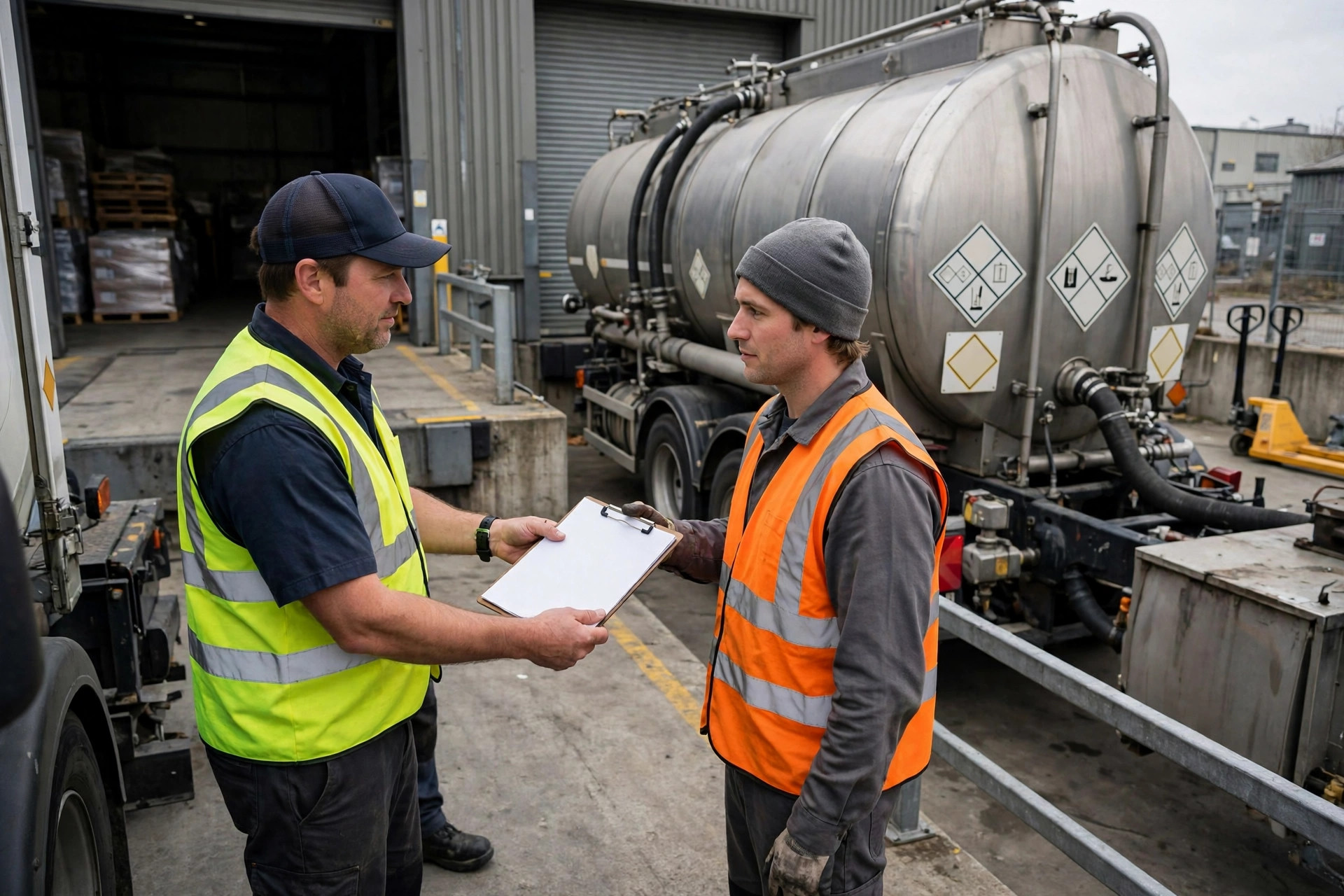
Here is my blunt take: alcohol disinfectant coming into a warehouse is decided by three things, and only three things, before the truck is unloaded. Where it sits, how much one zone is allowed to hold, and how the air moves through that zone. Get those three wrong and everything after is repair work: moving pallets twice, shutting a zone down, reworking shipments, and, on a bad day, answering questions from the fire department and the insurer. I have seen too many warehouses lose not because the product was hard to handle, but because the receiving team took a shortcut on the day it arrived and rolled a flammable liquid straight into general storage.
There are two sides to this, and I always start with the cost before the benefit. Consolidating the product in one place makes management easy and counting easy, but it concentrates the risk in one spot. Spreading it across several zones limits what any single incident can touch, but inspection, recordkeeping, and training all get more expensive overnight. My call is simple: accept the management hassle rather than concentrate risk somewhere that is not ready for it. The labor you save by skipping the setup always comes back, multiplied, in one move or one shutdown.
Zoning First: Where Alcohol Disinfectant Is Allowed to Sit
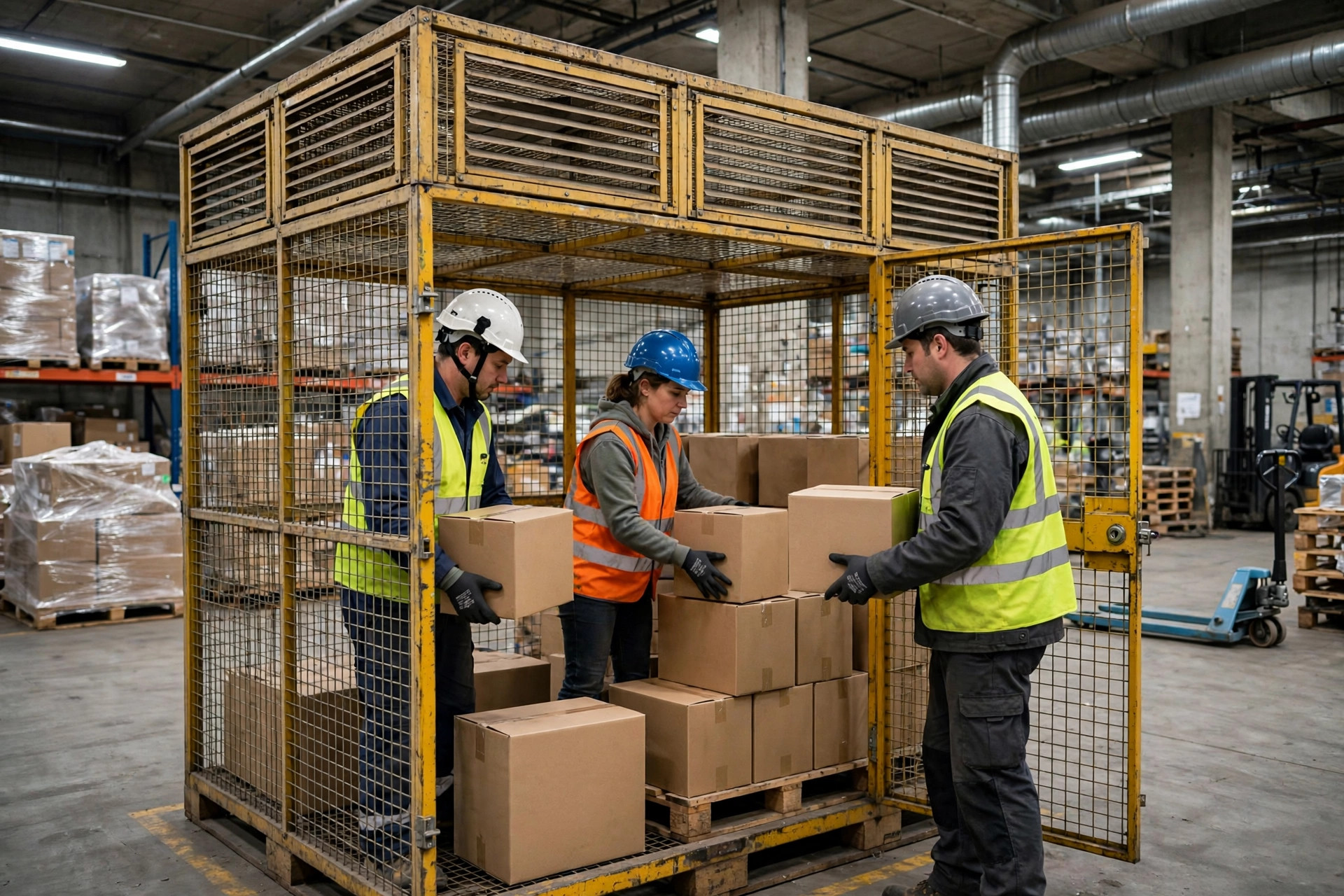
Zoning is not painting lines on the floor. It is separating three things: the product, ignition sources, and foot traffic. The product gets its own cage or compartment. No cardboard packaging stored inside it, no charging, no hot work, a fixed forklift route in and out, and a log for everyone who enters. A limit sign goes on the door where anyone walking past can see how much more the zone can take. A zone without a visible limit is a zone without a limit, and it will be filled to the brim sooner or later.
I watched this exact shortcut play out in July 2022 at a third-party warehouse in Ontario, California. A customer sent 320 cartons on short notice, and the receiving team, seeing open spots on the general racks, unloaded them there. On the third day, a supervisor smelled alcohol near the racks and discovered cardboard packaging stacked two bays over, with a charging area at the end of the same aisle. Nothing caught fire. The zone still shut down for most of the day while 12 people moved all 320 cartons, one by one, into a temporary cage, and the customer's outbound schedule slipped a full day. The postmortem did not blame the crew. Nobody on the receiving dock that morning had asked the one question that mattered: which zone was this shipment supposed to enter?
Alcohol Disinfectant Quantity Limits: Do the Math Before the Truck Arrives
The most common math mistake with alcohol disinfectant is calculating the limit for the whole building. Limits have to be calculated per zone, because incidents happen per zone, and a tidy building-wide total will not save a single cage that is already overfull. The arithmetic itself is simple: take the limit posted on the zone door, subtract what is already inside, and what is left is what you can receive today.
Take a concrete example. A cage door sign allows 240 cartons. The cage already holds 180. A new arrival brings 120. You can take 60, and the other 60 either go to a second cage with room or wait on the truck. Receiving teams hate hearing that sentence, but somebody has to say it. Taking all 120 makes the paperwork tidy and loads every bit of the risk into one cage.
A second story, from Dallas, Texas, in February 2024, shows why mixing products is its own mistake. A warehouse stored an alcohol-based sanitizer product in the same compartment as ordinary cleaning chemicals, reasoning that the categories were close enough and picking would be faster. One carton broke during handling, liquid leaked through the pallet slats onto the level below, and the night crew did not find it until inspection. Cleanup and repacking ran until 3 a.m., and the 6 a.m. outbound wave the next morning went out short. Similar categories are not the same thing. Storing a flammable liquid beside ordinary goods saves a few steps on a pick path and bets that a leak will never reach the neighbor.
Here is the framework I walk through with a customer before accepting this kind of freight. Fill in all four rows before agreeing on a receiving time:
| Decide first | How | What happens when you get it wrong |
|---|---|---|
| Zoning | Its own compartment, separated from ignition sources and foot traffic | The product lands in general storage and one incident takes the whole aisle with it |
| Quantity limit | Per zone, posted on the door | A building-wide total hides a cage that is already overfull |
| Mixing | Flammable liquids never share a zone with ordinary goods | One leaking carton contaminates a full pallet level |
| Records | In and out logged per zone, over-limit blocked | The books look fine while the actual zone is already over |
Ventilation: Dilution Beats Sealing It Up
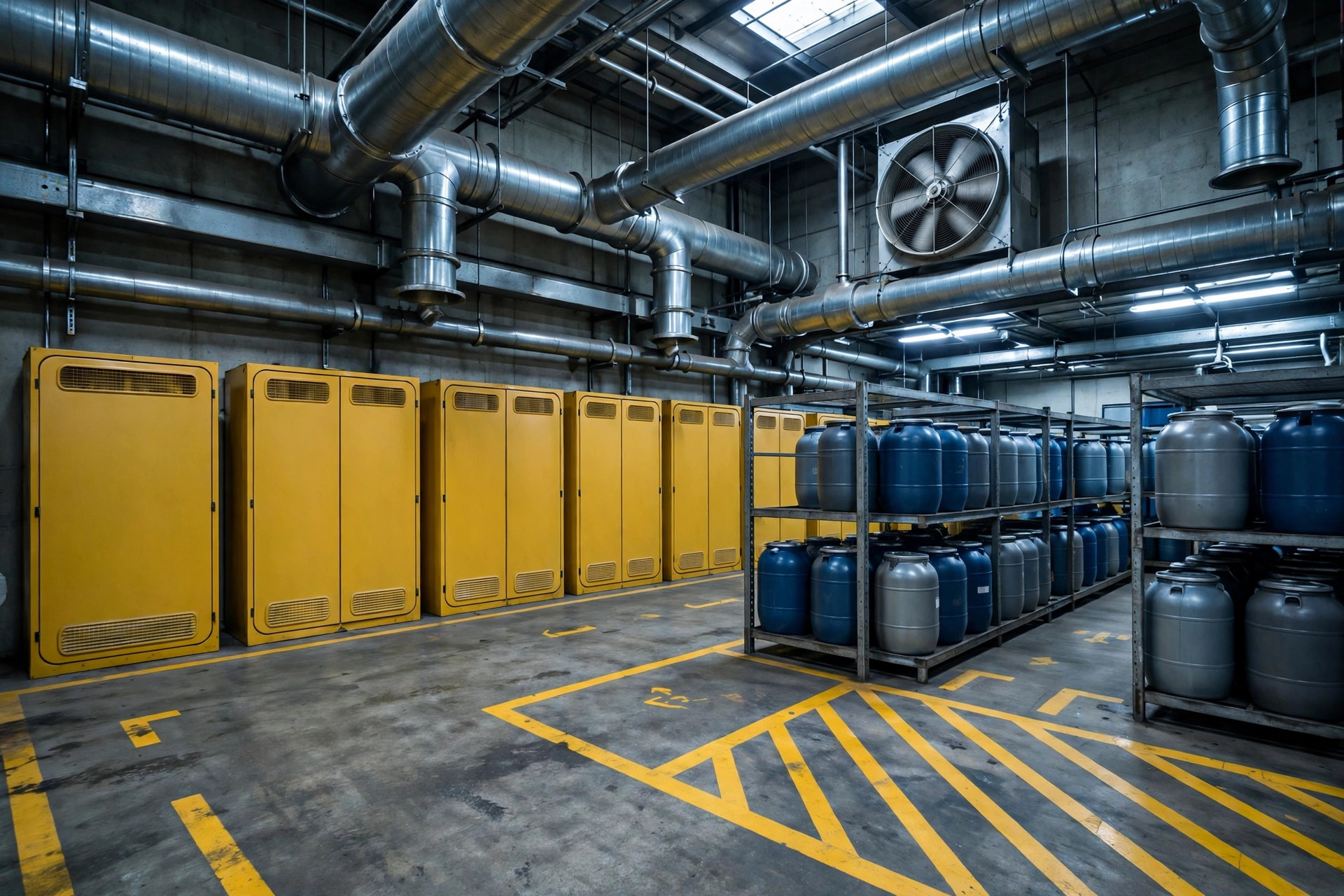
Here is the counterintuitive part. A lot of people assume the safest place for this product is a sealed metal cabinet. It is exactly the opposite. Vapor builds up in a sealed space with nowhere to go, and the concentration only climbs until somebody opens the door. Ventilation is not about making the warehouse smell clean. It is about keeping vapor from accumulating, and the airflow has to actually pass through the product, not just circulate near the ceiling.
So for alcohol disinfectant storage I check three things. First, whether the vents are blocked by product. I have seen too many vents hidden behind pallets, with fans running hard and air never reaching the cartons. Second, whether the airflow runs from one end of the zone to the other, intake on one side and exhaust on the other, instead of swirling around the door. Third, whether vent inspection is on the weekly checklist, looking for blockage and strange fan noise, rather than waiting until somebody smells something. As for specific limits and technical requirements, rules vary by jurisdiction, so always check the official source for the latest policy rather than trusting a number from memory.
The three costs are not equal, and that matters for budgeting. Zoning costs space, and space is a one-time investment. Quantity limits cost receiving flexibility, and that friction shows up on every delivery. Ventilation costs power and maintenance, and it is the easiest line item to cut because its benefit is invisible on a normal day. My advice runs the other way: space can be squeezed, limits can be negotiated, but a blocked vent is something you never tolerate even once.
So here is the question I would ask before the next truck is unloaded: for this alcohol disinfectant shipment, do the zone, the limit sign, and the ventilation all line up today? If they do not, do not rush to unload.
By Lao Mi, Supply Chain Veteran (20 yrs)