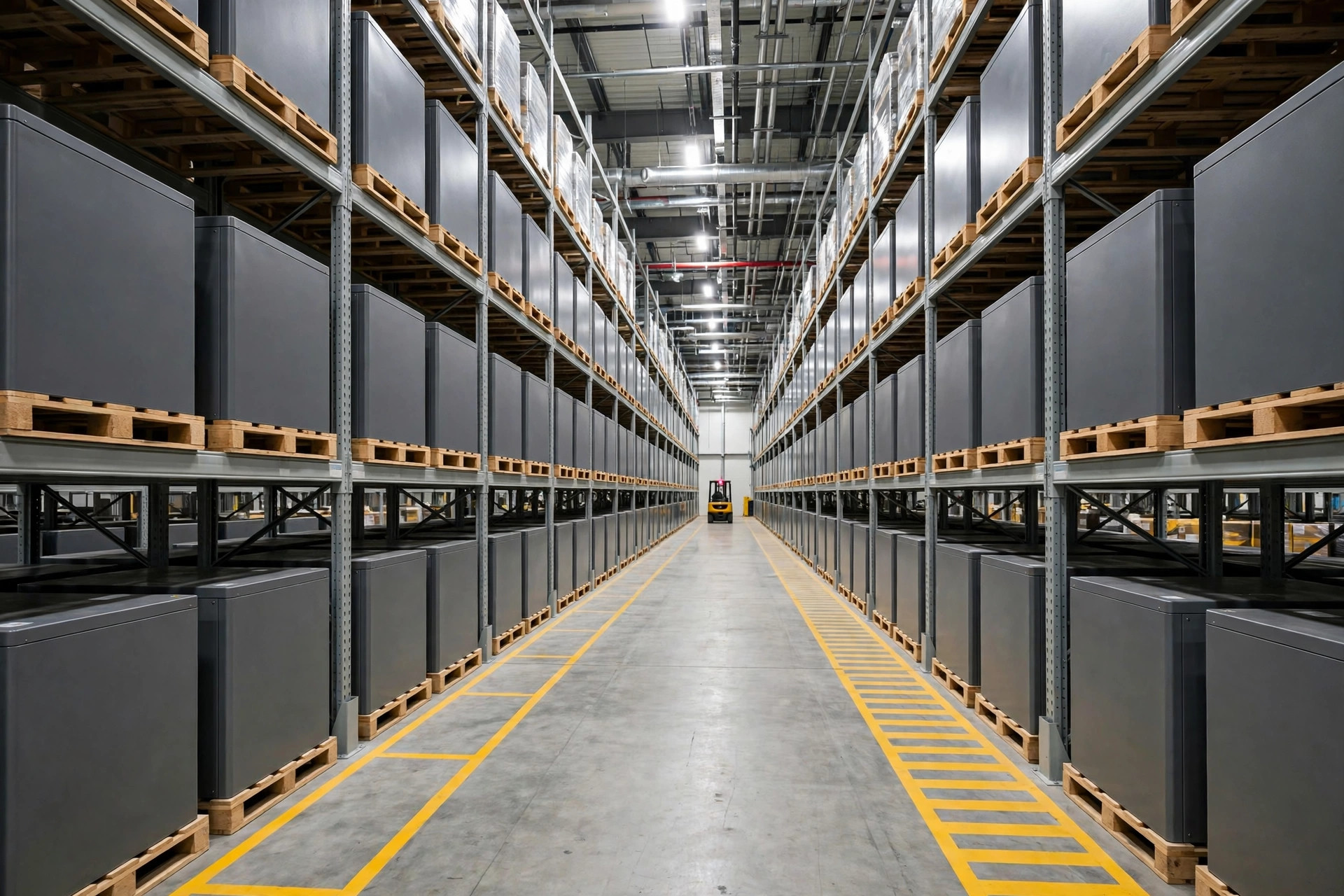
Let me open with the bill. Last month, a 3PL friend signed a new customer — sodium-ion energy-storage battery packs, 20,000 pallets a year in and out. He brought me the fire consultant's proposal: lithium-battery-grade protection — dedicated fire compartments, early-suppression sprinklers, explosion-proof electrics — quoted just under a million RMB (roughly $140K). His question: "Sodium-ion is supposed to be safer than lithium, right? Is this money burned?" My answer: don't ask burned-or-not yet. First get the ledger straight — where exactly sodium-ion differs from lithium, and what each difference is worth.
The table first: sodium-ion vs. lithium, through a warehousing lens
| Lithium (LFP as reference) | Sodium-ion | |
|---|---|---|
| Electrodes | Graphite anode, LFP cathode | Hard-carbon anode, layered-oxide or Prussian-blue-type cathode |
| Electrolyte | Flammable carbonate electrolyte | Flammable carbonate electrolyte too (sodium-salt system) |
| Thermal runaway | Lower onset temperature, violent gas venting | Higher onset reported in literature, comparatively milder reaction |
| Abuse tolerance (overcharge/nail) | Poor | Relatively better (per manufacturer's test reports) |
| Transport classification | UN3480/3481, lithium rules | Its own UN numbers — no longer filed under lithium (per latest UN Model Regulations) |
| Test standard | UN38.3 | UN38.3 does not apply; sodium-ion has its own test requirements (per latest standards) |
Read the electrolyte row again. Identical: flammable. That's why my headline says "don't copy-paste" — not "feel free to downgrade."
Three differences that decide your fire-protection bill
Difference one: thermal behavior differs, but "safer" doesn't mean "won't burn." Published literature generally reports higher thermal-runaway onset temperatures for sodium-ion than for mainstream lithium chemistries, with comparatively milder energy release and venting. Two qualifiers matter: "published literature" and "comparatively" — formulations vary by manufacturer, so treat the cell maker's thermal-runaway test report as the only number that counts for your building. And the electrolyte didn't change: once a fire starts, it's the same Class B (flammable-liquid) fire, and the suppression-media choice — water sprinklers vs. gaseous agents — is fundamentally no different from a lithium warehouse.
Difference two: transport and certification have already split. The UN assigns sodium-ion batteries their own numbers, separate from lithium's UN3480/3481; UN38.3 is a test manual written for lithium and does not apply — sodium-ion has independent test requirements. Before a single pallet enters your building, demand three documents from the customer: the UN transport classification report, cell/module thermal-runaway test reports, and the SDS. Missing any one of the three, and your fire consultant and your insurer will both quote you at the strictest tier — that is precisely where burned money comes from.
Difference three: the standards are still growing, and acceptance criteria aren't uniform. Lithium-battery warehousing has had a decade-plus for NFPA 855 (energy storage systems), UL 9540/9540A, and insurers' loss-prevention requirements to mature — plan review and underwriting follow well-worn paths. Sodium-ion? The standards are still catching up. On the same project, consultant A says "build it like lithium," consultant B says "you can step it down a grade." Non-uniform criteria, and every round of arguing costs your time and money.
2024, Jiangsu: an energy-storage integrator moving sodium-ion packs into a bonded warehouse. The fire consultant's first draft went full lithium-grade — dedicated compartments across 5,000 square meters, just under a million RMB extra. At plan review, the authority asked one question: "Where's the sodium-ion thermal data?" The customer produced the cell maker's test reports — onset temperature and gas volumes both better than LFP — and the second draft kept the fire compartments (the non-negotiable baseline) while stepping sprinkler density down a grade, saving roughly 30%. The lesson: test reports are money. Without them, you pay the most expensive standard by default.
The cost ledger: where the sodium-ion money actually goes
Here's the incremental fire-protection spend for a 5,000-square-meter battery warehouse, broken down (order-of-magnitude estimates — your local authority and quotes rule):
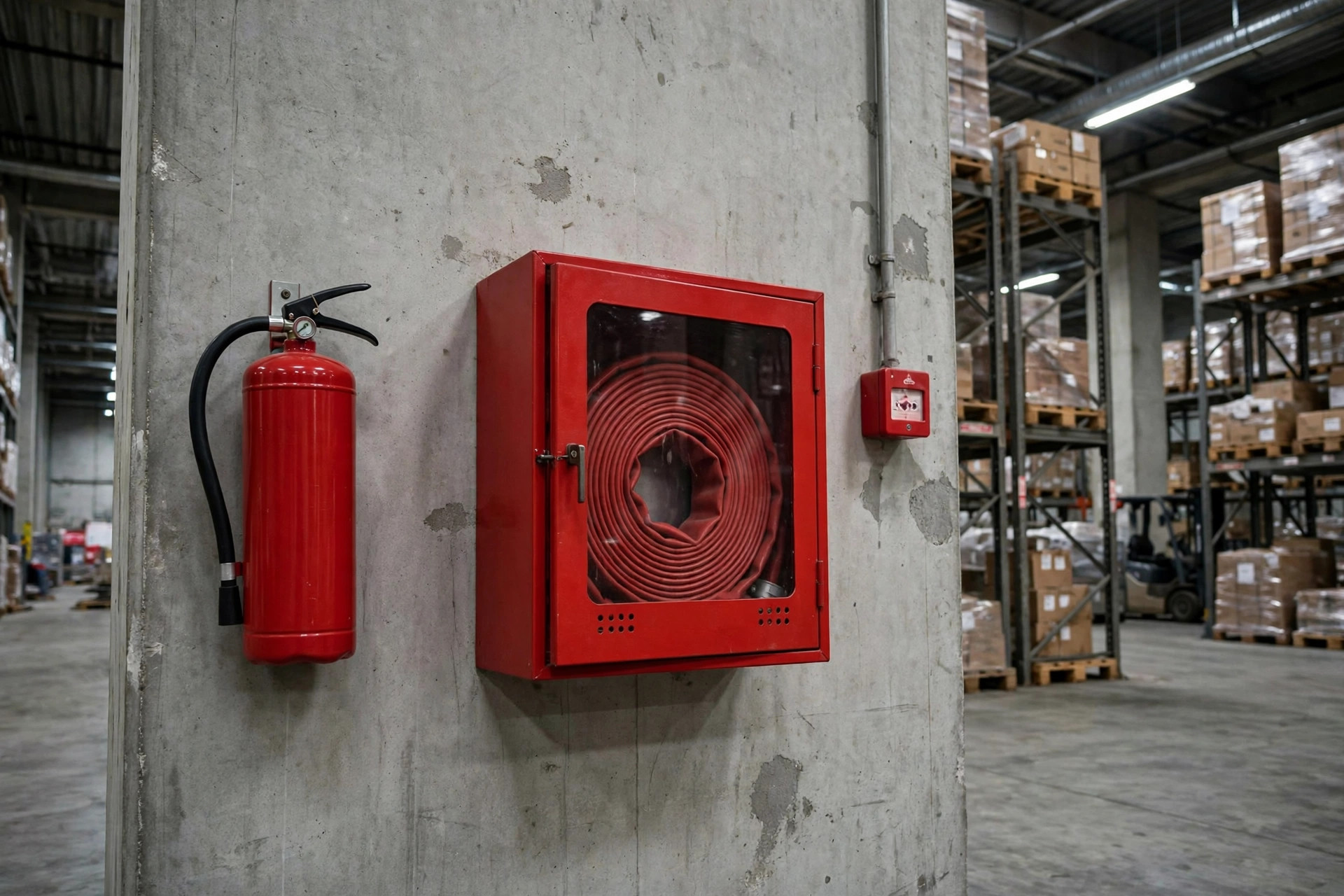
Fire compartments and rated walls: non-negotiable for sodium or lithium alike. To the fire code, a battery is a battery — there is no "gentle battery" discount.
Automatic sprinklers: lithium-grade high-hazard density is the baseline; with test reports in hand, stepping down a grade — and 20–40% savings — is a reasonable expectation. Negotiated, not standard.
Explosion-proof electrics and ventilation: sodium-ion vents comparatively less gas, so there's room to discuss ventilation and hydrogen-detection scope — but "room to discuss" isn't "permission to skip." Plan reviewers don't accept vague.
Insurance: the line everyone forgets. With no sodium-ion loss history, underwriters' models can only reference lithium — expect lithium-grade premiums. Unless you walk in with test reports plus the fire-acceptance paperwork, don't expect a discount.
Hidden costs: crew training, emergency plans, SOP updates. Sodium-ion and lithium emergency response differ in the details (like recognizing pre-runaway warning signs). Small money — invisible until the day it's the only thing standing between you and a total loss.
Late 2024, an East China 3PL took on a sodium-ion cell customer — 10,000+ pallets a year. The insurer's first quote applied lithium-warehousing rates with an uplift, citing "new chemistry, no loss history." The 3PL walked in with three things: the cell maker's thermal-runaway test reports, the fire-acceptance certificate, and the standalone sodium-ion UN transport classification. Two rounds of negotiation later, the premium landed near ordinary high-hazard-goods levels. The annual savings covered the fire consultant's fee with room to spare. My read: insurance prices uncertainty. Erase the uncertainty with paperwork, and the premium comes down. Show up with incomplete files, and you pay for the uncertainty.
The counterintuitive call: building to lithium grade today may be the cheapest option
Sounds wrong; the math says otherwise. Sodium-ion standards are still growing. Build "stepped down" today, and if next year's standard demands it back, the retrofit costs 1.5× the first build at minimum — shutdowns, clearing the building, re-review, every one of them billable. Build to lithium grade once, pass acceptance once, and fire, insurance, and customer audits all stop arguing — what you save is time and friction. My line: unless you hold a complete test-report chain (cell level, module level, pack level) and the local authority signs the stepped-down design in writing, build to lithium grade, no exceptions. Gambling compliance to save money is the most expensive bet in this business.
The calculable conclusion — run this before signing any sodium-ion warehousing deal:
Incremental fire-protection capex divided by this customer's annual gross margin: under 30%, with a 3+ year term — sign it. Build to lithium grade, once, done right.
30–50%: sign only after securing the three documents (UN transport classification, thermal-runaway test reports, SDS), then negotiate the step-down and push the ratio under 30%.
Above 50%: walk away — or make the customer share the retrofit cost. That's not your business to subsidize; it's theirs.
One sentence to remember: sodium-ion being "milder" than lithium is a chemistry fact; but fire codes and insurers recognize paperwork and standards, not chemistry. Until your files are complete, it's a lithium battery that happens to be billed at lithium rates. Whether the money is burned has nothing to do with the battery — it's all about whether your paperwork is complete.
By Lao Zhou, Logistics Cost Analyst