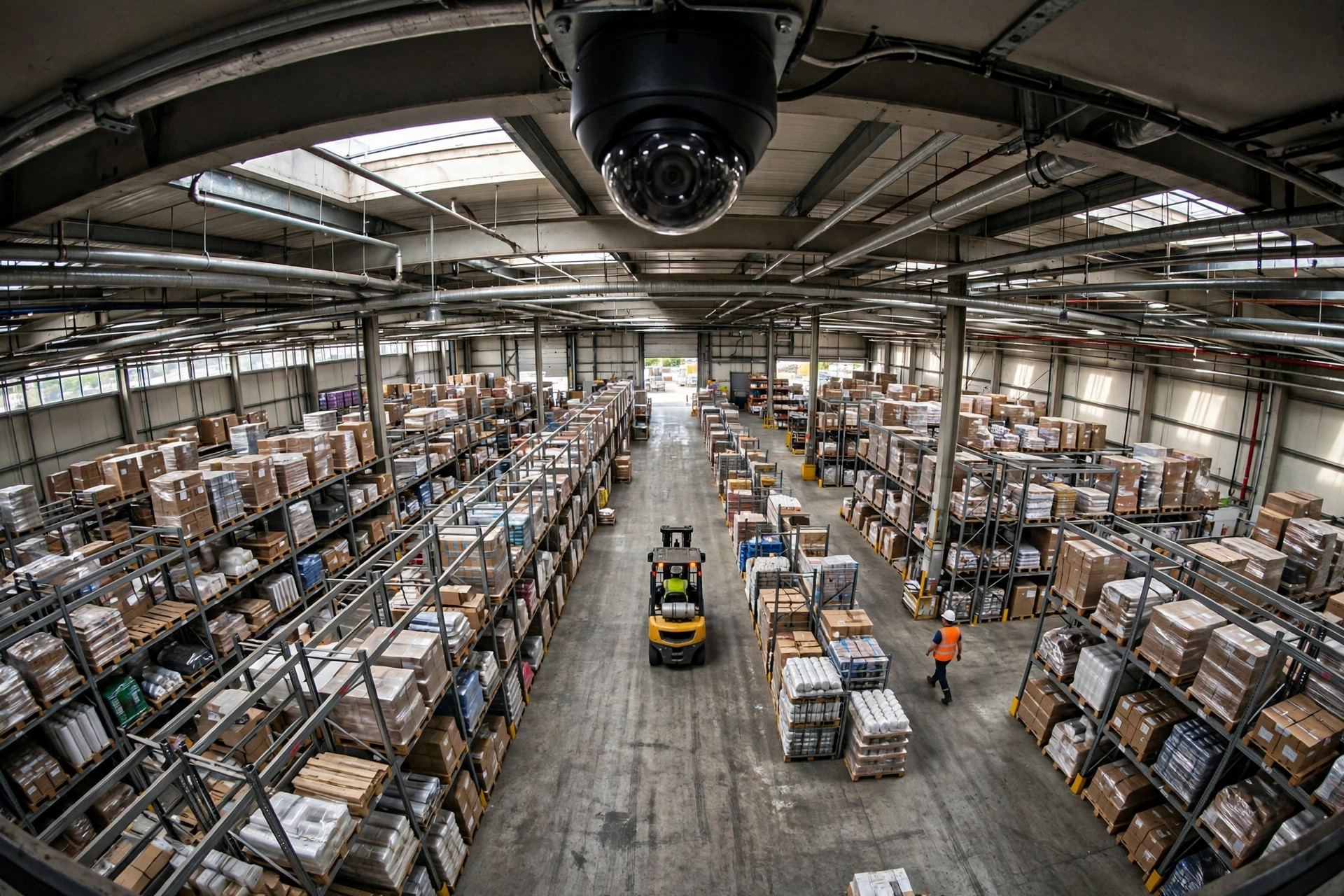
Every fourth quarter, the warehousing industry performs the same play — but in the 2024 peak season, the play gained a new character: AI workforce scheduling software.
The old script went like this: order volumes double, the full-time crew isn't enough, temp workers are hard to hire and harder to keep, shift leads build schedules by shouting in group chats, and the floor runs short-handed. In 2024, several 3PLs started letting scheduling algorithms decide who works which shift tomorrow, instead of relying on a supervisor's gut and relationships.
The phenomenon: scheduling is moving from gut feel to data
A bit of context first. For the past decade, warehouse scheduling has belonged to the shift lead: who is reliable, who is obedient, who can take overtime — all of it lived in one person's head. That works in a 30-person warehouse. In a 100-plus-person facility with temps making up 40% of headcount at peak, one person's head isn't enough — the published roster and actual attendance are routinely two different documents.
AI scheduling software arrived exactly at this pain point. Its selling point isn't "scheduling faster" but "telling you two weeks early that you're short." That distinction matters, as the cost math below will show.
The data: labor math gets scarier the deeper you go
According to widely used industry estimates, labor typically accounts for more than 60% of total warehouse operating costs — the single largest line item. Annual industry surveys have also listed hiring and retention difficulty as the industry's top challenge for several years running — check the original published reports for exact rankings; here I'm describing the trend.
Peak-season temp labor costs more. Temp workers hired through staffing agencies typically cost about 30% more than full-time equivalents on an all-in basis — local labor market rates apply. That 30% covers the agency markup, the productivity loss during onboarding, and the repeated recruiting cost driven by high turnover.
I ran the numbers: a 100-person facility with temps making up 40% of headcount during a three-month peak season. On the above basis, the temp premium alone reaches well into six figures in USD per year. Exact figures vary with local wage levels, but the order of magnitude holds.
So the problem is clear: peak-season labor is an expensive and uncertain cost item. AI workforce scheduling software is aiming squarely at it.
What warehouse labor scheduling software actually schedules: inputs and outputs
A dose of cold water first: most "AI scheduling" on the market does something far less mysterious than the pitch decks suggest. Its inputs and outputs can be laid out quite concretely.
Four kinds of input. First, demand-side data: historical order volumes, wave distributions, promotional calendars — answering "roughly how much work is coming in the next two weeks." Second, supply-side data: the employee roster, the skills matrix (who's forklift-certified, who can run the order picker, who only packs), attendance records — answering "what cards are we holding." Third, productivity baselines: units per hour by process, historical overtime data — answering "how much output each card plays." Fourth, external variables: promo events, weather (which affects show-up rates) — answering "what surprises to expect."
Three outputs. First, a shift schedule for the next two to four weeks, down to the person, the shift, and the process. Second, a labor gap alert: telling you two weeks ahead that "week three of November is still short 12 people," instead of discovering it the morning you're already short. Third, staffing recommendations: fill the gap with overtime, hire temps early, or adjust the wave plan.

You may have noticed: the core of this thing isn't "scheduling accurately." That's the first counterintuitive point — the greatest value of AI scheduling is exposing the labor gap two weeks early, not producing a flawless roster. Knowing two weeks out that you're short 12 people versus finding out that morning are two entirely different cost magnitudes to fix.
Why it works in some warehouses and not others
In 2024 I followed a counterexample: a 40-some-person small warehouse in the Midwest bought a scheduling package and abandoned it three months later. The reason was simple — their WMS work-order data was a mess, hours were hand-entered by the shift lead, and nobody maintained the skills matrix. Garbage in, and the schedules the algorithm produced were ones nobody would follow.
The lesson is a hard precondition: AI scheduling is a game for the data-clean. Three prerequisites, all mandatory:
First, accurate WMS work-order data, so order volumes and wave times genuinely reflect workload. Second, complete time records, enough to compute per-process productivity baselines. Third, a living skills matrix — employee skill tags maintained continuously, not filled in once at onboarding and forgotten.
There's also an organizational condition: supervisors must actually execute the schedule. However good the algorithm, a schedule nobody follows equals zero. Many projects die at this layer, not the technical one.
What size warehouse is it worth it for: a decision framework
This is the question readers care about most, and my judgment is: AI scheduling has a clear scale threshold, and it only pays past it.
| Facility size | Recommendation |
|---|---|
| Under 30 people | Excel plus supervisor experience is cheaper — a fake need |
| 30-100 people with clear seasonality | Worth evaluating; data foundation is the key variable |
| 100+ people, or peak temp share above 30% | Seriously worth considering; ROI is easiest to prove here |
The logic: scheduling software costs are largely fixed (subscription plus implementation), while the returns scale with the temp premium and the cost of running short. In a sub-30-person warehouse, the shift lead knows everyone personally — the incremental value of the algorithm can't cover its cost. That's a textbook fake need; don't let vendor pitches carry you away.
The second counterintuitive point: AI scheduling doesn't save the labor cost of "scheduling" — how much time does a supervisor spend building a roster? What it saves is the temp premium and the fulfillment losses from running short. Put the right thing in the denominator when you compute ROI, or the return figure is pure illusion.
Trend: from rosters to labor as an asset
Zooming out. My judgment is that AI scheduling is only the starting point; the destination is digitized labor management. Scheduling data accumulates into per-process productivity baselines; baselines evolve one step further into a "capacity curve" you bring to customer negotiations — quoting not headcount but "how many orders this line ships per day."
On the timeline, over the next two to three years, scheduling algorithms will converge faster with labor management systems: scheduling decides who shows up, the labor management system measures how well they performed, and once those two datasets connect, warehouse labor management truly closes the loop.
An open thought to end on: when a 3PL can produce a capacity curve precise down to the process level, what happens to its pricing power with customers? Labor turning from a cost line into a priceable asset may be the most profound impact of AI scheduling — and that impact is only just beginning.
By Dr. Chen, Supply Chain Researcher