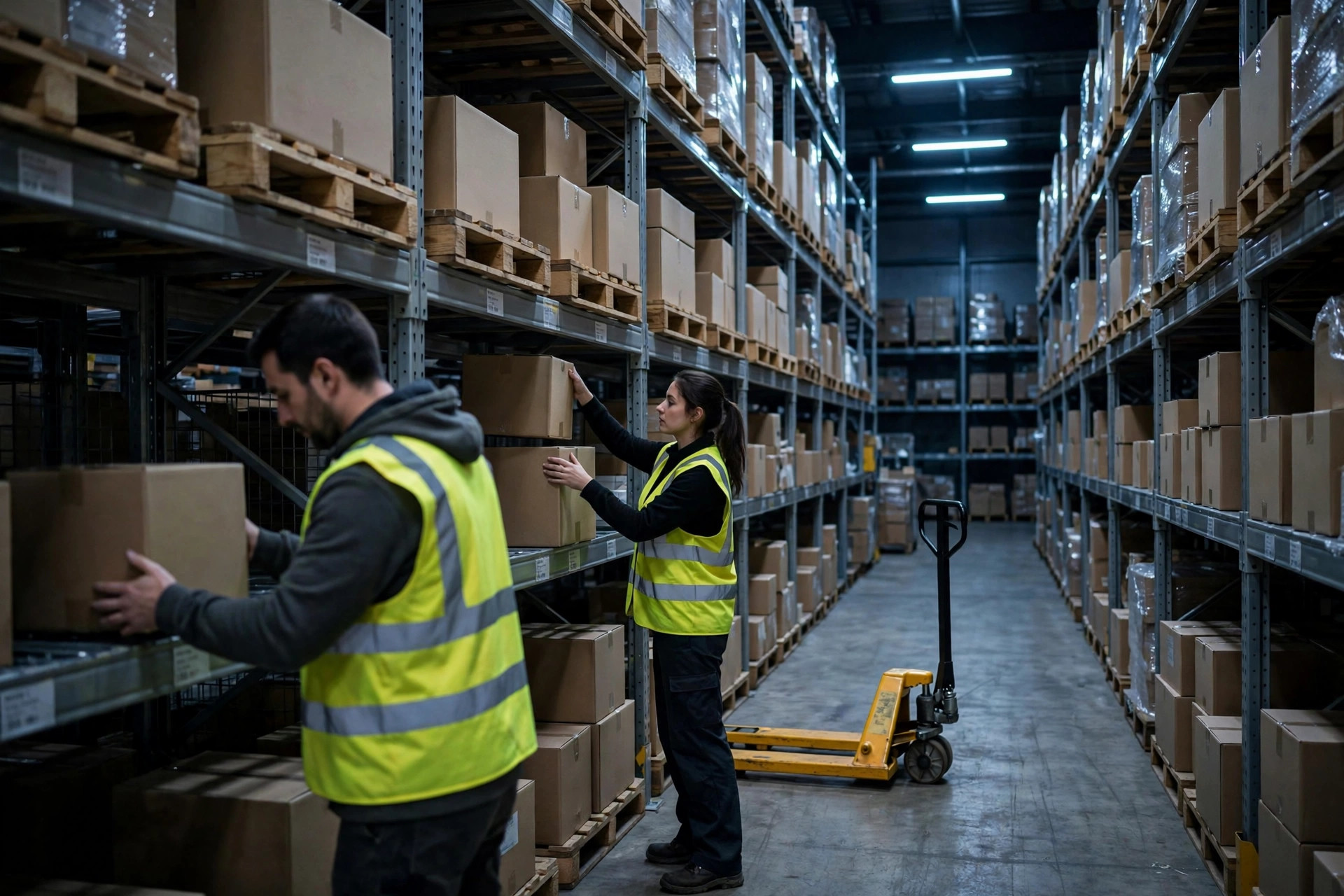
Here's my verdict up front: can picker training get a new hire productive in 3 days? It depends on the job. In a warehouse shipping full cases and full pallets, mostly single-SKU bulk orders — 3 days is plenty. In an eaches-picking operation with thousands of SKUs and half a dozen exception flows buried in the RF gun — forcing someone solo in 3 days is just buying errors with extra steps. Bluntly: training length shouldn't be set by HR's gut. It's set by task complexity.
This cuts two ways. Three days is too short if you just throw them in. But I've seen too many warehouses stretch training to two weeks and still get mispicks — because the problem was never the number of days. It was that there was no pass/fail bar anywhere in the process.
I've Seen Too Many Counterexamples: Two Weeks of Training, Still Mispicking
A few years back I was diagnosing a 3PL warehouse in Ontario, California. They complained their new hires were "unteachable." Their onboarding ran two weeks: week one watching safety videos and shadowing a veteran, week two "working on their own with the veteran nearby." Sounds responsible, right? The problem: across those two weeks there wasn't a single written or verbal test, not one line defining what "qualified" meant. The veteran said "looks fine," and the newbie went solo.
The result: in their first solo week, new pickers ran a 2.3% mispick rate (their own definition: wrong, short, or extra lines as a share of total lines picked). During peak season, a single month of reverse pickups, reships, and customer-service firefighting burned well into five figures. And management's conclusion? "Let's make training a little longer."
See the real problem? It was never about the days. Two weeks of training taught "the process" and tested nothing. With no pass/fail bar, "two weeks of training" and "no training" produce the same result.
The 3-Day Picker Training SOP: What Happens Each Day, and How Each Day Is Graded
In 2023 I visited a home-goods e-commerce warehouse outside Phoenix. Their pickers went solo in 3 days, and first-week error rates sat between 0.6% and 0.9%. The secret wasn't the day count — it was that every single day had a pass/fail bar. Miss the bar, repeat the day.
Step zero: tier the work. A 3-day SOP only covers "what you need today." Split picking tasks into two tiers: full-case and full-pallet bulk work gets a simplified version; eaches picking with heavy SKU variety and RF-gun exception flows gets the full version below.
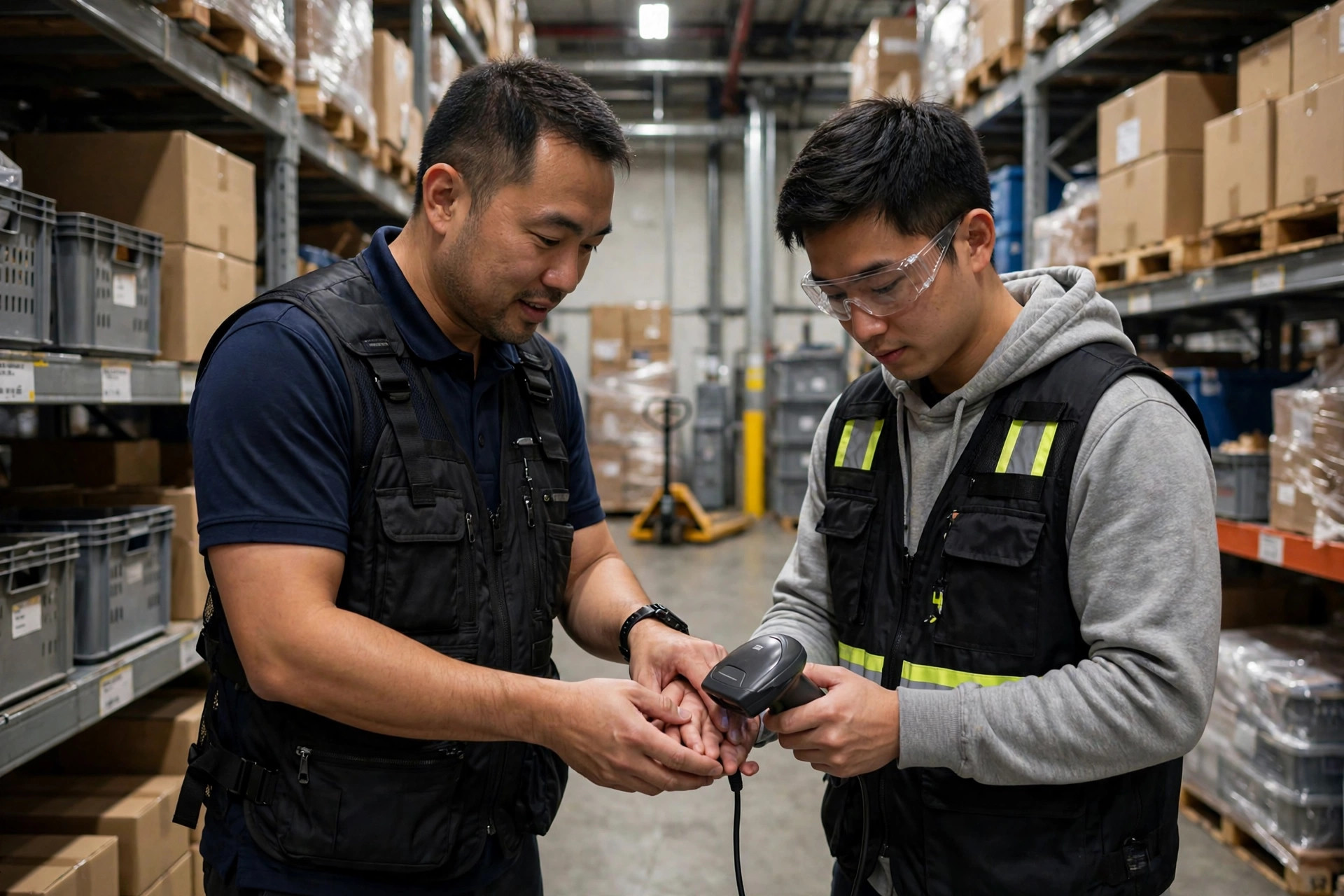
Day 1: Shadow. Hands off. The new hire follows a buddy all day and learns exactly three things: how the aisles flow, the logic of where SKUs live, and three RF gun actions — log in, accept task, confirm. Nothing else gets taught. Advanced system functions and exception handling wait until week two. Before clocking out, the buddy quizzes them verbally — 10 questions, 8 right to pass. Fail? Shadow again tomorrow.

Day 2: Semi-solo, buddy ten feet back. The new hire scans and picks on their own; the buddy stands ten feet behind, watching in silence — speaking up only if a mistake is about to happen. Target for the day: 150 to 200 order lines, zero defects. One miss and you don't pass. Sounds harsh? It's supposed to be. This day filters for carelessness, not for slow learners. Slow can be trained. Careless can't.
Day 3: Solo, but capped. Volume capped at half the normal rate, buddy spot-checks 20 lines every hour. The bar: full-day error rate at or under 1%, and UPH at 50% of the veteran average. Clear both, go fully solo on day four. Miss the error bar, repeat day two.
Buddy selection matters too: not your fastest picker — your lowest-error picker who can actually explain things out loud. And while someone's buddying, their own UPH target gets discounted 20%. Otherwise nobody volunteers. Buddying up while carrying a full quota? Only a fool takes that deal. Do this math first, or your "buddy system" is just a piece of paper.
The Pass/Fail Bar: Speed vs. Accuracy — Which Comes First
This cuts two ways, but my verdict is clear: in the rookie period, protect accuracy first. Speed is a week-four problem.
Why? Because in picking, muscle memory sets fast and is brutally hard to rewrite. Push a rookie to chase speed in week one and they don't learn "fast" — they learn shortcuts: grabbing from memory instead of scanning, grabbing two units at once to save a trip. Once those habits set, you'll spend a month unteaching them. Slow first, fast later — that's the cheaper side of the trade-off, every time.
Some ranges from warehouses I've actually worked with. Note the framing: these are experienced ranges, not industry standards — SKU profiles differ too much to judge your people by someone else's numbers. For eaches operations, a rookie first-week error rate of 0.5% to 1.5% is normal; above 2% means your training or your SOP is broken. For full-case operations, week one should already be under 0.5%. On speed, don't be greedy: 50% to 60% of veteran UPH in week one is fine; hitting 80% by week four counts as qualified.
What happens when someone fails the bar? They repeat — they're not fired. Fail twice, they move to a different role: packing, replenishment. Don't keep them on the pick line. A careless person won't become careful with 30 days of training. Put them somewhere the job fits them; everybody wins.
One Counterintuitive Take
Most people cost out training as the labor of those 3 days: the buddy's time, the new hire's wages. Bluntly, that's the small money. The real cost is the errors made by a poorly trained picker working solo in weeks two through four — one mispicked order, with the reverse pickup, the reship, customer service, and the bad review, costs five to ten times a clean fulfillment (my experienced magnitude — run your own numbers). The three days of wages you "saved" on training won't cover one peak-season afternoon of misships.
So when I hear "two weeks of training," what I often hear is management laziness dressed up as thoroughness: problems that should have been solved with an SOP and a pass/fail bar, papered over with "they'll get it if they watch a few more days." It's never the people who can't learn. It's the process with no grading bar.
Next time your warehouse hires, don't ask HR "how many days is training." Ask one question: "Which day has the test, and what happens if they fail it?" If there's no answer, 3 days and 30 days make no difference.
By Lao Mi, Supply Chain Veteran (20 yrs)