Open the ledger before you open the vendor deck. The phrase ai wave planning warehouse labor gets sold with a lot of theatre, but on my desk it is one book with two columns: which cost line does it actually move, and which cost line does it add? Intelligence that cannot move a line in the ledger is a demo, not an investment.
First, be precise about what is being optimised. A traditional wave is assembled by human habit: orders are cut off at set times and grouped by zone, carrier, and service level, then released to the floor. The flaw is that release timing rarely matches the labour curve. Staff wait for work in the morning, then a large wave lands in the afternoon and the whole building works overtime. AI wave planning changes two things: when waves are released, and what each wave contains. It uses forecast order inflow, the picking difficulty of different order types, current staffing, and equipment status to decide timing, size, and mix, so that picking workload follows the labour curve instead of fighting it. It does not make anyone pick faster. It reduces the hours where people wait for orders and orders wait for people. That distinction decides whether the money is real.
The First Ledger: Where AI Wave Planning Warehouse Labor Saves, and Where It Charges
The savings come from exactly three places. Everything else is marketing. First, overtime. Smooth the workload and part of the peak that used to be carried by evening overtime can be absorbed inside the normal shift. Second, temporary labour. When peaks are unpredictable, a warehouse staffs defensively and keeps extra hands as insurance. A reliable forecast lets you trim that insurance layer. Third, idle gaps downstream. When release rhythm is right, packing and checking stations stop alternating between overload and starvation, so the same headcount clears more orders per hour.
Now the charges, all of them, including the one vendors leave off the quote. Subscription or licence fees. Implementation and integration with your existing systems. The unglamorous work of cleaning order and labour data. Training, plus the productivity dip during the first weeks. And the line nobody quotes: the correction cost when the forecast is wrong. That cost is real, and it lands on your ledger, not theirs.
Here is a clearly labelled hypothetical calculation — not any real warehouse's data, so replace every assumption with your own numbers. Suppose a mid-volume warehouse covers peaks with overtime and temporary staff, and AI wave planning cuts a portion of peak overtime and a few defensive temporary positions: call the annual labour saving A. Call the annual total of software, amortised implementation, training, and maintenance B. The decision is one ratio: A divided by B above one pays back; near one, you are working for the vendor; clearly above one, it deserves a serious conversation. No currency figures here, deliberately — wage structures differ too much for any published number to be honest. Your own version takes twenty minutes with last month's overtime hours, temporary headcount, and a full vendor quote.
Break-even follows order volume and peak shape, roughly like this:
| Order scale (qualitative) | Labour peak pattern | The AI wave planning account |
|---|---|---|
| Small, steady volume | Little peak or valley; people and orders both idle | No overtime to save; B is pure cost — do not buy |
| Medium volume, clear peaks | Quiet mornings, explosive evenings, routine overtime | A comes from peak shaving; payback possible — calculate carefully |
| Large volume, many channels and service levels | Wave mix too complex to plan by hand | A comes from peak shaving plus mix optimisation; best payback odds |
The principle is blunt: AI wave planning earns money from the gap between peaks and valleys. If your warehouse has no such gap, there is nothing for it to earn, however beautiful the slides look.
Two Cases: One Ledger Done Right, One Line Item Missed
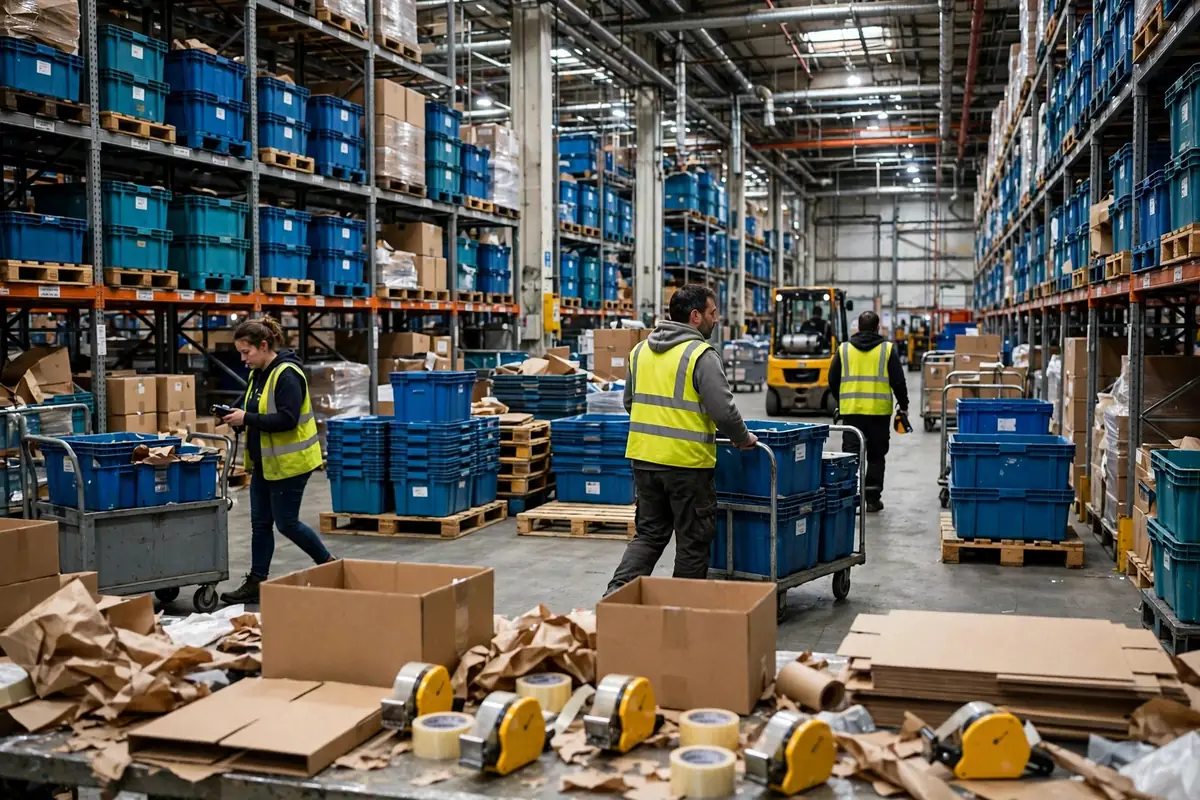
Case one. In 2023 I reviewed the numbers for a home-goods distribution warehouse, details anonymised. Their problem was not headcount. It was release discipline. The sales side cut orders off in one afternoon batch, a huge wave hit the picking area at once, aisles clogged, and everyone worked overtime at night — while mornings often had pickers standing around waiting for work. Before buying any intelligent system, they did one thing: they replaced two large daily waves with smaller waves timed to the labour curve, supported by a simple estimate of order inflow. Overtime hours fell in the first month. The lesson matters for every buyer: the most valuable logic inside AI wave planning — matching workload to the labour curve — can be captured largely with rules and discipline in a warehouse of the right scale. When that operator later evaluated an AI system, they paid only for the remaining mix optimisation, and the ledger was clean because they knew exactly what they were still missing.
Case two. In 2024 a consumer-electronics accessories warehouse had the opposite experience. Their volume was respectable, they bought wave optimisation with forecasting, and three months later they told me it had changed nothing. The fault was not the algorithm. Their promotions were decided at short notice — major campaigns sometimes confirmed to the warehouse only days ahead — while the forecast model had been trained on calm historical patterns. Predicted inflow and real inflow were two different stories. Waves were built on the wrong forecast, staffing followed the wrong waves, and the first peak week ran worse than the year before until supervisors took manual control. Nobody had asked the prior question: were this operation's orders forecastable at all?
When the Forecast Is Wrong: The Failure Mode of AI Wave Planning Warehouse Labor
This is the section I care about most. When the forecast is right, everyone is a hero. When it is wrong, somebody's ledger pays. The failure mode is consistent. Over-forecast, and waves are released too early and too large: half-picked waves pile up, aisles block, checking stations drown in staged work, and the building looks busy while shipping little. Under-forecast, and waves that should have been released early sit in the pool until the cut-off forces everything out at once — and you are back to whole-building overtime, the exact disease you paid to cure. Worse, the error cascades. A wrong wave throws packing, weighing, and carrier handover off rhythm behind it. One forecast error, and the entire warehouse runs the wrong race all day.
So before buying, fix three escape routes in writing. First, keep manual override: a supervisor who sees the forecast diverging must be able to take over wave release immediately, without waiting for the system to correct itself. Second, demand confidence signals: on days the system itself is unsure, it should say so early, and you staff those days conservatively. Third, run it in shadow mode first: the system advises, humans operate the old way, and you compare its advice against reality for a defined period. Only grant it control after its advice has earned it. Without these three, one bad forecast in peak season will cost you more than a year of licence fees in chaos and overtime.
Here is the counterintuitive judgement I will defend in any budget meeting. The ceiling of AI wave planning is set by the predictability of your orders, not by the price of the algorithm. An operation with a stable promotion calendar, stable channel mix, and stable cut-off rules will get results from ordinary tools. An operation where promotions are improvised and channels change weekly should fix its management rhythm before buying intelligence. Reverse that order, and every purchase is tuition.
A Conclusion You Can Calculate for AI Wave Planning Warehouse Labor
I will close the way I always close: with a sequence you can compute, not a feeling. Question one: what were your overtime hours and temporary labour costs over the last three months? That is the ceiling of A; if you cannot produce that number, stop the ROI conversation. Question two: are your peaks genuine demand peaks, or artefacts of your own cut-off habits? If artefacts, fix cut-off discipline first and take the free savings. Question three: does your predictability survive a shadow test? Compare forecast against actual for several weeks and look at the gap with open eyes. Question four: spread the vendor's full-cycle price into an annual B, compute A divided by B, and discount A conservatively, because demo savings are always quoted at the ceiling.
Finish those steps and you hold a ratio plus conditions, not an impression. Clearly above one, conditions met: buy it, and hold the vendor to the shadow-test numbers. Near one: do the free wave-discipline work first, survive a peak season, recalculate. Below one: close the demo. That money would be spent unfairly — the conclusion is already written in your ledger.
By Lao Zhou, Logistics Cost Analyst