Bluntly, here is my conclusion up front: in most warehouses, slowness does not come from one step being especially slow. It comes from waiting between steps. An order lies in the system, waits in the picking queue, waits at the packing bench for checking, waits at the dock for a truck, and those waits added together usually exceed the time anyone actually spends working on it. If you want order cycle time reduction warehouse results, do not buy equipment first. Work through four choke points one by one and cost each of them: wave release, picking queues, the packing bottleneck, and the carrier cutoff. Whichever choke point eats the most time gets fixed first.
I have seen too many warehouses start by talking about automation, going around in circles over conveyors and robots, while cycle time barely moves. One warehouse was like that: the picking area looked busy, everyone walking, yet an order still took most of the day from placement to outbound. When we followed a few orders, we found they entered the system in the morning but the wave did not release until the afternoon. Pickers were waiting for waves, waves were waiting for orders to accumulate, and half a day simply evaporated. The equipment was fine. The sequence was wrong.
Wave Release and Order Cycle Time: Orders Are Not Unpicked, They Are Unreleased
The first choke point is wave release. Many warehouses release waves on a fixed schedule, say one batch in the morning and one in the afternoon. It sounds tidy, but it manufactures waiting time. An order arrives at ten, the wave releases at noon, and those two hours are pure waiting. Worse is the "wait until the batch fills" mindset: holding orders until enough orders for the same customer or zone accumulate, then releasing them together. By the time the batch fills, the carrier cutoff is nearly here.
The diagnostic is direct: take ten orders and measure how long each waited between entering the system and entering a wave. If that wait commonly exceeds an hour, the wave policy needs changing. The fix is not necessarily real-time release, which is unrealistic for a small warehouse. That is the first place order cycle time reduction warehouse work should look. Try rolling release, say once an hour, or work backward from the cutoff: however much time remains before cutoff, release whatever must go. The picking distance saved by a fuller wave never repays half a day of customer waiting. This is a two-sided thing: fuller waves raise picking efficiency per trip, but they lengthen order waiting time. Protect the promise time first, then efficiency. That order cannot be reversed.
Picking Queues and the Packing Bottleneck: Busy Is Not the Bottleneck
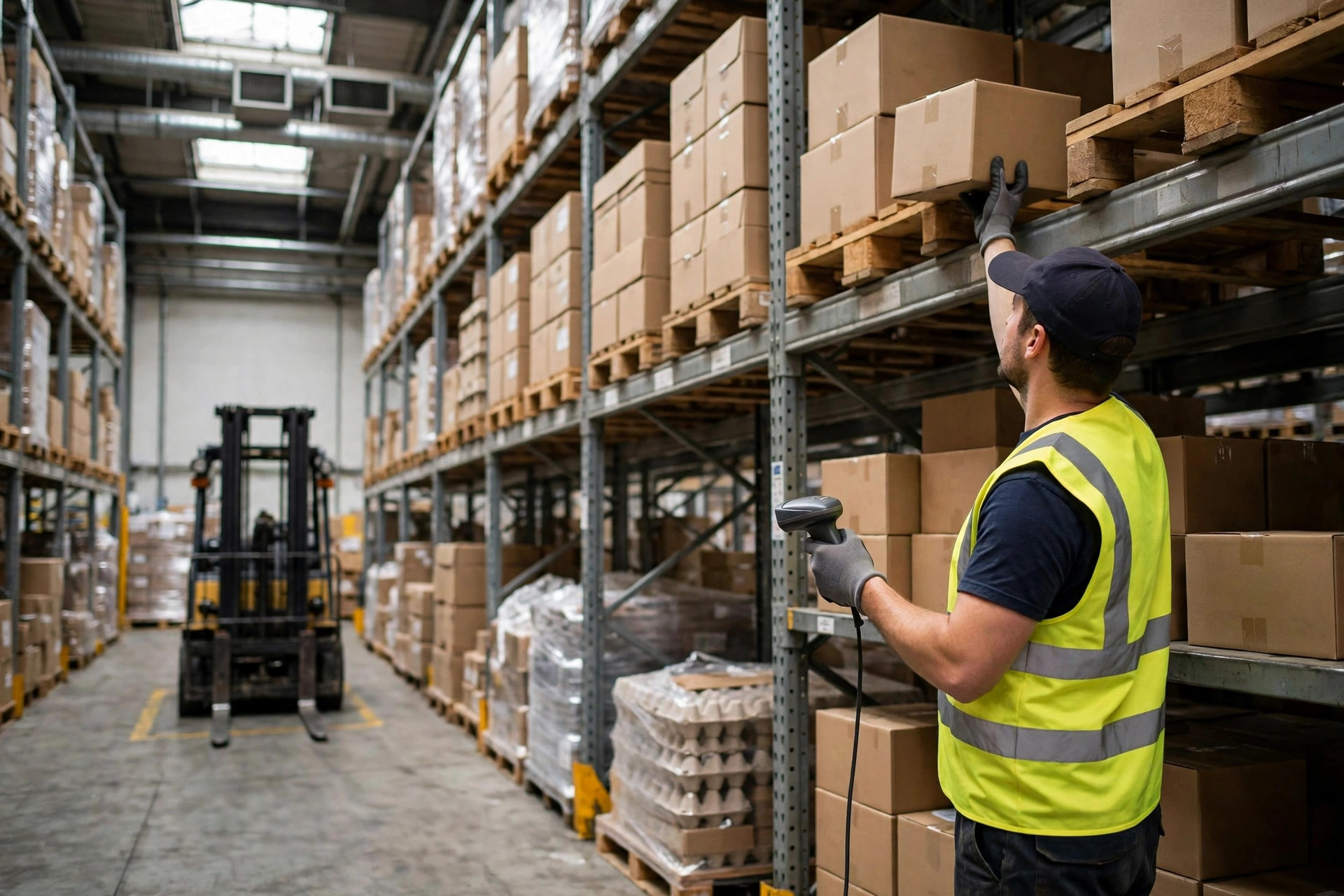
The second choke point is picking queues. A crowded picking area does not prove picking is the bottleneck. Watch whether pickers are picking, or waiting for stock, waiting for an aisle, waiting for a check. Once, following orders, we found pickers spending nearly a third of a morning waiting for lifts and aisle clearance, with actual picking taking less than half their time. Adding people does not fix that kind of queue. More people only crowd the aisles further. The fix is staggered wave release and moving fast-moving products to nearby pick slots, so picking paths stop colliding.
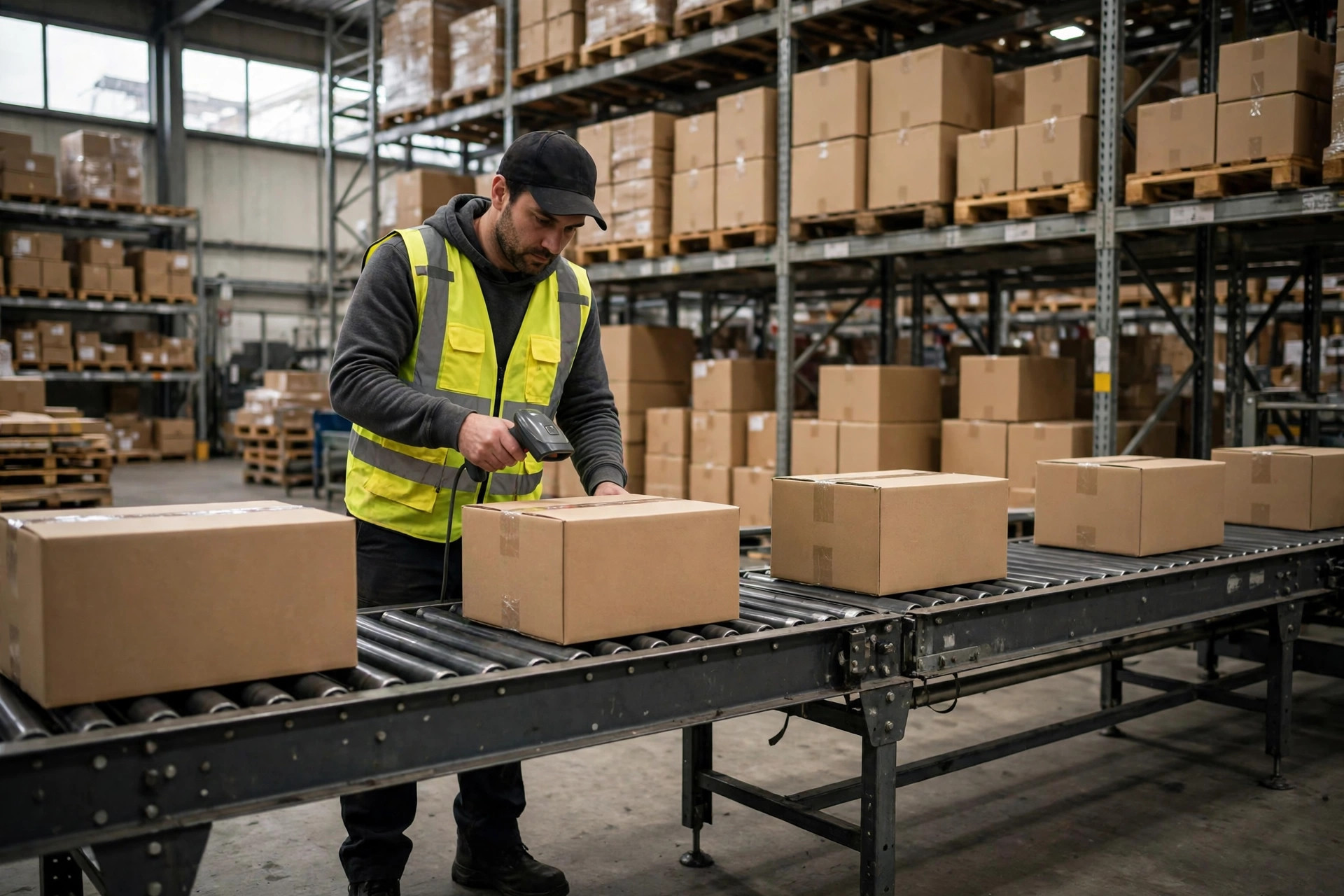
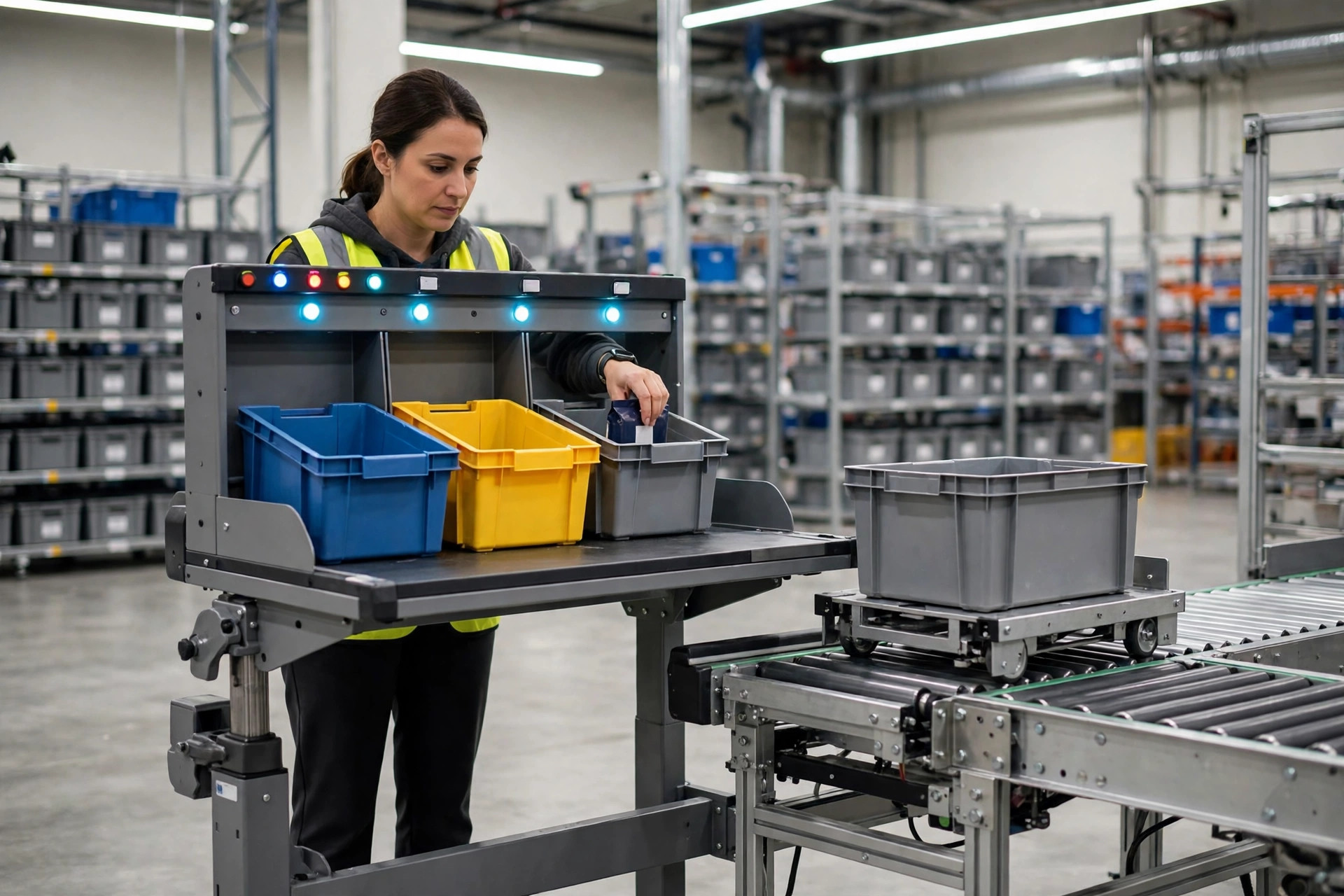
The third choke point is packing. The packing bench is often the quietest bottleneck in the building: picking feeds it steadily, while one person weighs, labels, and checks each parcel, and the pile grows as cutoff approaches. I have seen a warehouse where packing coped fine all day, then queued up every afternoon before cutoff, with picked goods stacked at the bench and trucks waiting at the dock, while orders simply could not get out. Cost it this way: measure how many orders the bench handles per hour, then measure how many arrive per hour at peak. If arrivals exceed throughput, accumulation is inevitable. The fix is also two-sided: adding a person at peak is the simplest move, but over the longer term, splitting weighing, labeling, and checking into a line, or routing simple orders through a fast packing lane, lasts longer. Adding people is nothing to be ashamed of, but if adding people is all you ever do, the bottleneck stays put.
| Choke point | How to measure it | Fix first |
|---|---|---|
| Wave release | Wait from system entry to wave entry | Rolling release, work backward from cutoff |
| Picking queues | Picker time waiting for stock or aisles | Stagger waves, move hot products closer |
| Packing bottleneck | Peak arrivals versus bench throughput | Peak staffing, fast lane for simple orders |
| Carrier cutoff | Gap from ready freight to loading | Confirm cutoff daily, reserve loading windows |
The Carrier Cutoff and Order Cycle Time: Freight Ready, Truck Gone
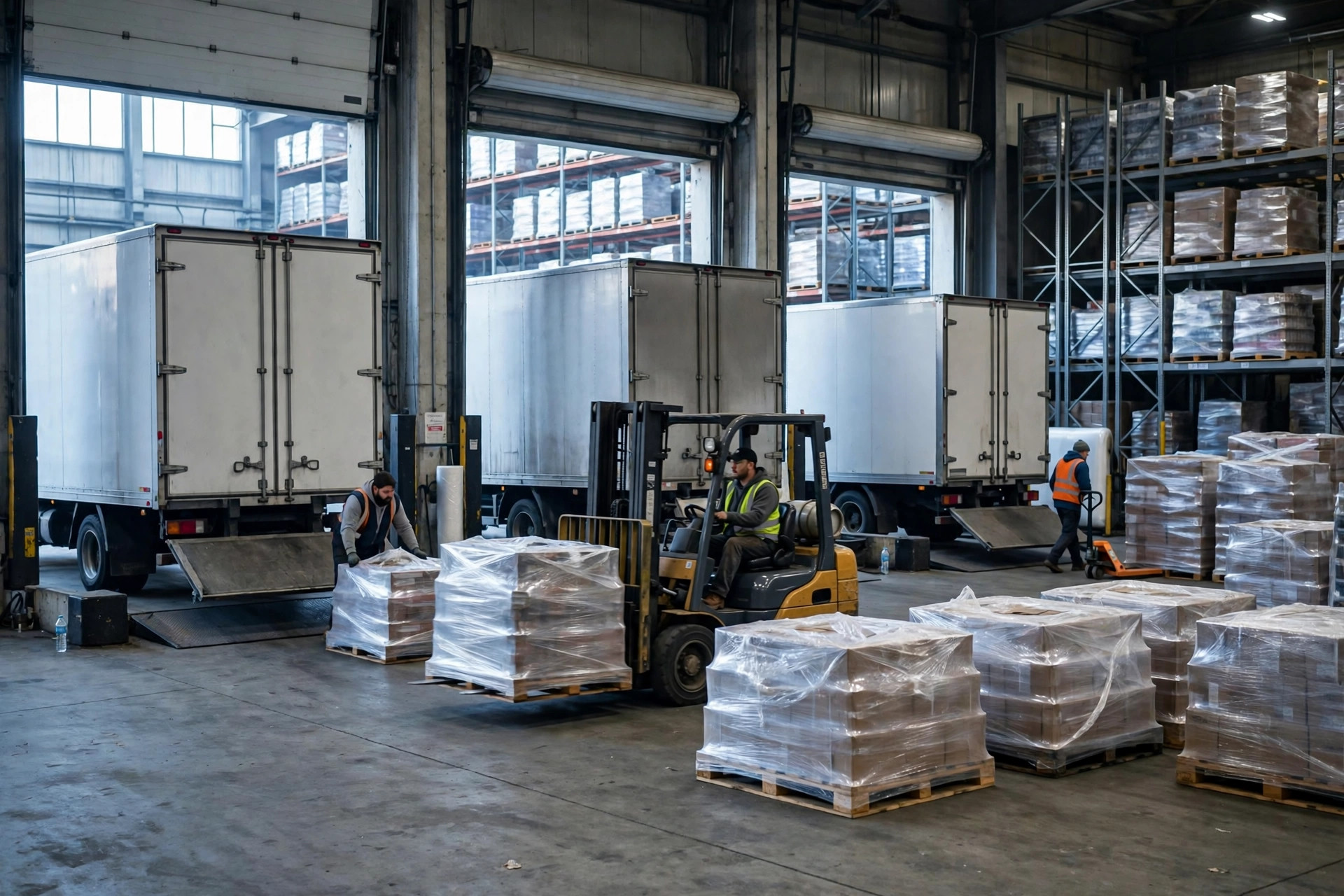
The fourth choke point is the carrier cutoff. This is the most unjust kind of delay: the freight is ready, the labels are printed, but the truck misses the cutoff because it moved earlier or the dock queued up, so everything waits for the next run. The customer still sees a late delivery, while the warehouse feels it finished on time. I lived through this once when a cutoff moved half an hour earlier and nobody told the picking team, and three truckloads of freight rolled to the next day. After that we set a rule: cutoff time is confirmed every morning, written on the whiteboard, and any change goes to the group chat immediately. No verbal relay.
Diagnosing all four choke points takes a simple calculation: record five timestamps per order, system entry, wave entry, pick complete, pack complete, and loaded. Subtract them and four waits appear. Whichever wait is longest is where the problem lives. Do not go by feel and say "picking is slow." The numbers may show picking is not slow at all, and the real wait is waves holding for a full batch. Cost the segments, not just the total, because that is how order cycle time reduction warehouse work actually finds the problem. A fine-looking total can hide a problem inside one segment forever.
And here is a counterintuitive judgment: a shorter cycle is not always better. Past a certain point, each hour saved costs steeply more: extra staff, overtime, rising error rates, checking time squeezed out. The goal of cycle time reduction is not "as fast as possible." It is "stably fast." A customer can accept two-day delivery, but cannot accept sometimes one day and sometimes four. Squeeze the variation down first, so every order lands inside its promise, and only then worry about whether the average is fast. One line to close: if you ask me where the cycle gets stuck, my advice is, do not ask how to go faster first. Ask where the time goes, segment by segment, and fix the segment that eats it.
By Lao Mi, Supply Chain Veteran (20 yrs)