Here is my answer up front: AI warehouse picking route optimization is worth doing, but do not expect it to cut your picking cost on its own. To put it bluntly, the algorithm saves walking, not picking. Whether the walking it saves turns into money depends on your order profile, your slotting, and whether your pickers actually follow the route. Miss one of the three, and the steps you saved exist only on paper.
This has two sides. People who back the algorithm will show you a number: a widely cited breakdown of picking time puts travel at roughly 55 percent, searching at 15 percent, and extracting the product at 10 percent, with the rest going to other tasks. That split traces back to a practitioner's estimate quoted in a warehousing textbook, not a controlled measurement, but the direction is right. Pickers spend most of their day walking. People who doubt the algorithm will say that the prettiest route means nothing if pickers do not follow it, or if the slotting itself is a mess. Both sides are telling the truth.
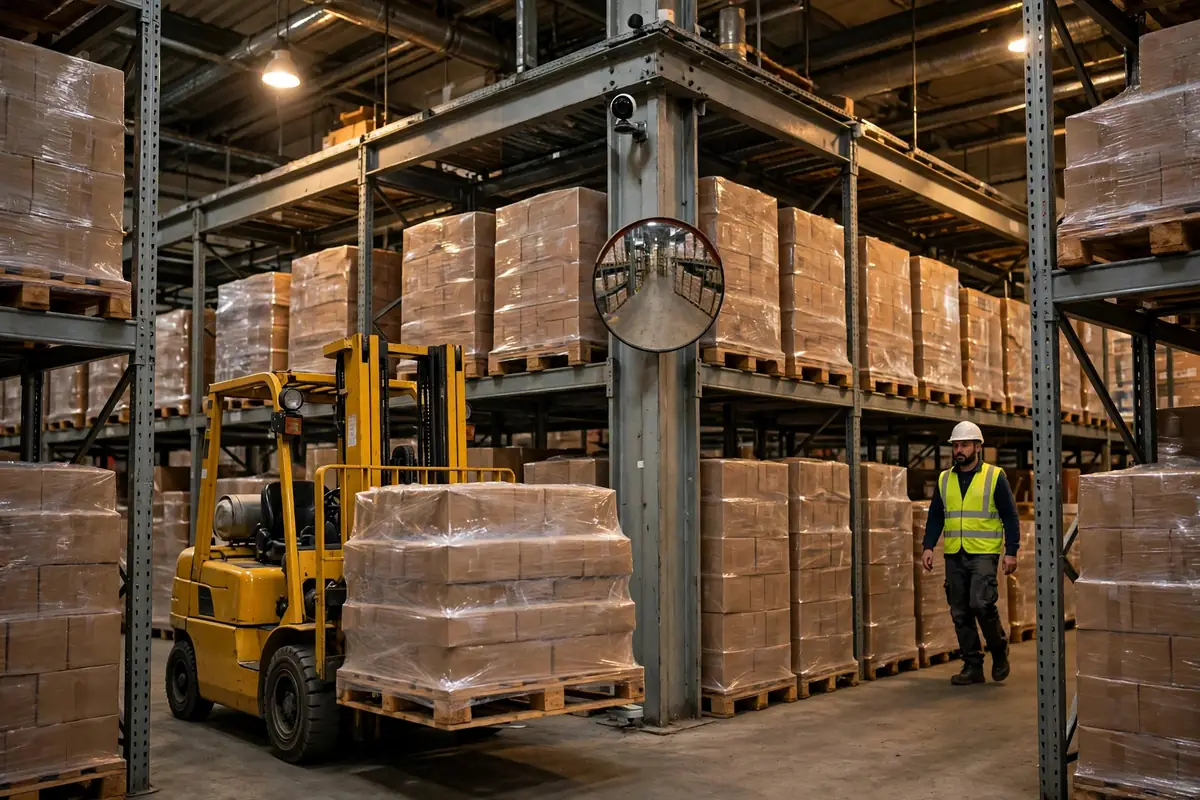
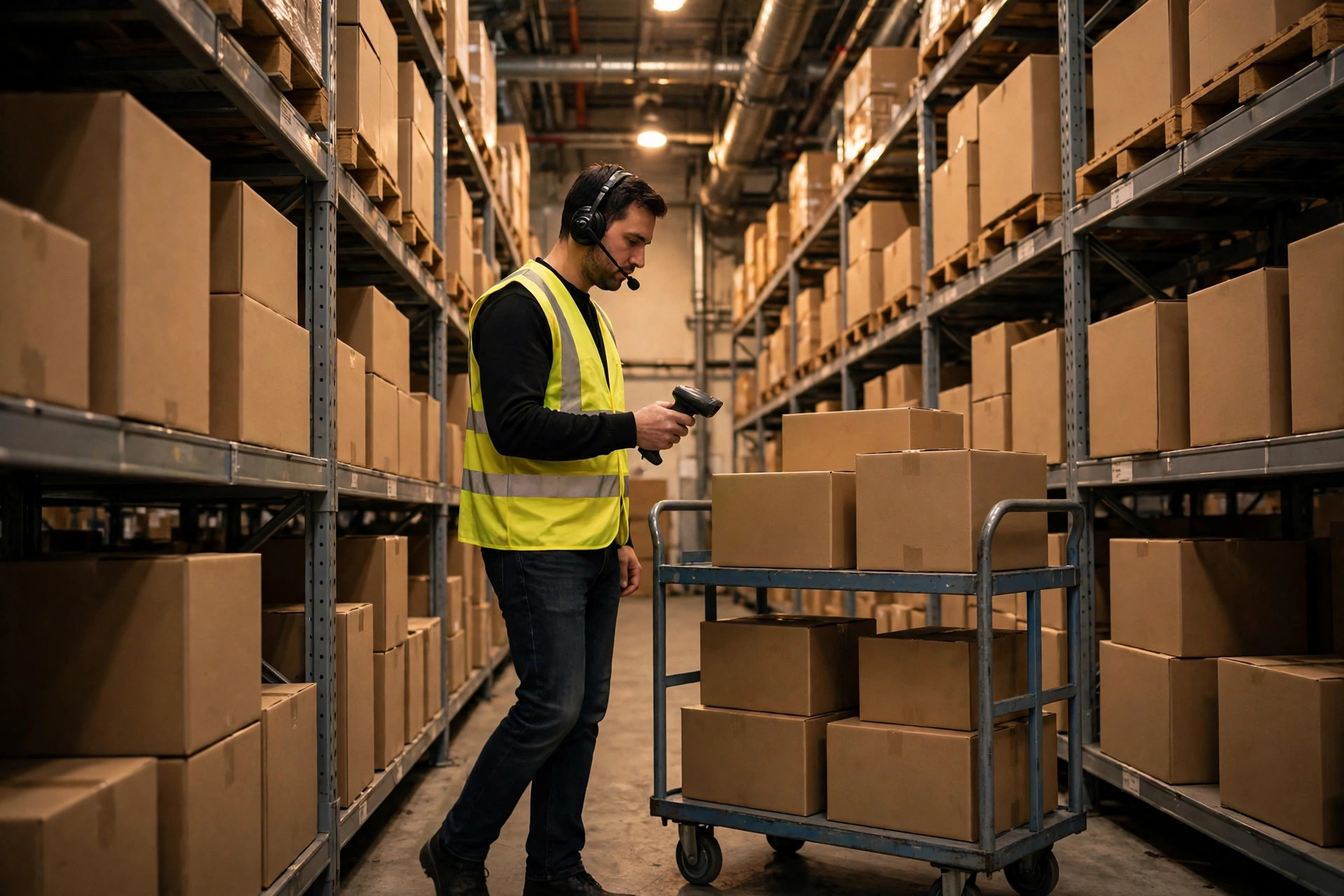
I have seen too many warehouses pay tuition on this one. In 2019, I visited a 3PL in Ontario, 80,000 square feet, about 4,000 orders a day. The owner had just bought a picking module with route optimization, and the demo looked beautiful. The routes on the screen flowed like they were drawn by hand. Then I walked a shift with a picker and saw the problem: the system's route ran through an aisle where a replenishment cart was parked, so pickers detoured around it every single trip. The detour cost more walking than the algorithm saved. The owner was looking at "theoretical savings" on a report. I was looking at a detour that happened every day.
AI Warehouse Picking Route Optimization: First Work Out What It Actually Saves
The algorithm saves three things. The first is walking distance, because the route stops following location sequence and starts following the shortest path. The second is repeat trips down the same aisle, because batch picking folds several orders into one pass. The third is the empty walk back, because the system builds the return trip into the route and picks up orders along the way.
All three depend on clean data. One wrong location, and the algorithm sends a person to the wrong place. One wrong inventory count, and the picker arrives at an empty slot and walks back, giving up everything the route saved. There is a more common problem: fast-moving products slotted at the far end of the building. The smartest algorithm can only find the shortest path inside a bad layout. Good navigation cannot fix a road that was built in the wrong place.
In 2023, a home goods client told me they had run route optimization for six months and picking productivity had risen less than 5 percent. I walked the floor, and the problem was not the algorithm, it was the slotting. Their A-class products, the ones that moved fastest, were spread across six aisles, two of them at the far end of the building. We did one round of re-slotting first, moving A-class products into the two aisles nearest packing, changing nothing else. Two weeks later, average walking distance per order had dropped by nearly 30 percent, and only then did the algorithm start to earn its keep. The order cannot be reversed: fix the slotting first, then talk about route optimization.
The Shortest Path Is Not The Fastest Path
This is the trade-off that gets ignored most often in AI warehouse picking route optimization. The algorithm optimizes for the shortest total distance. The floor optimizes for the most orders out per hour. Those two goals agree most of the time, and they fight the rest of the time.
Take a simple case. The shortest route may ask a picker to reverse direction twice in one aisle, because two different orders have items in that aisle a few locations apart. On distance, that is optimal. From a human point of view, the picker has to turn around twice and stop and restart the cart twice. An experienced picker would rather walk an extra 20 meters and clear the whole aisle in one pass. The algorithm does not know that. It only knows meters.
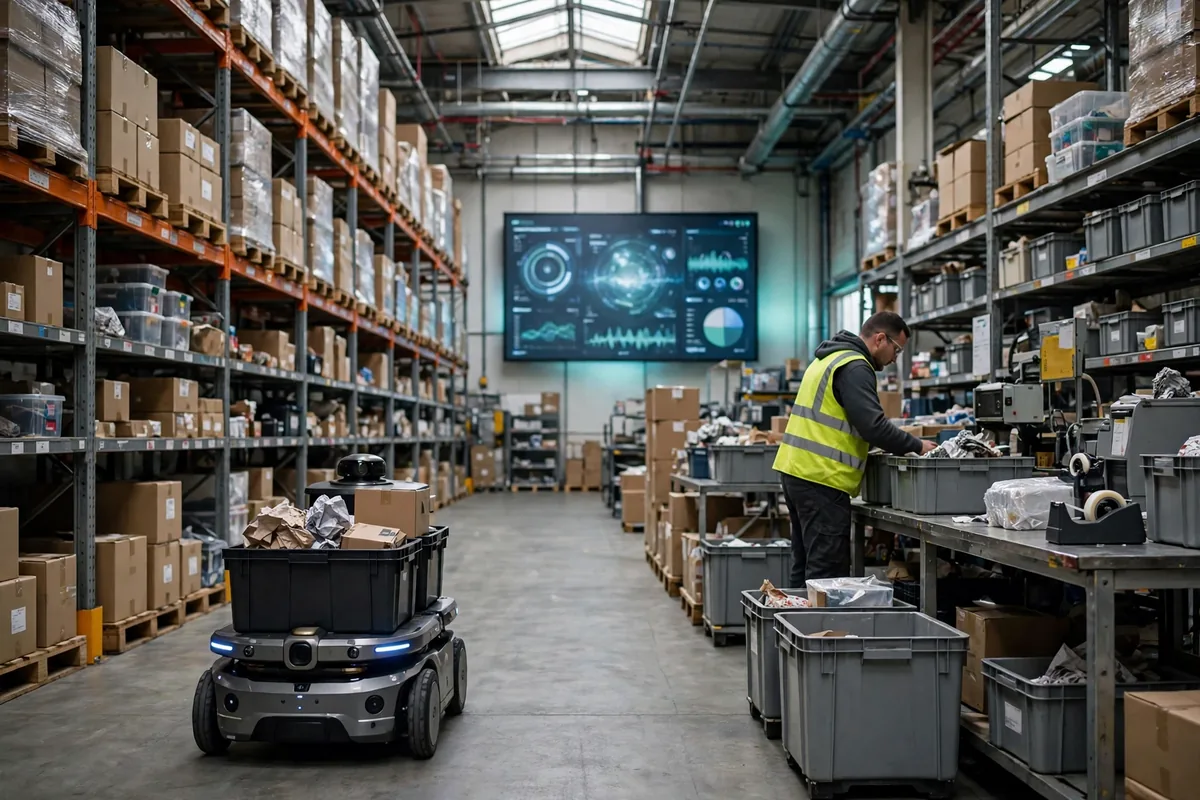
Congestion is the other blind spot. The system gives ten pickers ten optimal routes. At peak, all ten end up in the same aisle, waiting on each other, waiting on a forklift, waiting on replenishment, and the distance saved gets spent standing still. A good system accounts for live congestion in the aisle. A weak one only draws straight lines. That is why I always tell buyers to ask the vendor one question before signing: does your algorithm see the live state of the floor, or only a static map of locations? If it only sees the map, think twice no matter how low the price is.
Is AI Warehouse Picking Route Optimization Worth It? Check Three Numbers
Ignore the vendor's brochure and measure three numbers yourself. The first is walking distance per order, measured for two weeks before and two weeks after go-live. Measure the same order profile; peak and off-peak numbers cannot be compared directly. The second is order lines picked per picker per hour. If that number goes up, the improvement is real. The third is pick accuracy. Routes change, rhythms change, and if accuracy drops, no amount of saved walking makes up for it.
Here is the way I usually run the math. These numbers are an illustrative example to show how the calculation works:
| Item | Illustrative example |
|---|---|
| Pickers | 20 |
| Walking distance per picker per day | 8 km |
| Walking distance saved after optimization | 20% |
| Walking time saved per day (at 4 km per hour) | 20 people × 1.6 km ÷ 4 km per hour = 8 hours |
| What that equals in labor | Roughly one full shift |
Eight hours sounds like a lot, but whether it turns into one fewer person on the schedule depends on whether the saved time comes in one block. If twenty people each save 24 minutes scattered across the whole day, you cannot cut a shift. Those eight hours only convert into labor savings when orders come in concentrated waves. So when you do the math, do not just add up the hours. Ask whether the saved time can be assembled into a complete shift.
There is one more counterintuitive point: small warehouses often get less back from AI picking route optimization than large ones. Not because the algorithm is bad, but because the routes in a small warehouse were never complicated. Experienced pickers already walk close to the optimal path, so there is little left to squeeze. The value shows up in mid-sized warehouses doing thousands of orders a day across tens of thousands of locations, where a tangled route costs real money. If you ship under 50,000 orders a month, do your ABC analysis and fix your slotting first. Route optimization can wait.
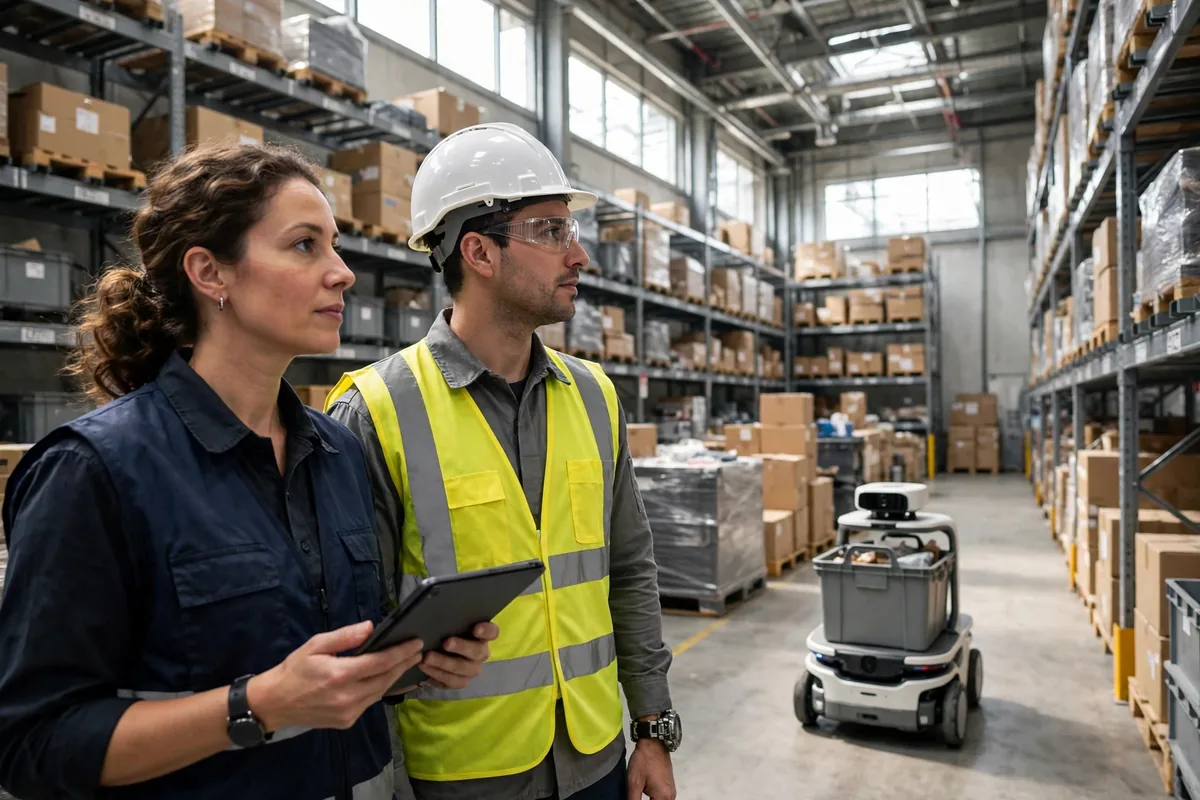
It comes back to one question: are you buying a shorter route, or faster orders out the door? If the answer is the second one, do not stare at the demo. Walk a shift with a picker first and see what they are actually walking around every day.
By Lao Mi, Supply Chain Veteran (20 yrs)