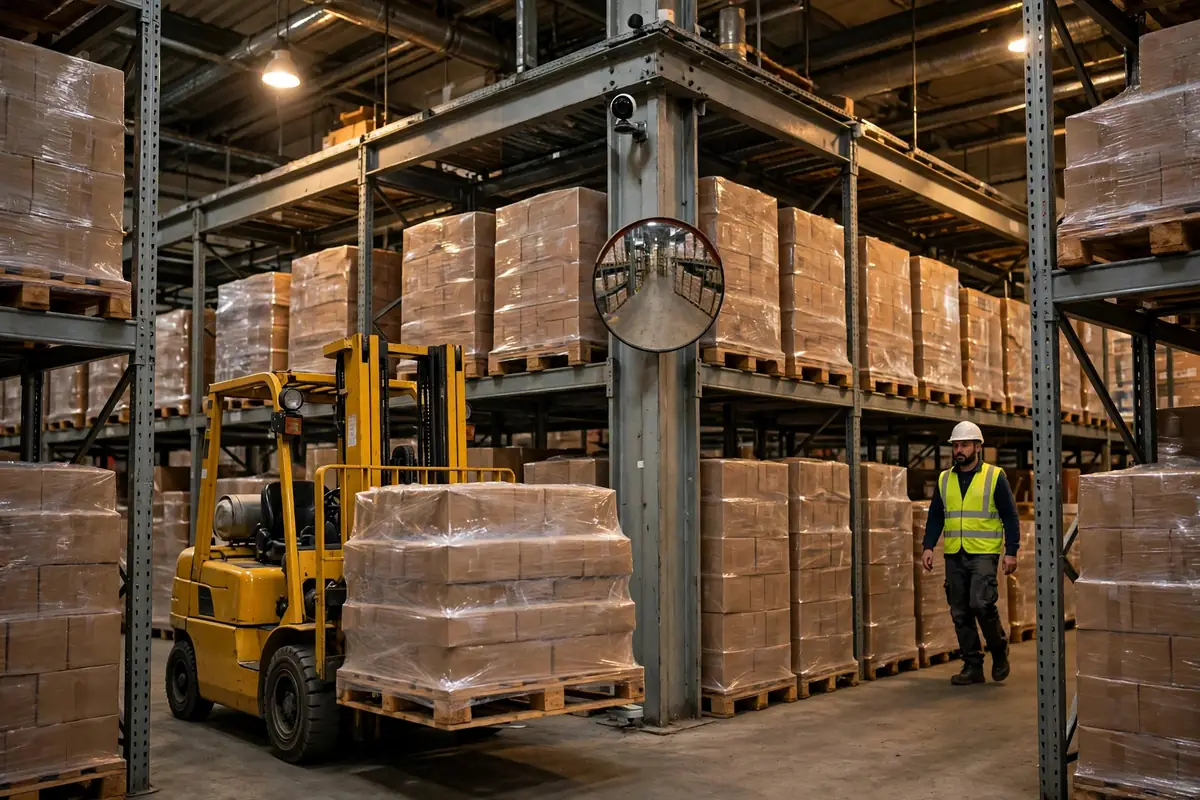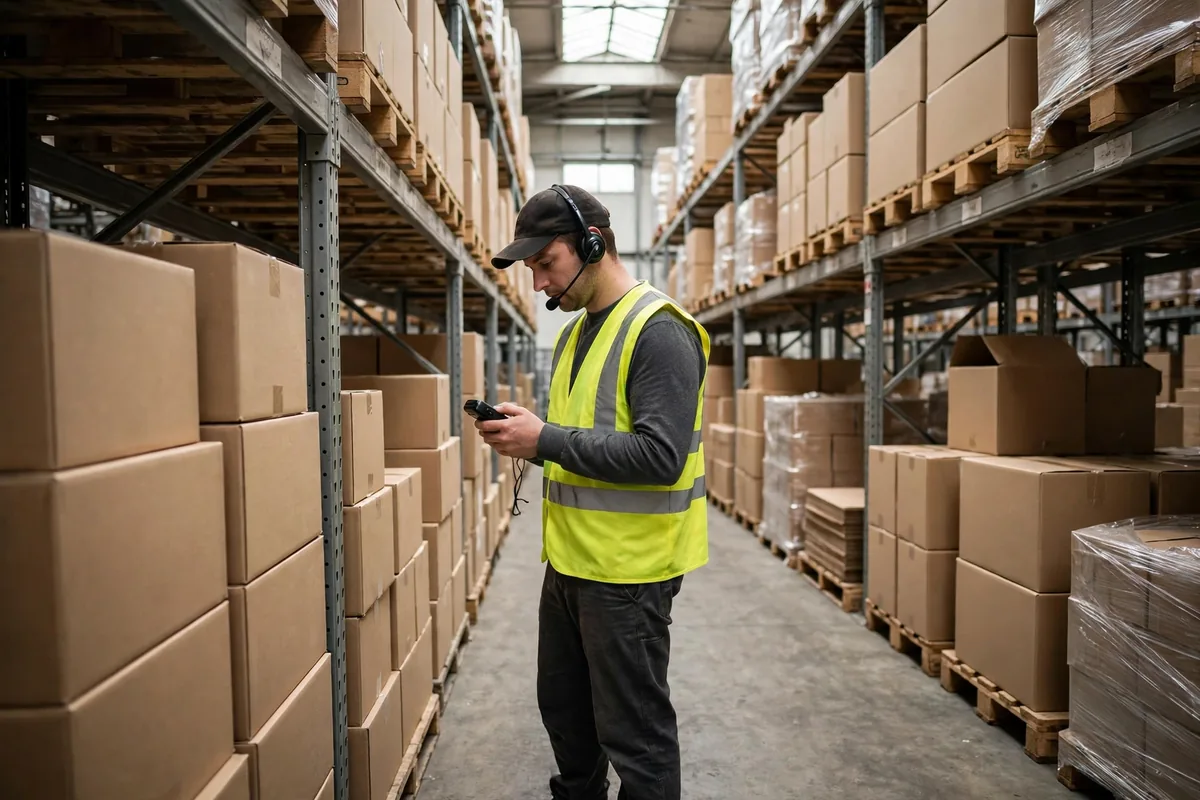
We had a client in the Inland Empire, a 3PL running home goods out of a roughly 40,000-square-foot warehouse, pushing three or four thousand orders a day in peak season. Last fall the owner called me, excited: he wanted to roll out an AI voice picking assistant warehouse-wide. Pickers would wear headsets, the system would call out the location and the quantity, and their hands would be completely free. Sounds beautiful, right? I told him one thing: don't sign yet. Pilot it in one zone, and run it through a full peak season first.
He half-listened. He ran the pilot, but only for two weeks. The numbers "looked faster," so he rolled it out across the whole warehouse. The first week of peak season is when things went sideways.
Mispicks went up, visibly. The one I remember best: a picker heard "aisle zero-three, slot seven" as "aisle zero-three, slot one," and grabbed a table lamp instead of a floor lamp. The customer sent a photo and complained. We paid the return shipping, we re-picked the order, and a customer service rep spent an afternoon apologizing. The owner later worked it out: one mispick cost him more than the labor saved on dozens of correct picks. That was the week he learned that picking by ear can be fast, but one mistake costs far more than being slow.
So what went wrong? The equipment was fine. The warehouse was too loud. Forklift backup alarms, tape guns at pack-out, someone shouting across the aisle — it all floods the ear. The system calls out a string of location digits, you miss one, the whole pick is wrong. And unlike a paper list, you can't just glance back to double-check. You have to ask the system to repeat the whole instruction, and by then you've given back whatever time you saved.
Here's the part vendors never tell you: their demo is always recorded in a quiet conference room. In a real warehouse, a picker wears that headset for a full shift. Ears get tired. Brains get tired. The worst window I've seen is mid-afternoon, around three or four o'clock — that's when errors cluster. Attention is not a machine. It fades in the afternoon, and a voice system has no way to know that.
Where an AI Voice Picking Assistant Actually Saves Money
So is voice picking a trap? No. The trap is rolling it out everywhere without asking where it fits.
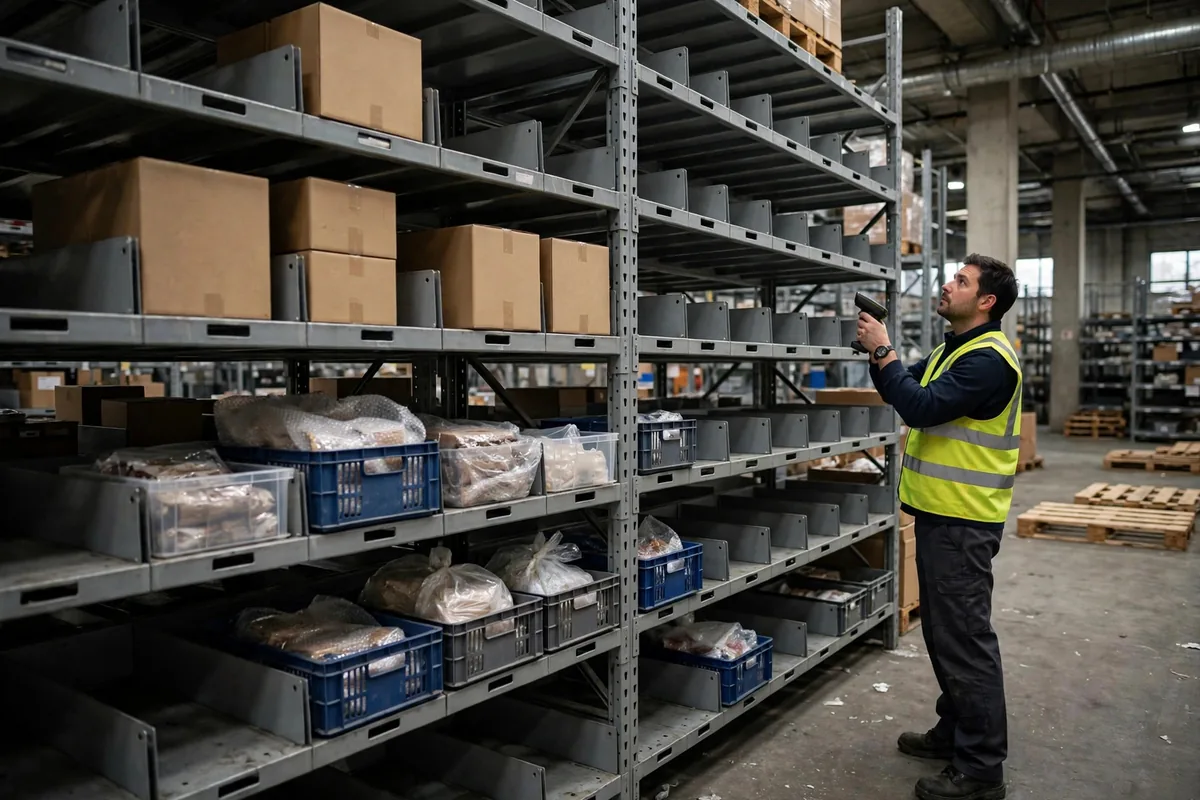
Another client of ours, an apparel e-commerce 3PL near Dallas, runs a smaller warehouse with far messier orders: often one or two pieces per order, and more product types than anyone can count. When they adopted voice picking, they did two things differently. First, they kept voice plus scan verification — the ear gives the instruction, the hand scans to confirm. A beat slower, far fewer mistakes. Second, they used voice only in the pick zone. Packing and final checks stayed visual, because at that point you want eyes on the product.
Peak season held up. And the saving surprised me: it wasn't pick speed, it was training. A new hire used to shadow an experienced picker for about a week before working alone. With the headset walking them through each step, most new hires could run a zone on their own in about three days. When you bring on a dozen or twenty temps for peak, that training time is real money. The client did the math and found the biggest saving wasn't speed at all — it was hiring and onboarding cost.
So here's my contrarian take: the real selling point of an AI voice picking assistant is not that it is faster. It is that new people get productive faster, and both hands stay free. If you buy it expecting pick speed to double, you will probably be disappointed. If you buy it because peak-season temps need to be useful in three days, then you bought the right thing.
Which Warehouses Should Use Voice Picking — and Which Should Not
I sort warehouses into three groups, based on clients I've actually seen.
The first group is the best fit: big items, few product types, fixed locations. Lighting, home goods, appliances — one location, one carton, hear it once and grab it. The ear rarely gets it wrong.
The second group can use it, with a condition: small items, many product types, fragmented orders. Voice is fine, but only with scan verification. Think of the scanner as a second pair of eyes for the ear.
The third group should wait: warehouses that are already noisy, where locations change constantly, or where pickers need judgment to decide what to grab. Sort out your locations and bring the noise down first. Otherwise you are paying to make your own life harder.
There is one more test, and it matters in negotiation: how much does one mistake cost you? High order value, expensive return shipping, brand-name customers, a mispick that means refunds and apologies — then voice picking needs verification, no exceptions. Low order value, a single product type, mistakes you can absorb internally — then running without verification is a fair gamble. Take that sentence to the negotiating table. It works.
Run the Real Numbers Before You Negotiate
The price on the quote is only the first payment. What you actually need to cost out is the whole picture:
| Method | Upfront cost | New hire ramp-up | Biggest risk | | Paper pick lists | Lowest, almost no new equipment | About a week, shadowing a veteran | Slow, orders pile up in peak | | Handheld scanners | Medium, devices plus system integration | About three to four days, depends on the interface | One hand holds the goods, one holds the device — drops happen when it gets busy | | AI voice picking assistant | Higher, headsets, servers, voice templates | About three days, following spoken instructions | Misheard digits, noise, fading attention in the afternoon — and one mispick is expensive |
Those ramp-up times are reasonable ranges from what I've seen across clients; your warehouse will differ, so treat them as a starting point and verify with your own pilot. When you negotiate price, don't just haggle over the per-headset number. The real money hides in three places: whether the voice templates are built for your locations or charged extra, who pays for the system integration, and whether you can walk away if the pilot underperforms.
The worst deal I ever saw: a client signed a three-year contract, bought the hardware outright, and after two months of a pilot that missed its targets, wanted out. The vendor pointed at the contract — no refund on hardware, no refund on templates. That money would have paid two pickers for a year. So negotiate the exit before you negotiate the price. It matters more.
Three Questions to Ask Before You Sign
Next time you sit across from a vendor, ask these three questions.
First: how long is the pilot, and if it misses the agreed targets, who pays to tear it out and restore the warehouse to how it was?
Second: what error rate counts as failure, and if we cross it, does the vendor pay, or do we absorb it? Get that number in the contract, not in an email.
Third: when the contract ends, who owns the hardware? Who owns the voice templates and the location data? If we switch vendors, can we take our own data with us?
Ask those three, and watch how the other side reacts. If they dodge, hedge, and only promise things verbally, walk away no matter how cheap the price looks. If they are willing to put numbers in writing, the deal is worth pursuing even if it costs a bit more.
An AI voice picking assistant is like most new tools in the warehouse: the question is not whether it is good, it is whether it fits. Picking by ear — faster or just noisier? That depends on how loud your warehouse is, how messy your freight is, and how steady your people are. Next time someone tells you voice picking doubles efficiency, answer with one line: pilot one zone through a full peak season, and let the data talk.
By Susan, 3PL Sales Director