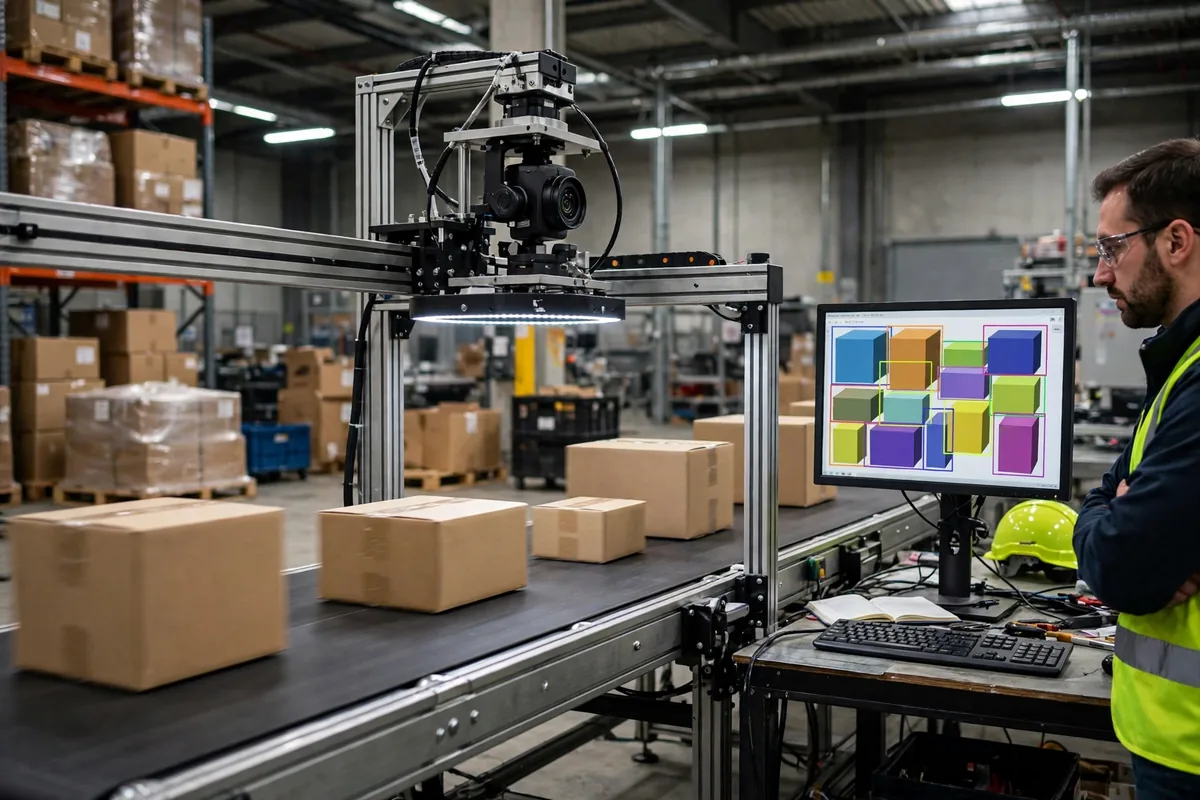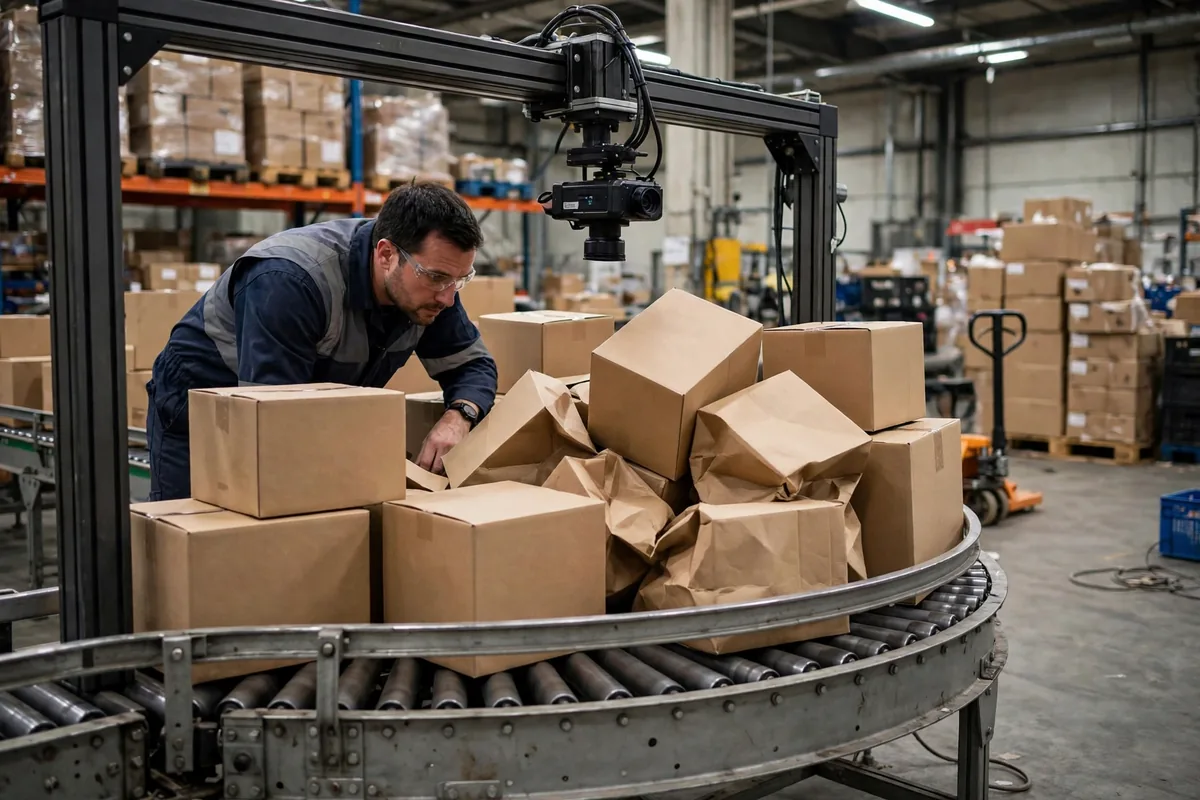
Over the past two years I have followed camera pallet-counting pilots in three quite different warehouses, and the pattern that emerged was remarkably consistent. AI vision pallet counting accuracy is best understood not as a property of a camera or an algorithm alone, but as the outcome of a set of conditions. Change the conditions, and the same system will give you a different answer, sometimes in a different direction. That is the starting point for any serious evaluation, because a demonstration video almost always shows the system under its most favorable conditions, not under yours.
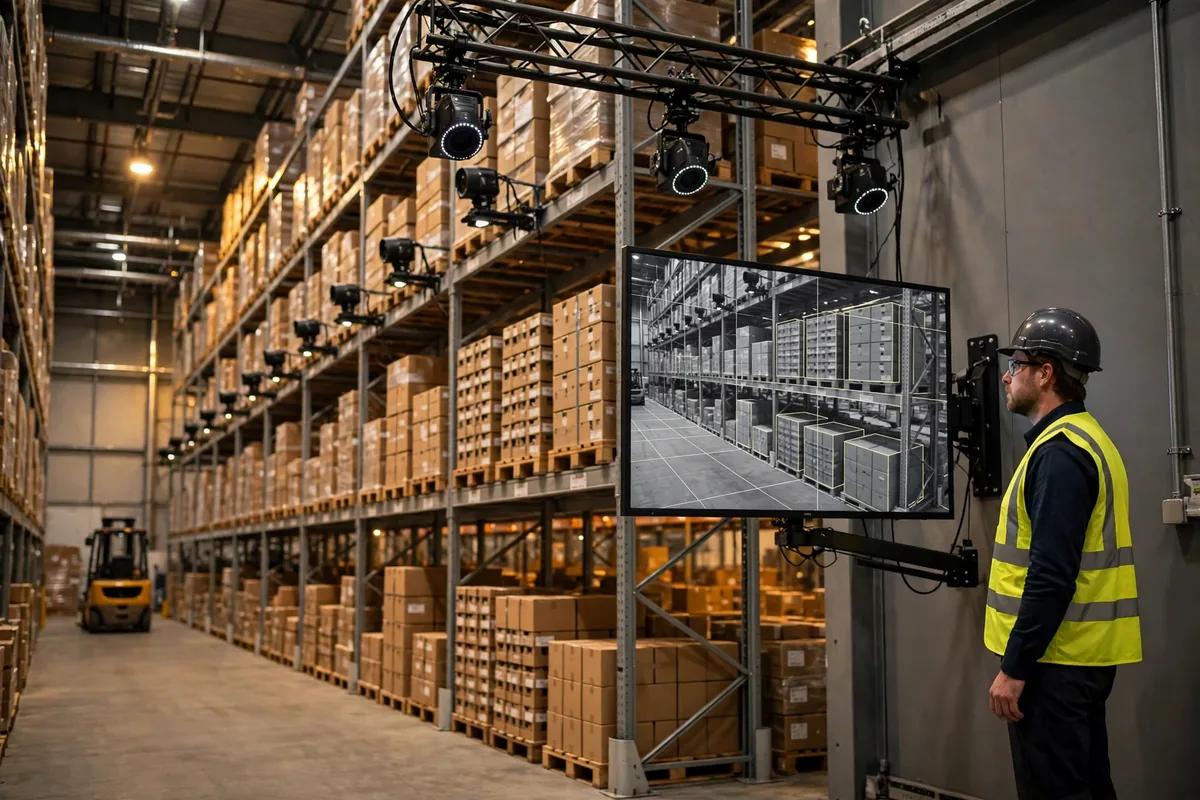
The first site looked, at first glance, like a straightforward success. It was a third-party warehouse in eastern China handling consumer goods, where two fixed cameras faced a row of neatly stacked full pallets of finished product. The pallets faced the same way, the stack heights were nearly identical, and the lighting was bright and even, with no direct sunlight striking the aisle. During counts the forklifts were stationary and the pallets did not move, so the cameras worked through the row one frame at a time. The system totals matched the manual recount almost exactly, and the site manager was understandably enthusiastic about cutting night-count labor. This is the comfort zone for vision counting. When every target is fully visible, the background is clean, and nothing is moving, the task is close to counting blocks in a photograph, and the difficulty itself is low.
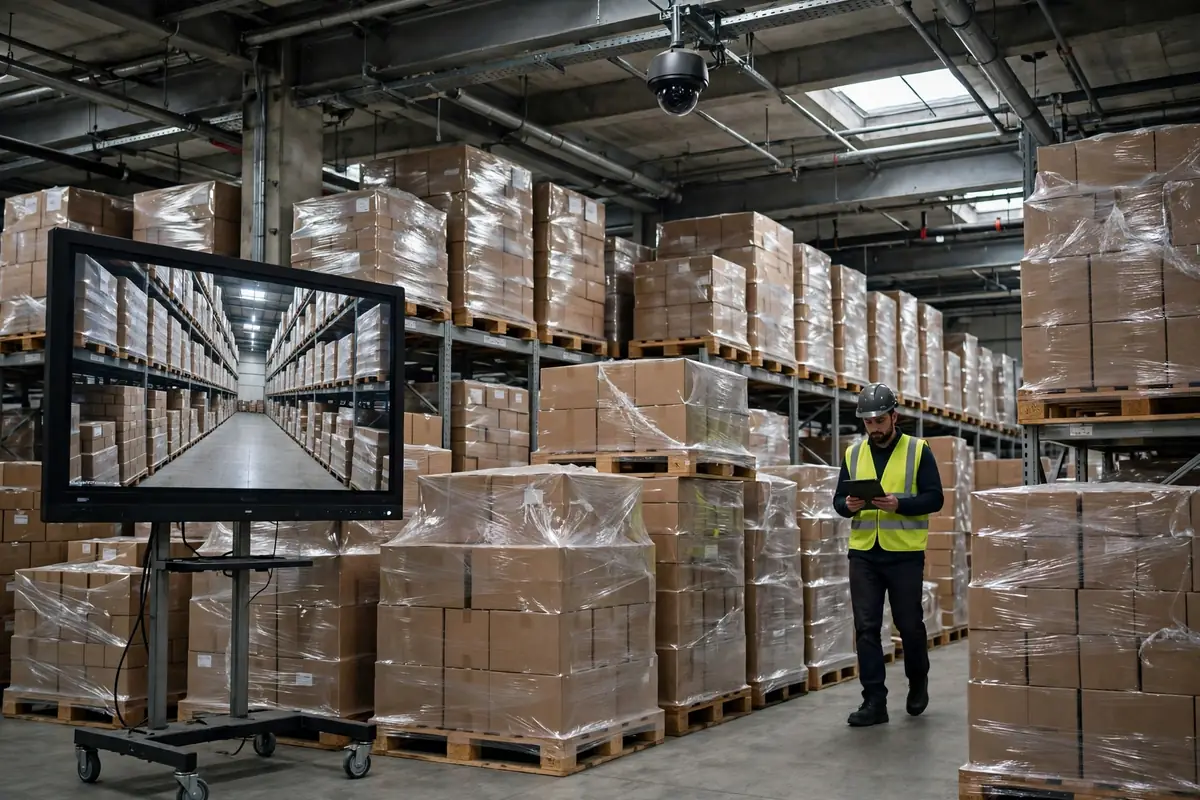
The second site told a different story, using the same system. In an auto-parts warehouse in northern China, the spare-parts area mixed tall and short pallets, some topped with cartons and some only half stacked, with several pallets partly hidden behind columns and temporarily stored empty pallets. A camera at the end of the aisle shot at an angle, so distant pallets occluded one another while nearby pallets looked wider than they were because of perspective. Over two consecutive days the system undercounted that area, not randomly but repeatedly, because the same class of occlusion kept recurring. Staff added a manual recount to reconcile the books. The lesson was direct and worth stating plainly. Occlusion is not occasional noise. It is a structural bias, and when it grows, the error tends to lean in one direction, usually low, rather than scattering evenly around the truth.
The third site was the most instructive, precisely because the idea behind it sounded so attractive. An e-commerce warehouse in southern China wanted mobile cameras riding with forklifts so counting could happen during normal outbound work, with no separate count pass. In practice, as soon as the forklift moved, the images carried motion blur, pallets changed apparent size from frame to frame, and the system once counted the same pallet twice as it passed two viewpoints. When sensitivity was turned down, the same run began to miss pallets instead. The team changed the method so the forklift paused for two seconds at marked positions before a capture, and the miscounts fell sharply. Motion is not impossible to handle, but it has a price: either the work slows down, or the tolerance for error rises.
When AI Vision Pallet Counting Accuracy Holds Up
According to the comparison across these three pilots, camera counts hold up when several conditions line up at once. Pallet orientation and stacking form are relatively uniform, sightlines are free of structural occlusion, lighting is stable, and there is no sustained relative motion between camera and target. When two of those conditions deteriorate together, the result becomes difficult to describe with a simple reassurance. Mixed full and partial pallets, irregular stacking, and loose material stored at the aisle edge all blur the boundary in the image between one pallet and the next. Once the system cannot reliably tell where one pallet ends, the error stops being an isolated miss and becomes a tendency across a whole zone.
Four Variables Behind AI Vision Pallet Counting Accuracy
It helps to separate the influences into four groups. The first is occlusion and stacking form. Once more than about a third of a pallet is hidden, counting relies on inference, and the more inference there is, the less the book figure can be trusted. The second is light. Strong reflections from overhead lighting, changing daylight in the late afternoon, and the sharp bright-dark boundary near dock doors can make the same pallet look different at different times of day. The third is motion and viewpoint. Moving capture and steep shooting angles amplify perspective error, while a fixed position and a brief pause are the cheapest corrections available. The fourth is mixed product types. When one image contains both full pallets and loose cartons, the system must first decide what counts as a pallet, and if that definition does not match the warehouse bookkeeping rule, even a stable count will produce the wrong books.
| Site condition | How far camera counts can be trusted | More reliable approach | | Full pallets, uniform orientation, fixed cameras, stable light | High, useful as a primary check | Spot-check on a schedule, investigate exceptions | | Mixed full and partial pallets, partial occlusion | Moderate, better as a warning signal | Review flagged zones in full after a system count | | Moving capture, changing light, irregular stacking | Low, prone to systematic bias | Fix the capture method first, do not rely on the count alone |
Run Your Own Trial Before Deciding on the Division of Labor
According to the experience of these pilots, a credible trial does not need to be large, but it does need rules. Start by choosing an area that represents real work, not only the tidiest aisle used for a showcase. Include partial-pallet zones, occluded corners, and aisles where light changes during the day. Write down the counting rules before the trial begins: what counts as one pallet, how a partial pallet is converted, and whether empty pallets count at all. Camera and human counters must use the same rules, or the comparison means nothing. Run the trial over several days, covering morning and evening shifts and different light conditions, and record system counts, manual counts, and the reason for each difference, grouped by occlusion, light, motion, and mixed product types, rather than reporting a single total gap. Report AI vision pallet counting accuracy by zone and by cause, not as one blended figure. The figure that matters most is not the average performance but the worst category, because after go-live, that category is the one that will come looking for you.
From a trend perspective, the more realistic role for vision counting is not to replace human cycle counts outright, but to change what human counters spend their time doing. Neat zones can be checked frequently by camera, while complex zones remain human work, and people shift from counting every pallet to resolving flagged exceptions. The benefit is that book risk stays under control. The drawback, which vendors rarely emphasize, is that the labor saving is smaller than the demonstration suggests. A business case built on eliminating all count labor will disappoint. There is also a counterintuitive point managers often miss: the best first place for cameras is frequently the neatest zone, not the messiest one, because only there is frequent camera checking actually trustworthy.
Looking further ahead, the question worth watching is not only whether recognition algorithms improve, but whether warehouses will adjust their sites in return: standardizing stack heights, keeping sightlines clear, and agreeing on a conversion rule for partial pallets. The more a site is standardized to be machine-readable, the wider the range in which camera counts stay credible. The more a site stays as it is, the clearer the ceiling becomes. Before comparing vendors, it may be more useful to answer one prior question honestly: how much of our daily habit are we willing to change so that a camera can see clearly.
By Dr. Chen, Supply Chain Researcher