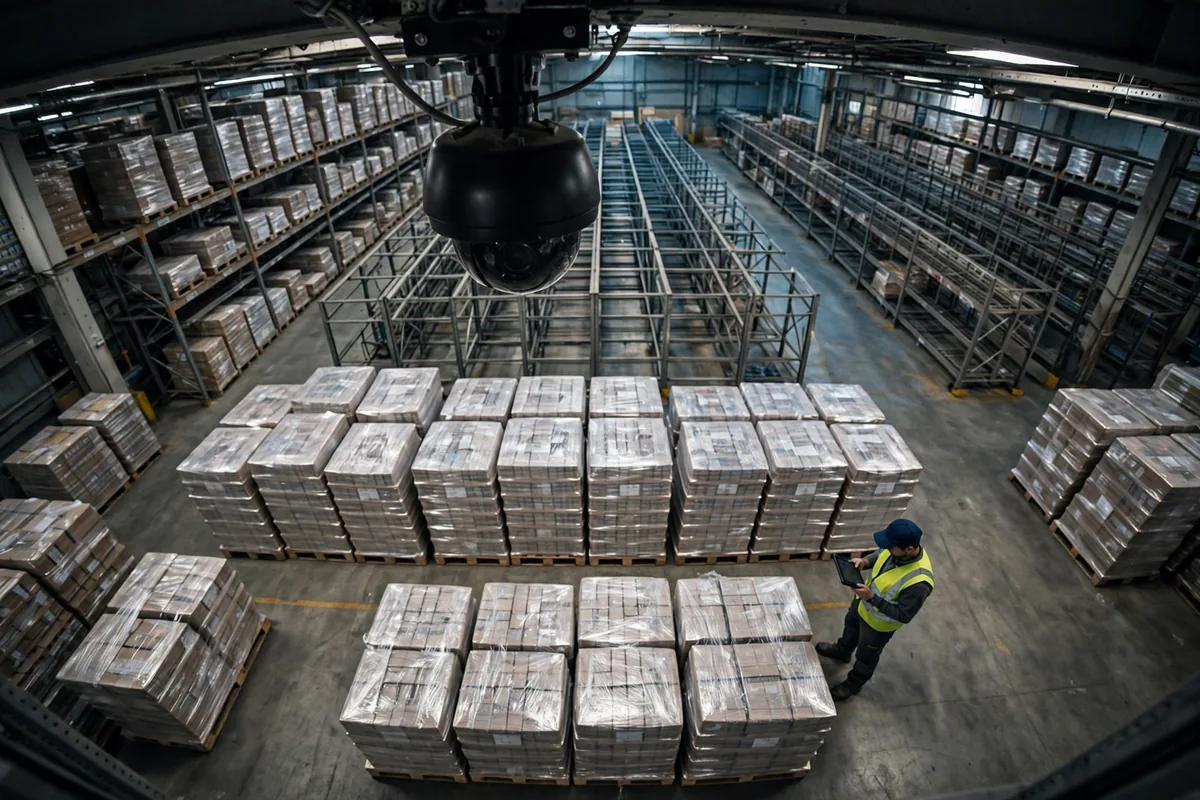
In October 2026, at a cycle-count review meeting in a third-party logistics warehouse in Ontario, California, an AI vision cycle counting warehouse system flagged a variance that stopped the room: the camera reported two cartons of small appliances missing from a high bay location, while the system record showed the location in balance. That moment captures the real problem with AI vision cycle counting warehouse deployments. The machine can count stock. It cannot decide what a variance means, whether cartons are genuinely gone, the record is stale, or the camera simply misread the scene. That verdict has to come from a set of rules agreed before the cameras go live, and the Ontario warehouse ended up rewriting its variance process rather than arguing about camera accuracy.
The pattern behind that meeting is worth pausing on. Based on my field visits over the past two years, vision-based counting has spread through North American 3PL and e-commerce warehouses faster than earlier waves of automation, because it asks very little of the building. Cameras mount above the racks, models start running, and counting shifts from people climbing to reach high bays toward machines scanning on a schedule. The expensive part of cycle counting was never the act of counting itself. It sits downstream, in the chain of investigation, rechecking, adjustment, and assignment of responsibility that follows every variance.
The Camera Counts the Stock: AI Vision Cycle Counting Errors Are Rarely Just One Number
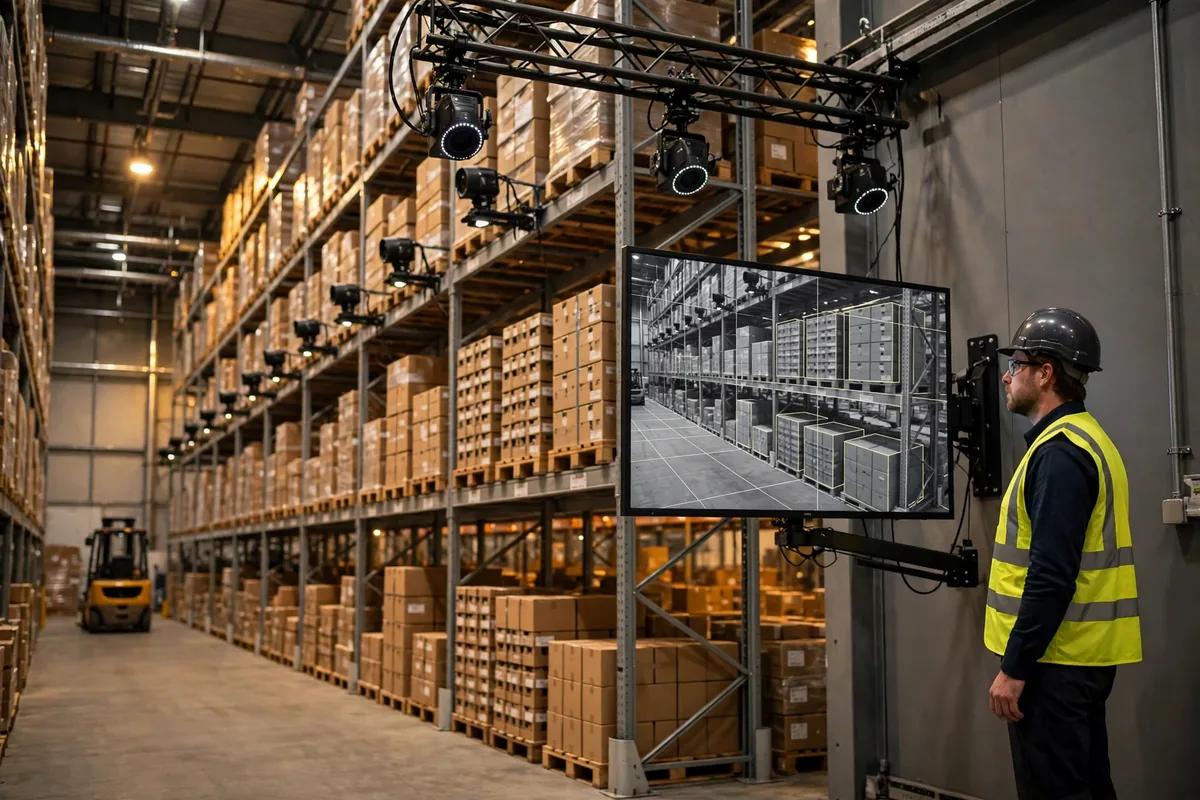
The Ontario case deserves a closer look. The facility covers roughly 90,000 square feet and handles small appliances and home goods. In September 2026 it installed fixed cameras over two aisles of high-bay racking, scanning nightly when no picking was under way. In the first month, the system flagged 31 variances across 240 sampled locations. Manual rechecks sorted them into 19 camera misreads, 7 stale records, and only 5 genuine stock discrepancies. What troubled the warehouse manager was the recheck workload: every flagged location had to be verified by someone going up to the bay, and a large share of the counting hours the cameras had saved went straight back into rechecking.
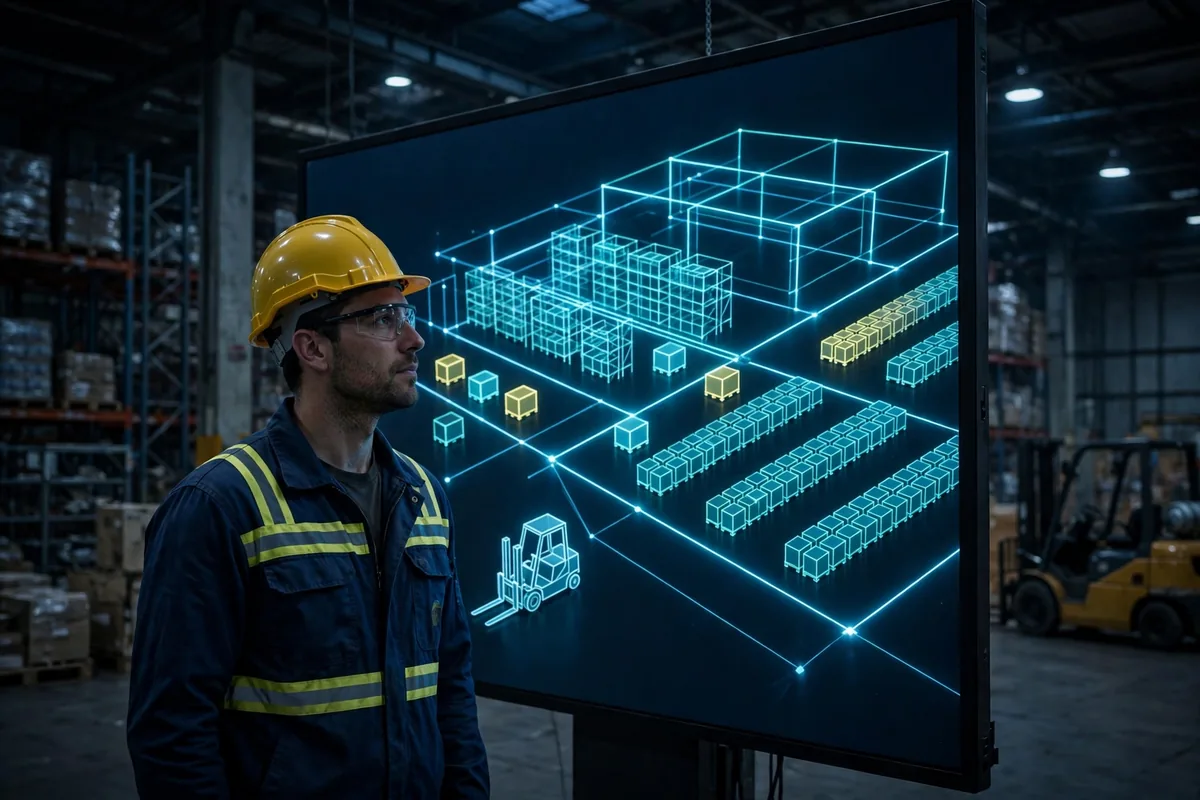
A second warehouse, near Dallas, Texas, tells an almost mirrored story. This e-commerce site handling auto parts mounted cameras on forklifts instead, scanning locations as drivers worked their normal routes. Over three months it scanned more than 4,000 locations, and over sixty percent of its flagged variances clustered in three kinds of place: ground-level locations half-hidden behind pallets, corner bays tight against uprights, and items whose packaging had changed so the cartons no longer matched the reference photos on file. The weakness was not the algorithm but the physical world: cartons get obscured, labels face inward, and packaging changes.
Both cases point to the same diagnosis. Errors in vision counting fall into three layers, and they arrive mixed together inside a single variance figure. The surface layer is recognition error, where occlusion, glare, and changed carton shapes distort the count. The middle layer is timing: stock has just been moved and the record has not caught up, so the camera and the system are describing two different moments. The deepest layer is process error, a carton put away in the wrong bay at receiving or picked from the wrong level, which the camera merely exposes. Vendor-quoted recognition accuracy should therefore be treated as a reference point only, with actual performance judged on each warehouse's own pilot.
AI Vision Cycle Counting Warehouse Variances Need Three Buckets Before Anyone Talks About Blame
The Ontario warehouse eventually settled on a method that is simple in structure: classify first, then act. The first bucket is a misread, demonstrated jointly by the system screenshot and the recheck photo, for example when the camera counts cartons from the neighbouring bay or mistakes the shadow of an empty pallet for a carton. Misreads trigger no adjustment. They go into a log of recognition problems that feeds back into model tuning and camera angles. The second bucket is a stale record, where the movement paperwork trails the camera's timestamp and the recheck confirms the stock against inbound and outbound transactions. These variances lead to the record being corrected, not to blame, and the follow-up targets the timeliness of the process. Only the third bucket, a confirmed discrepancy where a person at the bay verifies the stock genuinely does not match the record, starts an adjustment and a root-cause investigation, graded by value and product category.
The value of the classification lies in where it draws the lines of responsibility. Misreads belong to the equipment and the model, stale records belong to process and system integration, and only confirmed discrepancies belong to operations and management. Without those lines, a variance quickly becomes a round of finger-pointing, while nobody fixes the underlying problem. Classification has to rest on evidence. Each variance should keep at least three items, the camera frame from the time of the scan, a photograph taken during the recheck, and a snapshot of the system record at the same moment. Missing any one of them makes it hard to reconstruct the scene afterwards, and classification becomes guesswork.
One Decision Table for Whether an AI Vision Cycle Counting Warehouse Setup Earns Its Place
Whether vision counting is worth adopting cannot be answered from technical specifications. It depends on the shape of each warehouse, and the table below works through the four dimensions that matter most.
| Dimension | Manual cycle counting | Fixed-camera setup | Mobile patrol setup |
|---|---|---|---|
| Coverage | Planned sampling, limited reach | Scheduled full scans, continuous | Scans along work routes, coverage follows the route |
| Blind spots | High bays and corners are hardest to count | Deep positions and occluded cartons are hardest to see | Areas drivers never pass go unscanned |
| Evidence for a variance | Rechecker's memory and notes | Screenshots with timestamps, reviewable later | Footage along the route, but angles vary |
| Best fit | Mixed SKUs, packaging that changes often | Stable carton shapes, fixed locations | Long aisles, fixed travel paths |
The costing for an AI vision cycle counting warehouse project has to be done on the same basis, using each warehouse's own numbers. Monthly counting cost equals recheck hours multiplied by labour cost, plus the hours spent tracing and adjusting variances, plus losses from counting-related stoppages or mis-shipments. Vision counting changes the mix rather than simply cutting it: it removes the hours spent counting locations one by one, and it adds recheck hours, camera maintenance, and model tuning, on top of a one-off deployment investment. In Ontario's first month, the hours saved by not hand-counting 240 locations were largely consumed by rechecking 31 flagged variances, and the net benefit only appears once the classification rules bed in and the 19 misreads fall sharply. A small pilot measured on site beats any vendor cost model.
Here is the counterintuitive judgement: the more accurate a vision counting system becomes, the more dangerous it gets. Trust migrates faster than capability is verified. After a few quiet months with few variances flagged, recheckers start skipping verification and accepting the system's verdict at face value, yet the failure mode vision systems are most prone to is the systematic one, for example a packaging change that makes the model undercount across a whole aisle, which goes unnoticed precisely because fewer variances are being raised. In the manual era, a counter climbing to a high bay would incidentally notice things outside the plan. A camera only answers the question it was asked, and anything outside the plan needs a separate mechanism to catch it. The safer framing is to treat vision counting as a radar, not as the final judge of inventory truth, and to keep periodic manual sample counts as the calibration for that radar.
My trend judgement is cautiously optimistic. Vision counting is moving out of the phase of proving the technology works and into the phase where process and evidence decide the winners. Over the next two to three years, the dividing line will not be recognition-rate decimals, but whose variance classification rules are more complete, whose evidence chain closes more cleanly, and whose integration with the WMS is more timely. The more interesting question sits on the other side: as warehouses retain counting imagery, will that footage grow from a counting tool into a general evidence layer for inventory management, reused for receiving checks, claims, and customer queries? If so, the value of an AI vision cycle counting warehouse setup will be measured in disputes that now have evidence behind them, not in counting hours saved. Whether that holds depends on how many warehouses are willing to write their variance rules down clearly before they argue about how many cameras to buy.
By Dr. Chen, Supply Chain Researcher