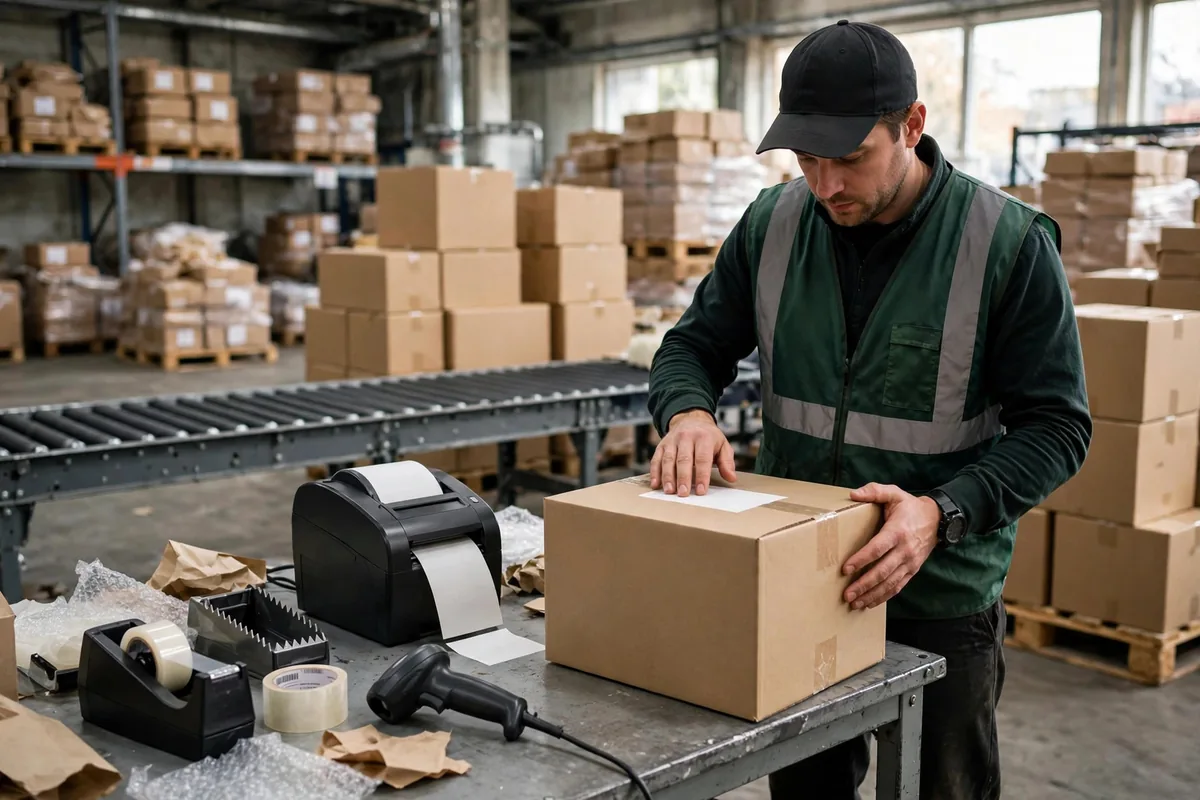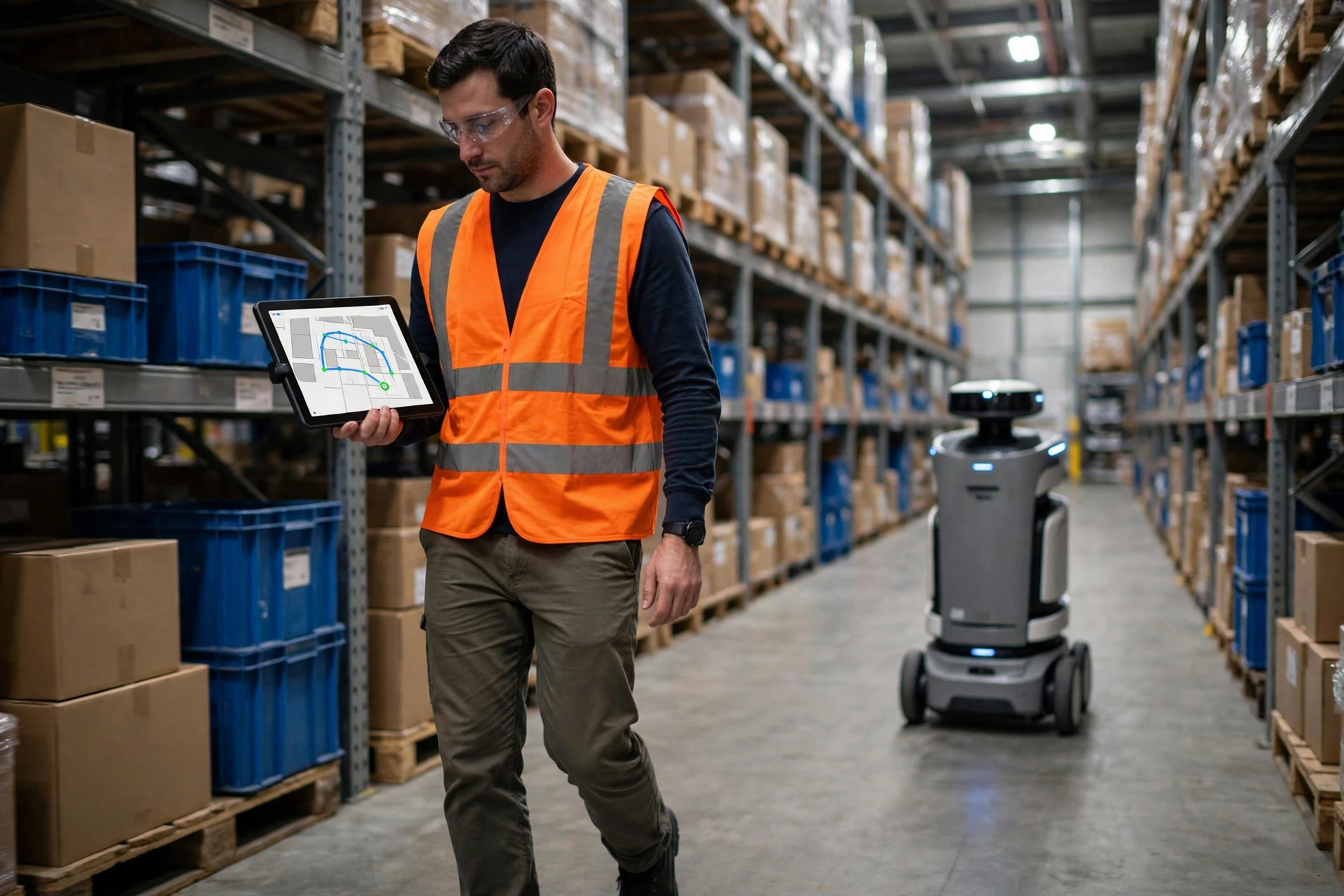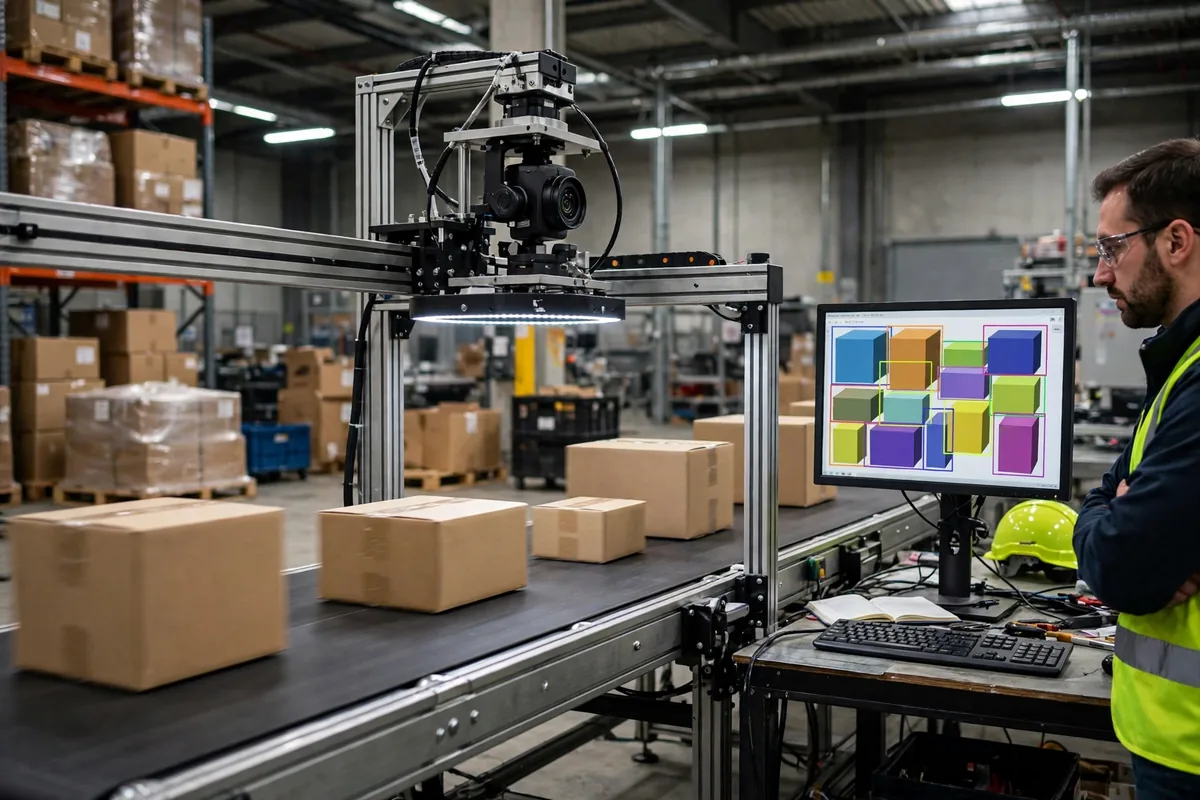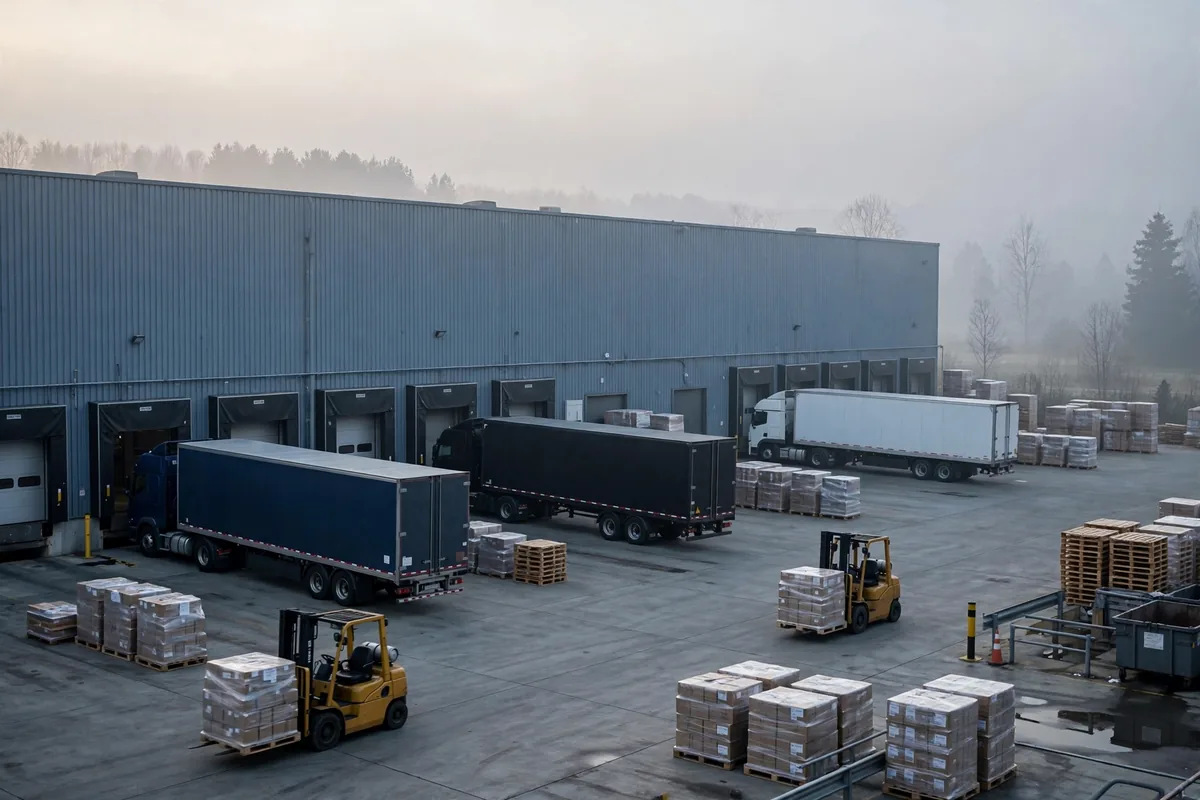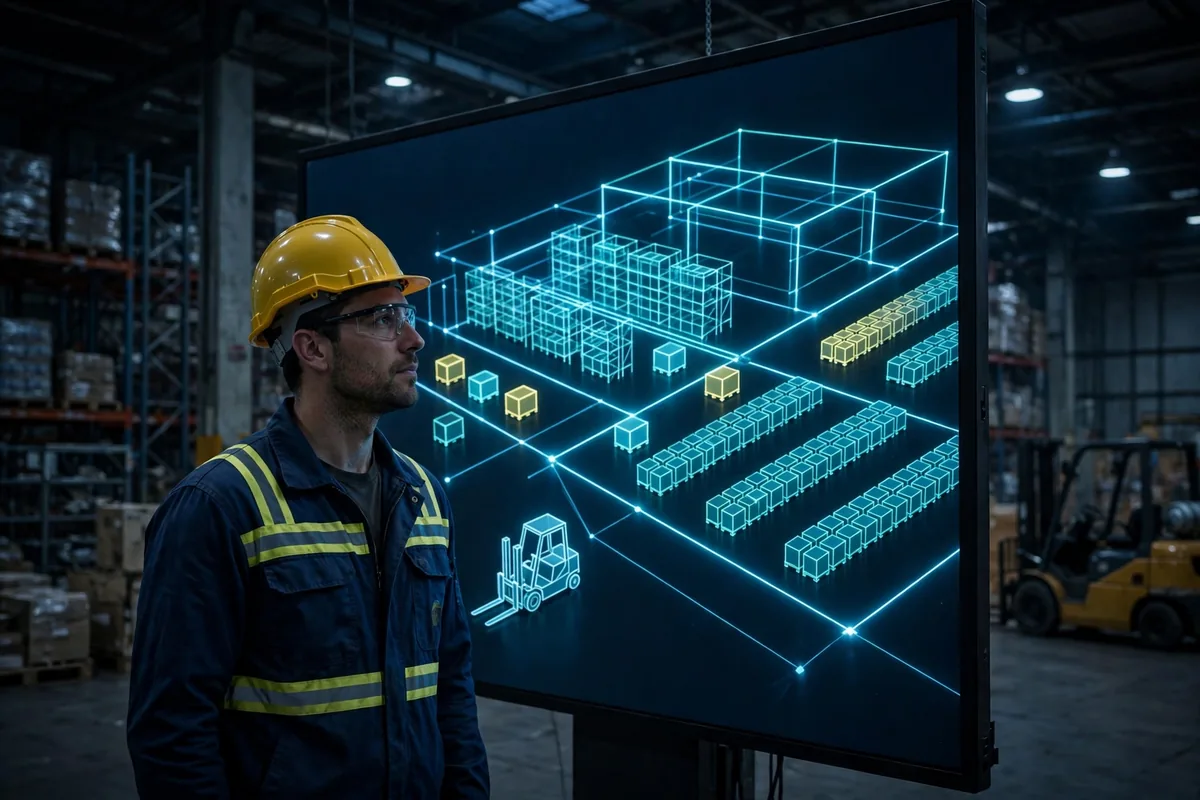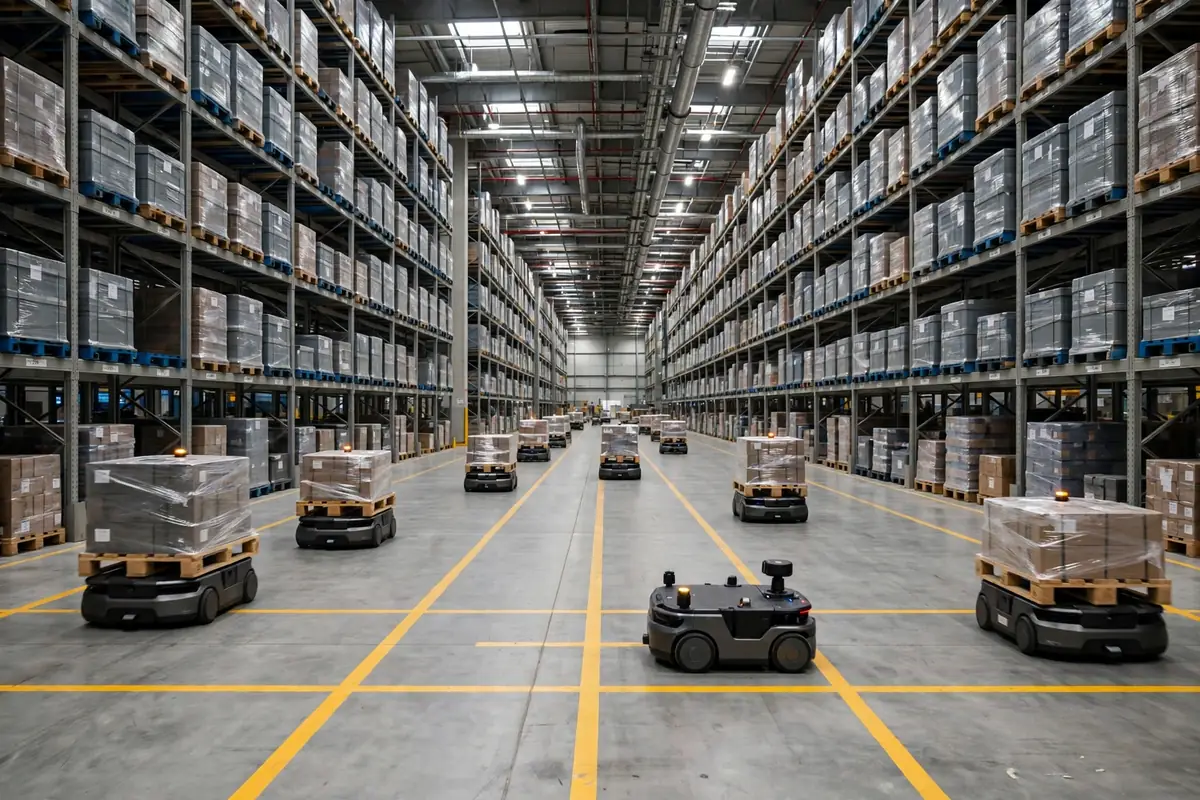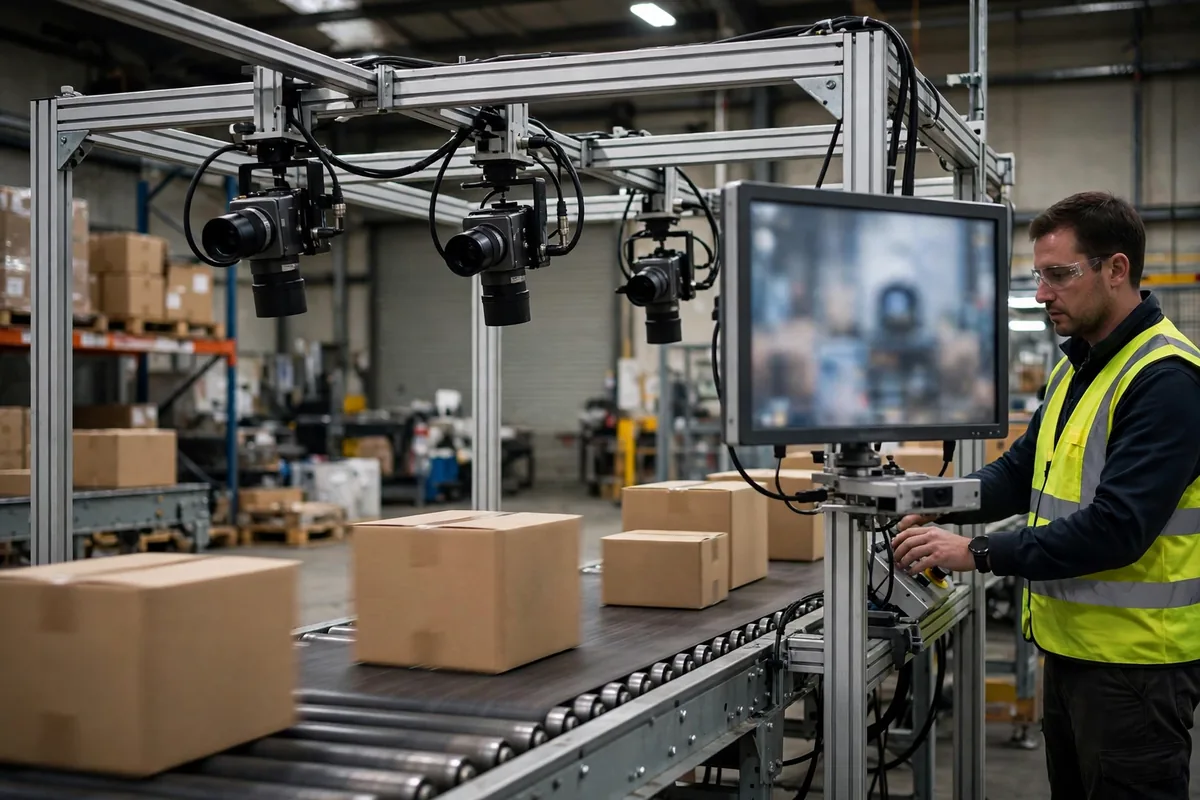
We had a client — small home appliances — who came to us furious over a packaging damage claim last year. His products left our warehouse in good shape and arrived at buyers with crushed corners and chipped paint. Returns plus claims were eating several thousand dollars a month. He said to me, "Susan, I pay you for warehousing. The goods come in fine and go out damaged. How do we settle that?" I had no good answer. Because at outbound, nobody was actually looking at every carton. Manual inspection? A conveyor running a dozen cartons a minute — human eyes can't keep up.
That is the problem AI vision packaging damage detection is supposed to solve: the last checkpoint before a box leaves the building, guarded by cameras instead of tired eyes. But let me be straight with you up front — this is not a case of "install cameras, problem solved." I've seen clients where it worked, and clients who installed it and ripped it out. The difference wasn't the price of the cameras. It was how they used them.
Manual Inspection vs. AI Vision for Packaging Damage: Where the Difference Really Sits
Put the two approaches side by side and the math gets clear:
| Manual inspection | AI vision packaging damage detection | |
|---|---|---|
| Speed | Keeps up with the conveyor on a good day; faster means more misses | Photographs and judges every carton at line speed |
| Misses | People miss things when tired, after shift changes, or when damage is small | Consistent, but only as good as its training samples |
| Evidence | "I looked at it" — worth nothing in a dispute | A photo of every carton, damage archived automatically |
| Cost | Looks cheap, but it's permanent labor cost | Heavy upfront, low marginal cost afterwards |
| Liability | Three parties arguing for a week over who broke it | Photo evidence settles it in minutes |
The most valuable row in that table is the last one. Anyone in 3PL knows the hardest part of a damage claim isn't the money — it's assigning responsibility. Damaged in the warehouse, the warehouse pays. Damaged in transit, the carrier pays. Damaged by the buyer, the buyer eats it. Without photos, three parties can argue for a week. With an outbound inspection photo, liability is settled in minutes. The arguing time saved alone pays for a lot of system.
Our Other Client: The Cameras Went In, and the Staff Stopped Looking
But there's another side to this story. We had another client, home goods, who heard vision inspection worked and bought a system without a second thought. First month after install, damage claims dropped. Second month, staff gradually stopped checking the alerts. Why? Too many false alarms. Tape glare on a carton got flagged as damage. A dark patch in the print pattern got flagged as a dent. A slightly wrinkled box got flagged too. Hundreds of false alarms a day, and the team went from checking every alert to spot-checking to just clearing them. By month three the system was decoration, and the claims came back.
I've seen this trap more than once. The biggest enemy of AI vision packaging damage detection isn't missing damage — it's false alarms grinding down human trust. The most expensive camera doesn't fix that. What matters is your sample set: how many of your box types, how many damage shapes, how many lighting conditions the system has actually seen. If the samples are thin, the system can test beautifully in the lab and still cry wolf on your conveyor.
So before you sign anything, ask the vendor three questions. First, do the training samples include our box types and our damage patterns? Second, what is the false-alarm rate at real line speed — not lab data? Third, how is the false-alarm review workflow designed, and how many alerts will staff have to handle a day? If those three answers aren't solid, don't sign yet.
The Counterintuitive Part: Detecting Packaging Damage Is Not Fixing Damage
Here's something shippers don't love hearing: vision inspection can only find problems. It can't fix them. The camera tells you this carton is damaged, but it won't tell you who damaged it, and it won't bring the damage rate down. Bringing the rate down takes a different kind of work: whether inbound inspection catches weak cartons, whether palletizing is done properly, whether the conveyor turn is too sharp, whether the forklift operator handles cartons gently.
One client of ours made exactly this mistake. After installing detection, the detection rate went up and the boss was delighted — problem solved, he thought. But the claims total barely moved, because the damage was the same damage, just better documented now. When we traced it back, the damage clustered in two places: cartons stacked too heavy at inbound palletizing, and cartons knocking into each other at a conveyor bend. We fixed the stacking standard and added cushioning at the bend, and only then did the damage rate actually fall. The camera is a thermometer, not a fever reducer.
Three Questions for Your Next Contract Talk
Damage eventually comes down to the contract. Next time you're negotiating a warehousing agreement that involves vision inspection, ask these three questions:
First, how long are inspection photos kept, and who can access them? Outbound photos are your liability evidence. Retention period and access rights belong in the contract — don't discover the photos only last 30 days when a claim lands.
Second, who reviews false alarms, and what happens when review fails? After the system flags a carton, does someone in the warehouse check it, or does it just go through? Whose labor pays for that review?
Third, what is the damage-rate target, and what are the rewards and penalties? Inspection is a means; the goal is pushing the damage rate down. Put the target in the contract, with consequences on both sides, so both parties have a reason to actually reduce damage — not just document it.
AI vision packaging damage detection is a good tool, but it's only the last checkpoint before outbound, not the answer for the whole chain. The best cameras in the world won't replace careful palletizing or a contract that assigns responsibility clearly. Buying the tool is the easy part. Making the process follow is the hard part. Both sides — shipper and 3PL — need to admit that.
Next time you're at the table, ask those three questions.
By Susan, 3PL Sales Director