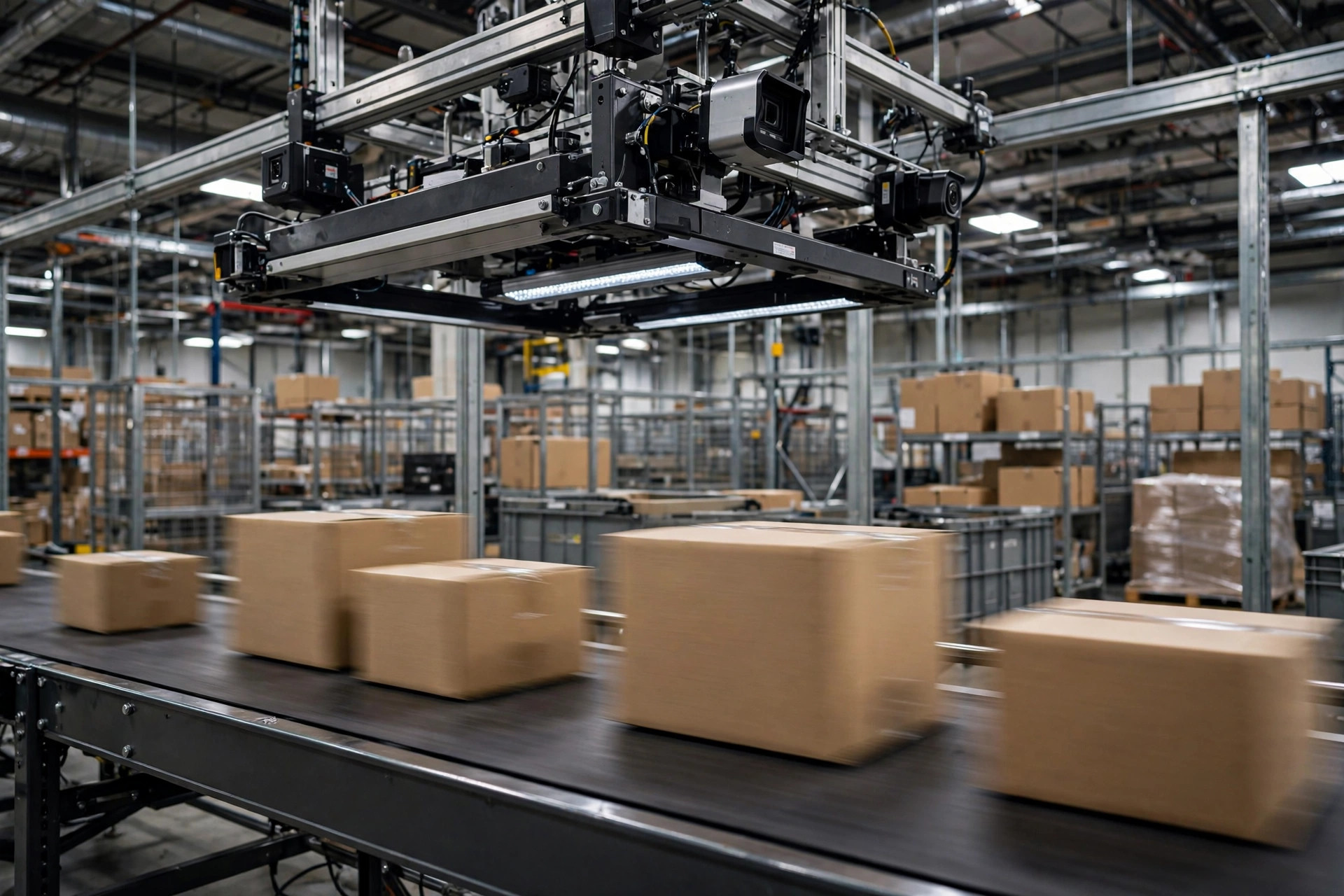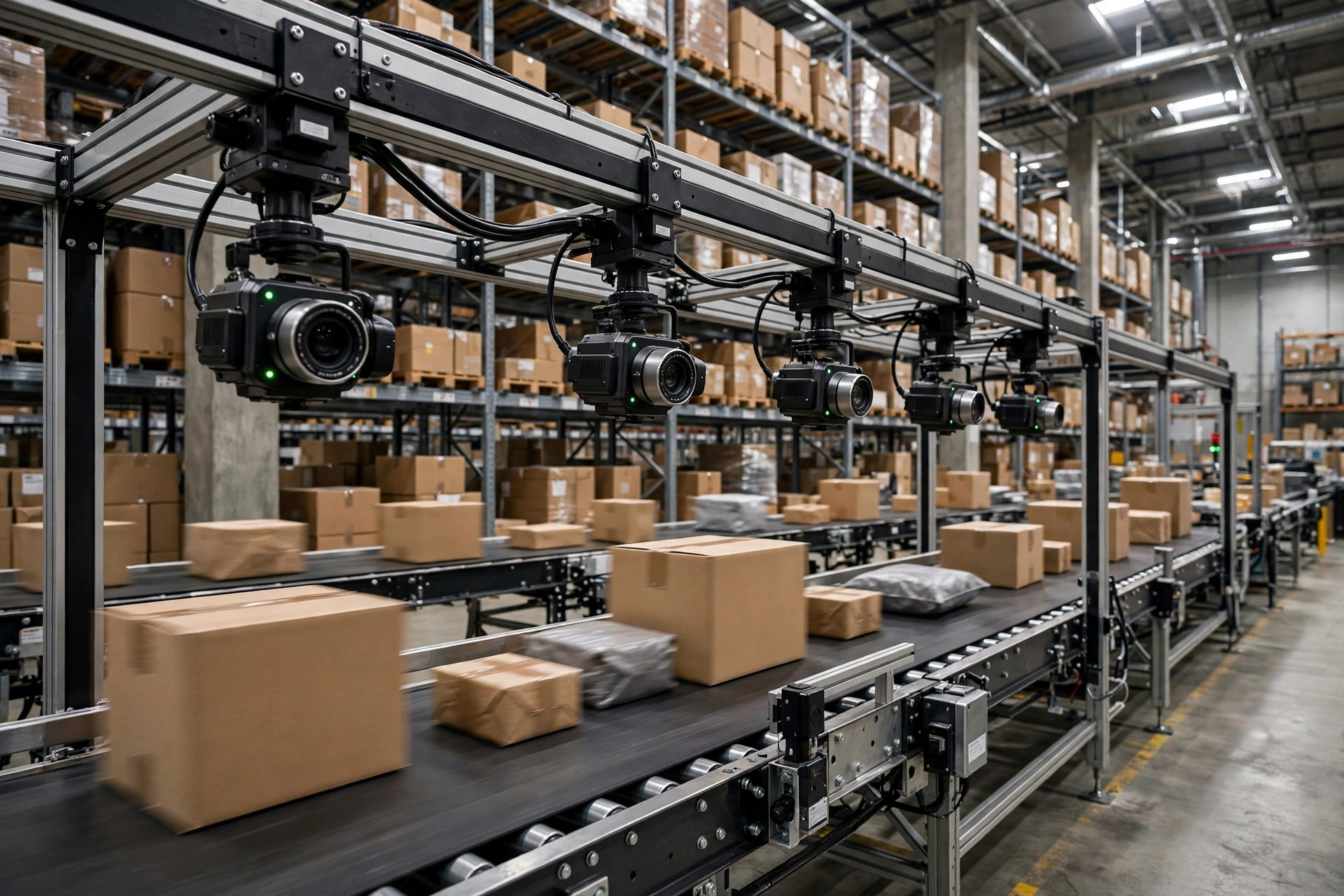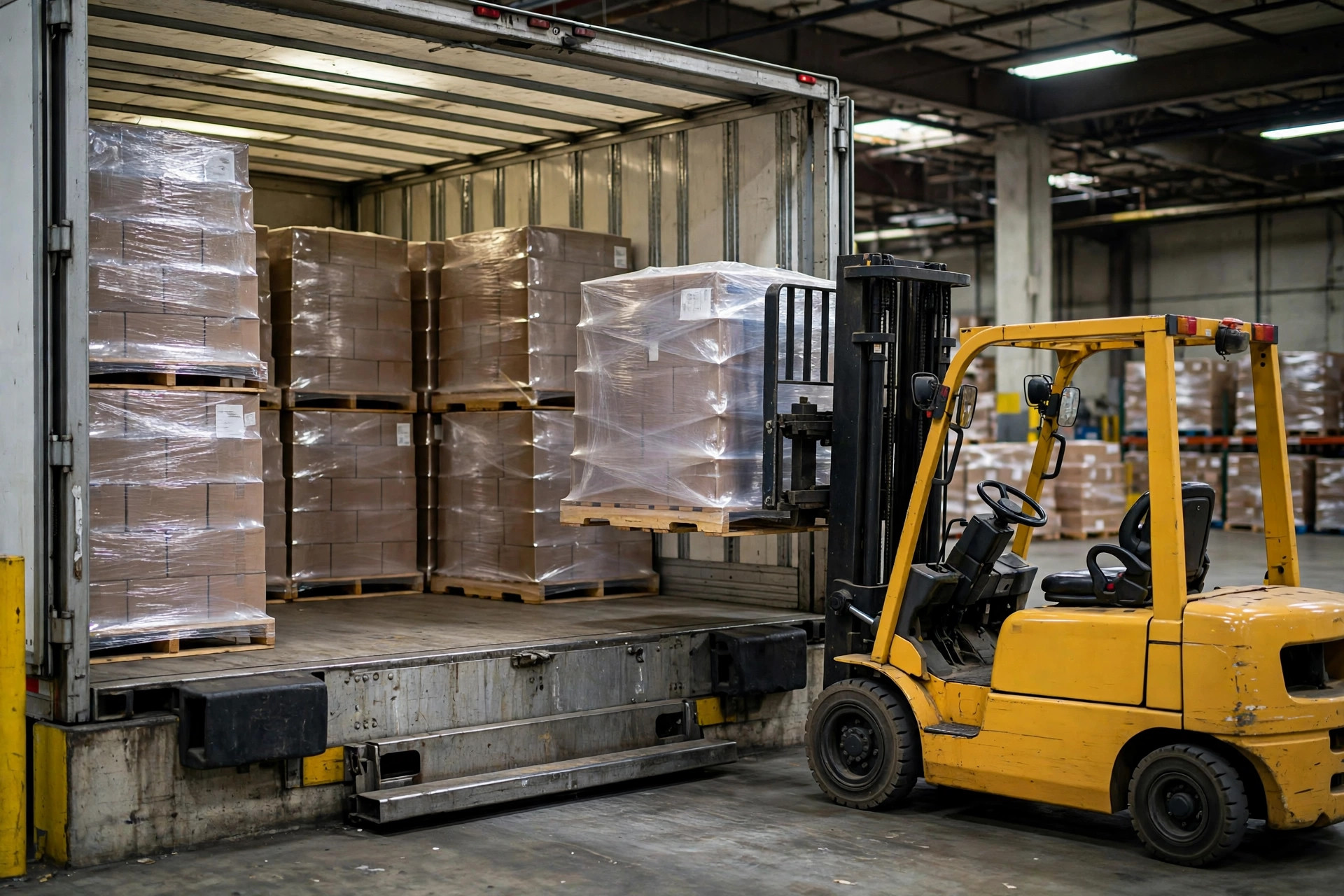
A 53-foot trailer holds 26 standard pallets. That number doesn't change. What changes is how many trailers you need for the same freight. Load 24 pallets per trailer instead of 26, and every dozen trailers you ship, you've paid for a thirteenth truck you didn't need. On a cross-country lane, one extra truckload runs into the thousands of dollars. Trailer loading is one of those places where two or three pallet positions are real money.
I saw the expensive version of this in the spring of 2025, at a beverage distributor's DC outside Dallas — about 200,000 square feet, shipping multi-stop routes across Texas and Oklahoma. One Tuesday, a 12-stop route came back with a problem: the driver had refused the load at stop three. Not because anything was damaged. Because the crew had loaded it in the order the pallets came off the staging lane, not in reverse delivery order. At every stop, the driver had to unload half the trailer to reach the two pallets buried behind everything else. By stop three he was done arguing and drove back.
The load planner was a good guy, ten years on the job. His system for multi-stop loads was a whiteboard and memory. It worked fine when routes had four stops. At twelve stops with mixed SKUs — cases of cans, kegs, bag-in-box syrup, all different weights — the whiteboard lost.
It's not about filling the trailer. It's about loading it right.
The pitch for load optimization software is usually "fit more in." That's the wrong frame. Any decent loader can fill a trailer. The expensive mistakes are about loading it wrong.
A real loading algorithm juggles several constraints at once. Axle weight comes first. In the US, every state enforces limits on single and tandem axles, and a trailer that's legal on gross weight can still be illegal on axle weight if everything heavy sits over the rear tandems. Get flagged at a weigh station and you're not just paying a fine — you're reworking the load on the shoulder or at the nearest lot, missing delivery windows. The algorithm treats axle limits as a hard constraint and assigns heavy pallets to positions that keep every axle legal. A human loader treats it as a feeling.
Then there's the center of gravity. Kegs and drums don't forgive a bad guess. Neither does a hard brake on a downhill grade.
Then delivery sequence, which is where multi-stop routes live or die. The rule is simple — last stop loads first, first stop loads last, closest to the doors — and the execution is brutal once you pass five or six stops with mixed pallets. Miss the sequence and every stop becomes an excavation. Drivers notice. The good ones start refusing your loads, and then your "cheap" loading operation is paying detention and rework instead.
Stackability rules round it out: heavy under light, crushable on top, fragile gets its own zone. An experienced loader knows all of this. The problem isn't knowledge. It's combinatorial explosion. Past a few dozen SKUs with different weights, dimensions, and delivery stops, the human brain starts rounding. Rounding is where the rework comes from.

The software is the easy part. The data is the hard part.
Load optimization tools are usually sold as annual subscriptions — check current vendor pricing, it moves around. The sticker price is rarely the reason these projects fail. Bad master data is.
The algorithm eats pallet dimensions and weights. It gets them from your item master. And in a lot of warehouses, the item master is fiction. Case dimensions recorded five years ago, supplier changed the packaging twice since, nobody updated it. Weights estimated by whoever received the pallet, off by 20 percent on a normal day. One SKU, three suppliers, three different case configurations, one record in the system.
Feed that to an optimizer and you get a beautiful 3D loading diagram that cannot be built. The forklift driver follows it for three pallets, the fourth doesn't fit the slot, and the whole plan collapses. I've watched this happen more than once: software bought in Q1, abandoned by Q2, blamed on the vendor, caused by the data. Vendor demos run on clean test data. Your dock does not.
Before you spend a dollar, do the free test: pull ten pallets at random, measure and weigh them, and compare against the system. If more than two don't match, fix the data first. A floor scale at the dock door — weigh every pallet, write it back to the system automatically — is the cheapest correction you'll ever buy. Accurate data makes even your veteran loader better. Dirty data makes any software a paperweight.
The second trap the sales deck skips: the plan doesn't survive the day. In high-mix operations, orders get added and cut constantly. The diagram computed at 8 AM is obsolete by the time two rush pallets show up at noon. Either you freeze the plan — say, a hard order cutoff two hours before departure, which takes real backbone with sales and customers — or the software recomputes in seconds and pushes the new diagram to the driver's tablet or a printout at the dock. If the tool can't replan live against your order system, it's a half-product for high-mix work.
One more practical point: the diagram has to be readable on the dock. Numbered pallet positions on the printout, matching labels on the pallets. Nobody on a forklift is interpreting a 3D render. They need "pallet 5 goes left, second row" in plain language.
Where the math actually works
Here's my honest breakdown. If you're shipping a dozen or more truckloads a day on relatively fixed lanes, pilot it on one or two lanes. The freight saved plus the rework eliminated usually pays back the subscription in months. Worth doing.
If you're shipping a handful of trucks a day, multi-stop, mixed SKUs — the software can help, but only after you fix the cutoff rules and the data foundation. Buy it before that and you're buying a lesson.
If you're shipping two or three trucks a day, standardize your pallets and weigh them first. The software conversation can wait.
Load optimization is data engineering wearing an AI costume. With clean data, it's a money printer. With dirty data, it's decoration. The question isn't whether the algorithm is smart. It's whether your pallet dimensions are true.
A checklist you can use tomorrow
- Pull 10 random pallets. Measure and weigh them. Compare against the system. More than 2 mismatches — fix the data, forget the software for now.
- Pull last month's loading records: average pallets per trailer, how many extra trucks went out because something "wouldn't fit," and what those extra trucks cost. That's your business case.
- For multi-stop routes, lock the delivery sequence into the SOP. If the sequence changes daily, no algorithm saves you.
- Pilot on your most stable 1–2 lanes first. Never roll out warehouse-wide on day one.
- Make the vendor run your real orders through a trial calculation, then put the result next to what your best loader actually built. Buy only if it wins.