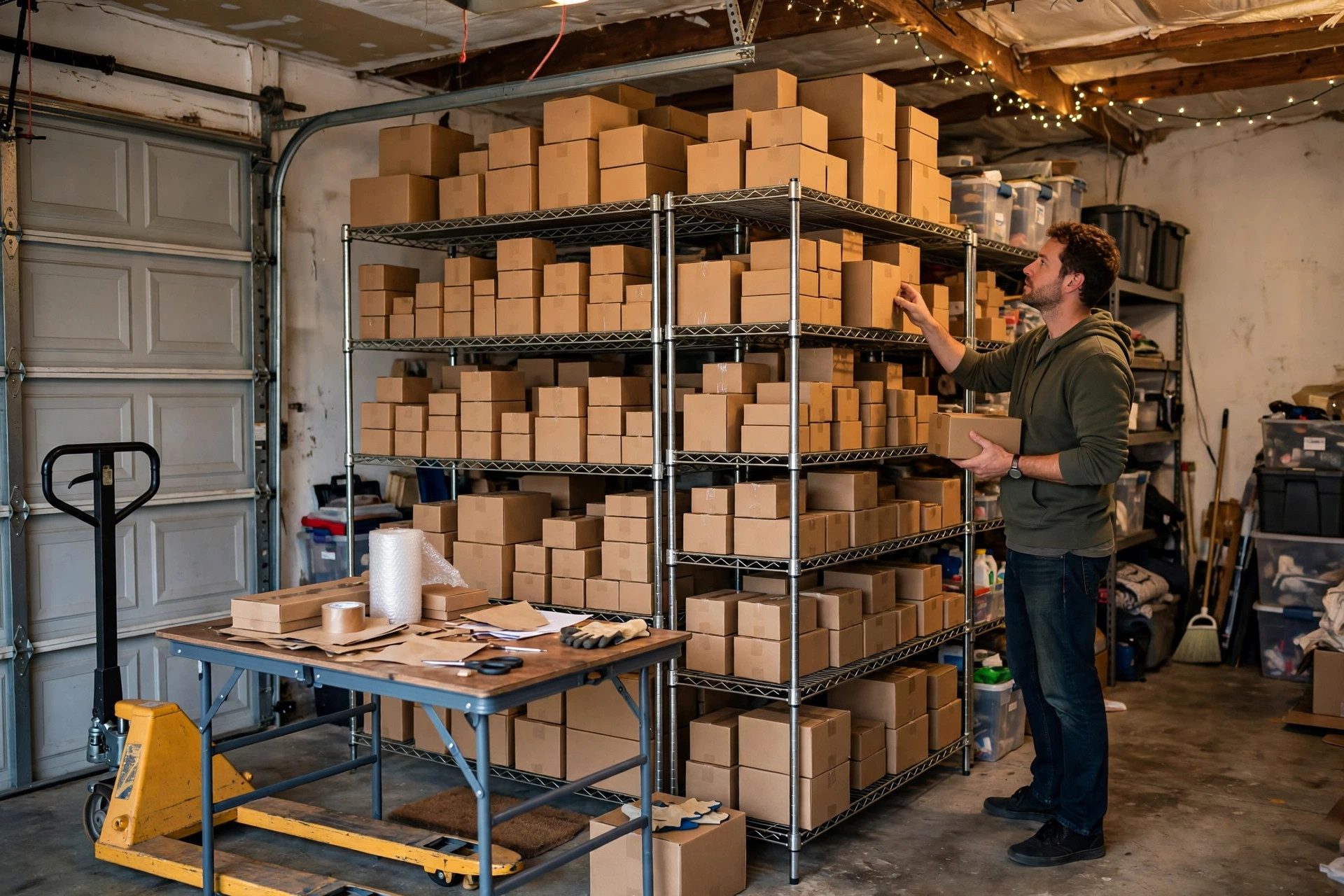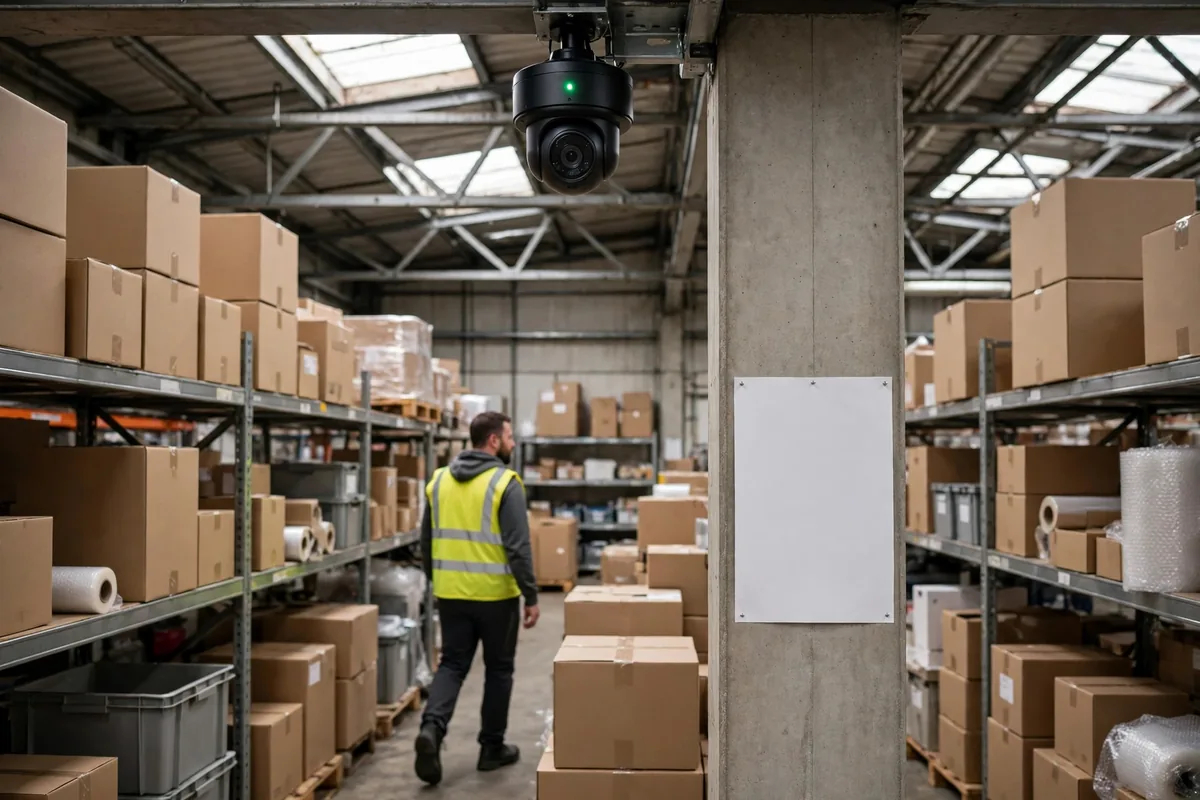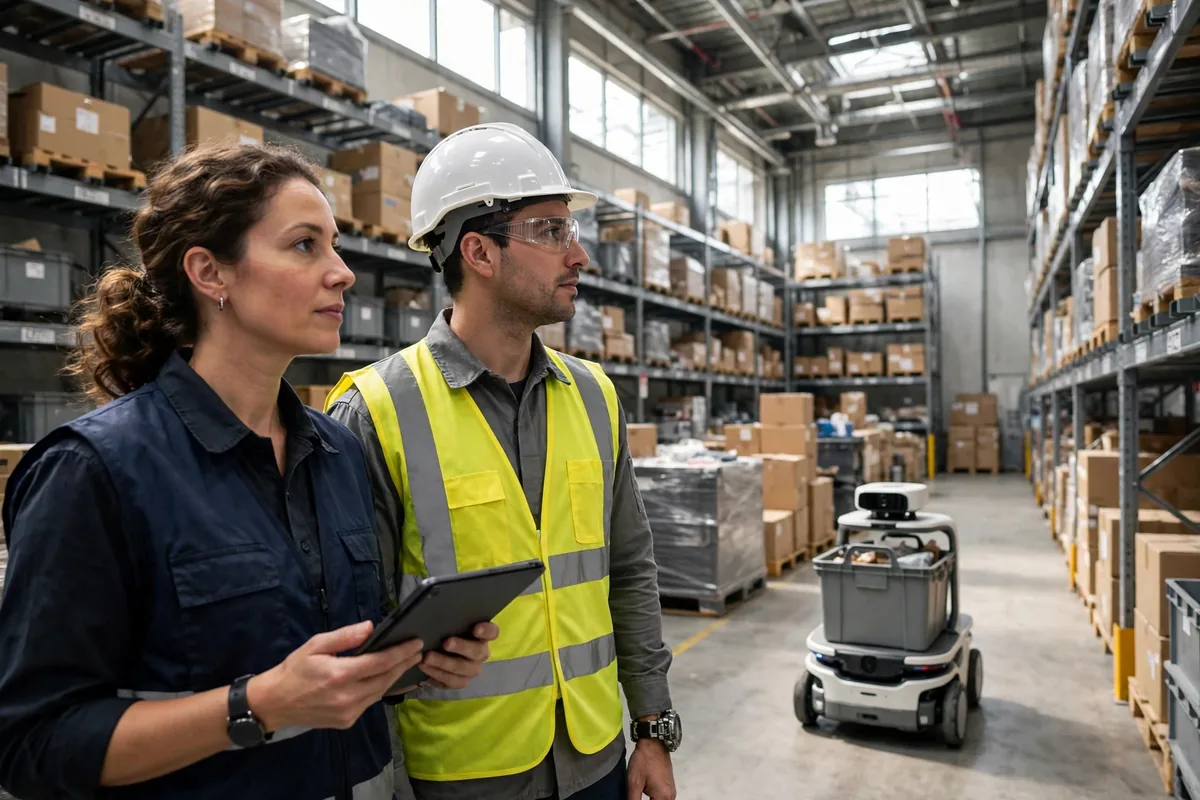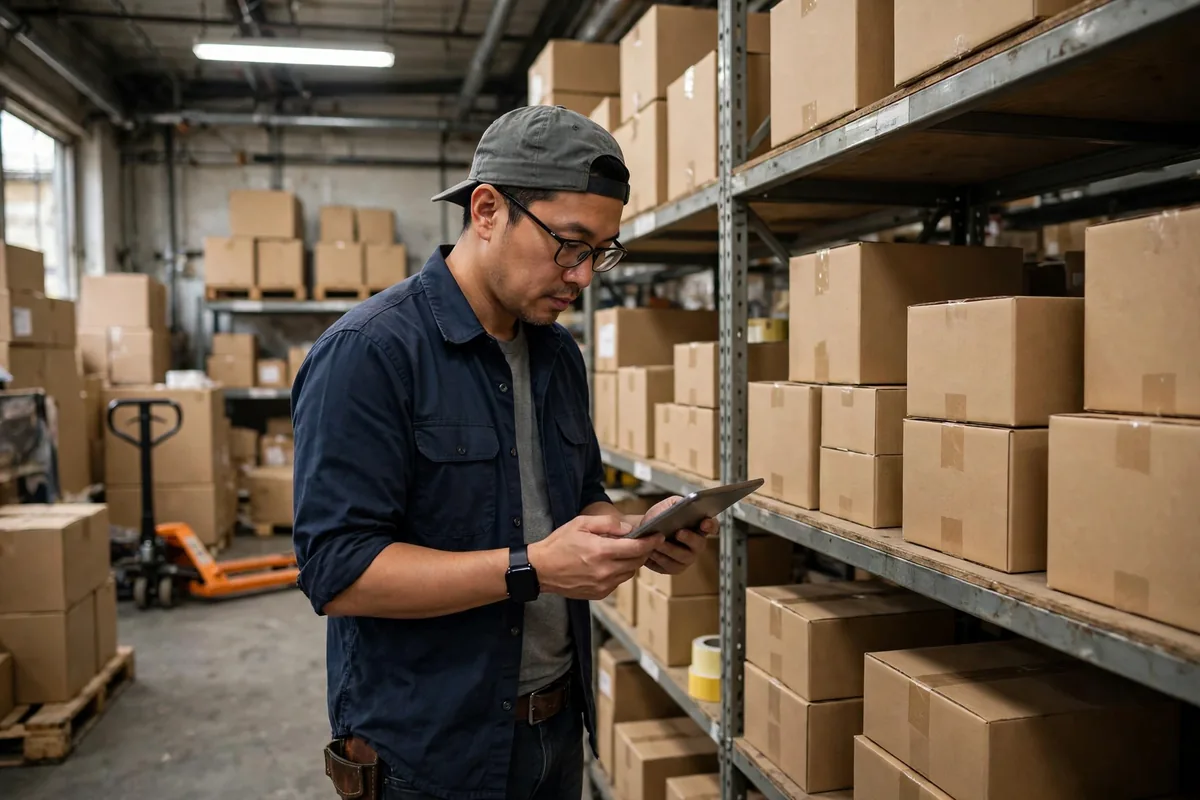
Last October, an AI vendor's sales rep came to our warehouse with a laptop to demo his system. Half an hour in, staring at a screen full of error messages, he managed one sentence: "Your SKU data is… special." I almost laughed out loud. Special? Our warehouse is 3,000 square meters, four people, a little over 600 SKUs, and our data has real personality: one carton of tissue paper goes by three different names in the system, and bin A-12-03 supposedly holds 40 cartons but actually holds a pile of returns.
That day I learned warehouse AI data preparation is not a big-company luxury. For a small warehouse, it is survival. Gartner predicts that 60% of AI projects lacking AI-ready data will be abandoned through 2026. MIT's NANDA project found in 2025 that 95% of generative AI pilots produced no measurable return. Behind both numbers sits one sentence: the model does not take the blame; the data fails first.
Just How Dirty Was Our Data
Start with master data: the SKU, location, and customer tables. This is the foundation AI stands on. A crooked foundation, and whatever you build on top collapses.
Our classic mess is what I call "one product, many codes." One brand of tissue paper: purchasing created a SKU called "Tissue-3ply," operations thought the name was too long and created "Tissue 3-ply," and then a supplier changed the pack from 100 sheets to 120 and someone created a third. Three SKUs in the system, one physical product, inventory split across three codes. When AI calculates replenishment, it thinks there are three products. The suggestion cannot possibly be right. I spot-checked our 600-plus SKUs and found more than 40 duplicates like this, close to one in ten.
Locations were worse. We have no dedicated location manager; freight goes wherever there is an empty spot, and the system locations drifted far away from reality long ago. At last year's count, our inventory record accuracy was 91% — nine out of every hundred bins did not match the books. Hand AI data that is 91% accurate and ask it to plan pick paths, and pickers walk to a bin, find nothing, and walk back. That is not efficiency. That is paying to annoy your own people. These are our own count figures, not an industry benchmark.
Customer master data was no cleaner. The same customer appears as two companies because one record says "XX Trading, Dongguan" and the other says "Dongguan XX Trading," with the address written two different ways. AI clustering would happily count them as two customers. Whose fault is that? Ours — a small warehouse with nobody owning data, and a boss, me, who used to think "close enough is fine." AI does not accept "close enough."
Warehouse AI Data Preparation: Three Kinds of Data, in the Right Order
Warehouse AI data preparation, in the order our warehouse learned the hard way: master data first, operational data second, equipment data third. Get the order wrong and the work is wasted.
| Data type | What it covers | What dirty data looks like | Good enough for a pilot |
|---|---|---|---|
| Master data | SKU, location, customer tables | Duplicate SKUs, bins that don't match the books, duplicate customers | Zero duplicate codes among top SKUs; location accuracy above 95% |
| Operational data | Orders, picks, cycle-count records | Skipped scans, count differences fixed by hand, returns entered three days late | Same-day paperwork, pick records matching order numbers |
| Equipment data | Scanner, sensor, printer logs | Timestamps out of sync, missing logs, errors nobody reads | Logs match orders, timestamps aligned with the system clock |
Why master data first? Operational data is the running story; master data is the dictionary. If the dictionary is wrong, the story is wrong. Our approach: clean the top 200 SKUs by sales velocity first — the head of the list covers about eighty percent of shipments. For locations, lock in one iron rule first: one bin holds one SKU. Customer deduplication took one afternoon for most of it.
Operational data comes second. Orders, pick records, and count records are the textbook AI learns "how our warehouse actually works" from. The textbook cannot have missing chapters: pickers skipping scans to save time, count differences quietly edited, return orders entered three days late — all of it teaches the AI the wrong lessons. Our homegrown rule is simple: today's paperwork gets cleared today, and anything left overnight is the first item at the next morning's meeting.
Equipment data comes last: scanner logs, sensor readings, printer errors — the biggest volume, the least use in an early pilot. Just make sure scanner logs can be matched to order numbers and sensor timestamps are not half an hour behind the system clock. We had exactly that problem once: a sensor ran 25 minutes behind the WMS, and the AI's temperature analysis came out completely misaligned.
Warehouse AI Data Preparation on the Cheap: No Budget Required
A big company hires consultants for data governance, tens of thousands of dollars a job. We cannot afford to burn that kind of money. Our fixes are homegrown, and they work.
Fix one: Excel is a governance tool. I export the SKU table, sort by name, and duplicates sit side by side where eyes catch them. Sort by barcode next, and missing or duplicated barcodes jump out. Every Friday afternoon, the warehouse supervisor and I spend an hour chewing through 50 SKUs. In a month we finish the top 200. The cost is two people's time; the result is a duplicate rate that fell from nearly one in ten to essentially zero.
Fix two: let the scanner be the referee. Pickers used to grab stock from memory. Now the rule is scan to confirm both bin and SKU, and the scanner beeps when it is wrong. People complained for two weeks. By the third week, pick errors were down, and every bin that did not match the books surfaced one by one.
Fix three: stop doing surprise counts, do rolling counts. Twenty bins every morning before work starts, the whole warehouse covered in a month. A mismatch gets fixed on the spot, and we ask why right there — wrong bin or wrong entry? In three months our inventory accuracy climbed from 91% to over 97%. Again, our own numbers — proof a small warehouse can lift its figures with homegrown methods.
Now the math (illustrative example): four people, half an hour each per day on data cleanup, comes to 60 labor hours a month. At 30 yuan an hour, that is 1,800 yuan. Compare that with launching an AI pilot on dirty data: vendor implementation fees start in the tens of thousands of yuan, the pilot runs a month, the data turns out wrong, you start over, the fee is gone — and peak season still needs humans to do the rescuing. That 1,800 yuan buys the ticket to a pilot that does not crash.
Here is the counterintuitive part: the smaller the warehouse, the sooner this work has to happen. Big warehouses have IT teams and budgets and can absorb a crash. When a small warehouse crashes once, half a year's profit is gone. Do not think "we are small, we have little data, this is easy." Little data means every error is a big share. Six hundred SKUs, forty duplicates — in the AI's eyes, this warehouse has no clean data at all.
Advice for Warehouses Like Ours: Clean First, Talk AI Later
If you run a small warehouse too, the next time a vendor tells you "just plug it in and it runs," ask three questions first: what does your model do with duplicate SKUs like ours? When a bin does not match the books and the pick path is wrong, who owns that? If the pilot goes sideways, is the implementation fee refundable? After those three questions, you will roughly know whether the money is worth spending.
We have not adopted AI yet. The data is clean, and the pilot is scheduled for the second half of this year. A vendor's slide deck does not expire, but peak season will not wait for you. Wash the three tables first, then connect the operational records, and only then the equipment logs. When warehouse AI data preparation is done, AI arrives as a helper. Without it, AI arrives as a boss you have to serve.
Small warehouses have their own way of surviving: big companies bulldoze through with budgets; we pick away at it with our own two hands. Pick it clean, and a small warehouse can use AI too — just on our own schedule, not the salesperson's.
By Xiao Ma, Small Warehouse Owner