Here's my conclusion up front: for AI vision looking at pallets, counting them is the least valuable application. The two things that actually matter are how high the empty pallets are stacked, and whether the pallets are broken. Get either one wrong and you're looking at a safety incident or a cargo-loss incident.
I've seen too many warehouses manage pallets entirely by feel: how high is too high — the forklift driver decides. Whether a pallet is damaged — the receiving clerk glances and decides. Feel works fine right up until the day it doesn't, and after that day nobody can explain anything. This has two sides. One side is labor savings — AI watches instead of people. The other side is worth more: AI testifies instead of people. To put it bluntly, the biggest value of pallet detection isn't saving labor. It's turning "gut feel" into "a record."
Two pits I've personally fallen into
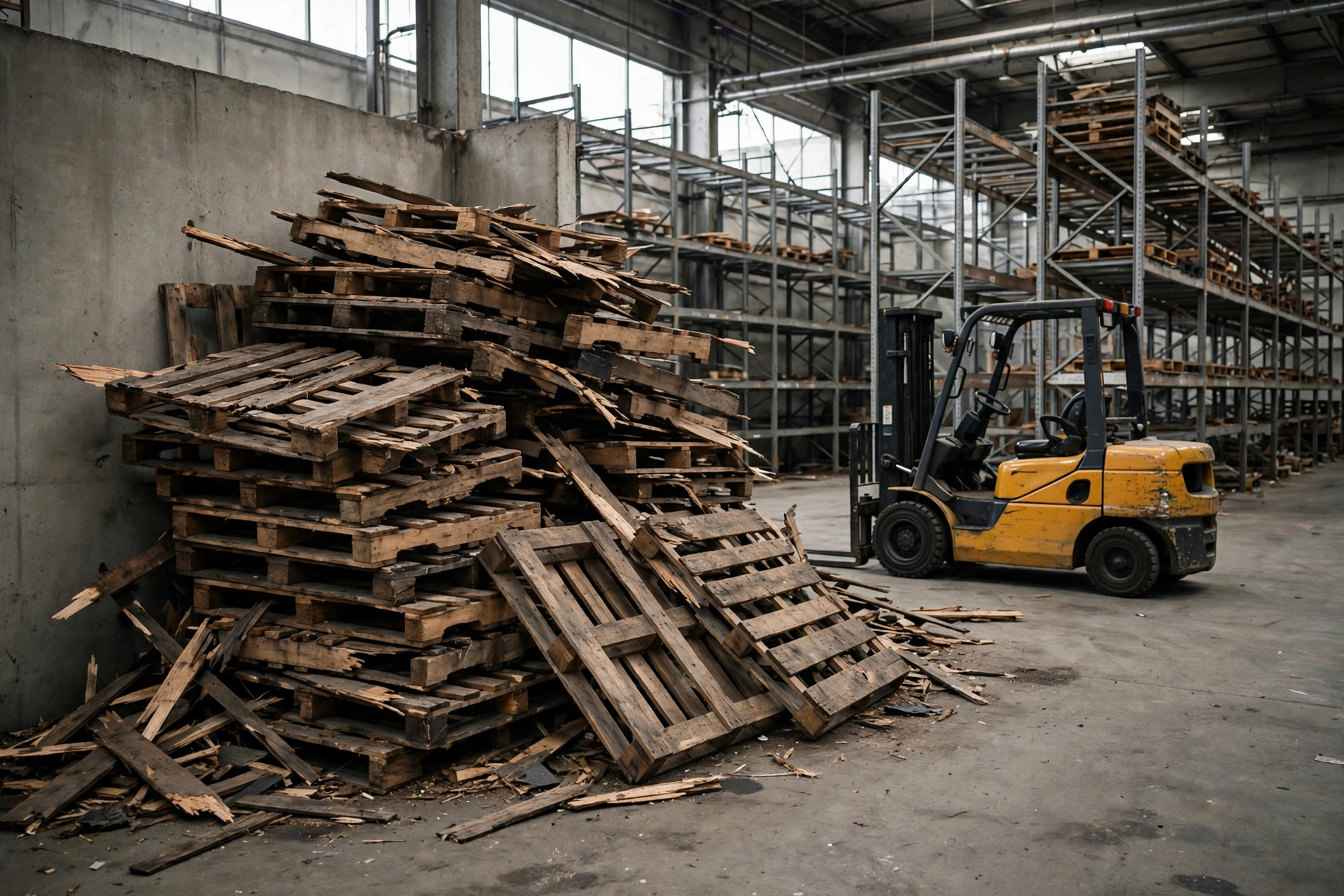
Early 2025, a food 3PL in California: empty pallets in the staging area stacked 20+ layers high, over two meters. A forklift brushed the neighboring stack while retrieving goods, and the whole thing came down like dominoes — crushed two pallets of product beside it and nearly hit a person. The post-mortem found that nobody in the building could say what "too high" meant. The SOP had a height limit written down, but nobody measured. It was all eyeballed. And eyeballing stops happening the moment people get busy.
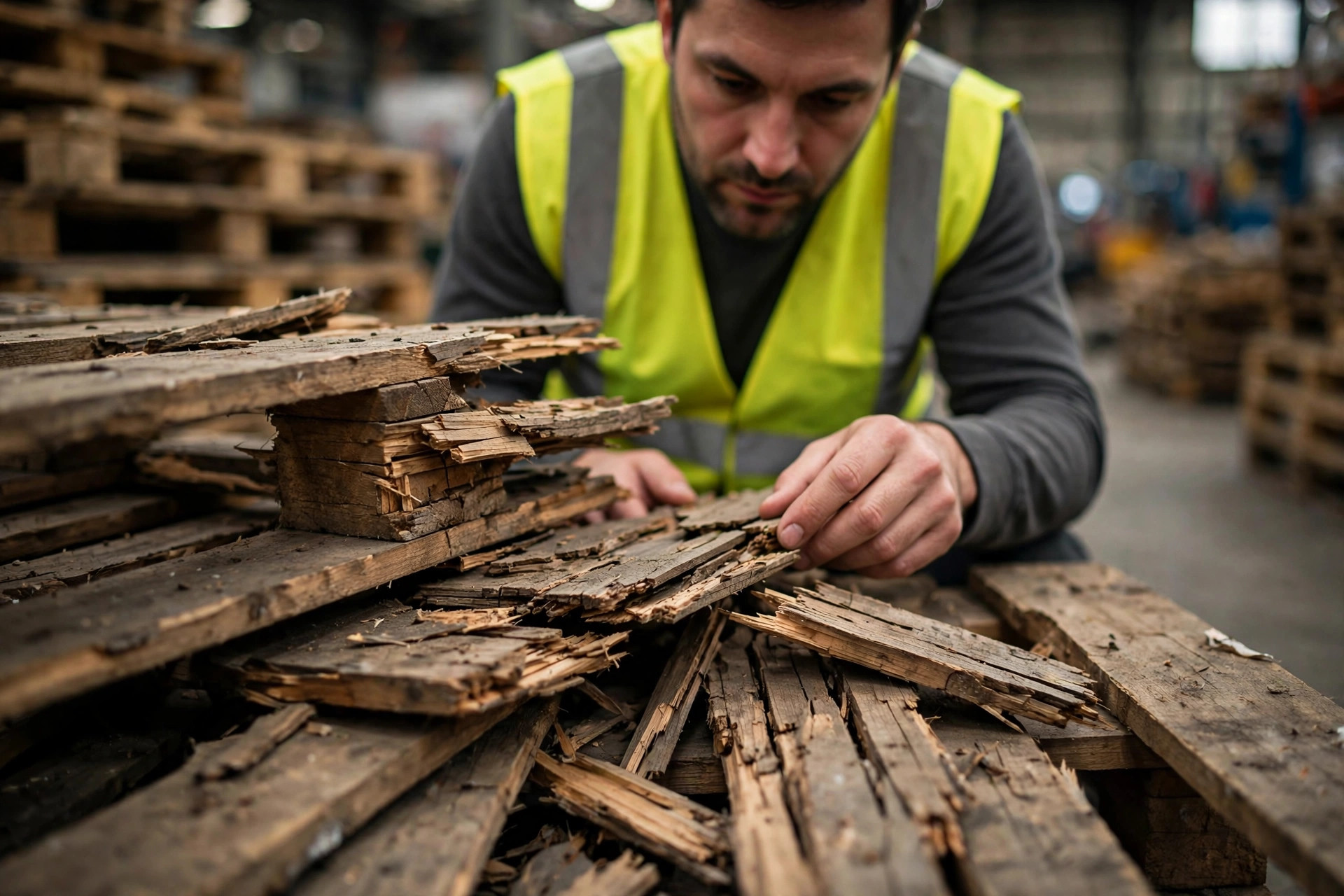
Late 2024, an e-commerce warehouse: a pallet with a cracked load-bearing deck board went up onto high racking. Inbound inspection was visual sampling at under 10%, and this pallet slipped through. A month later it sagged on the beam and dropped the entire load. Product damage plus rack repair ran into the hundreds of thousands of yuan. What does one pallet cost? A few dozen yuan. One broken pallet on racking, traded for hundreds of thousands in losses. The finance team just shook their heads.
Both pits — "stacked too high" and "pallet was broken" — are exactly what AI vision does well, and it's what AI does best: staring tirelessly, with a standard that never drifts.
The fix: cameras watching two things
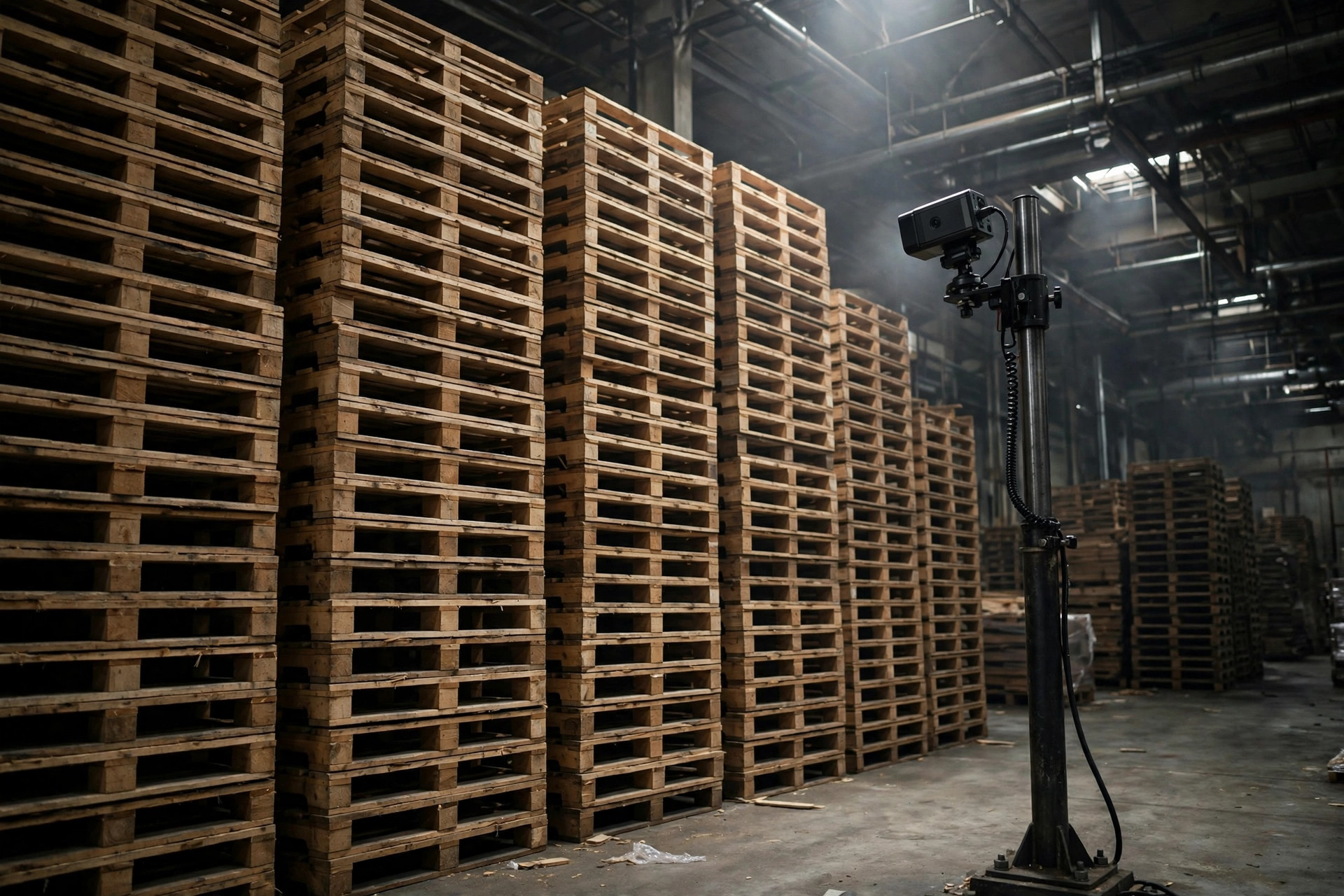
First: empty pallet stack recognition. Cameras go in the pallet staging and stacking areas. AI counts layers and measures height; anything over the set limit triggers an alarm and ties into forklift dispatch — an over-height stack automatically generates a break-down task. The technology isn't complicated. The hard part is the standard: what counts as too high depends on pallet type (wood and plastic pallets have different centers of gravity) and floor conditions. Set the standard, then enforce it.
Second: damage inspection. As pallets pass the camera, AI flags three damage signatures: cracked deck boards, missing or loose nails, and overall warping or deformation. A flagged pallet gets frozen automatically — tagged "awaiting repair" in the WMS, blocked from racking. Stop broken pallets from going up, and you've cut most of the rack-collapse risk at the source.
Camera placement matters: the pallet inbound gate and the stacking-area entrance are mandatory — the last checkpoint before pallets enter the high-risk zone (racking). Add supplemental lighting. Backlight at the dock door, dim night shifts — without proper lighting, recognition rates fall off a cliff.
The tuning pit: the false-positive vs false-negative trade-off
Everything has two sides, and tuning is about finding the balance between them.
Tune it too sensitive and false positives pile up: a deck board that's just dark in color gets flagged as cracked; a slightly angled stack gets flagged as over-height. Forklift drivers get buzzed a dozen times a day, and within three days someone switches the system off — "this thing is worse than my eyes." False positives kill trust.
Tune it too loose and false negatives pile up: genuinely cracked boards go unrecognized, broken pallets go up on racking anyway. False negatives kill the system's value — installed but useless.
My recommendation: for the first month after go-live, err on the side of more false positives, and staff one human verification role. Every alarm passes human eyes first, and the verification results feed back into model training. After a month, false positives come down and trust gets built. When pallet detection projects die, eight out of ten die from "too many false positives in week one, shut off by the floor" — not from the technology being bad.
A few more practical pits: old and new pallets differ wildly in color, so training samples must cover both; pallets darken when damp in rainy season, so recalibrate the model periodically; stacks go up at crooked angles, so normalize the angle before recognition. Camera vendors won't tell you any of this. You learn it by stepping in it.
Here's the honest comparison of human vs AI:
| Human inspection | AI vision | |
|---|---|---|
| Coverage | Sampling, a few glances a day | 24/7, every stack passes through |
| Consistency | Depends on mood and experience — rookies and veterans, two standards | One model, one standard, forever |
| Traceability | Verbal, finger-pointing after incidents | Every stack logged, damage rates queryable |
| Cost structure | Ongoing labor, more expensive over time | One-time investment, near-zero marginal cost |
See the point: AI never wins on "sees better than humans." It wins on "never gets tired" plus "keeps records." Human sampling covers under 10% — the other 90% is open risk exposure. AI takes coverage to 100% and seals the exposure shut.
Roll it out in three steps; don't blanket the whole site with cameras on day one. Step one: one camera set at the pallet inbound gate, get damage interception running first — this is the fastest ROI link, because one broken pallet kept off racking might be one incident avoided. Step two: add height recognition in the stacking area, with automatic break-down tasks for over-height stacks. Step three: wire the data into the WMS — damaged pallets auto-frozen, over-height events in the daily report, management reviewing the damage-rate trend weekly. Three steps done, and pallet management has moved from "feel" to "system."
Run the numbers
A camera-plus-edge-compute setup lands in the tens of thousands of yuan. One rack collapse? Product damage, rack repair, downtime — hundreds of thousands at minimum, before counting injury liability and shutdown orders.
The harsher math is the evidence chain. Before, pallet condition was verbal — after an incident everyone pointed fingers: the 3PL blames the pallet supplier, the supplier blames handling. Now every stack passing the camera is logged: damage rates, over-height counts, which batch on which day, all on record. Responsibility goes from argument to lookup. The hours saved from not arguing are money too.
To put it bluntly, the labor AI vision saves on pallet detection is the least valuable part. What pays is three things: real-time alerts on over-height stacks, interception of damaged pallets, and a searchable evidence chain when something goes wrong. Humans can't do any of the three, 24 hours a day, without degradation.
One question to close: in your warehouse right now, how many pallets are "probably fine"?
By Lao Mi, Supply Chain Veteran (20 yrs)