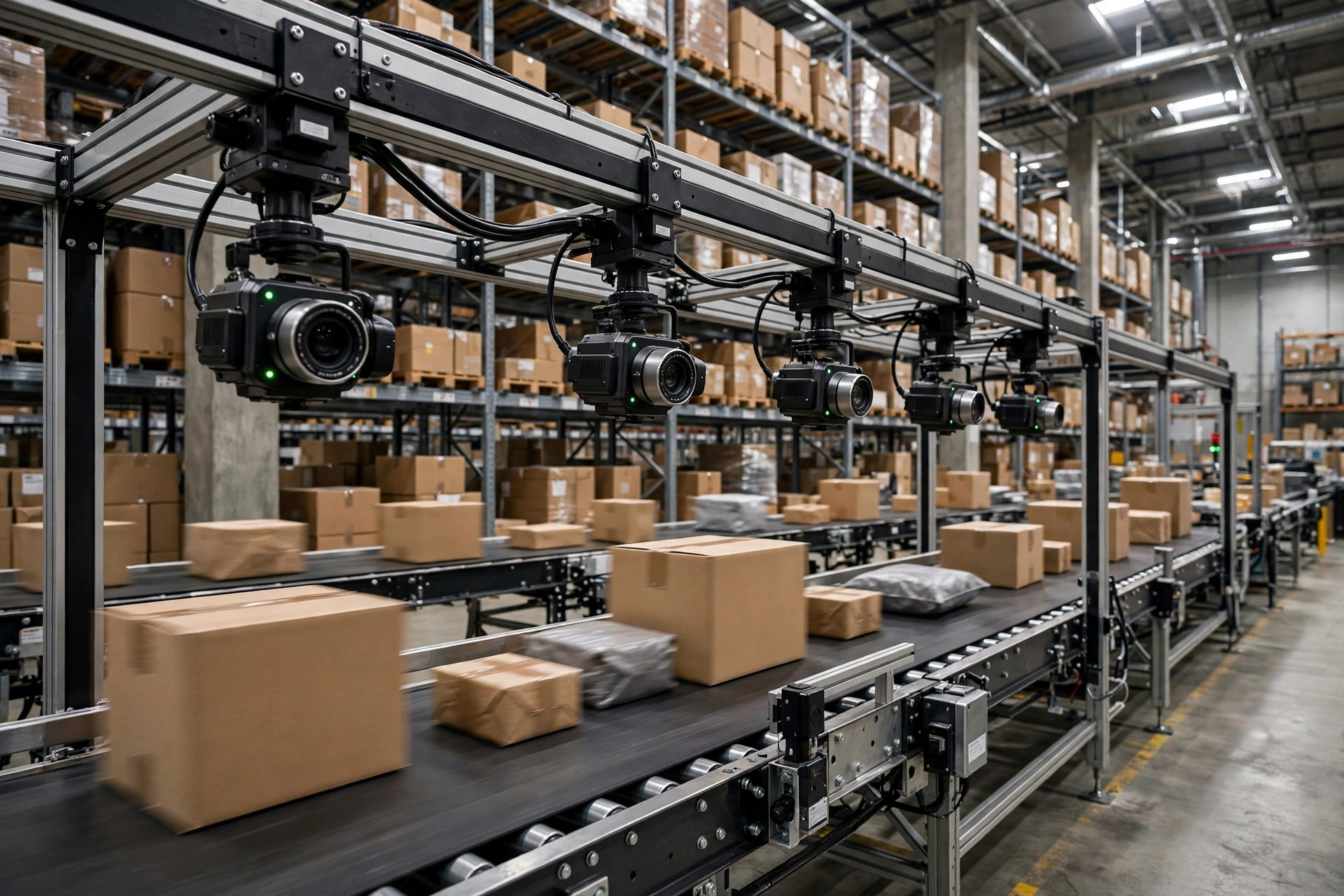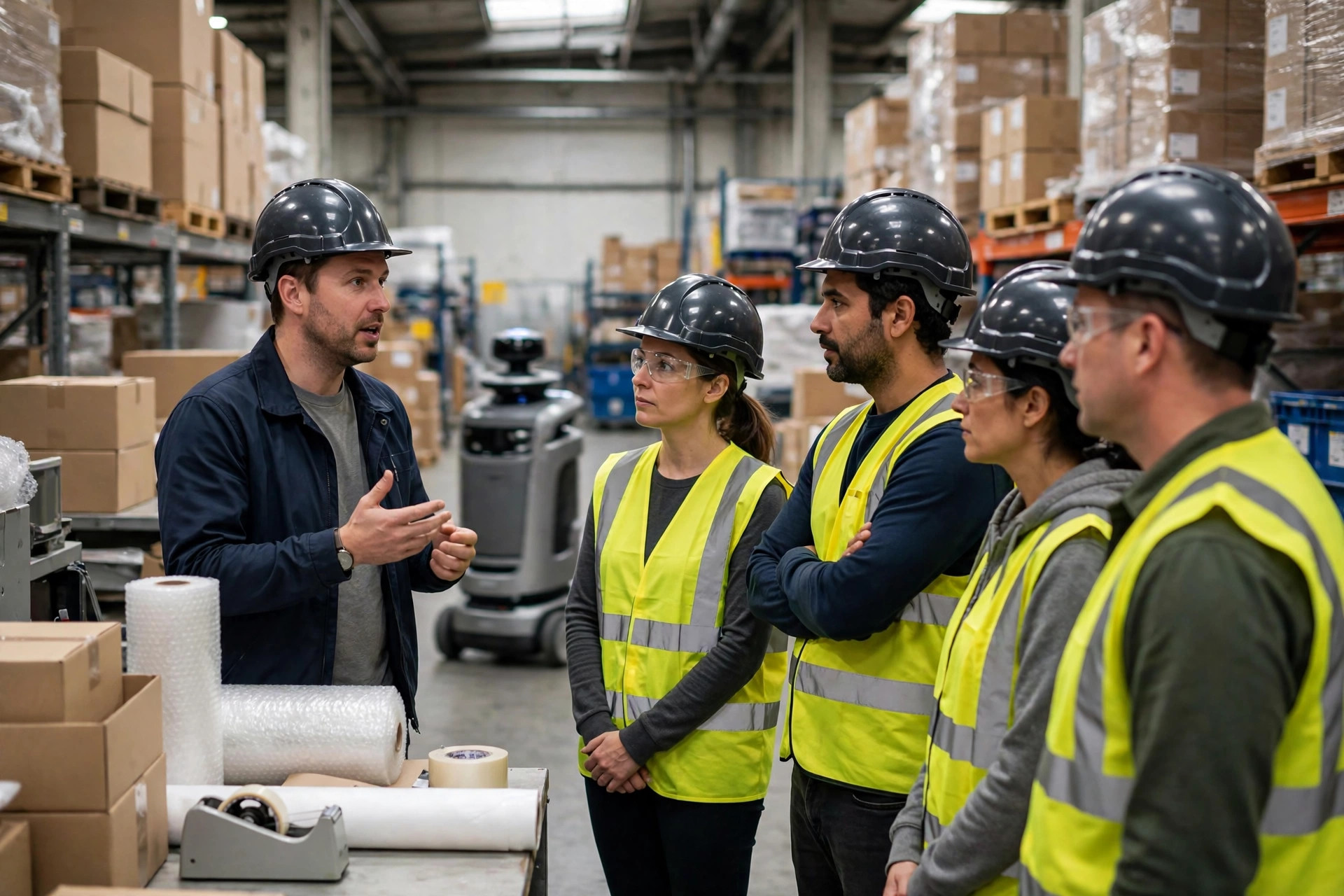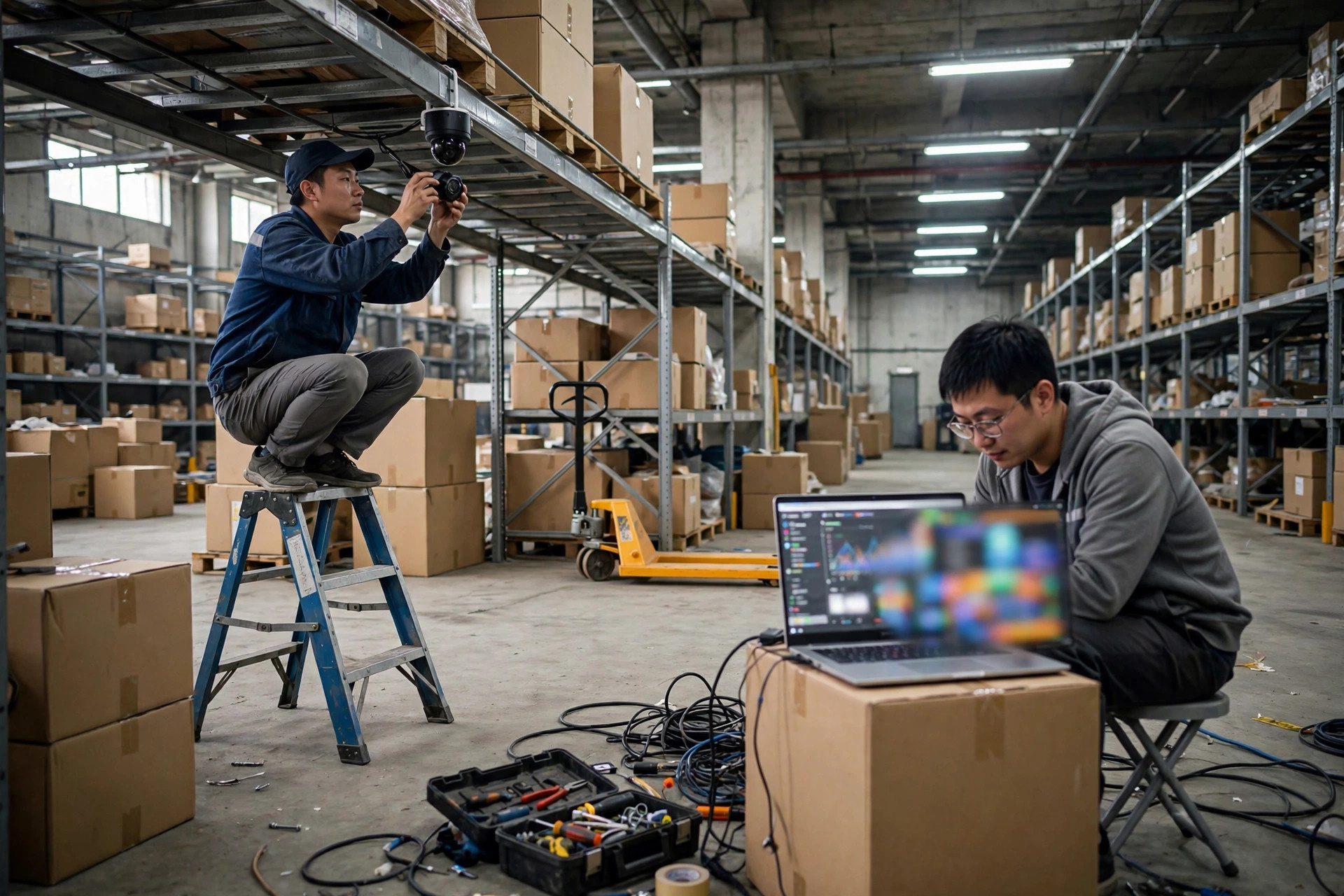
Last fall, an AI vendor's sales rep sat in my office, spun his laptop around, and said: "Boss Ma, this vision-based picking verification system — the software license is only $11,000 a year. AI adoption is that simple."
I almost signed on the spot. Then my wife — our warehouse's part-time bookkeeper — piped up from the corner: "Eleven grand for the software. And what about the rest of the bill?" One sentence, and I sobered right up.
We run a 3,000-square-meter warehouse with 15 people. Every dollar in our account has a name on it. If $11,000 is just the opening bid, the numbers hiding behind it could give a small owner a heart attack. The hidden costs of AI adoption live exactly where the quote can't see them. So today I'm opening up our books — the tuition we've paid — so fellow small operators can see: beyond the software money, how much budget do you really need to set aside?
Hidden Cost #1: Data Prep and Labeling — Tuition Paid Before AI Starts Working
In October 2025, a vendor from Suzhou came to demo AI cycle counting at our warehouse. The demo was slick: camera sweeps the rack, inventory counts itself. Software quote: about $8,500 a year. Seemed reasonable.
Then their engineer arrived and his first sentence was: "Boss Ma, you'll need to prepare training data first. Photograph all 800-plus SKUs from every angle — figure on 20,000 images minimum."
I just stared at him. Fifteen people, and we're drowning in outbound shipments all day. Who's going to play photographer?
Here's how we solved it: I hired two part-time students from a nearby college at about $20 a day. Two full weeks. Over 23,000 photos. Labor alone cost me around $600 — and that doesn't count my own time. Every evening I had to spot-check the shots: blurry ones, duplicates, shots that caught the neighboring rack — all had to be redone. After two weeks, I was dreaming in barcodes.
The math: $8,500 for software, roughly $1,400 in data-prep labor and time. First lesson of AI adoption: the model doesn't know your products, so you have to teach it — and "teaching" is a line item that never appears on the quote.
Street-smart tips for fellow operators:
- Label only your fast movers: We later figured out that 80% of our picks came from 20% of SKUs. Photograph and label that 20% properly, let a generic model muddle through the rest — cuts labeling work by more than half.
- Ask the vendor for a pre-trained model: Many vendors already have warehouse-SKU models trained. Fine-tuning beats training from scratch every time. Before signing, ask: "Do you have an existing model close to my product category?" If yes, you've got leverage to negotiate.
- Don't label it yourself — make suppliers do it: We later talked our upstream suppliers into providing standard product photos. Their catalog images doubled as training data. Free.
Hidden Cost #2: System Integration — the Generation Gap Between Old Systems and New AI
Data finally sorted. The engineer's second sentence: "Boss Ma, what version is your inventory system? Got API docs?"
Our inventory software is a local install I bought five years ago for under $3,000. It doesn't know what an API is. The AI system needs to read order data in real time for verification — without integration, I'd have bought a very expensive blind man.
The vendor's proposal: custom integration development, about $5,500, one month timeline. My blood pressure spiked — the software was only $8,500, and integration costs another $5,500?
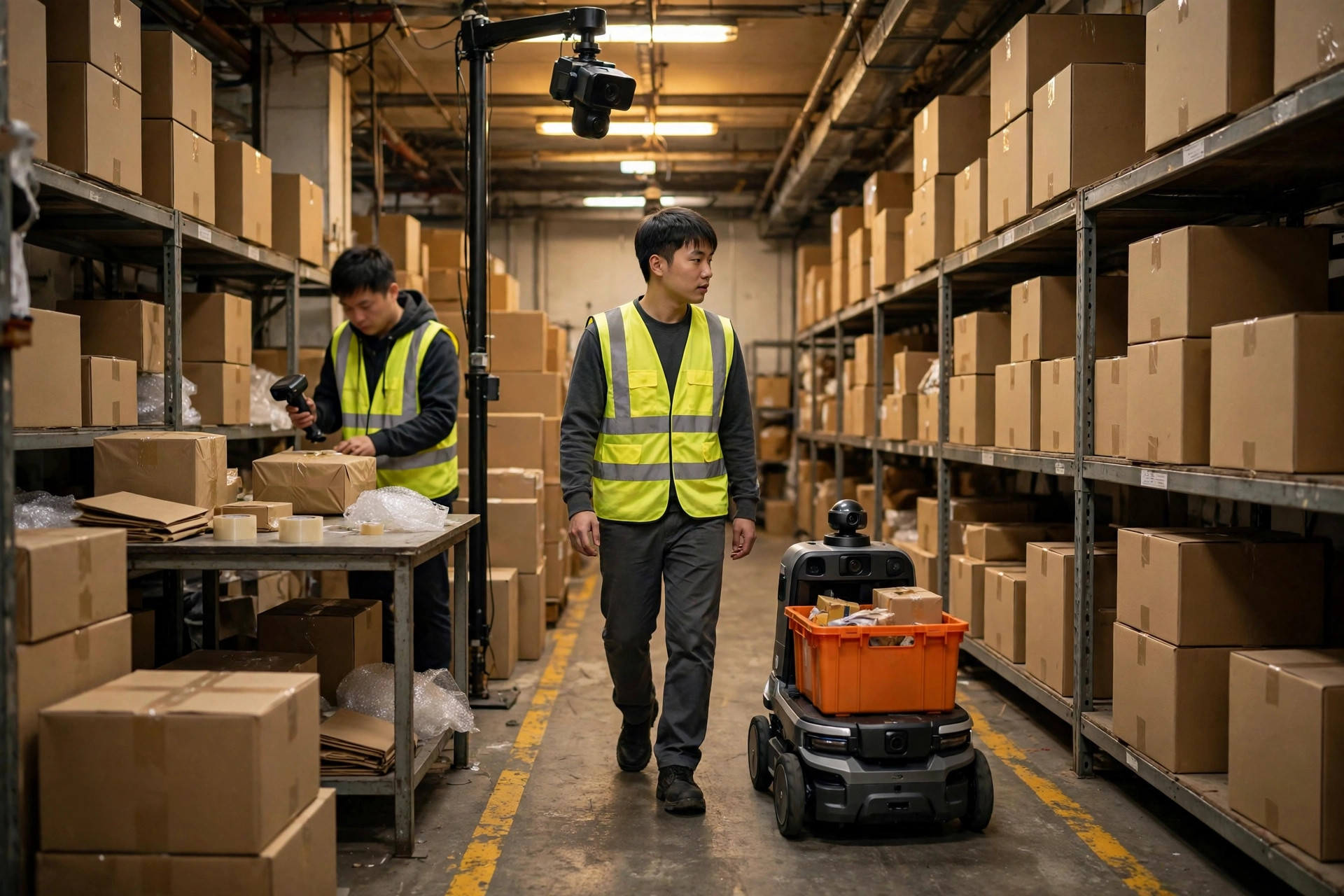
We ended up with a gloriously low-tech solution that works beautifully: export a spreadsheet every evening. The AI side built a CSV import function. Each night we dump the day's outbound orders into it; next morning the AI verifies against that list. Real-time? No. But we ship two or three hundred orders a day — plenty good enough. Integration cost: zero dollars, plus half a day aligning column headers with their engineer.
This bill: $8,500 software, $5,500 if you go the "proper" route, $0 the scrappy way. Of all the hidden costs in AI adoption, integration is the easiest to underestimate — big companies have IT departments for this; our ancient systems make vendors shake their heads.
Three questions to ask vendors before you sign:
- Does your system support CSV/Excel import and export? (If yes, there's a scrappy path.)
- Have you integrated with an old system like mine before? (If no, add 30% buffer to the quote.)
- Can we run two weeks in "semi-automatic" mode to validate results before deep integration? (If yes, don't spend that $5,500 yet.)
Hidden Cost #3: Ongoing Maintenance and Model Retraining — the Spending Starts After the Purchase
The system finally went live. Worked decently — mispick rate dropped from 0.3% to 0.1%. I was celebrating when the renewal notice arrived: year two software $8,500, plus an annual "model optimization service fee" of about $2,000.
I asked what that was. Answer: new SKUs, changed packaging, adjusted racking — the model needs retraining and tuning, or accuracy decays.
Fair enough, honestly. AI is like raising a kid — birth is just the beginning; raising it costs money. We turn over about 30% of SKUs a year. Without fresh data, the model starts going senile within three months, false alarms climbing.
This bill: $8,500/year software, $2,000/year tuning. The hidden costs of AI adoption are billed annually — not a one-time deal.
Scrappy fixes:
- Write free tuning sessions into the contract: At renewal we negotiated four free model tune-ups per year; beyond that, pay per session. Four a year covers our turnover rate — that $2,000 fee, gone.
- Train one "half-expert" of your own: Xiao Li in our warehouse, born after 2000, good with phones. I had him shadow the engineer for two days. Now he handles basic data top-ups and parameter tweaks himself. A vendor site visit starts at $280 a pop; your own guy costs a takeout dinner.
- Accept "good enough": Pushing recognition from 92% to 98% might cost another $4,000. For our little warehouse, 92% already brought mispicks into the acceptable range. Those last 6 points are big-company vanity, not small-warehouse necessity.
The Full Tab: Software Is Only a Third
Line up all three bills (our warehouse, year one):
| Line item | Cost (USD/year) | Share of total |
|---|---|---|
| AI software license | 8,500 | ~63% |
| Data prep/labeling (labor + time) | ~1,400 | ~10% |
| Integration (scrappy route; "proper" route ~5,500) | 0 (proper route ~29%) | 0% |
| Ongoing maintenance/model tuning | ~2,000 (after negotiation) | ~15% |
| Year-one actual total | ~11,900 | Software = 71% |
Wait — software still looks like the big piece? Hold on, that's the scrappy version. Go the "proper" route — hired labelers, custom integration, full-price maintenance — and the total easily tops $19,000, with that $8,500 software license under 45%. I asked my neighbor Lao Chen down in Foshan (he installed AI forklift collision-avoidance in early 2026, software quoted at $7,000): old-warehouse wiring and network upgrades cost him $4,000, two years of maintenance another $4,000. Software ended up barely a third of his total.
Here's the counterintuitive takeaway: the most expensive part of AI adoption was never the AI — it's the infrastructure debt your warehouse has been racking up for years. Old systems, dead Wi-Fi zones, messy data. The vendor sells you the renovation rendering; converting the fixer-upper is on your own dime.
A Three-Question Checklist: Ask Yourself Before Signing
We can't afford to burn money, so now I have a habit: before any AI project gets signed, it has to pass three questions. Can't answer them — no signature.
Question 1: Is the data ready? List your SKU count, photo volume, labeling labor. If it takes more than two weeks, cut scope before you talk project.
Question 2: Can the systems talk? Write down your current software version and whether it exports Excel. Ask the vendor for a "minimum viable integration" — don't start with real-time APIs.
Question 3: Who maintains it? Assign one of your own people to learn it. Don't hand your lifeline entirely to the vendor — their service fees are priced on your dependency.
Answer all three, and budgeting at roughly 2x the software quote will keep you out of trouble. Can't answer them — however tempting the quote looks, park it for now.
AI is genuinely good stuff, and small warehouses can afford it — but on small-warehouse terms: no big-bang rollouts, no worshipping enterprise playbooks. Go scrappy where you can, save where you can. The software money is just the ticket; the three hidden bills after you walk in — that's the real exam.
Small warehouses have their own way of surviving. Get the math right, and AI works for you.
By Xiao Ma, Small Warehouse Owner