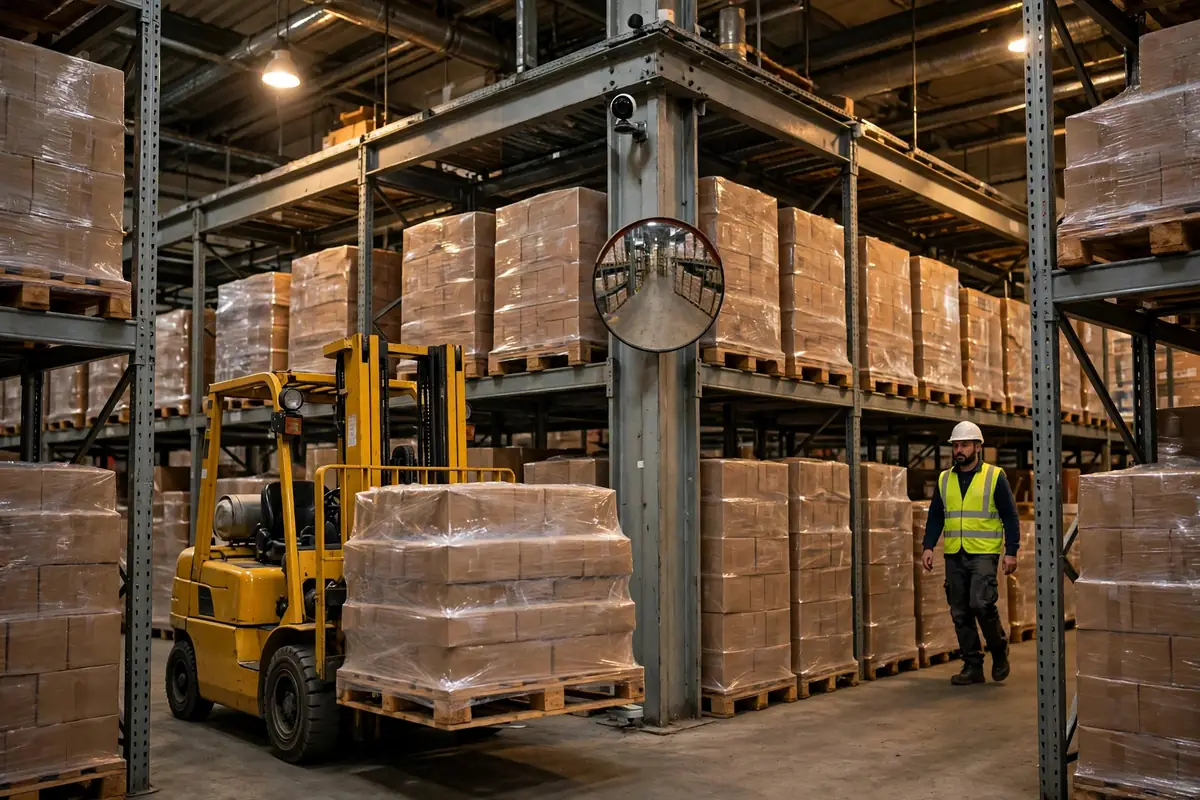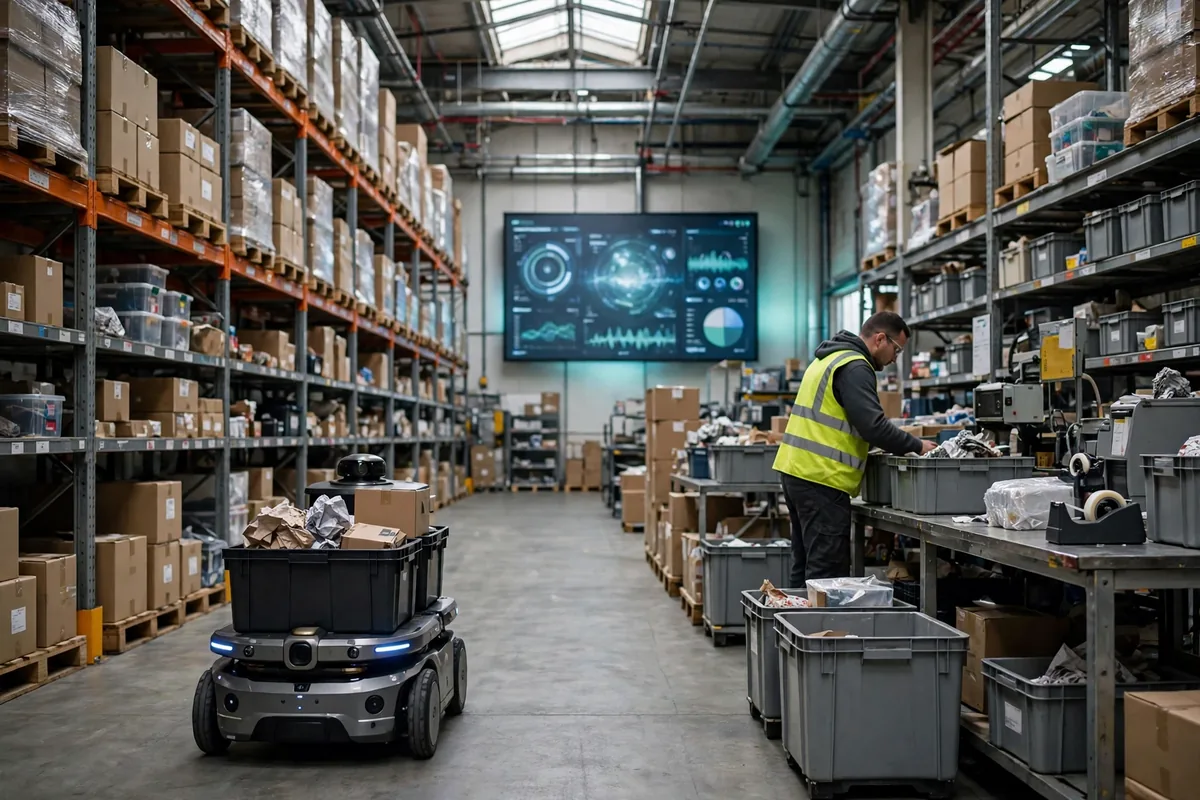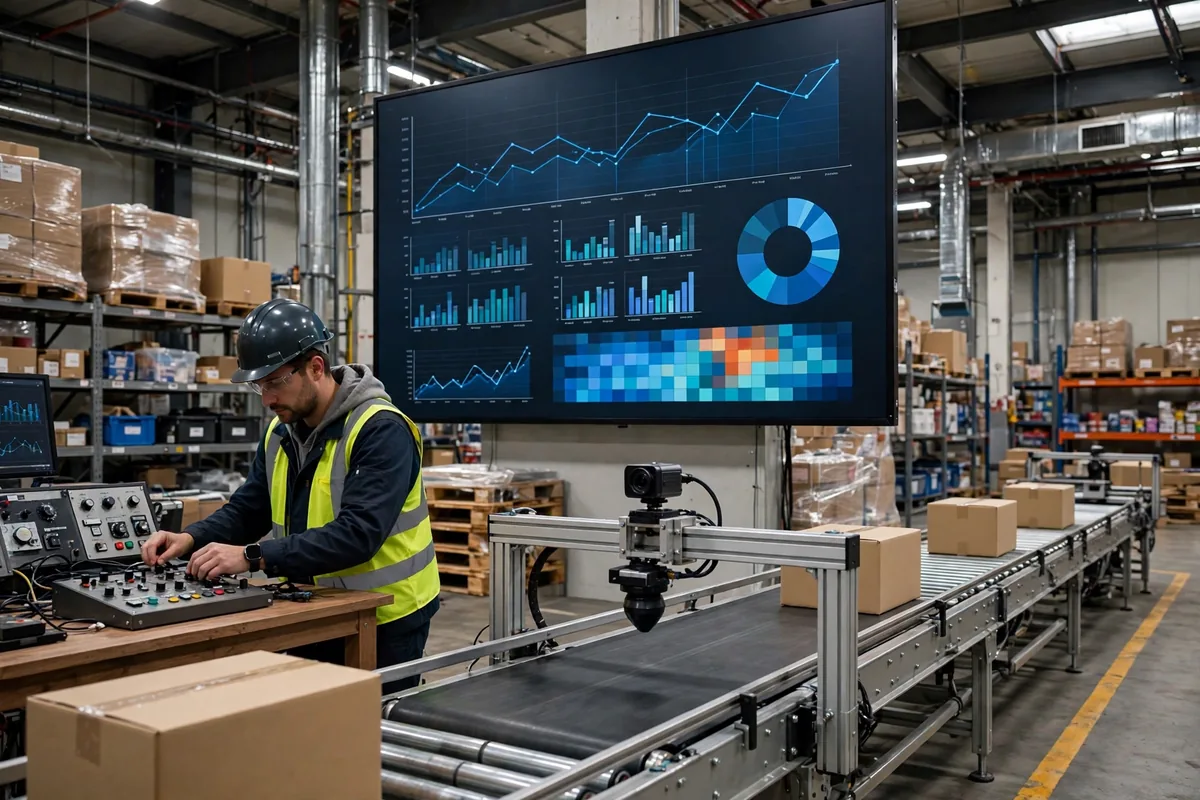
Let me say it straight: before AI does anything useful in your warehouse, data preparation has to happen first. I've watched too many projects buy expensive software, sit through a beautiful demo, and then fall apart on day one — and the root cause was always the data. Master data that doesn't match, transaction records full of holes, exceptions nobody bothered to write down. Feed that to an AI and you get a system that has never set foot in a warehouse telling your pickers where to walk. The smarter it is, the faster it goes wrong. This piece is not about models or algorithms. It is about the three types of data you have to clean up before AI goes live, the order to do it in, and how you know each one is done.
In the fall of 2023 I was asked to review a 3PL warehouse east of Los Angeles — 120,000 square feet, about 4,000 orders a day. They had just spent $180,000 on an AI picking-path system meant to cut the distance pickers walked each day. In the first week after go-live, pickers were walking about 2 kilometers more per day, not less. We spent three days chasing the problem. It was not the algorithm. It was the data: the same product lived in the system under three different item numbers, and bin locations had been keyed in by hand five years earlier, with more than 60 of 400-plus bins carrying the wrong level. The AI did exactly what it was told, on data that was wrong. The system sat idle for two months while the team went back and cleaned up the data. That $180,000 bought a lesson: if data preparation is not finished, the AI project has not started.
Data Preparation Starts With Master Data: Get the Basics Right
Master data is three tables: products, locations, suppliers. Think of them as the warehouse's household register. If the register is wrong, every document and every calculation downstream is wrong too. The dirty versions look the same everywhere I go: one product with three item numbers — one created by purchasing, one synced in from a marketplace, one invented by the warehouse itself. Bin codes mixed with upper and lower case and stray spaces, so the system treats one bin as two. One supplier written five different ways in the same column.
Cleaning this up is unglamorous work, and that is the point. Settle on one item number per product and map the rest — no new numbers, no exceptions. Then walk every bin with a printed list and fix errors on the spot, with the warehouse supervisor signing off on each aisle. Then fill the gaps in supplier and product attributes, with a list of missing fields and a deadline for purchasing and operations to close them. Two sides to this: it looks like manual labor with zero technology in it, and it is also the only thing that decides whether the AI can do basic arithmetic correctly. My acceptance bar is blunt: master data fields at least 98% complete, zero duplicate item numbers, every bin verified in person. Until you hit that bar, do not spend another dollar.
Data Preparation for Transactional Data: Don't Feed the Model Junk
In the spring of 2024, an e-commerce warehouse in Chicago asked me to look at its AI replenishment forecast. The system wanted to order $30,000 of a small home appliance because it was "turning over fast." I dug into the transactions and found the story: half of that so-called turnover was returned goods being put back on the shelf, and the other half was outbound records double-counted during cycle-count adjustments. Real sales were about 60% of what the system believed. If that $30,000 order had gone through, at least half of it would have sat in the warehouse for six months.
Transactional data goes dirty in a different way than master data. Master data is wrong at the source; transactional data leaks along the way. Returns that never get logged the same day. Damaged goods handled without a record. Count variances fixed by editing the number in the system and leaving no trace. Paper tickets keyed in a day late. The fix is not to rebuild history — it is to plug the leaks. Returns, damage, and count adjustments go into the system the same day, and a record with missing fields cannot be saved. Paper tickets get keyed in the same day, and anything overnight counts as an exception. Once a week, orders, inventory, and finance get reconciled, and any gap gets investigated the same day. The acceptance bar: missing fields under 2% across the four core transaction types, reconciliation gaps cleared the same day. If the history is too dirty to save, cut a clean window of recent weeks for the AI to learn from. A short clean stretch beats three years of dirty data.
Exceptions and Feedback: Without Them, AI Never Learns
This is the easiest of the three to ignore, and the one that decides whether AI gets better over time. Exception data is everything that went wrong: stockouts, mis-ships, damage, late orders, customer complaints. Feedback data is what people did with the AI's suggestions: accepted or overruled, and why. In most warehouses neither exists. Exceptions travel by word of mouth. Whether the AI was right or wrong, nobody writes it down. With no feedback loop, the AI makes the same mistake today, tomorrow, and next month — identical, every time.
In the summer of 2024 I visited an auto-parts warehouse near Dallas. The AI issued a replenishment list every morning, and operations overruled about a third of it from experience — without ever recording a single reason. Three months later the AI was still making the same suggestions and operations was still overruling them. Three months of learning, wasted. Fixing this takes no big project: every exception gets a record, a cause, and a resolution — one sentence is enough. Every AI suggestion gets an accept-or-overrule mark, and every overrule gets a one-line reason. A month of that is good training material for the next round. Here is the counterintuitive part: the more exception data you keep, the cheaper AI mistakes become, because the system can learn from them. A warehouse with no exception records looks smooth on the surface while the same mistake repeats unnoticed.
What Order, and What It Costs
Take the three in the order above: master data, transactional data, then exceptions and feedback. The order is not flexible. Without agreed master data, reconciliation never ties out. Without plugged leaks in transactions, exception records have no case to attach to. The table below is an illustrative estimate for a mid-size warehouse — 3,000 orders a day, 2,000 bins. The numbers are a hypothetical example, not an industry benchmark:
| Data type | What it usually looks like | Cleanup work | Acceptance bar | Illustrative cost |
|---|---|---|---|---|
| Master data | One product, several item numbers; wrong bin codes | One number per product; walk every bin | Fields 98%+ complete; zero duplicates | 2–3 weeks, ~$10,000 |
| Transactional data | Returns unlogged; counts edited without a trace | Same-day entry; weekly three-way reconciliation | Missing fields under 2%; gaps cleared same day | 3–4 weeks, ~$15,000 |
| Exceptions & feedback | Word of mouth; overrules with no reason | Every exception logged; every suggestion marked | Record, cause, and resolution on file | 1–2 weeks, ~$5,000 |
Add it up and the whole job runs about 6 to 9 weeks and $30,000. That looks like an extra charge on top of the AI project, until you price the alternative: two months of rework and a $180,000 system sitting idle. Data preparation is not a cost line. It is the entry ticket for the AI project — if you cannot pay it, do not walk in yet.
So the next time a vendor tells you dirty data is fine because the model will learn on its own, ask one question: when it learns the wrong thing, who pays for it? If they cannot answer that, put the deal on hold, clean the data first, and talk about AI after.
By Lao Mi, Supply Chain Veteran (20 yrs)