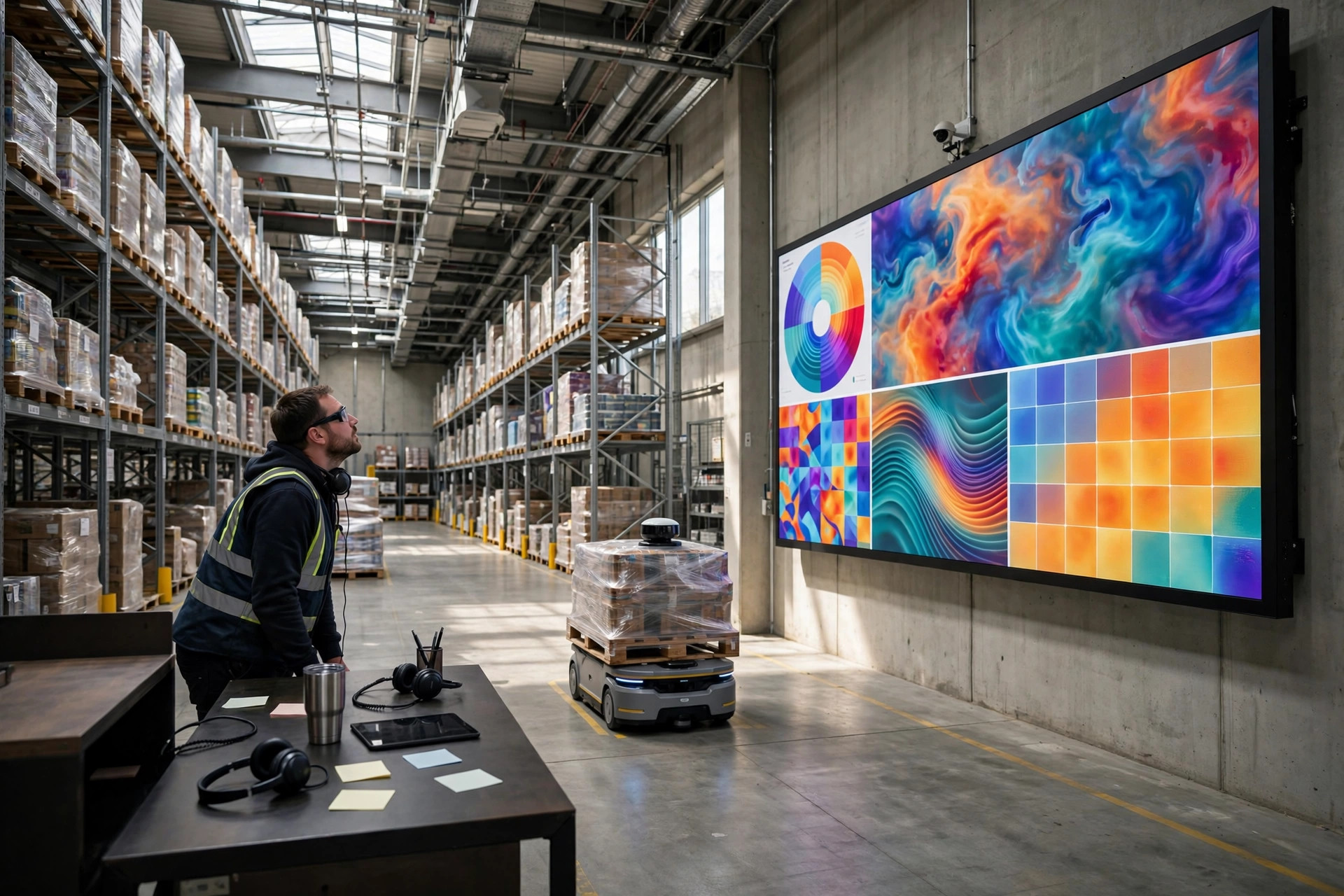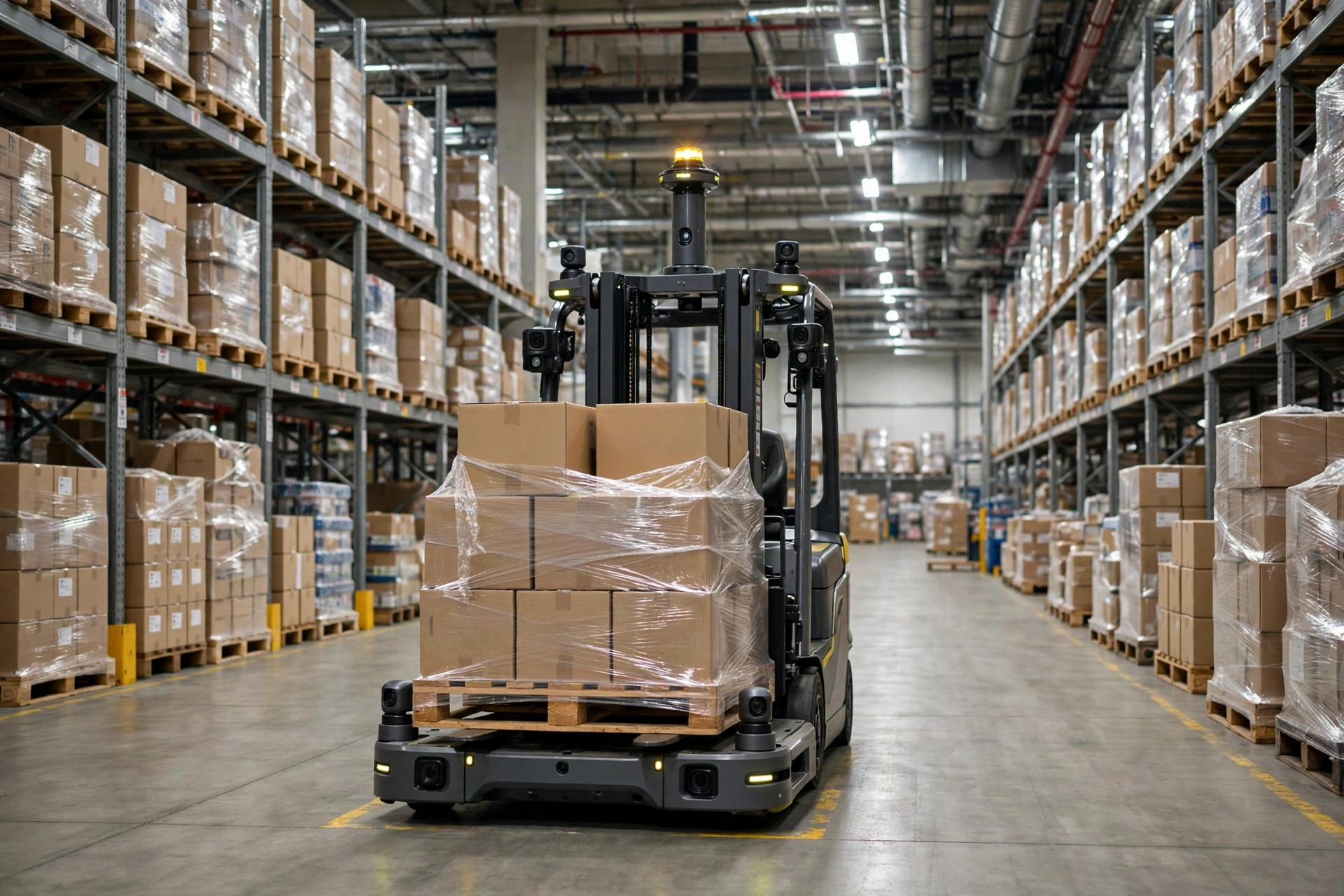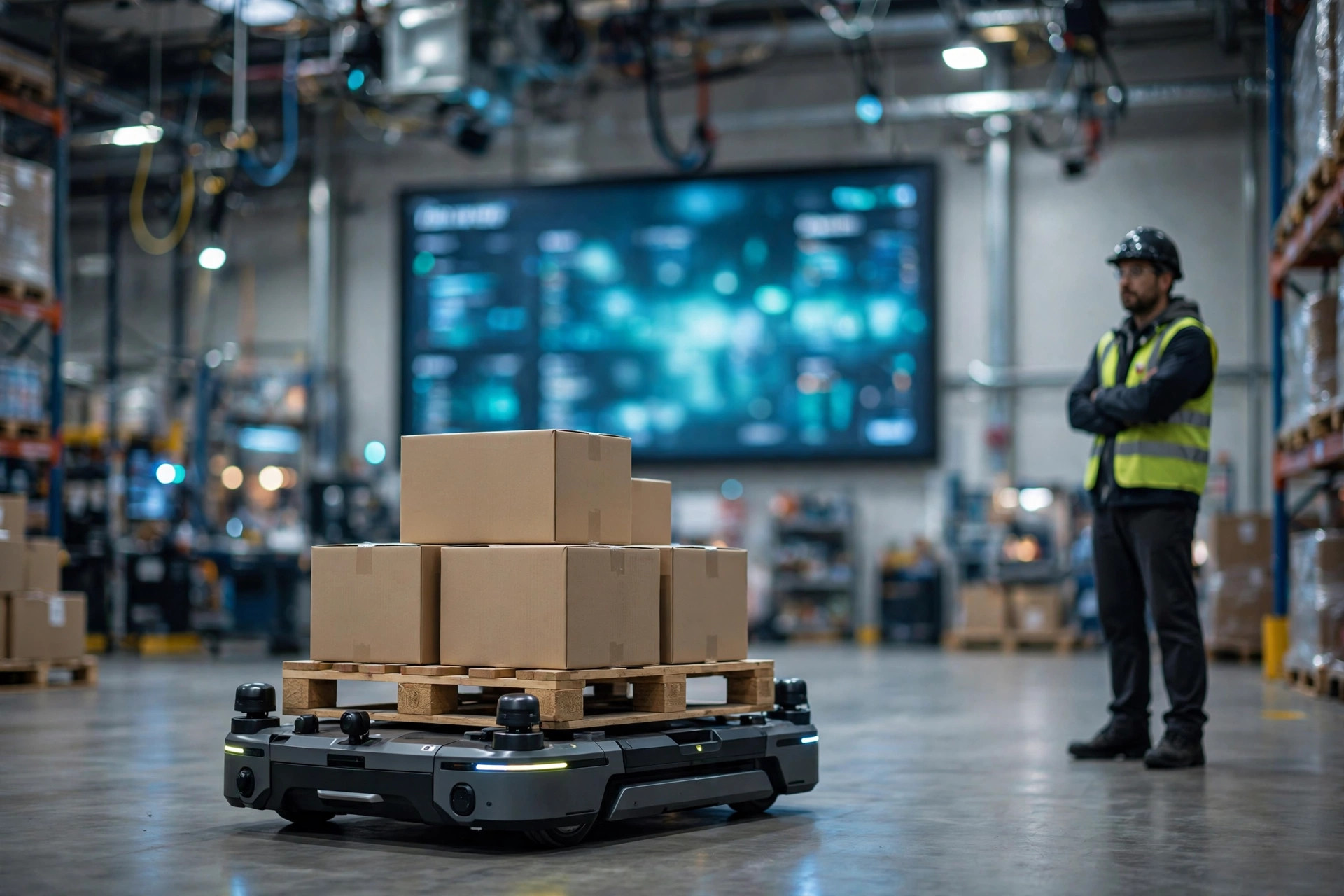
Last Wednesday morning I was at a 3PL in Ontario, California, looking at a slotting project. That afternoon I stopped by a friend's e-commerce fulfillment center for coffee. Similar footprint, similar order volume — but the two operations felt like they belonged to different decades.
At the 3PL, the pick supervisor was tearing printed wave sheets off a stack and handing them to pickers, who pushed carts up and down the aisles. At my friend's place, the day's orders had already been split into waves by the system, AMRs were queuing in the aisles to receive tasks on their own, and the pickers just stood at their stations picking — goods came to the people, not the other way around.
Same city, same industry, two eras apart. My friend said something that stuck with me: "We both bought AI. The difference is we put it inside the process."
I've been turning that sentence over for days. Everyone in warehousing talks about AI these days, but most people aren't talking about the same thing. From what I've seen in the field over the past few years, AI adoption in warehouses falls into three stages. I named them myself: point tools, embedded process, and autonomous decision-making. Knowing which layer you're on determines whether your next dollar should be spent or saved.
Stage one: point tools, saving labor one spot at a time
Stage one is where most warehouses are. You have a handful of AI tools: a vision camera catching damaged parcels, a piece of software generating replenishment suggestions, a chatbot in customer service. Each tool works on its own. Each one saves some labor at one spot, or makes one step a little faster.
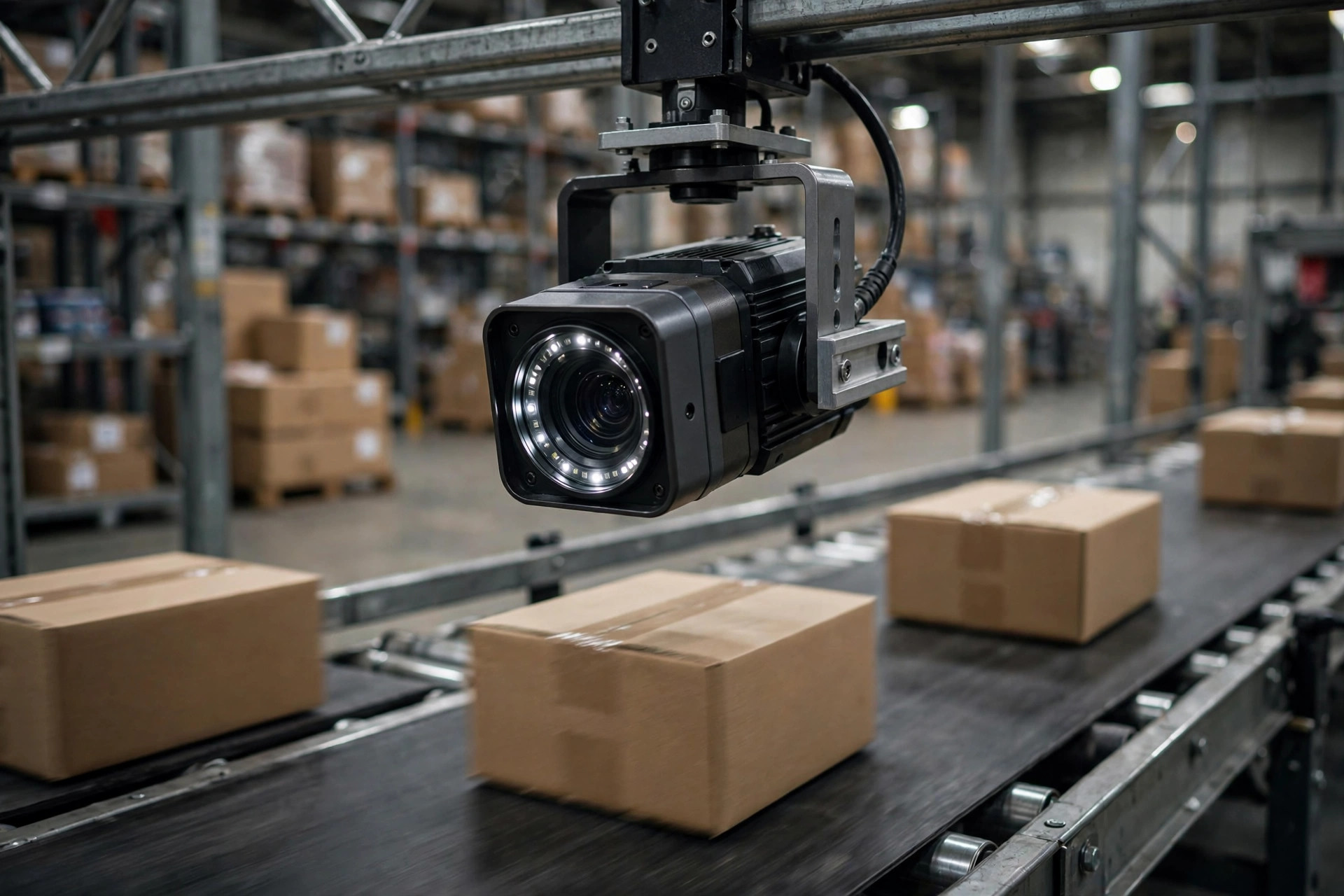
The problem is obvious once you look: the tools don't know each other. The vision camera flags a damaged parcel, but someone has to type that into the system by hand. The replenishment suggestions get calculated, but purchasing still confirms them line by line. AI solved one dot. Moving information between the dots — the handoffs, the checks, the communication — is still all human.
Here's the test for stage one: if you switched off every AI tool for a day, would the floor fall apart? If operations keep running, just slower and more tiring in a few spots, you're at stage one. AI is your fancy assistant, not your process.
The trap at this stage is mistaking point tools for "we've digitized." I've had owners tell me "our warehouse is already on AI," and it turns out they bought two vision cameras. Money spent on tools, zero change to the process, and the labor saved doesn't even cover the annual software fees. That's not AI's fault. It's misaligned expectations.
Stage two: embedded process, where AI starts changing how you work
At stage two, AI stops being a collection of isolated tools and grows into the process. How waves are cut, where inventory is slotted, when replenishment triggers — decisions that used to live in a supervisor's head are now computed from live data, and people execute and verify.
The signature of stage two: people start adapting to the machine's rhythm instead of the machine accommodating people. Pick paths come from the system. The first lesson in onboarding is "trust the screen." It sounds a little inhuman, but the payoff is real — same headcount, same order volume, noticeably higher units per labor hour.
The cost is real too. Embedding AI in the process means rewriting SOPs, rewriting KPIs, rewriting the org. Your most experienced veterans are often the biggest resistance, because the system is messing with their "feel." I watched one facility lose output for months after go-live because veteran staff didn't trust the system's wave logic and quietly kept doing it the old way. When the system and the people fight, the one that loses is always the one you paid for.
So the real investment at stage two isn't the software license. It's change management. The license is just the ticket — getting the organization to actually change is the main event. When stage two fails, nine times out of ten it's a people problem, not a technology problem.
Stage three: autonomous decision-making, where the system closes the loop
Stage three is still rare. I've only seen early versions of it in a few flagship facilities run by the biggest players. The defining trait: the system doesn't just recommend, it acts and self-corrects. Demand forecasts drive purchasing and pre-slotting directly. Equipment faults generate their own work orders. Wave plans reshuffle automatically against real-time labor availability. People move from executors to supervisors, handling only what the system flags red.
The line between stage three and the first two is accountability. In stages one and two, a human still signs off on the decision. In stage three, the system makes many of the calls directly, and people are the backstop. That's a genuine management test: would you let the system re-cut waves by itself at 3 a.m.? When something goes wrong, whose fault is it?
My call: stage three will trickle down from flagship sites over the next few years, but only for operations that did the first two stages properly. A warehouse with dirty data jumping straight to autonomous decisions is like handing the wheel to someone who needs glasses — the faster it goes, the worse the crash.
A quick self-test: which layer are you on?
Forget the vendor pitch decks. Ask yourself three questions.
Are your AI recommendations something employees "consult," or something they must execute? If it's just a reference, you're at stage one. If it's mandatory and measured, you're at the door of stage two.
Between your systems, does data flow on its own, or do people carry it? If humans are still moving Excel files and screenshots around, no AI is going to be more than a point tool, no matter what it cost.
Last one: if you killed all the AI tomorrow, would your floor run "a bit slower," or would it collapse? Collapse means AI has grown into the bones of your process.
Answer those three honestly and you'll know where you stand — and what to do next. Stuck at stage one? Don't buy more tools. Connect the data between the ones you have. Working through stage two? Manage the change like a real project; the go-live is the easy part. Knocking on stage three? Ask whether your data quality and your accountability structure are ready before anything else.
If your system could cut its own waves and re-slot its own inventory next year, would you trust it with that authority at midnight? Don't buy a ticket to stage three until you can answer that one.