Here's the verdict up front: without an NRTL listing or label, a Chinese-built AGV can't even get into a pilot run at a major US customer's warehouse. That sounds harsh, but after years working warehouse automation on the US side, I've watched more than one manufacturer learn this the expensive way — the machines cross the ocean, arrive at the customer's dock, and get stopped cold by one sentence from the customer's EHS team: "Show me the NRTL listing." No certificate, no pilot.
A friend at a Chinese AGV maker lived through this in early 2024. A 3PL outside Chicago — 120,000 square feet — wanted six pallet-carrying AGVs. The demo units were already on site, the warehouse manager loved them, and everything was waiting on EHS sign-off. Then the EHS engineer walked the floor: no listing on the vehicle, no listing on the lithium battery pack, and a charger cobbled together from a domestic 220V design. Three strikes. The project froze for nearly four months until it was resolved through field evaluation, and the customer almost switched vendors in the meantime. My advice to any manufacturer: safety certification isn't a post-shipment task — it's a pre-design task.
First Things First: The US Doesn't Care About Your CE Mark
The first instinct of many Chinese manufacturers going abroad is: "But we have CE certification." I'll be blunt — CE carries no weight in the US. American warehouses answer to OSHA, and 29 CFR 1910.303(b)(2) is explicit: electrical equipment used in the workplace must be listed or labeled by an NRTL, a Nationally Recognized Testing Laboratory. NRTL isn't one company's name — it's an OSHA-maintained roster that includes UL, Intertek (ETL), TÜV SÜD, SGS, and others. So "UL certification," the phrase everyone uses, really means NRTL listing.
For AGVs specifically, there are four standards you can't dodge:
Vehicle electrical safety: UL 583. The full title is the Standard for Electric-Battery-Powered Industrial Trucks, currently ANSI/CAN/UL 583:2025, eleventh edition. It covers the electrical and fire safety of forklifts, pallet trucks, tractors — and an AGV is, at its core, a driverless electric industrial truck. When an NRTL evaluates your vehicle, this is the standard the electrical side gets judged against.
The battery pack: UL 2580. This one governs batteries for electric vehicles, explicitly including lithium-ion packs for AGVs and AMRs, covering electrical, mechanical, environmental, and abuse testing. This is where many manufacturers get stuck: the vehicle design is fine, but the battery comes from a third-party supplier who can't produce a UL 2580 listing — and without it, the vehicle listing doesn't happen. Make the listing certificate a line item in your battery purchase contract.
Mobile robot safety: ANSI/RIA R15.08. The US safety standard written specifically for industrial mobile robots, now maintained by A3, in three parts: Part 1 covers the robot itself (hazard identification, e-stops, safety-rated monitored stops), Part 2 covers system integration (deployment design, traffic management, fleet coordination), and Part 3 covers the end user's responsibilities. With Part 3 finalized in 2026, the trilogy is complete — and customer EHS teams increasingly ask for it. When GE Appliances evaluated AMR vendors for its warehousing operations, demonstrated conformance with R15.08 was a real differentiator.
Control panels and wiring: NFPA 79. The electrical standard for industrial machinery. Your AGV's control cabinet and the charger's power distribution need to be wired and interlocked to NFPA 79. Cabinets built to Chinese GB practice routinely get flagged here during field evaluations.
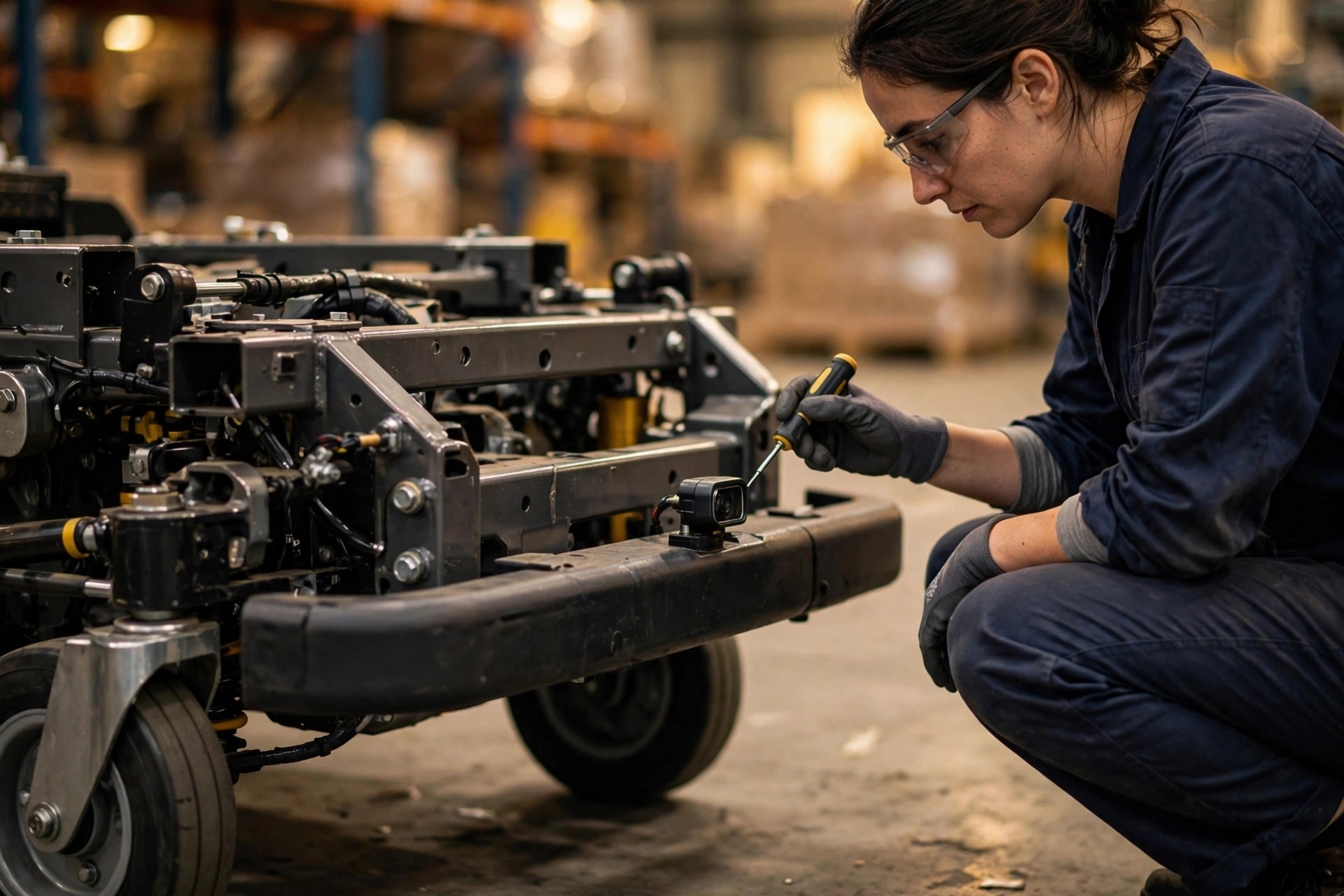
Listing vs. Field Evaluation: Do the Math Before You Choose
There are two paths through the NRTL system, and picking the wrong one burns money and schedule.
Path one: Listing. You send sample units to an NRTL lab for full testing against the standard. Once you pass, your factory enters a follow-up inspection program with periodic audits, and every unit rolling off the line can carry the listing mark. This is a true product certification — do it once, benefit for years. It's the right call for manufacturers serious about sustained, high-volume US shipments. When a big customer's purchasing terms say "NRTL Listed," this is what they mean.
Path two: Field Evaluation. The machines are already in the US, and an NRTL engineer comes on-site — to the customer warehouse or your US facility — to inspect them unit by unit. Pass, and each unit gets a field evaluation label. This fits small trial batches, a handful of demo units. Two gotchas: the label is only valid for the specific units evaluated, and it's only valid together with the evaluation report — lose the report and the label is worthless. Also, the evaluation happens on the customer's turf, so every fix is out in the open: the engineer points out the problem, you fix it on the spot, and if you can't, that trip's travel costs are gone.
My straight advice: if you're serious about the US market, get listed from the first shipment. Field evaluation looks cheaper and faster, but you repeat it for every batch — the long-run math flips against you fast, and large customers' EHS teams accept field labels with noticeably less enthusiasm than listings. Timelines and costs vary with product complexity and NRTL backlog, so get quotes from two or three NRTLs at the project stage rather than taking a broker's word for it.
One more trap to flag: don't mistake self-declaration for certification. I've seen manufacturers hand a customer a test report from their own lab and claim "we comply with UL 583." The customer's EHS team won't even read it — OSHA wants third-party NRTL backing, and self-testing doesn't count. This is fundamentally different from the CE self-declaration model. The mindset has to change.
The Punch List: Where Evaluations Most Often Fail
Whether you go for listing or field evaluation, NRTL engineers tend to flag the same handful of issues. Self-check these before they arrive and you'll save real money:
Emergency stops. You need physical e-stop buttons — mushroom head, red on yellow, dual-channel safety circuit, and pressing one must hard-cut drive power. Some domestic-market AGVs hide the e-stop as a soft button on a touchscreen to keep the styling clean. In the US, that's an instant fail. E-stops must also sit where people can actually reach them, front and rear.
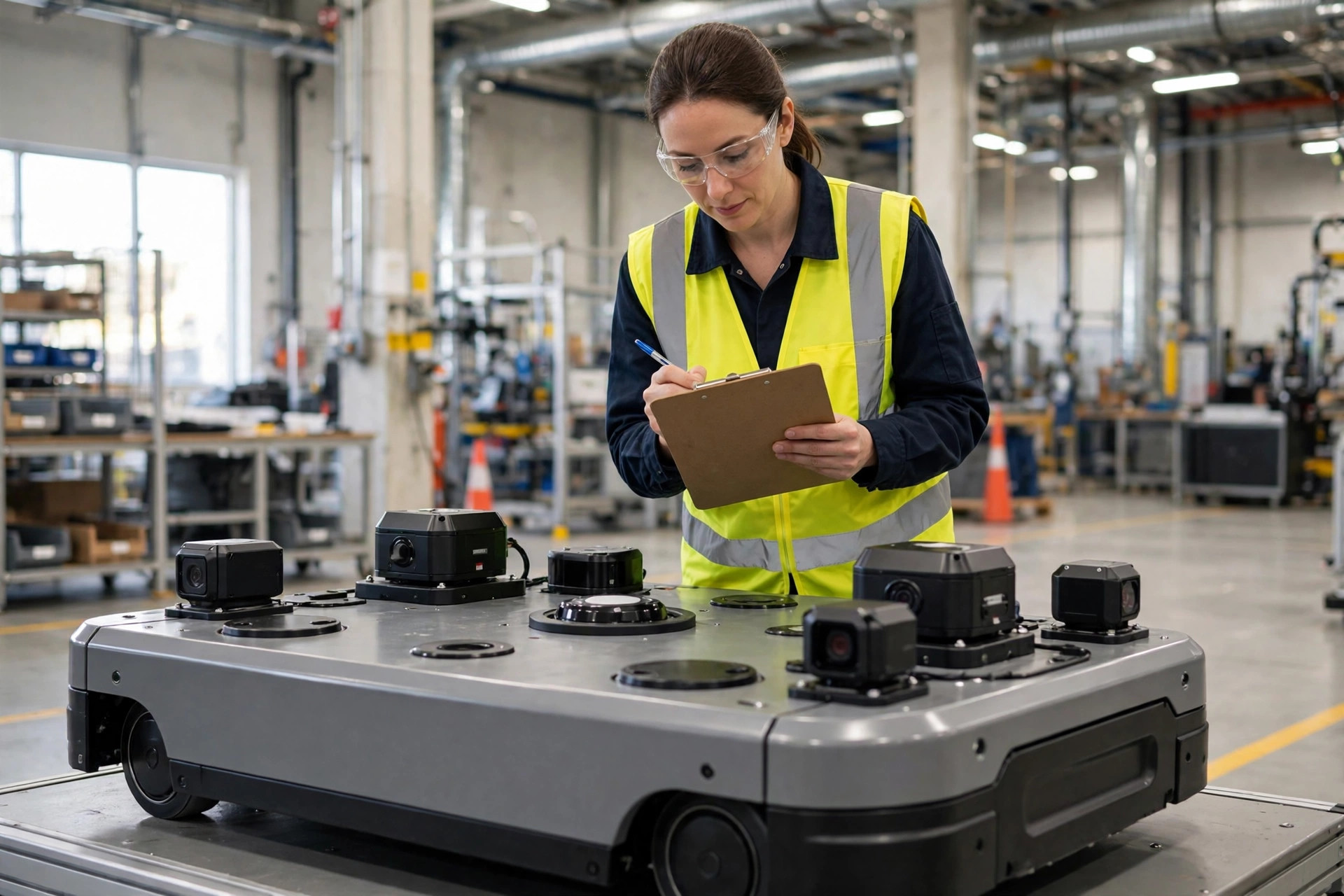
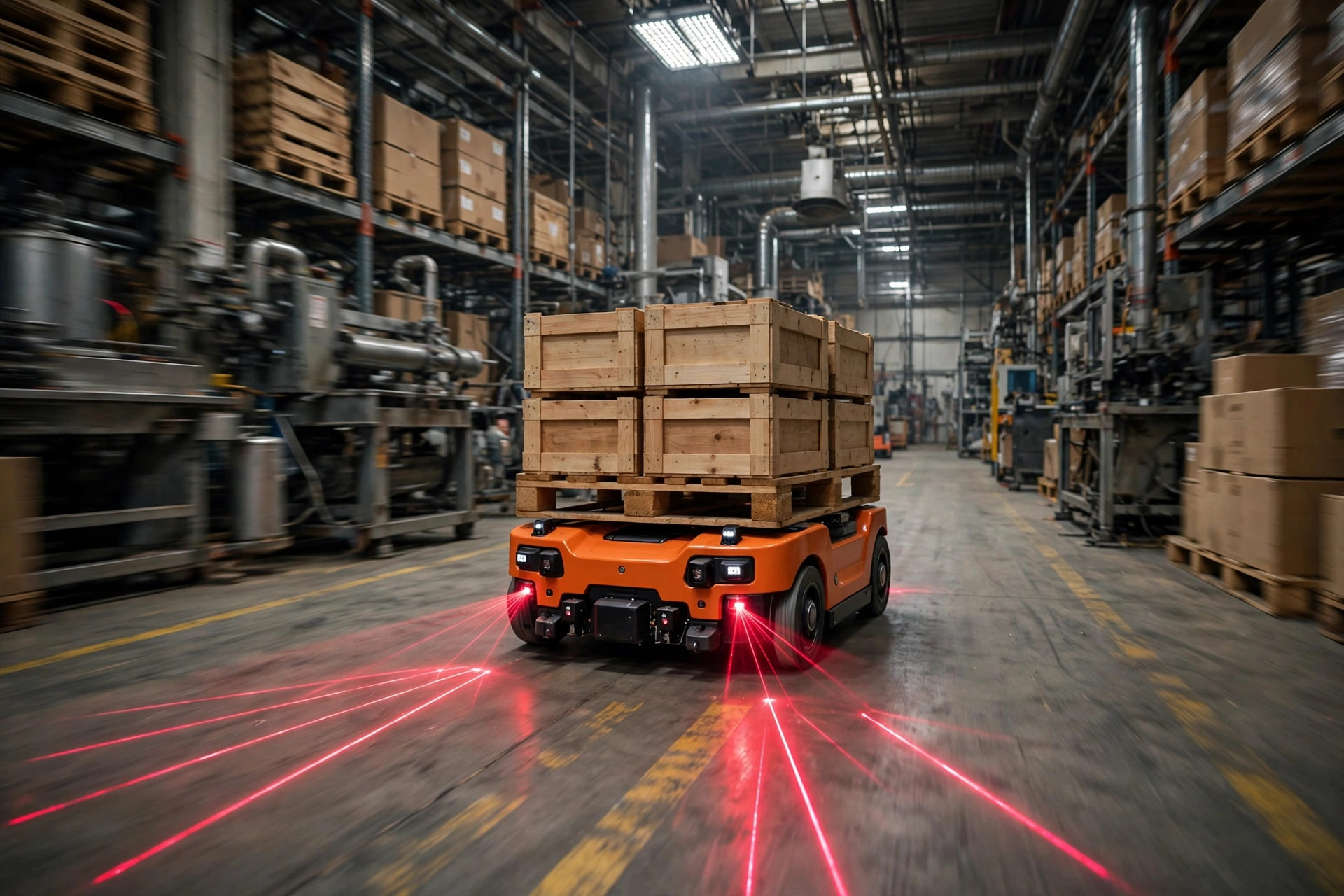
Safety laser scanner zones. Having a scanner isn't enough — the NRTL checks whether your protective fields match the vehicle: do the slowdown and stop zones line up with speed, payload, and braking distance? A common failure: the factory default was configured empty, then the customer loads a one-ton pallet, braking distance grows, and the safety zones no longer cover it. This gets checked every time.
Audible and visual alarms. US customers are particular about start-up, reverse, and turn warnings. Alarm loudness and mounting position matter — "we have a buzzer" doesn't cut it.
Charging safety. The charging area is an EHS focal point for lithium-battery AGVs: the charger needs proper electrical protection, the area needs ventilation and separation from combustibles, and ideally smoke detection and a fire response plan. And the charger itself is electrical equipment — it needs its own NRTL listing or field evaluation. Plenty of manufacturers remember to certify the vehicle and forget the charger.
Nameplates and manuals. English nameplates with ratings and safety warnings; an English manual with the safety chapters intact. Don't dismiss this — field engineers genuinely do flip through the manual.
Three concrete recommendations for manufacturers, each paid for in real money: first, write certification requirements into the technical spec at the project kickoff and design to UL 583 and R15.08 thinking from day one — redesigning a finalized prototype can restart the whole certification process. Second, only buy safety-critical components (battery packs, scanners, charge modules) that already carry NRTL listings, and make the listing certificate a purchasing acceptance criterion, so a supplier can't hold your vehicle certification hostage. Third, budget dedicated time and money for certification and pay for a design review with an NRTL early — a small fee now digs out the big holes before they get expensive. Bottom line: the earlier you knock on the certification door, the cheaper it opens.