Let me tell you where the biggest cost is. It's not the test fees. It's time.
From submitting a unit to holding the certificate, the full loop of testing, remediation, and retesting takes far longer than most people expect. I've seen plenty of manufacturers doing North American certification for the first time trip over one assumption: "we send a sample, pay a fee, get the cert." Not how it works.
This piece won't quote you prices — certification bodies change their quotes every year, and printing a number would mislead you. What I'll give you is the anatomy of the cost and the anatomy of the timeline. Understand both, and you'll know where to save and where not to.
Where the Money Goes
Start with the North American route. UL 3100 — the Standard for Safety for Automated Mobile Platforms — is the key credential for AGVs entering the North American market. Dematic's AGVs were the first to earn UL 3100 certification, and more manufacturers have followed since.
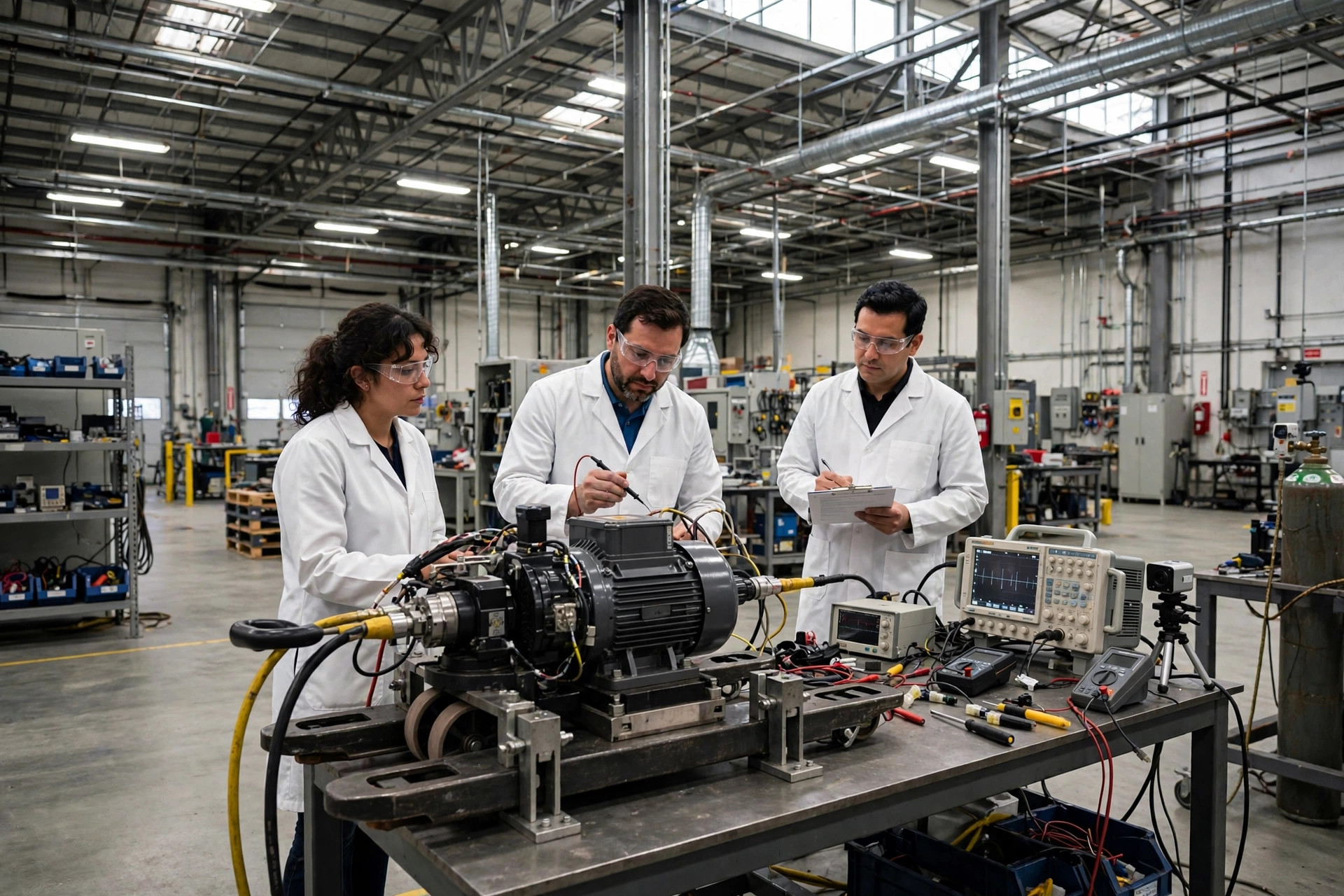
What does UL 3100 test? Fire and shock safety of batteries and charging systems, enclosure strength, functional safety, motor safety, protection against injury, overall performance, and autonomous driving functions. The published test list from Intertek runs from clause 46 to 57 and reads like a gauntlet: power rating verification, temperature, discharge, dielectric (for circuits at 60 Vdc and above), mold stress, abnormal operations, component faults, relay and solenoid burnout, motor overload, locked rotor. Every item you fail means remediation and retesting.
The money goes into five buckets.
First, test fees. Lab time and engineering hours, quoted per project. Take the certification body's latest quote as gospel — don't trust numbers floating around online from years ago.
Second, component certification. This is the biggest hidden trap. UL 3100 is a system-level standard, but the critical components inside — batteries, the BMS, chargers, motors, controllers — many need their own certifications. Uncertified components get pulled out and tested individually during the system evaluation, and that doubles both cost and time. Enclosure materials need a UL 94 flammability rating. The smart move: select certified components at the design stage. They cost more up front, but far less than getting stuck mid-test.
Third, remediation. In all my years, I've never seen a first submission pass clean. Structural reinforcement, component swaps, documentation fixes — every remediation round costs money. And there's an order of magnitude between fixing something at the prototype stage and fixing it after tooling is cut.
Fourth, the functional safety review. Clauses 21 and 22 of UL 3100 cover risk assessment and functional safety. Emergency stop, obstacle detection, behavior on malfunction — safety-related functions need verification and validation against functional safety standards. The documentation workload is heavy, and most first-timers badly underestimate the engineering hours it takes.
Fifth, the money after the certificate. Certification isn't a one-time purchase. UL's factory follow-up inspections come every year, billed annually. Product revisions and key component changes trigger re-evaluation.
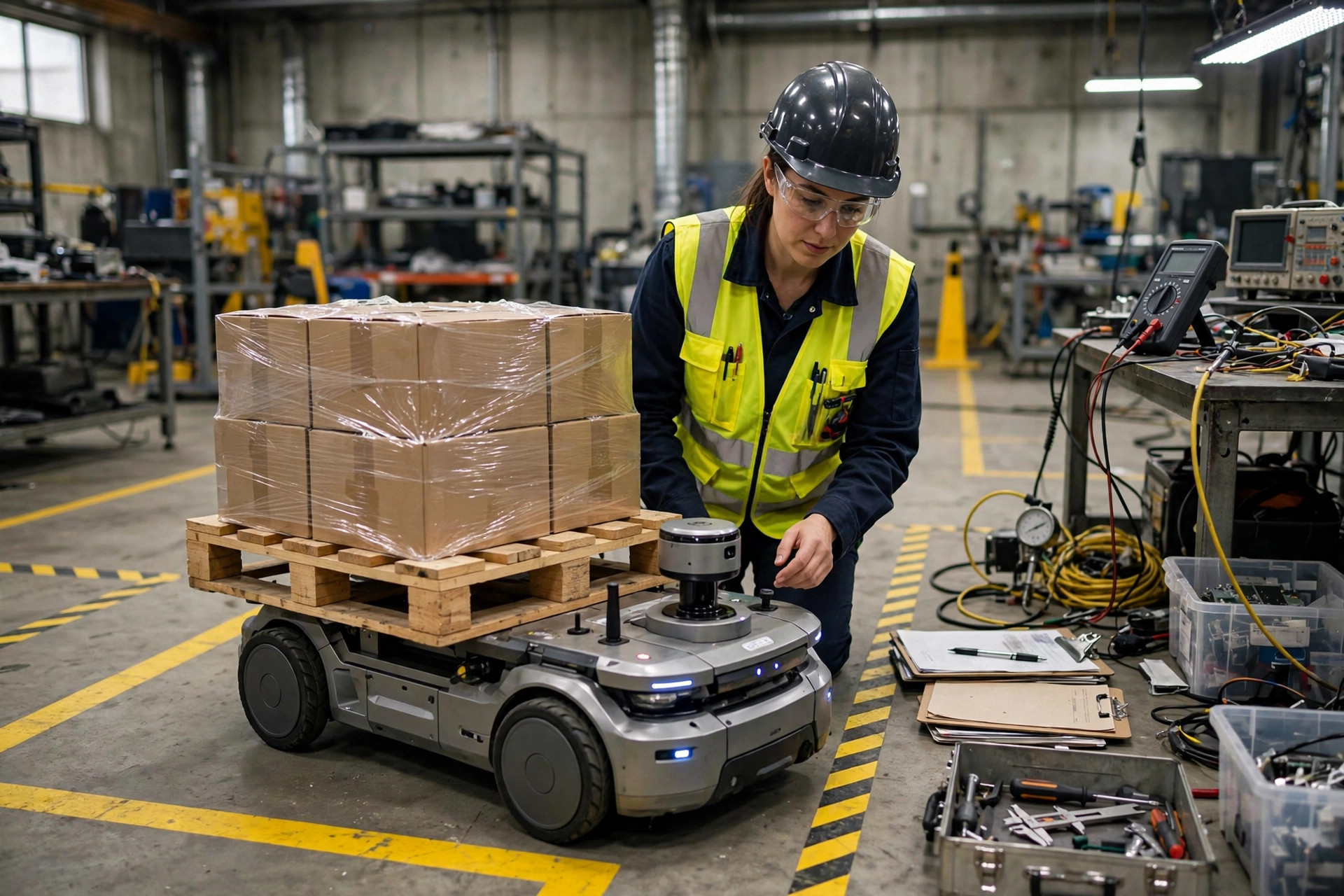
There's also the standards track alongside UL 3100. ANSI/RIA R15.08 — published in December 2020, purpose-built for industrial mobile robots, in three parts (Part 2 in 2023, Part 3 in 2026). It replaced ANSI B56.5, a standard that had been around for over four decades. R15.08 shows up in enterprise RFPs with growing frequency. When GreyOrange certified its Ranger GTP (a 220- to 3,500-pound payload goods-to-person robot) to UL 3100, the process was a component-by-component fire and shock review of everything in the machine. Nothing got a pass.
Where the Time Goes
The timeline gets stuck in four places.
Scheduling. Certification labs aren't walk-in. Prime slots have queues. The first thing you do when the project starts is grab a slot — don't wait until the prototype is ready to ask.
First-round testing. The sample goes into the lab and works through the test plan item by item. Clauses 46 through 57 — every failure gets logged.
Remediation and retesting. This is the least predictable stretch. A small fix means swapping a component and re-running one test. A big fix means structural changes and re-running a whole block. Each remediation plan goes back and forth with the certification engineer, and every round trip is weeks.
Documentation review. Risk assessment reports, functional safety validation documents, critical component lists, schematics, manuals — UL 3100 certification is half testing the product, half auditing the paperwork. Incomplete documentation means no certificate even if every test passed.
And bring enough samples. Some tests are destructive. Don't expect one unit to survive from the first test to the last.
Europe is a separate ledger. CE marking currently runs under the Machinery Directive 2006/42/EC, but Regulation (EU) 2023/1230 was published on 29 June 2023 and becomes mandatory on 20 January 2027. The new regulation writes in cybersecurity of safety control systems, AI in safety functions, and autonomous and remote-controlled mobile machinery. On top of that, AGVs need EMC Directive compliance. In many cases a notified body has to be involved — a completely different process from North America, and it needs its own plan if Europe is on your roadmap.
Here's my verdict.
Spend the money. If you're selling into North America, UL 3100 is a line you'll cross sooner or later, and enterprise buyers are already writing it into tenders. Early certification gets you onto approved vendor lists early.
When's the cheapest time to spend it? Before design freeze. Learn the standard cold, select components against certification requirements from day one, and leave margin in the structural design for the test clauses. Get a certification engineer involved at the prototype stage for a pre-assessment.
The most expensive way to do it? Freeze the design, cut the tooling, set up the production line — then submit for testing. When the failures come back, you're not modifying a prototype anymore. You're modifying tooling and a production line. Get the order wrong and the certification bill multiplies — but the real cost isn't the bill. It's the market window you lose while you're fixing things.