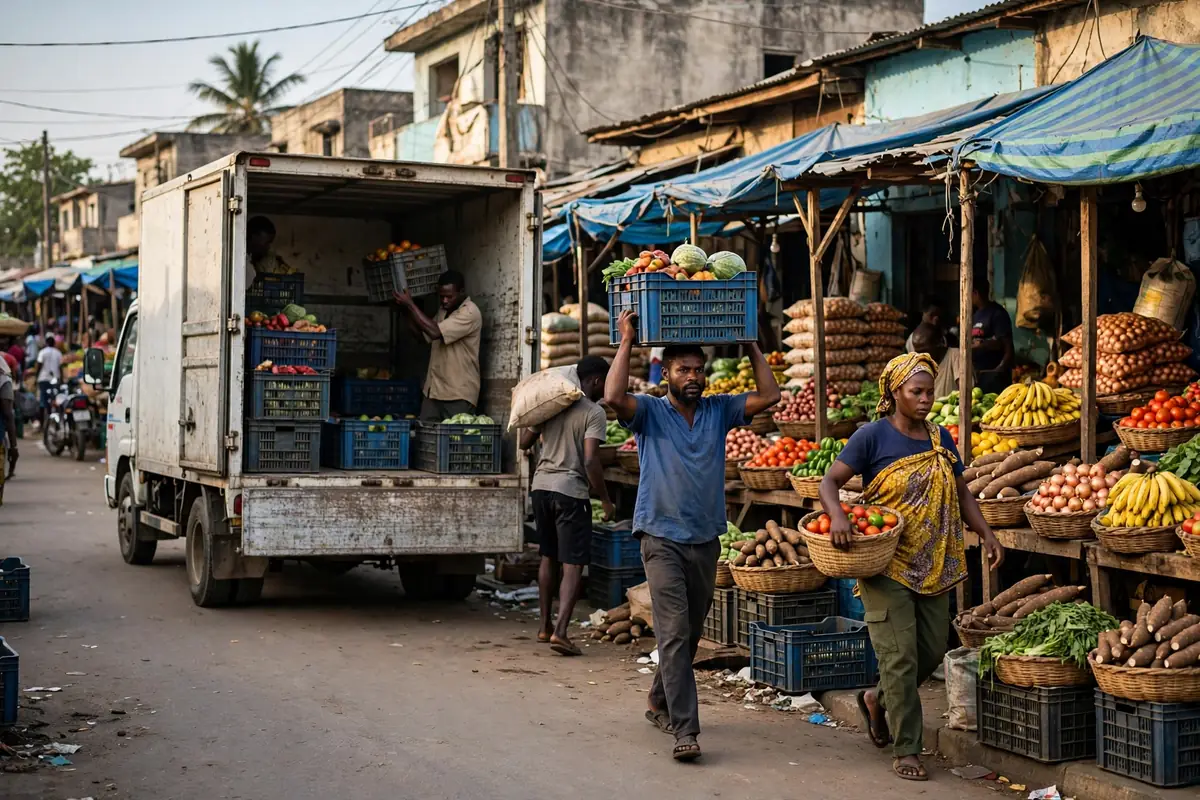
We small warehouses cannot afford to burn money like that. I learned that on day one of running my own warehouse. In Accra Ghana urban warehouse distribution, the big companies count their network. We small teams count whether today's truck has enough fuel to finish the route and whether this order will reach the customer on time. The warehouses, the traffic, and the trade-offs in Accra's capital come down to one question: with little money, few trucks, and few people, how do you still get the goods delivered on the last mile?
Accra is Ghana's capital and its biggest consumer market. Goods come in from the port at Tema and have to get into the city. The three big markets buy stock in the early morning and need distribution. Customers are scattered across neighborhoods and want delivery to their door. Every link in that chain burns money, and the link that burns the hardest is often the last few kilometers to the customer.
In Accra, Look at the Traffic Before You Look at the Rent
When a small warehouse picks a location, the first instinct is to look at the rent. We did the same thing when we started out. We found a cheap corner for our warehouse, and then the traffic every day ate back everything we saved on rent. Accra's traffic jams are famous. At morning and evening rush hour, the main roads move slower than a person walking. One more kilometer between the warehouse and the market means the fleet burns more fuel and more time every single day.
Research figures say only about 23% of Ghana's roads are paved, and the road conditions themselves drag delivery down. I believe it, because I see it on the road every day. Few paved roads means that when the rainy season comes, some stretches get hard to drive and fleets have to take the long way around. Detours burn more fuel. Pick the wrong warehouse location and you are paying a daily tax to traffic and bad roads.
The big companies play it differently. In November 2024, Jumia Ghana opened a 6,000-square-meter integrated warehouse and distribution center in Tema, with more than 120 pickup stations covering 16 regions and a network of more than 1,800 pickup locations. They win on network scale: the warehouse sits next to the port, goods go straight in when they arrive, and pickup stations are spread so thick that customers collect orders themselves on their way past, taking pressure off the last mile. We small warehouses cannot copy that scale, but we can copy the idea: stay close to where the goods come from, stay close to the customers, and make customers travel less.
The real texture of Accra is three big markets plus scattered warehousing. Makola, Kaneshie, and Madina buy stock in the early morning, and the city's warehousing is a patchwork of small stores behind market stalls, rented containers, and big shared warehouses split between several sellers. Stall owners do not care how impressive the warehouse looks. They care that the goods sit close to the stall and that morning restocking is on time. It looks messy, but the logic is solid: the warehouse follows the business, not the rent.
The Last Mile in Urban Distribution: Where the Money Goes
Here is the counterintuitive call, up front: in Accra urban warehouse distribution, the most expensive stretch is often not the long haul from the port to the city. It is the last few kilometers to the customer. Research figures say the last mile often accounts for more than half of total delivery cost. One long-haul truck can carry hundreds of items, so the cost per item is small. A last-mile truck can only deliver a dozen orders, and the fuel, the time, and the labor all land on those dozen orders. The more scattered the goods, the higher the cost per order.
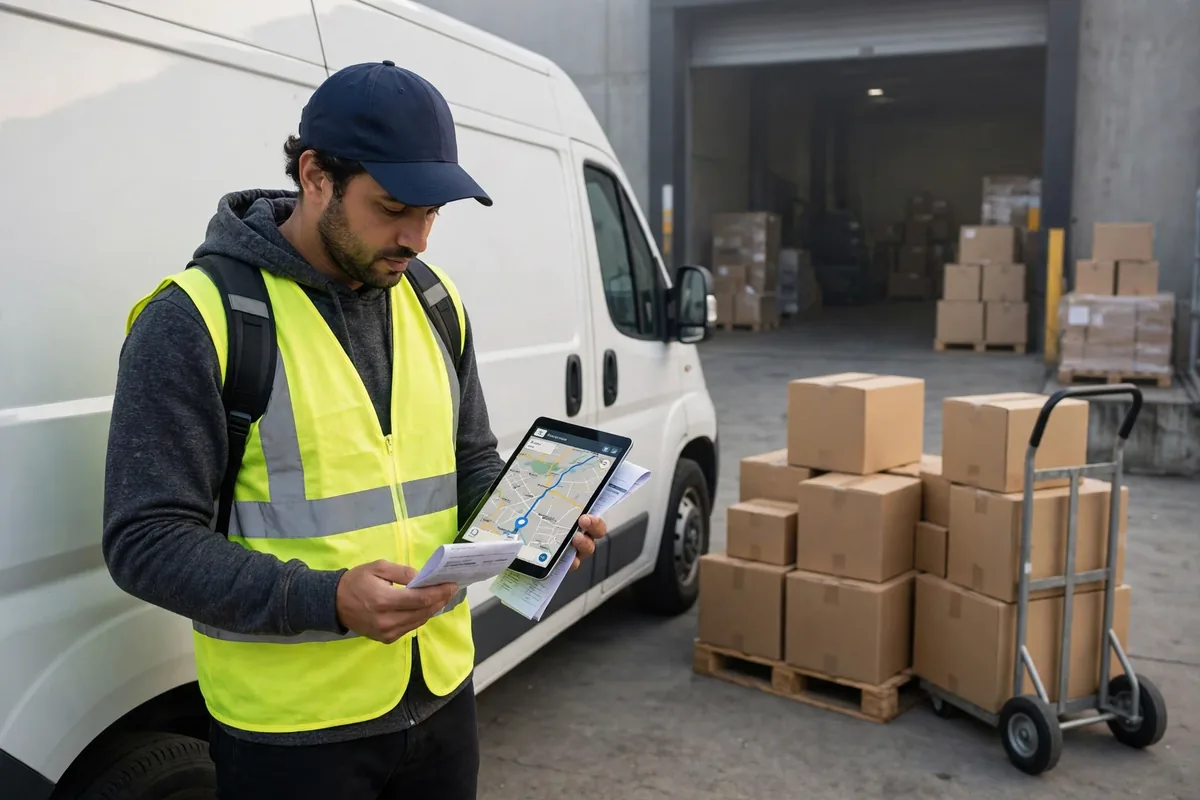
Where does the money go? Count three bills. The first is the traffic bill: one extra hour stuck in traffic burns driver pay and fuel, and pushes the next order's window back. The second is the address bill: many places in Accra have no house numbers, so drivers find places by landmarks and spoken directions. Ghana launched GhanaPostGPS, a digital address code that gives every location a code, which should help in theory. In practice, customers still give addresses the old way, and drivers still have to phone for directions. The third is the cash-on-delivery bill: cash on delivery is still the mainstream way to pay here. The customer inspects the goods and pays on the spot, so refused and returned orders happen far more often than with prepaid orders. One refused order means two wasted trips, and the cost doubles on the spot.
Add those three bills together and the last-mile cost stops hiding. A small team that wants to save money cannot only watch the fuel price. It has to watch all three: schedule around the worst traffic, confirm the address with the customer in advance, and call before dispatching a cash-on-delivery order. Save a little in each place and the savings add up to the profit on one order.
I have one more homegrown trick for cash-on-delivery orders: call before the truck leaves. Confirm the customer is home, the address is right, and the money is ready. One call takes a few minutes and stops plenty of wasted trips. If the customer wants to change the address or the time, say it once on the phone and the driver does not have to call again from the doorstep. Do not think that call is a bother. It is the cheapest insurance a small warehouse has.
There is another trade-off people miss: pickup stations versus home delivery. Home delivery feels better but costs more. Pickup stations are cheaper, but the customer has to come and get the goods. Jumia's network of pickup stations is dense enough that customers can collect on their way past. For our small warehouse, putting one or two pickup points next to a market stall or a neighborhood beats hiring a truck to drive all over the city. That is not laziness. It is a trade-off we worked out on paper.
Small-Team Distribution Trade-offs: Three Roads to Choose From
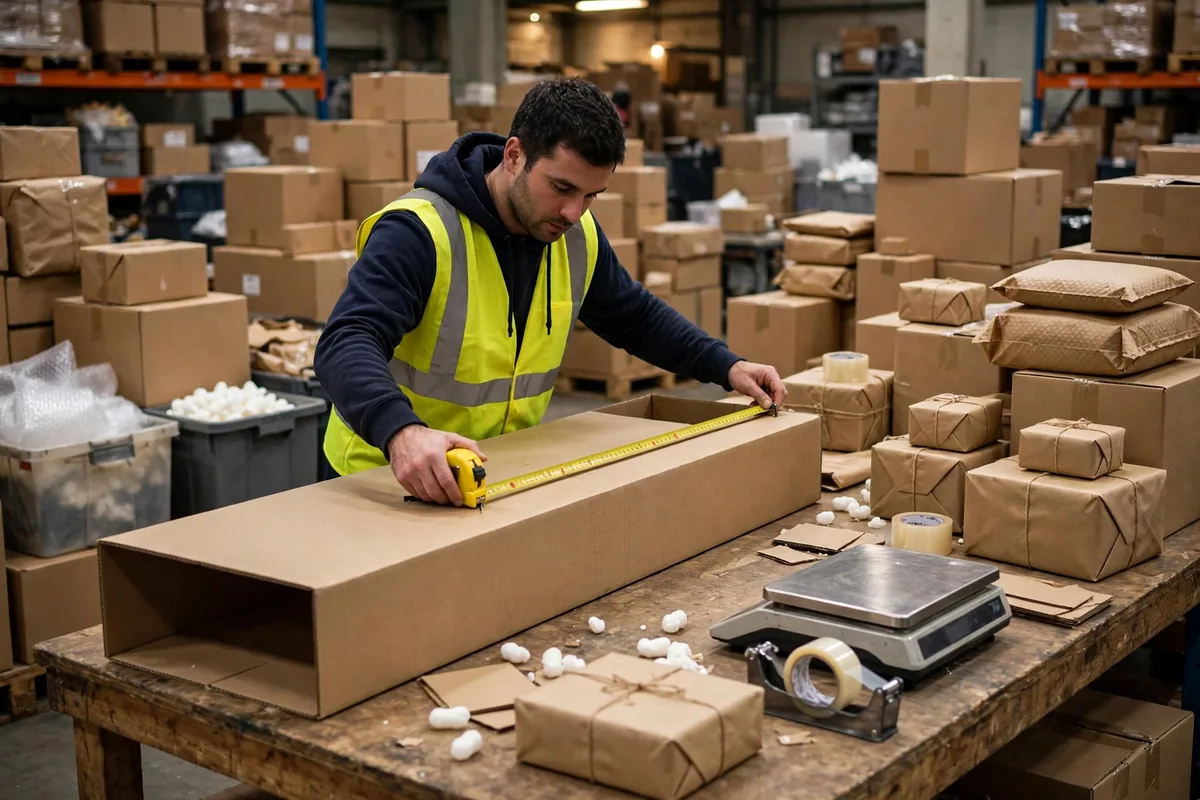
A small team doing distribution in Accra has roughly three roads. The first is the store behind the stall: goods sit right behind the market stall, so they are on sale as soon as the market opens and restocking is fastest, but the space is small and holds little stock. The second is a rented container: one container parked next to the market as a temporary warehouse, cheap to rent and easy to start or stop, but damp-proofing and security are all on you. The third is a shared big warehouse: several small sellers rent one big space together, splitting the rent and the management. The space is roomy, but goods have to move in and out on a shared schedule, so flexibility drops.
None of the three is the standard answer. The right one depends on your order volume right now. Small volume and few product lines, and the store behind the stall is enough. Volume climbing and needing turnover, and a rented container carries you for a while. Volume steady and planning for the long term, and a shared big warehouse pays best. The worst mistake is renting a big warehouse before the volume arrives, so the rent eats the profit first. The other worst mistake is clinging to the stall store after the volume has grown, so the goods pile up and orders get turned away.
Three pieces of advice for small teams like ours, all paid for with my own tuition. First, let the warehouse follow the business, not the rent. Stay a little closer to the market and the customers, dodge a little traffic, and the books look better. Second, confirm the address and the cash-on-delivery order before the truck leaves. One phone call can save one wasted trip. Third, let the distribution method follow the order volume. When the volume changes, change the warehouse. Do not cling to one method.
Road conditions and market rules in Accra change every year, so which road to take and what time to leave should follow the latest local conditions. Small warehouses have their own way of surviving, and the way is one sentence: spend every coin where it counts, and make every trip earn its keep. Every coin saved is one more day a small warehouse stays alive. The traffic cannot be dodged, but the books can be kept straight. The roads are rough, but the goods still have to arrive. Get the numbers right and a small warehouse can do just fine in Accra.
By Xiao Ma, Small Warehouse Owner