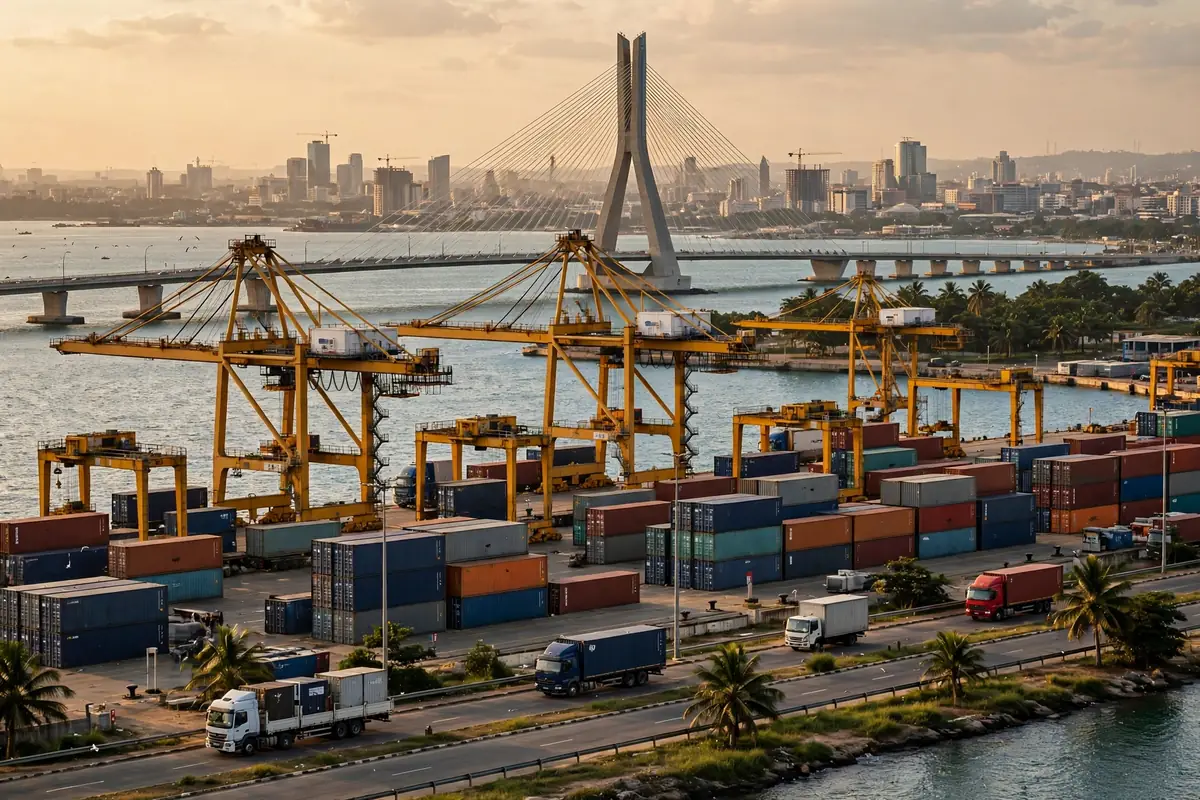
Let me tell you how a day in Abidjan urban distribution really starts. You are up before dawn, down at the port gate with your papers, and the whole city is still half asleep. Then the sun comes up, the bridges fill, and the lagoon that makes this city beautiful turns into the thing standing between your freight and your customer. I have driven trucks for fifteen years, and if there is one thing this city teaches you, it is that the port is only half the job. The other half is getting across town.
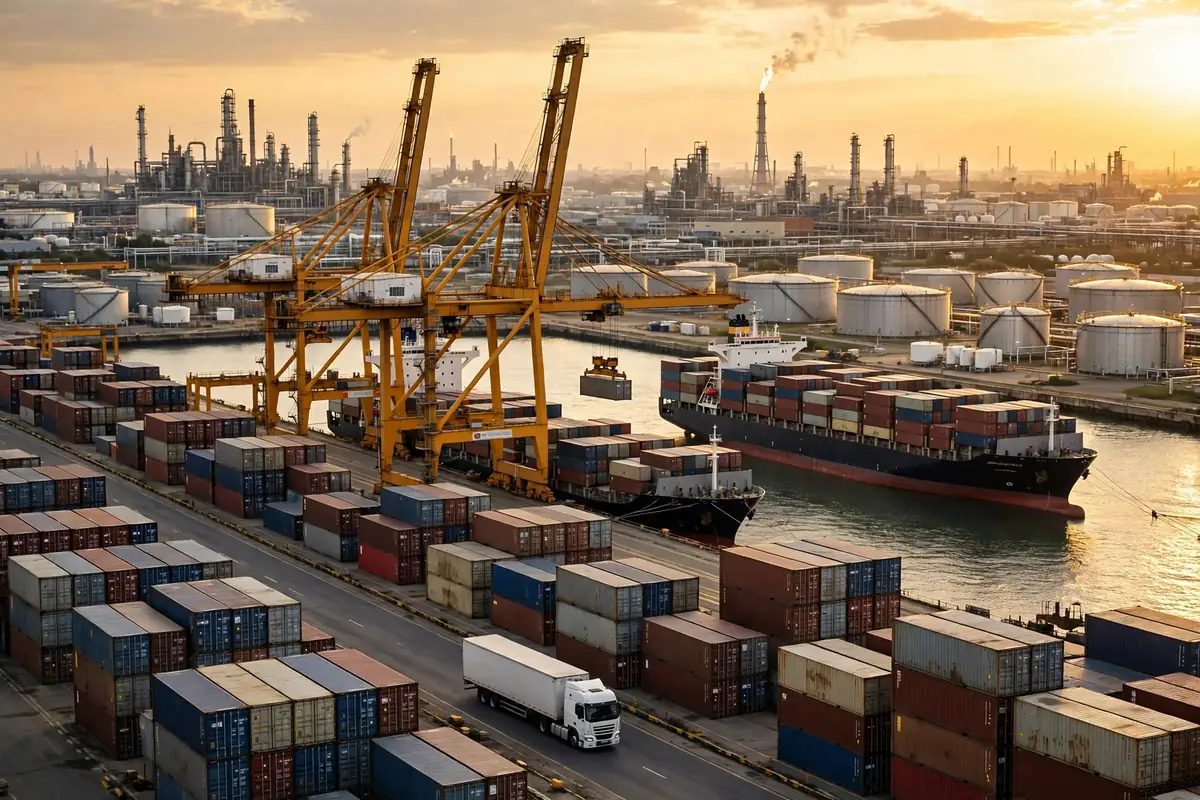
The port has changed fast, and you can feel it from the driver's seat. The second container terminal went into commercial operation on 2 November 2022 and was formally inaugurated on 2 December 2022. It covers 37.5 hectares, with 1,100 metres of quay, a 16-metre draft, and a design capacity of 1.5 million TEU a year, built for 596 billion West African CFA francs, about 914 million euros. That is serious money and serious concrete. The numbers followed: the port handled about 841,000 TEU in 2022 and 1.6 million TEU in 2024, while total cargo reached 40 million tonnes in 2024, up from 34.7 million tonnes in 2023. More ships, more boxes, more trucks at the gate. But a box coming off a ship is only the start of the story. Somebody still has to carry it across a city split by water and hand it over on time.
Abidjan urban distribution is hard because water cuts the city apart
I will never forget one run in November 2022, just days after the new terminal started commercial operations. A load of cocoa products had to go from the port area to a customer's warehouse on the far side of the lagoon. Cocoa is this country's lifeblood: Côte d'Ivoire grows about 40 percent of the world's cocoa, roughly 2 million tonnes a year, and export cargo cannot afford to sit around. We were at the gate before sunrise, picked up the box, checked it, sealed it, everything smooth. Then we hit the bridge in the morning rush and crawled, inch by inch. The customer kept calling to ask how much longer. All I could tell him was the truth: we are stuck on the bridge, and hurrying changes nothing. That run taught me the lesson I still work by. In Abidjan urban distribution, you do not plan port to warehouse. You plan port, bridge, rush hour, and both sides of the lagoon, all of it.
Another job drove the point home differently. We were supplying several supermarkets across town, small drops scattered on both sides of the lagoon. The old way was one truck from the port-side warehouse, stop by stop, crossing the water as the route demanded. Half the day went by and we had barely finished the second crossing. So we changed the method. The night before, we split the freight by zone: one truck for this side of the lagoon, one truck for the other, each using its own bridge, each working its own patch. Same trucks, same freight, far steadier delivery times. That is what split stock is for in this city. The water divided the town, so the distribution has to divide with it.
The bigger the port gets, the more the city warehouse matters
Here is the counterintuitive part. Box volumes nearly doubled between 2022 and 2024, the terminal capacity went up, and plenty of people assumed deliveries would get easier. It worked the other way. Bigger ships and more boxes mean more pressure at the port gate and more strain on the rhythm of the city. The bottleneck did not disappear. It moved off the quay and onto the bridges and the city streets. The port answers whether the ship can berth. Urban distribution answers whether the freight can get into town. Those are two different books, and you have to keep both.
That is why the choice between a big port-side warehouse and small split warehouses in the city is now the question every shipper here has to answer. A port-side warehouse sits close to the vessels, which suits full containers, break-bulk work, and transit cargo. The catch is that every delivery into town has to cross a bridge and gamble on traffic. A small in-city warehouse flips the deal: more to manage, another stock point to watch, but the freight sits close to the customer, so a morning order can reach the shop by midday, and a jam costs you an hour rather than the whole day. Neither is the right answer on its own. It depends on what you ship, where your customers sit, and how hard your delivery window really is.
Abidjan urban distribution: where the money actually goes
Here is how I break the bill down. In Abidjan urban distribution, the expensive part is not the leg out of the port. It is everything after you enter the city. Send a load straight from a port-side warehouse and the road time is the one thing you cannot predict: one jam can blow the customer's receiving window. Hold split stock in the city and the single trip gets shorter and steadier, but you pay for an extra warehouse and carry the extra stock. Plainly put, you are spending warehouse money to buy certainty about time.
If you cannot decide which way to go, ask yourself three questions. First, are your customers mostly on one side of the lagoon? If yes, direct delivery pays. If they sit on both sides, split stock is steadier. Second, what does one missed delivery window cost you? For cocoa exports, where a delay hurts, spend the warehouse money and do not gamble on the bridge. Third, is your volume steady? Steady volume makes a split warehouse easy to manage. Up-and-down volume favours the flexibility of a big port-side site. Answer those three and the choice mostly makes itself. The rest is execution.
| Approach | Suits | Biggest risk | How the bill works |
|---|---|---|---|
| Big port-side warehouse, direct delivery | Large volumes, full containers, transit cargo | Bridge congestion, missed receiving windows | You save on warehousing and carry the time risk yourself |
| Small split warehouses in the city | Supermarkets, many outlets, tight delivery windows | Extra management and stock pressure at each point | You pay more for warehousing and buy certainty on time |
| A mix of both | Volumes with peaks and troughs, customers on both sides | Unclear split rules, the two sides working against each other | Bulk freight via the port, urgent small lots via the city |
Three pieces of advice, all earned the hard way on the road. First, do not plan by the new terminal alone. A design capacity of 1.5 million TEU a year is impressive, but your freight still has to cross a bridge, so plan by the bridges and the traffic, not by the vessel schedule. Second, for cocoa and other big export flows, line up the port pickup rhythm with the city split rhythm before the peak season hits. A ship arriving on time means nothing if the freight cannot get out of the port. Third, keep the city warehouse small and close. Near beats big in this town: every bit closer to the customer is one less unknown on the road.
Fifteen years behind the wheel leaves you with one old saying, and it fits this city well: freight on the road cannot be hurried, but the sums have to be done before you set off. The port will only get busier and the boxes will keep coming, but the roads and bridges will not get any wider. The shipper who works out the split-stock sums first is the one whose freight arrives when the customer expects it.
By Shifu Zhao, Trucking Veteran (15 yrs)