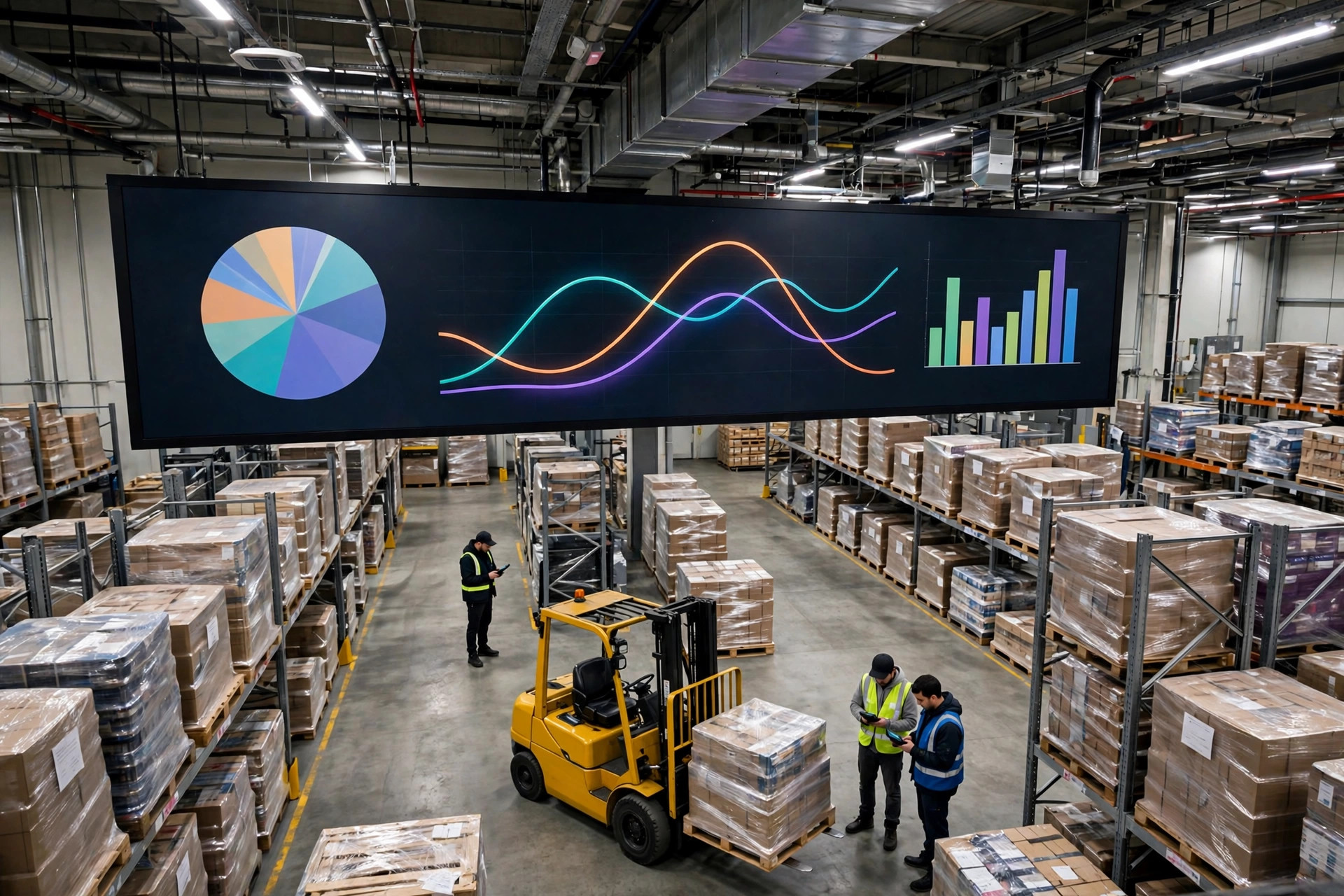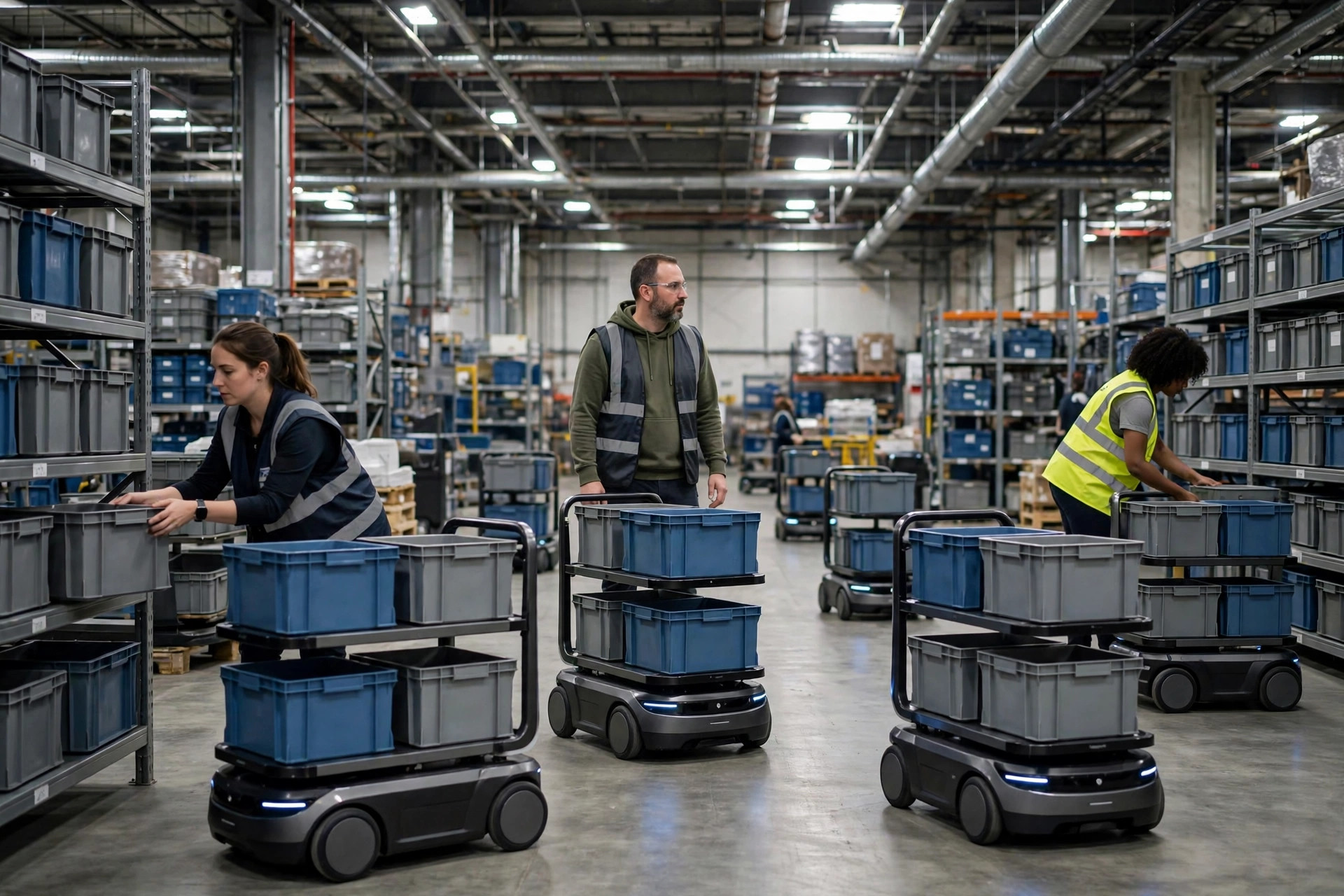
If the warehouse AI ROI 2026 story has a single sentence, it is this: this was the year the conversation shifted from whether to adopt AI to whether the AI already deployed has paid for itself. In January, vendors were still demoing humanoids and large models at trade shows; by mid-year, the people signing the checks were all asking the same question — does last year's contract still make sense on this year's ledger?
The warehouse AI ROI 2026 data: adoption is up, satisfaction is flat
According to MHI and Deloitte's 2025 Annual Industry Report, 28% of supply chain organizations had AI in use, with another 54% planning adoption within five years — 82% combined by 2029. A year later, the 2026 MHI Annual Industry Report added texture: among more than 500 supply chain leaders, 27% now use AI to automate operational decisions, 33% for demand forecasting and inventory optimization, and 30% for predictive maintenance.
A companion data point deserves attention. A 2025 study by MHI, Peerless Research Group and The Robotics Group found 48% of organizations using robots in their facilities — up from 23% three years earlier — and 64% paying through robotics-as-a-service or software-as-a-service models. The hardware is moving in, and so is a new way of paying for it.
On market size: Interact Analysis puts the global warehouse automation market at $29.6 billion in 2020, growing to $69 billion by 2025, with mobile robot deployments rising from just over 9,000 customer sites at the end of 2020 to more than 53,000 by the end of 2025.
But DHL's Insight 2030 survey adds a sobering footnote: 73% of executives expect to depend more on AI within five years and 68% expect greater reliance on robotics — yet only 44% have actually deployed warehouse robots, and a mere 34% say they are fully satisfied with their robotics today.
Adoption doubled; satisfaction sits at one in three. The divergence lives in that gap.
Warehouse AI ROI 2026 winners: three deployments with receipts
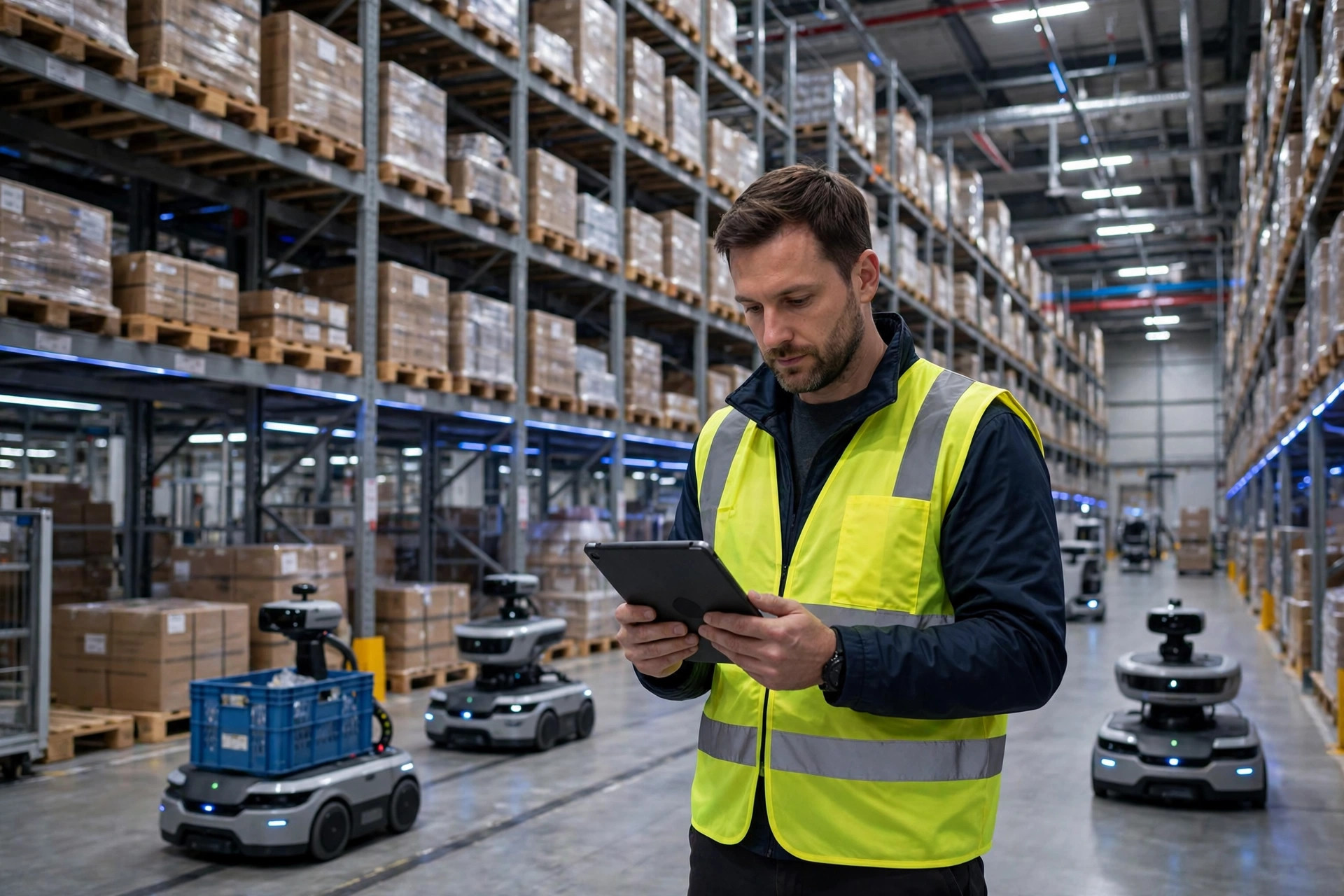
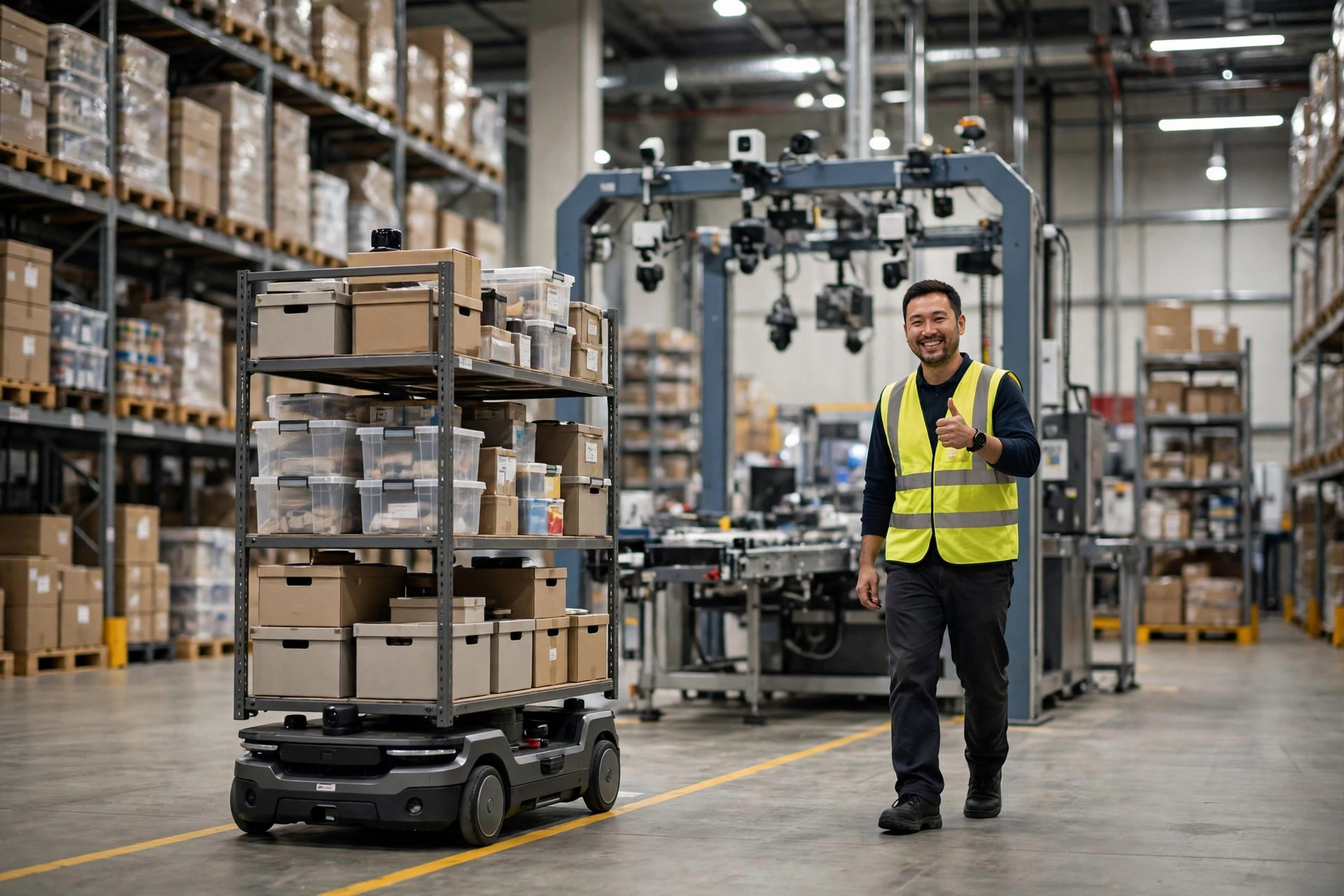
Exhibit one: DHL and Locus. The partnership began in 2017. In March 2026, DHL announced its Locus AMR fleet had completed its one-billionth pick — thousands of robots across more than 40 DHL-managed facilities, from e-commerce to healthcare logistics. The disclosed numbers: 30–180% increases in units picked per hour, and an 80% reduction in training time. Brian Gaunt, DHL Supply Chain's VP of digitalization, credited not the robots but "software and data readiness." For scale: Locus as a company passed 22,000 robots, 8.5 billion picks and 360 sites by October 2026, per Interact Analysis' Mobile Robot Market report — DHL's billion is one chapter of a larger book.
Exhibit two: Amazon's Sequoia. The AI-driven inventory orchestration system went live in Houston in October 2023 and moved into Amazon's 3.1-million-square-foot next-generation fulfillment center in Shreveport, Louisiana, which opened in September 2024. Amazon's disclosed figures: Sequoia identifies and houses inventory 75% faster and cuts order processing time through the fulfillment center by up to 25%. With more than 750,000 robots deployed network-wide, supporting over 75% of customer orders, CEO Andy Jassy told analysts on the February earnings call that the company had "already gotten a significant amount of value" from its robotics innovations. Sequoia's AI replaced no one — it containerized inventory and orchestrated it. The least glamorous link in the chain.
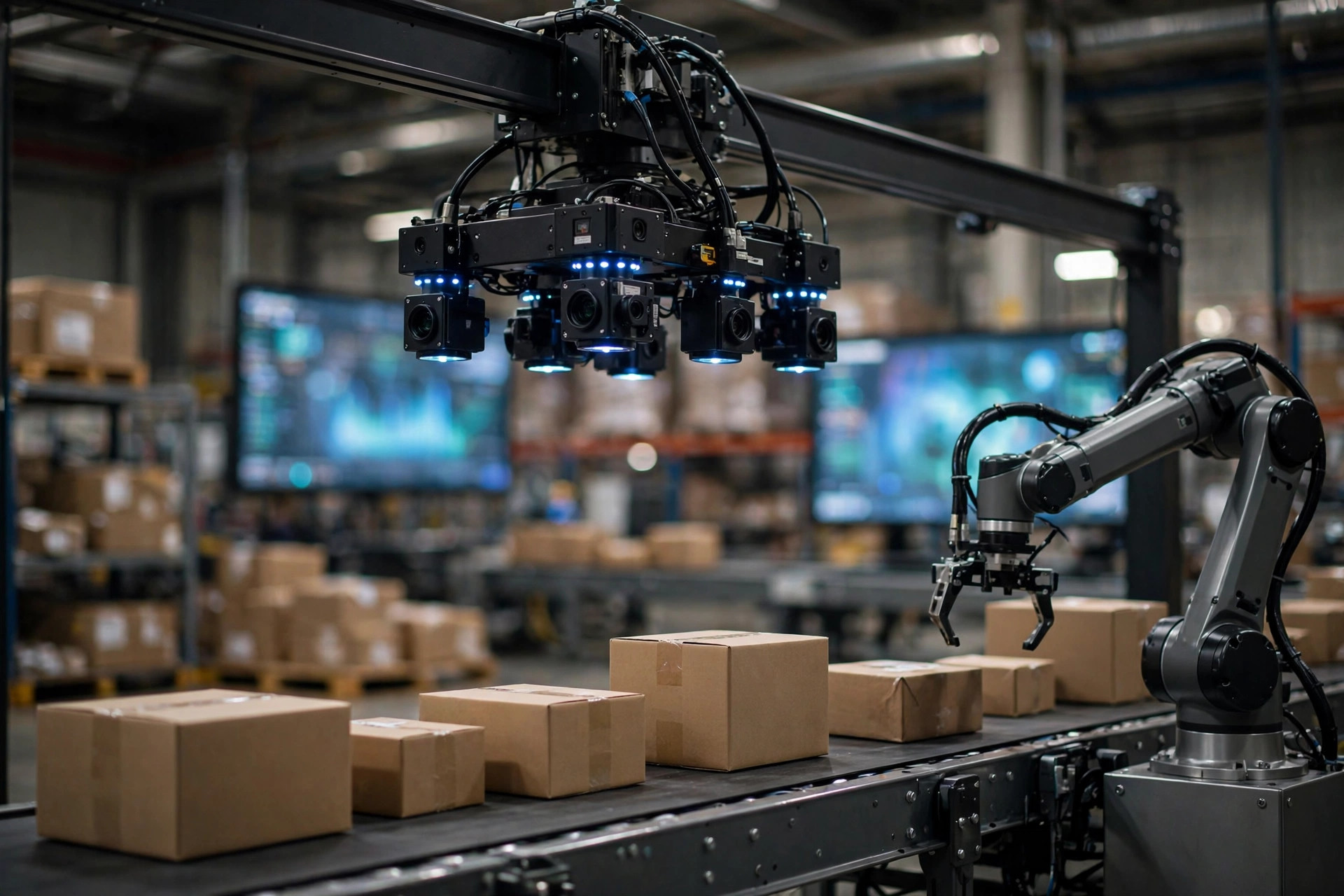
Exhibit three is a counterexample: Berkshire Grey. In July 2021 the company went public via a SPAC merger at a $2.2 billion enterprise value, with $507 million in cash and no debt on the balance sheet, per SEC filings, counting Walmart, Target and FedEx as customers. The technology was not the problem. In 2024, SoftBank took it private for roughly $375 million in cash — $1.30 a share. Same company, same technology, more than 80% of value gone in three years. The lesson is about the business model, not the engineering: heavy-asset, full-stack AI propositions still had no working payback model in 2026.
Side by side, the pattern is legible:
| Scenario | Public evidence (2026) | Cost structure | Why it paid — or burned |
|---|---|---|---|
| AMR collaborative picking (DHL × Locus) | 1B picks; +30–180% units/hour; −80% training time | Asset-light RaaS, scale on demand | Paid: it replaced walking, not workers; fleets flex with peak season |
| AI inbound orchestration (Amazon Sequoia) | 75% faster inventory housing; −25% processing time | Self-built, amortized at scale | Paid: AI embedded in the process, not a standalone device |
| AI sorting arms & vision sorting | 750K robots supporting 75%+ of orders | Amortized at scale | Paid: high-repetition motions, running 24/7 |
| Demand forecasting & inventory optimization | MHI 2026: 33% in use, highest of all AI uses | Pure software | Logic holds, but results live or die on data quality |
| Agentic AI for autonomous decisions | MHI 2026: only 27% | Pure software | Burning: still in the "dare we hand over decisions" phase |
| Full-stack heavy-asset robotics | $2.2B valuation → $375M take-private | Heavy capex, long deployments | Burning: technology fine, business model unproven |
| Humanoid robots | DHL Trend Radar 8.0: long-term trend | High | Burning: no payback evidence in 2026 |
The counterintuitive read, and the 2026 data largely confirms it: the warehouse AI that paid back fastest was usually the least "AI-sounding" one. Collaborative picking, inbound orchestration, sorting arms — all doing the unglamorous work of cutting wasted walking, containerizing inventory, identifying and sorting. The loudest names — agentic decision-making, humanoids — were still burning cash on validation. MHI's 2026 numbers translate the sentence into arithmetic: only 27% would let AI make operational decisions, while a single operator logged a billion picks.
Why the split: three variables
First, labor structure. DHL's global head of digital transformation Tim Tetzlaff put it bluntly to CNBC: distribution centers are typically sited where "it's very tough to find additional labor or even additional spaces just to build these warehouses." The first driver of automation is not that people are expensive — it is that they cannot be hired. Projects replacing workers who cannot be found pay back quickly; projects replacing workers who already exist need much finer math.
Second, data foundations. A telling detail in DHL's Insight 2030: 91% of respondents had installed or upgraded their WMS in the last five years, but only just over half used a labor management system — a gap the report says "could be limiting the ability to optimize scarce labor resources." Combined with Gaunt's emphasis on software and data readiness, 2026's payback dividing line is clear: not how advanced the model is, but whether continuous, usable operational data exists.
Third, the payment model. With 64% of organizations on RaaS or SaaS, per the 2025 MHI study, robots shifted from one-time capex to monthly opex. In 2026, SoftBank and Symbotic formed the GreenBox joint venture and signed roughly $7.5 billion in customer contracts aimed at the warehouse-as-a-service market. The payback question changed form: from "how many years to break even" to "does this pencil out every month."
The 2027–2029 outlook: three timelines
DHL's Logistics Trend Radar 8.0, published October 2026, names agentic AI among its most significant emerging trends — AI moving from assisting people to acting independently, what DHL calls "an era of autonomous and physical AI." But 2026's data constrains the timeline: only 34% are fully satisfied with today's robots, only 27% would hand AI an operational decision. The 2027–2028 battleground is more likely to be trust-building than smarter models.
The second timeline is hardware. Interact Analysis expects mobile robot deployments to exceed 53,000 sites by end of 2025 — the hardware keeps spreading, while value migrates toward software and services.
The third is ubiquity. MHI and Deloitte project 82% AI adoption by 2029. But "adopted" is not "paid off" — the divergence this warehouse AI ROI 2026 review documents will likely persist well before then.
Which leaves an open question: if 2026's biggest lesson was "data first, process first," will 2027's fastest payback belong to the most boring AI of all — the one that cleans up your data and straightens out your process? The second half of warehouse AI may belong not to the smartest model, but to the most patient operator.
By Dr. Chen, Supply Chain Researcher