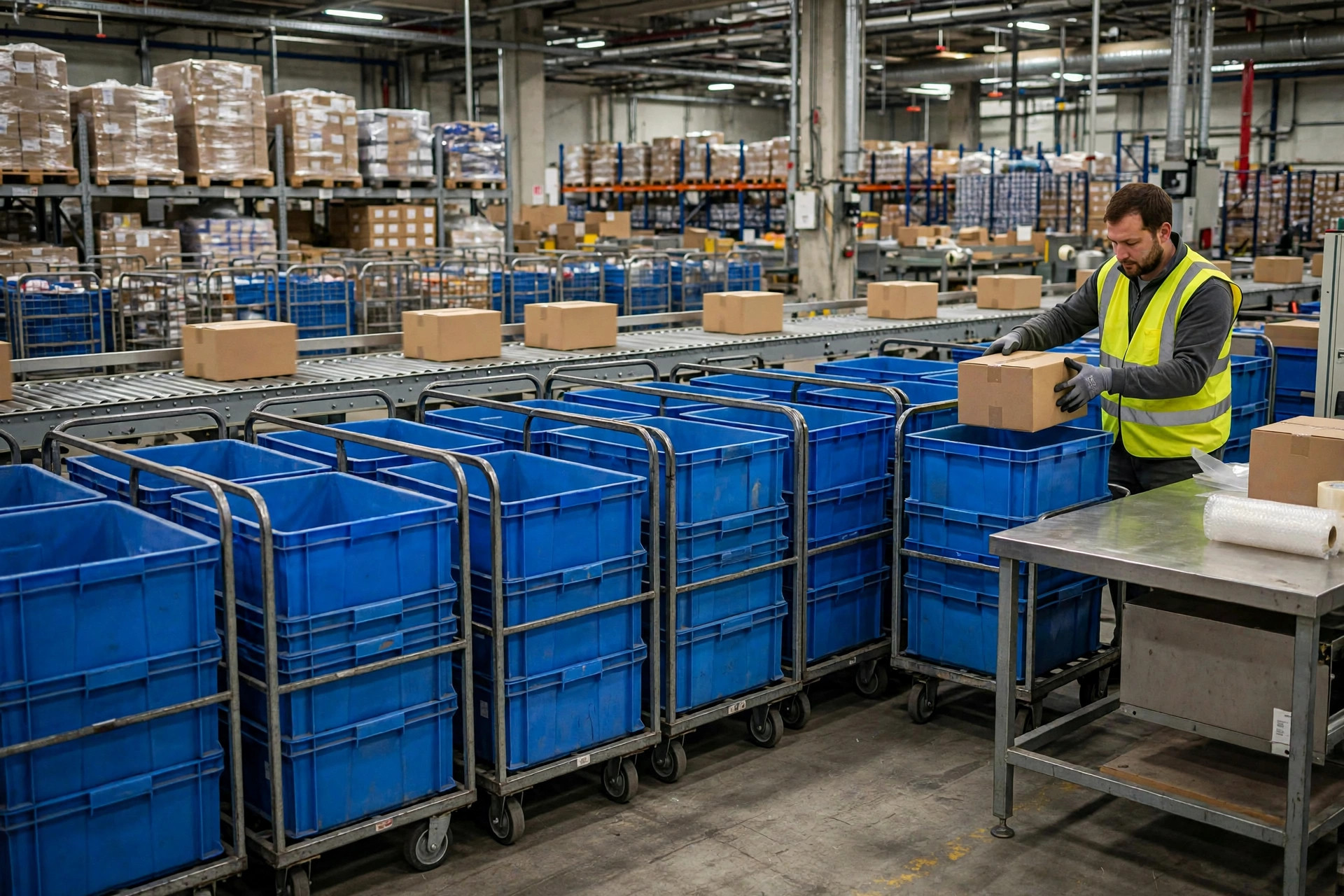
In 2021, I consulted for a 3PL warehouse in eastern China that handles auto parts — 80,000 square feet, more than 10,000 SKUs, over 7,000 orders a day. They had just spent serious money converting from discrete to zone picking. Average pick time per order dropped from just over four minutes to about two and a half. The owner bragged about it to everyone who visited.
Then peak season arrived. The consolidation area jammed for two straight days, late shipments triggered customer penalties, and within months they quietly converted back.
Picking the wrong picking method costs more than picking no method at all. Let me break down the math.
Both Methods Are Really About One Thing: Walking
First, the mechanics. Discrete picking means one picker, one order, walking the entire route to pick every line. Think of it like a chef cooking a whole dish start to finish: quality is traceable, you know exactly who to blame when something goes wrong — but the chef runs all over the kitchen on their own two legs.
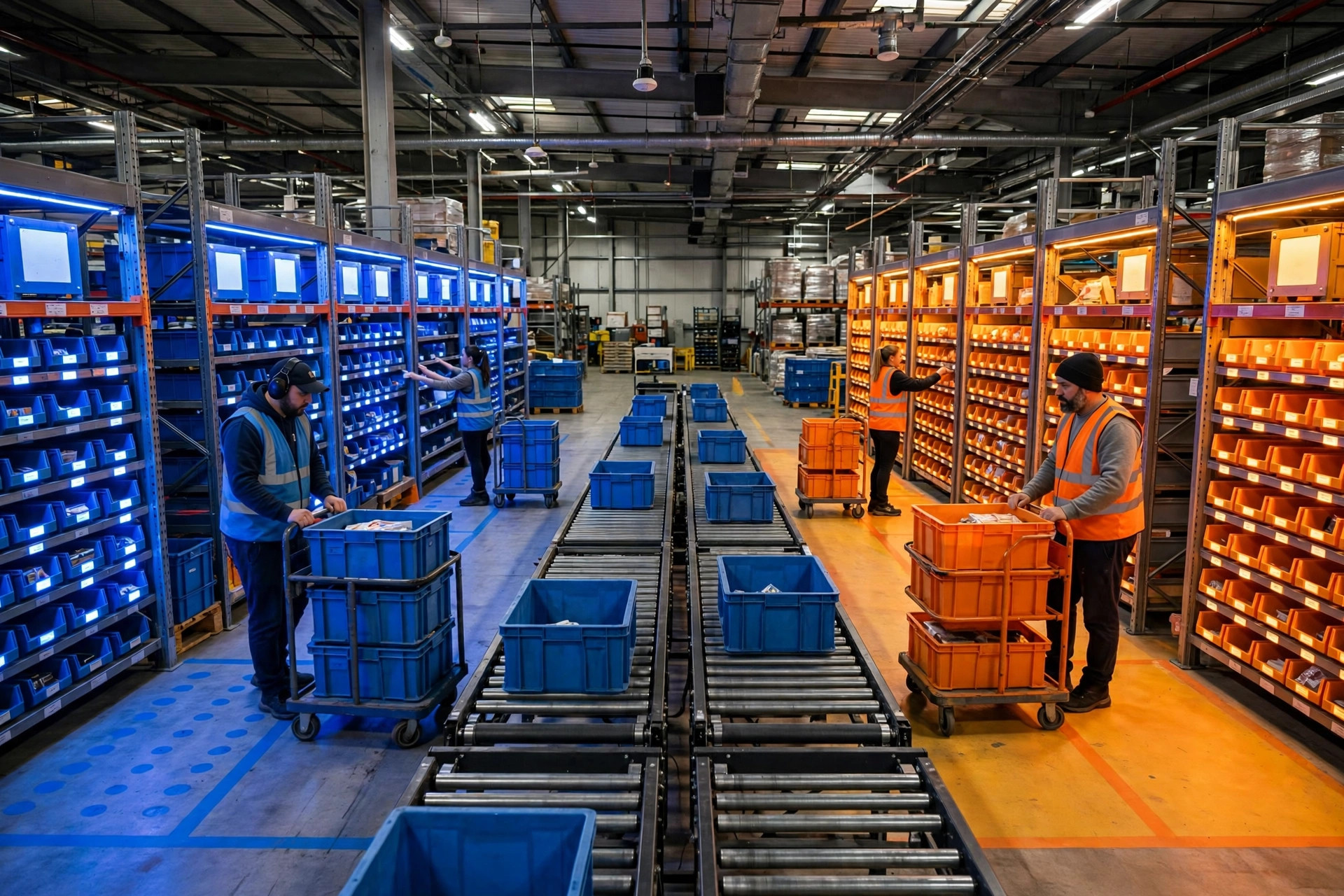
Zone picking divides the warehouse into zones. Each picker owns one zone and only picks what's in it; goods from multiple orders merge at a consolidation area. You can think of it as an assembly line: everyone does one operation, finished goods come out at the end. Per-unit efficiency is high, but you've added an "assembly" step.
Here's the data point that matters: in picking operations, walking typically accounts for more than half of total task time. Anyone who's done time studies will recognize that order of magnitude. So the real difference between the two methods comes down to one sentence: who walks, and how far.
In discrete picking, the picker walks the whole building — a hundred-plus meters per order is normal. In zone picking, each person paces a zone a few dozen meters across, and average travel distance per order can drop by more than half. Zone wins, right? Not so fast. A good chunk of the walking time you save gets paid back to consolidation — sorting, checking, waiting for all zones to deliver. I'll do that math below.
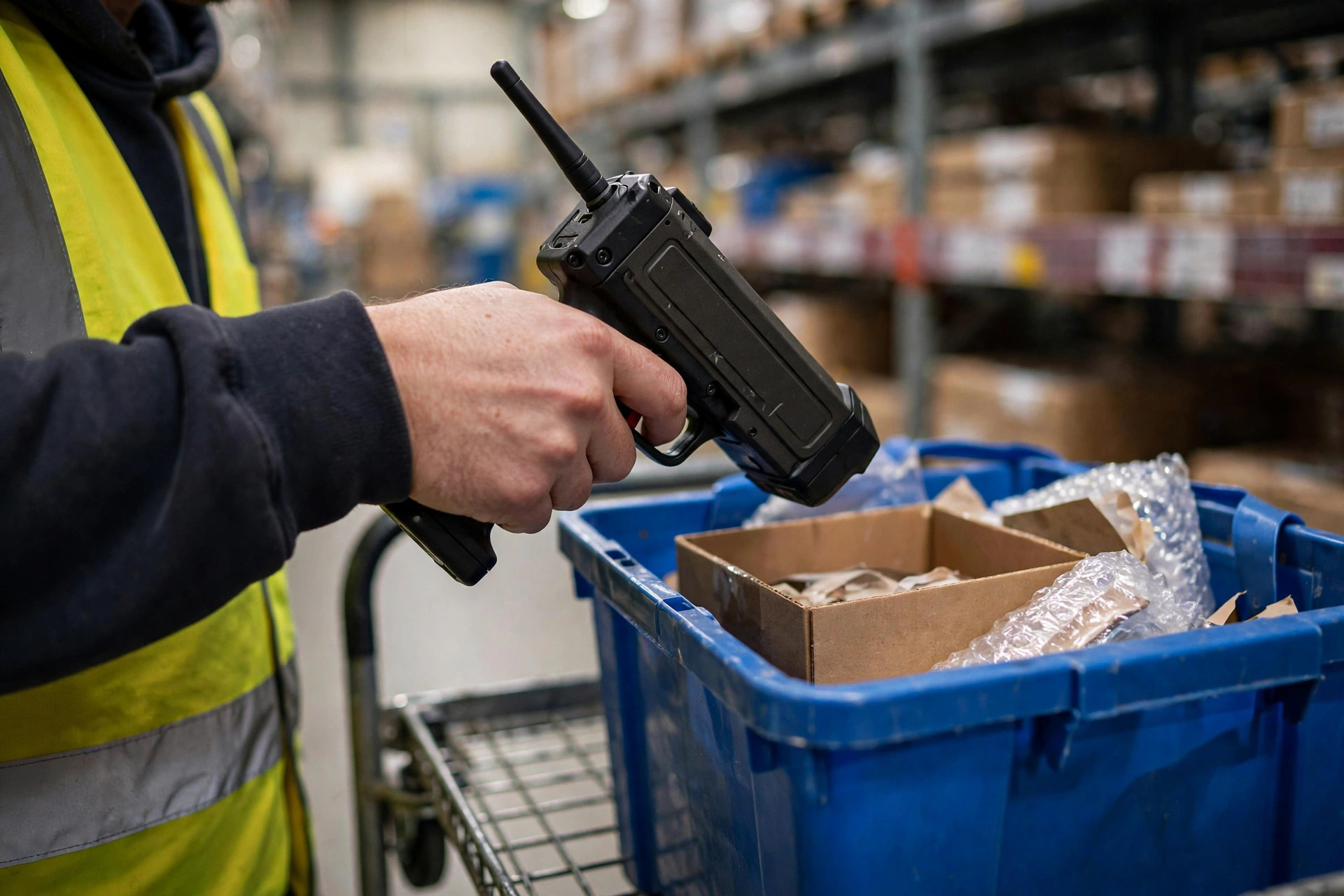
I like one engineer-friendly metric here: pick density. Think of it as how many lines you pick per hundred meters walked. In discrete picking, more lines per order means higher pick density — the walking pays for itself. In zone picking, density is naturally high because people stay in small areas, but consolidation eats part of it back. So don't compare "meters walked per order." Compare total time — walking plus consolidation — divided by lines. Cost per line is the number you can actually compare.
The Dividing Line: What Your Orders Look Like
The dividing line isn't how advanced your equipment is. It's your order profile. Three numbers: average lines per order, daily order volume, total SKU count.
The rule of thumb: warehouses with 1–3 lines per order, several thousand orders a day, and 10,000+ SKUs — mostly e-commerce small items and fast-moving consumer goods — are zone picking's home turf. Warehouses with 5+ lines per order, mostly bulky goods, a few hundred orders a day — auto parts, industrial supplies — do better with discrete.
| Order characteristic | Discrete fits better | Zone fits better |
|---|---|---|
| Lines per order | 5+ | 1–3 |
| Daily volume | Hundreds | Several thousand+ |
| SKU scale | A few thousand, mostly bulky | 10,000+, mostly small items |
| Volume volatility | Big peak/valley swings | Relatively stable |
Why is lines per order the number that matters? In discrete picking, more lines per order means the picker grabs extra lines "along the way" — travel cost gets diluted. In zone picking, more lines mean disproportionately more consolidation work, and consolidation error rates climb with it. Split an 8-line order across four zones and your consolidator waits on four separate deliveries. Waiting and errors are both costs.
There's a companion question: how you consolidate. Two flavors. Pick-to-order consolidation "picks" goods from each zone into complete orders — better when lines per order run higher. Put-wall consolidation "sows" goods into cubbies — better for high-volume orders of one or two lines. Pick zone picking but pair it with the wrong consolidation method and you've bolted the wrong transmission onto the engine. That Shenzhen small-appliance warehouse? Put wall paired with 6+ lines per order. The cubbies couldn't turn fast enough, and the mess compounded.
Zone count is a calculation too, not a guess. The rule of thumb works backward from throughput: figure out how many lines one person can steadily process per hour in a zone, then divide total lines by that. Cram two or three pickers into one zone fighting over the same slots and you might as well not have zones; slice zones too thin and consolidation wait times balloon.
Now for the rant, because somebody has to say it: some integrators push "zone picking plus pick-to-light" at every warehouse they visit, quoting systems for operations doing 500 orders a day. That's a fake need. In 2023, a cross-border small-appliance warehouse in Shenzhen — 6+ lines per order, fewer than 3,000 SKUs — got talked into zone picking with a put wall. Consolidation staff went from 4 to 12 just to keep up. Year-end accounting: no labor saved, a pile of new equipment depreciation, and they converted back to discrete-plus-batch the following year. Pick-to-light is good technology. The mistake is installing it without looking at the order profile. Automation can't fix your order profile — it can only amplify it. Before buying any picking automation, run the order-profile checkup. Plenty of warehouses discover they never needed zones at all.
The Maintenance Trap: Consolidation Is the Real Boss
Zone picking's biggest trap isn't picking — it's consolidation. The number of put-wall cubbies, the square footage of the consolidation area, the ratio of consolidators to pickers: undersize any one of them and fast picking upstream means nothing. That auto-parts warehouse in 2021 died exactly here. Picking efficiency went up after go-live, but consolidation was staffed for the old volume, and peak season buried it.
Then there's the reliability math. Zone picking depends on conveyors, pick-to-light systems, and consolidation logic running continuously — a series system, where reliability multiplies. Five links at 99% availability each give you barely 95% overall. In discrete picking, one picker going down affects only their orders; failures are isolated. When you calculate uptime and MTBF, don't look at single-device specs — look at the whole chain.
Discrete has its traps too: aisle congestion at peak, queues at hot SKU locations. But the fix is often batch picking plus route optimization, not a different method. Get discrete to 90 points before talking about zones — I've told that to a dozen warehouses, and the ones who listened all saved money.
Batch picking deserves its own mention as the middle ground between discrete and zone: group similar orders into a wave, pick everything at once, then sort. Think carpooling — people heading the same direction share a ride, and walking cost gets split. For warehouses with 3–5 lines per order and mid-range volume, discrete-plus-batch often beats an awkward zone setup, and you don't touch the consolidation area at all.
And the consumables nobody prices in: light modules, conveyor rollers, scanner batteries. The proposal mentions them in one line; operations year one will send you the bill. Maintenance traps always live outside the quote.
Worth the Money? Watch This One Number
Don't listen to integrator stories. Pull three numbers: lines per order over the last 90 days, daily order volume, total SKU count. Lines per order at 3 or below, daily volume stable at several thousand — zone picking is worth a serious conversation. Miss on any one of them, and get discrete-plus-batch to its ceiling first.
One refinement for the checkup: use the median lines per order, not the mean — a handful of 50-line orders will inflate the average. Check how many days the peak actually lasts; one or two spike days don't justify zone equipment. And look at the active-SKU ratio — 30% active versus 90% active are two completely different warehouses. All three numbers clear the bar before you talk zones; miss one, optimize discrete first.
Whether the money is worth it comes down to this one number: lines per order. Diagnose first, prescribe second — never the other way around.
By Da Liu, Automation Engineer