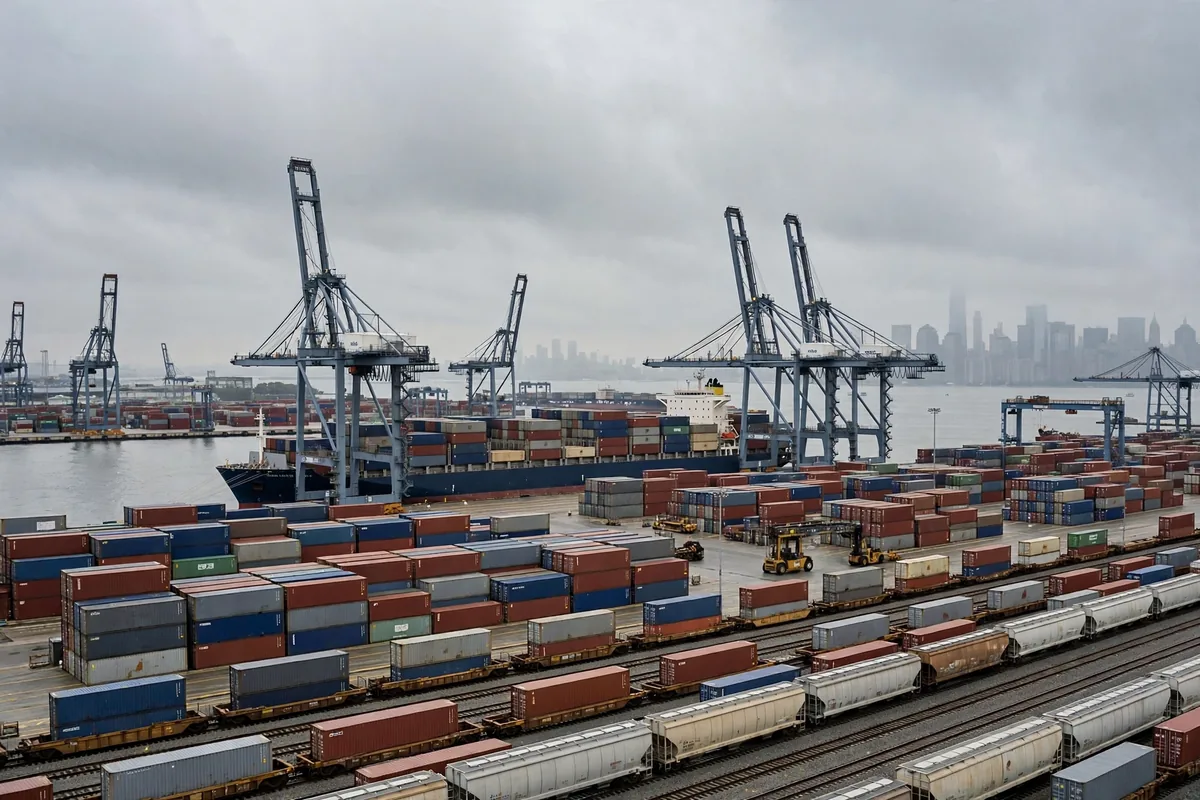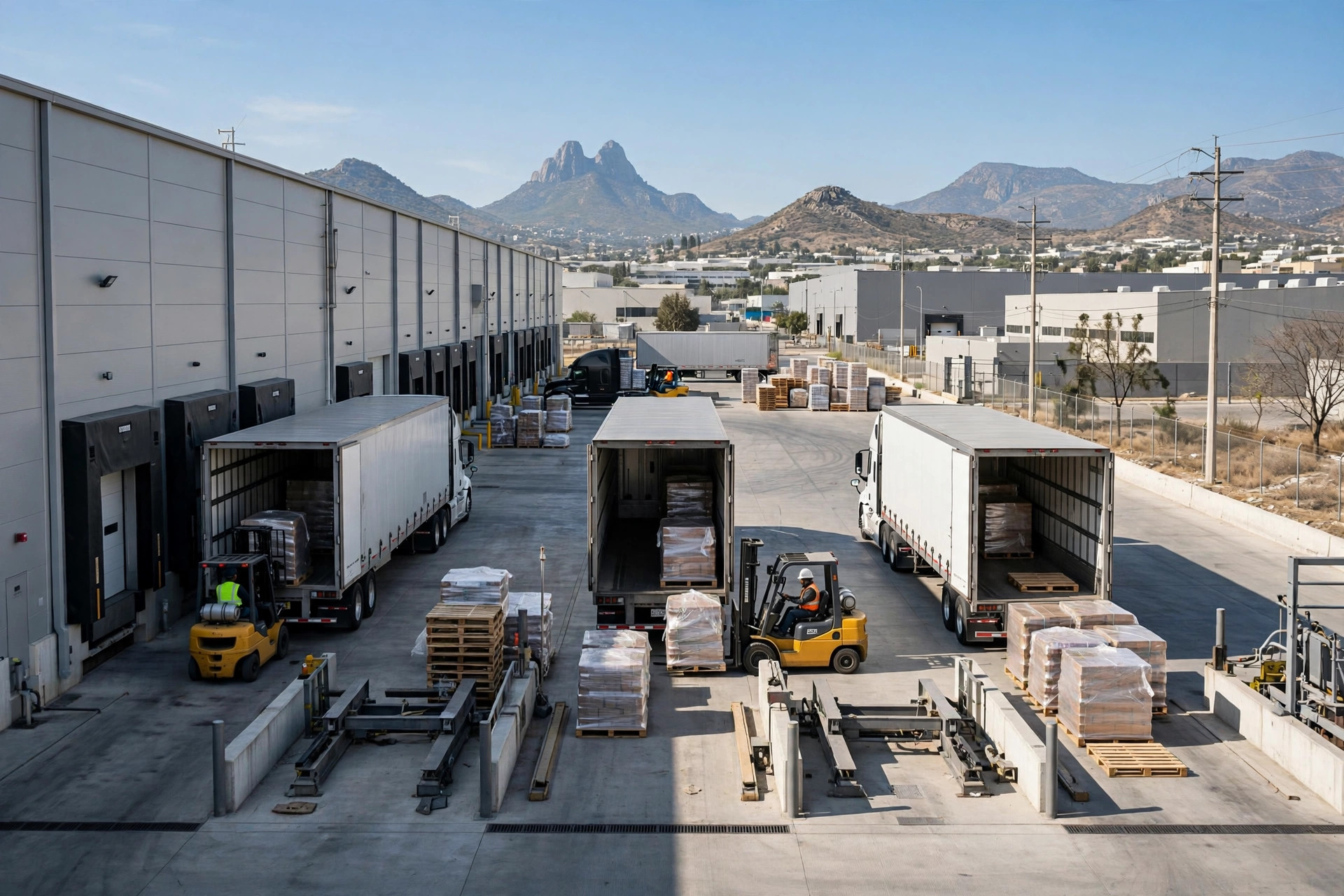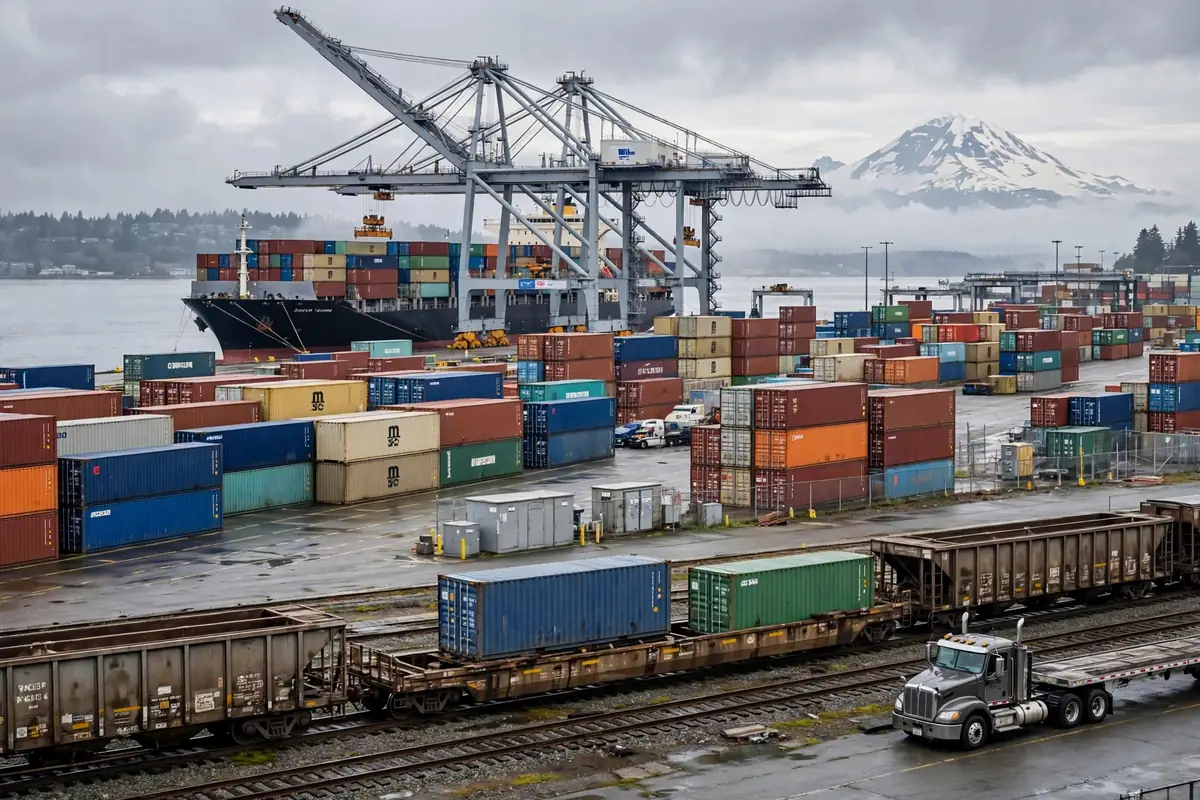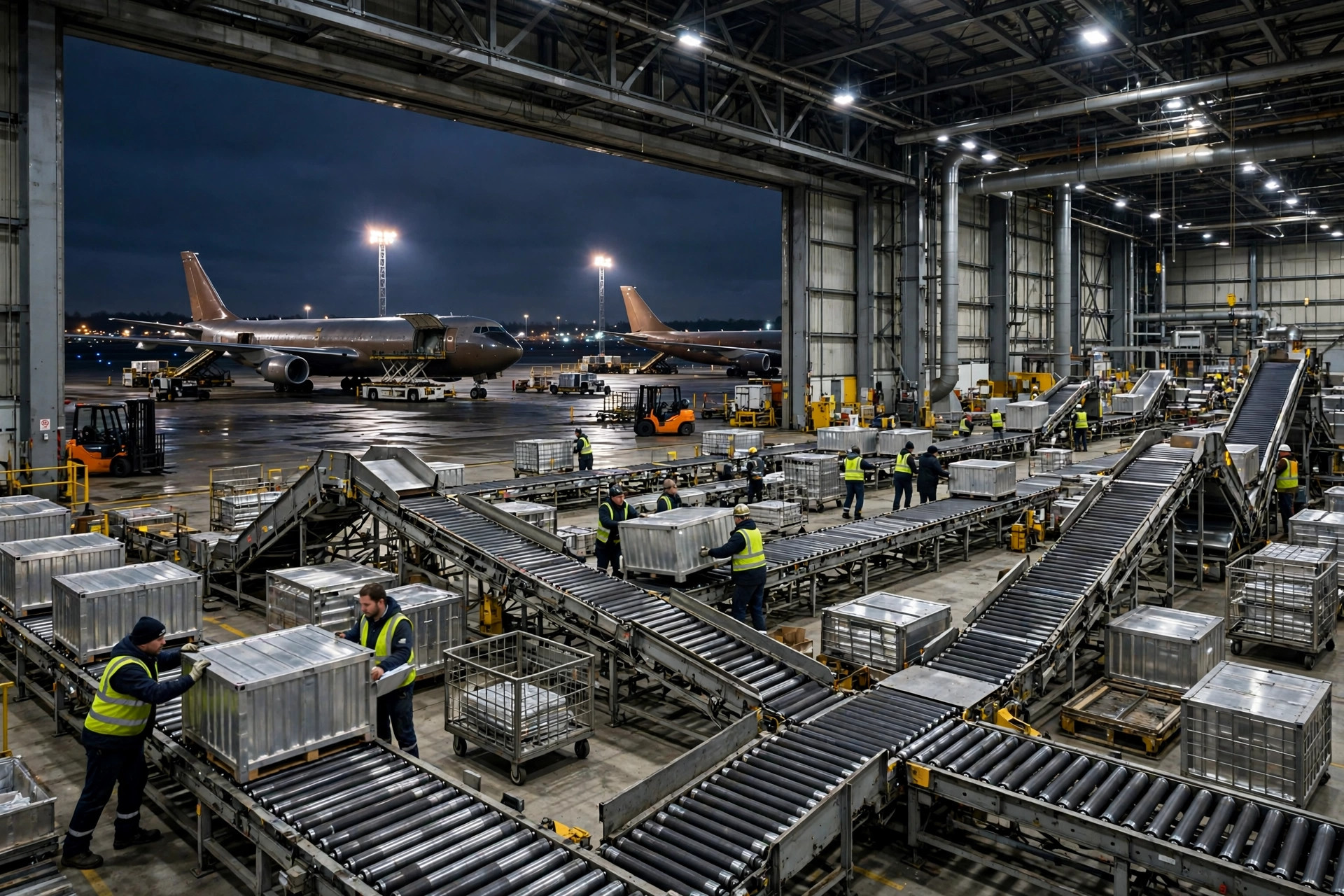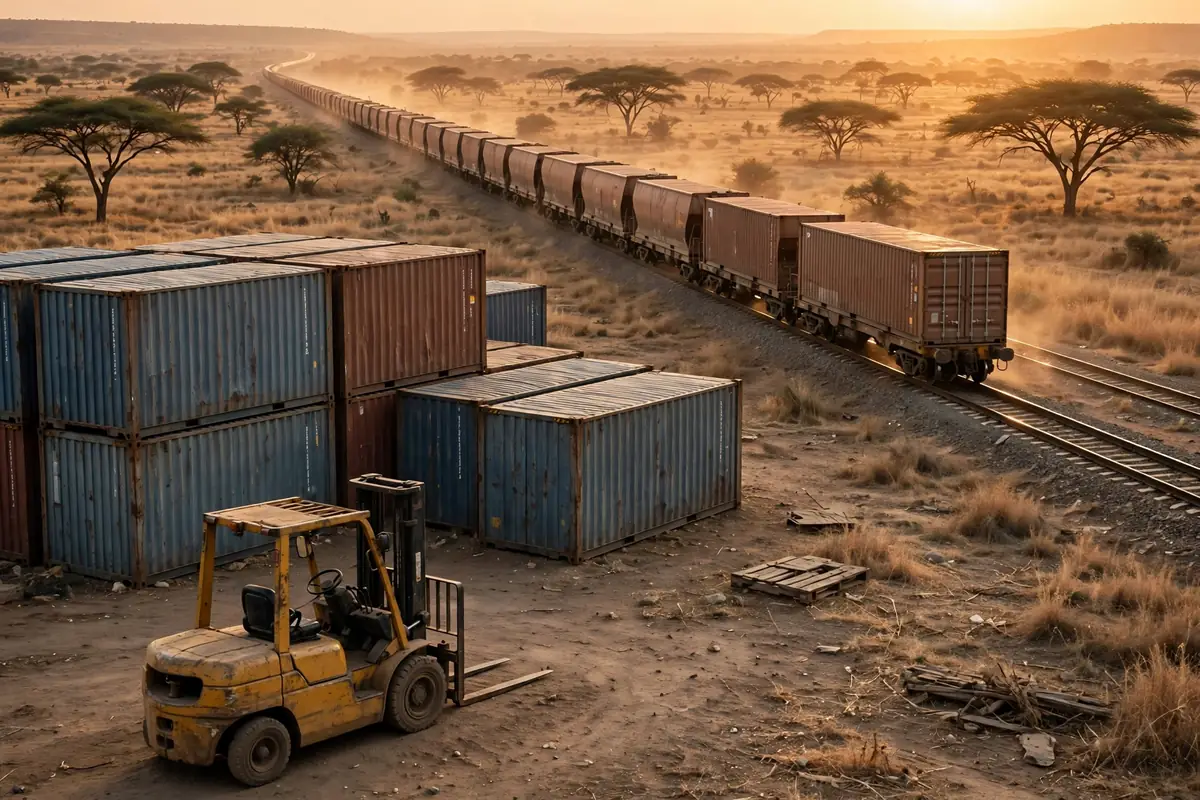
Let me put it plainly: the Lobito Corridor is not a railway. It is a pipe, and warehouses are the tanks along it. You can widen the pipe all you like, but if a tank is blocked, the water still does not flow. That is where Zambian copper sits right now.
Zambia produced about 880,000 to 890,000 tonnes of copper in 2025, and the government target is 3 million tonnes a year by 2031. Output is meant to more than triple while the export routes stay largely the same ones. Think of it this way: the mine keeps digging faster, but the road out of the gate has not widened at the same pace. Talking about warehousing here is not about how many sheds to build. It is about where copper stops after it leaves the pit, for how long, and who picks it up next.
How fast is the Lobito Corridor, really? Run the three routes side by side
Start with the principle. For copper exports, the big cost is not at the mine. It is on the road. The same tonne of copper can cost and take very different amounts depending on which corridor it uses. The Lobito Corridor upgrade is about $455 million. The Zambia-to-Lobito railway is about 830 kilometres, from Chingola to Luacano on the Angolan border, and the target is to cut the full journey from 16 days to 7. The rail leg from the Copperbelt to the port of Lobito takes about 3 days, while the route via Durban takes about two weeks. The time saving does not come from one stretch running unusually fast. It comes from the whole chain having fewer hold-ups.
Put the three corridors next to each other and the picture is clear:
| Corridor | Key facts | Best for |
|---|---|---|
| Lobito Corridor | Zambia rail leg about 830 km; Angola rail leg about 1,300 km; full-journey target from 16 days to 7 | Miners with steady volumes who need to cut cash tied up in transit |
| Dar es Salaam | Planning-model estimate of about $256–274 per tonne | Shippers already set up for eastbound routes with fixed partners |
| Durban | Copperbelt to port takes about two weeks | Shippers in no hurry, with mature operations on the southern route |
Read the cost column carefully. Lobito at about $156–201 per tonne is a planning-model estimate, not a published tariff. A model estimate means the number was calculated under assumed volumes, frequencies, and load factors. Treat it as a planning range, and confirm actual rates with carriers and the port before signing anything. Using a model price as if it were a quote is how negotiations fall apart.
Here is the counterintuitive part: the fastest corridor does not automatically give you the cheapest warehousing plan. Lobito is fast on the rail leg, but copper still has to get from the mine to the railway, and from the railway to the berth. If any single node slips, the nine days you saved evaporate. I have seen this pattern too many times. All the money goes into the main line, while the yards, inspection areas, and transfer points get nothing. The last mile does the damage. It is like buying a high-speed sorter and then feeding it by hand. The machine is fast. The system is not.
Where the storage nodes go: three points, none optional
Node placement starts with two questions: where does the cargo come from, and where is it going? Zambian copper is concentrated in the Copperbelt, and the port is on the Atlantic coast to the west. Three points in between do the work.
The first is the Copperbelt mine yard. This is the source. Copper concentrate and cathode leave the mine, and here they are consolidated, weighed, and documented for export. The yard is not for storing cargo. It is for gathering scattered shipments into full trainloads. Without it, every train leaves half empty and the economics of the rail service collapse. Think of the yard as a funnel that fills one train at a time.
The second is the Lusaka dry port. DP World has invested $300 million in a dry port outside Lusaka, and its warehouses and container yard are already operating. The point of a dry port is to move port functions inland: customs clearance, inspection, stuffing, and container storage can happen in Lusaka instead of queuing at the coast. Warehouse occupancy in Lusaka is above 90%. That number tells you two things at once: demand is genuinely strong, and spare capacity is genuinely scarce. If you expect to find space at short notice, you probably will not. Locking in space early with a long-term agreement is not caution here. It is a requirement.
The third is the border inspection and transfer point. Zambia and Angola have border procedures, and paperwork, inspection, and transfer all take time. Whether the 7-day target holds depends heavily on how smoothly this stretch runs. My advice is blunt: manage the border as a formal storage node, with inspection space and buffer stock, instead of treating it as a toll booth you drive past. Plenty of plans show 7 days on paper and then lose two days at the border. The spreadsheet never notices. The ship does.
The selection line sits here too. If you are a large miner with steady volumes, you need long-term positions at all three points, and the Lusaka dry port warehouse is the core asset. If you are a smaller forwarder with volatile volumes, do not build your own. Rent dry-port space, use third-party yards, and turn a fixed cost into a variable one. The dividing line is one question: does your average monthly volume feed a fixed warehouse position, month after month? If it cannot, rent. If it can, then talk about building. A self-built warehouse does not cure unstable volumes. It turns the problem into a fixed asset.
The maintenance trap: the faster the corridor, the less slack the nodes have
Finally, the maintenance trap, which is the part most often ignored. A faster corridor demands more from its nodes, not less. When Durban took two weeks, an extra two days at a node barely registered. With a 7-day target, one extra day at a node is a seventh of the whole journey. As the pace rises, the buffer has to be recalculated.
The first trap is treating the dry port as an unlimited warehouse. With Lusaka occupancy above 90%, your cargo may have nowhere to sit in peak season. Put peak-season guarantees in the contract: priority stacking, how overtime charges work, and who carries the cost when the yard is full. A verbal promise is not a guarantee.
The second trap is watching the railway and ignoring the connections. The 830-kilometre Zambian leg plus the roughly 1,300-kilometre Angolan leg look impressive on paper, but copper still travels from the mine to the rail terminal and from the rail terminal to the berth. Those two short hauls are where daily operations fail. Short-haul trucking, loading gangs, and yard scheduling all have to be staffed. If they are not, the fast main line is useless.
The third trap is treating a cost model as a quotation. To repeat it once more, $156–201 per tonne is a model estimate. Before moving cargo, get written quotes from the carrier, the port, and the dry-port operator, and line the three up before signing. Deciding on a corridor from a single quote is like ordering a machine from one sample datasheet. It is what an amateur does.
Zambia copper via the Lobito Corridor comes down to one sentence: the corridor sets the fastest you can arrive, and the nodes set how many days you actually take. With output heading toward 3 million tonnes, nodes that are not built in advance will waste a rebuilt railway. Is the money worth it? Look at one number: how many days did your cargo actually take from the mine to the ship?
By Da Liu, Automation Engineer