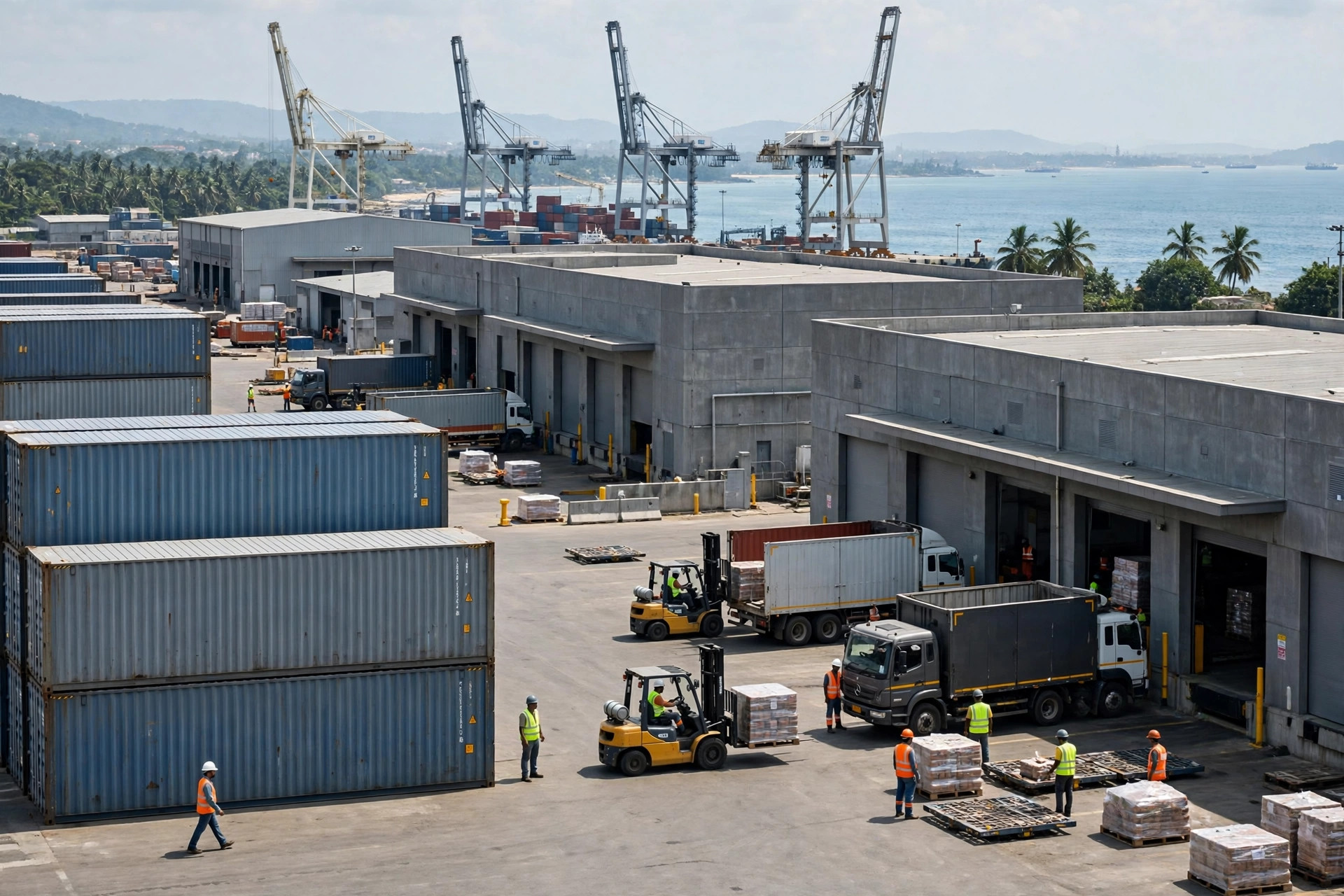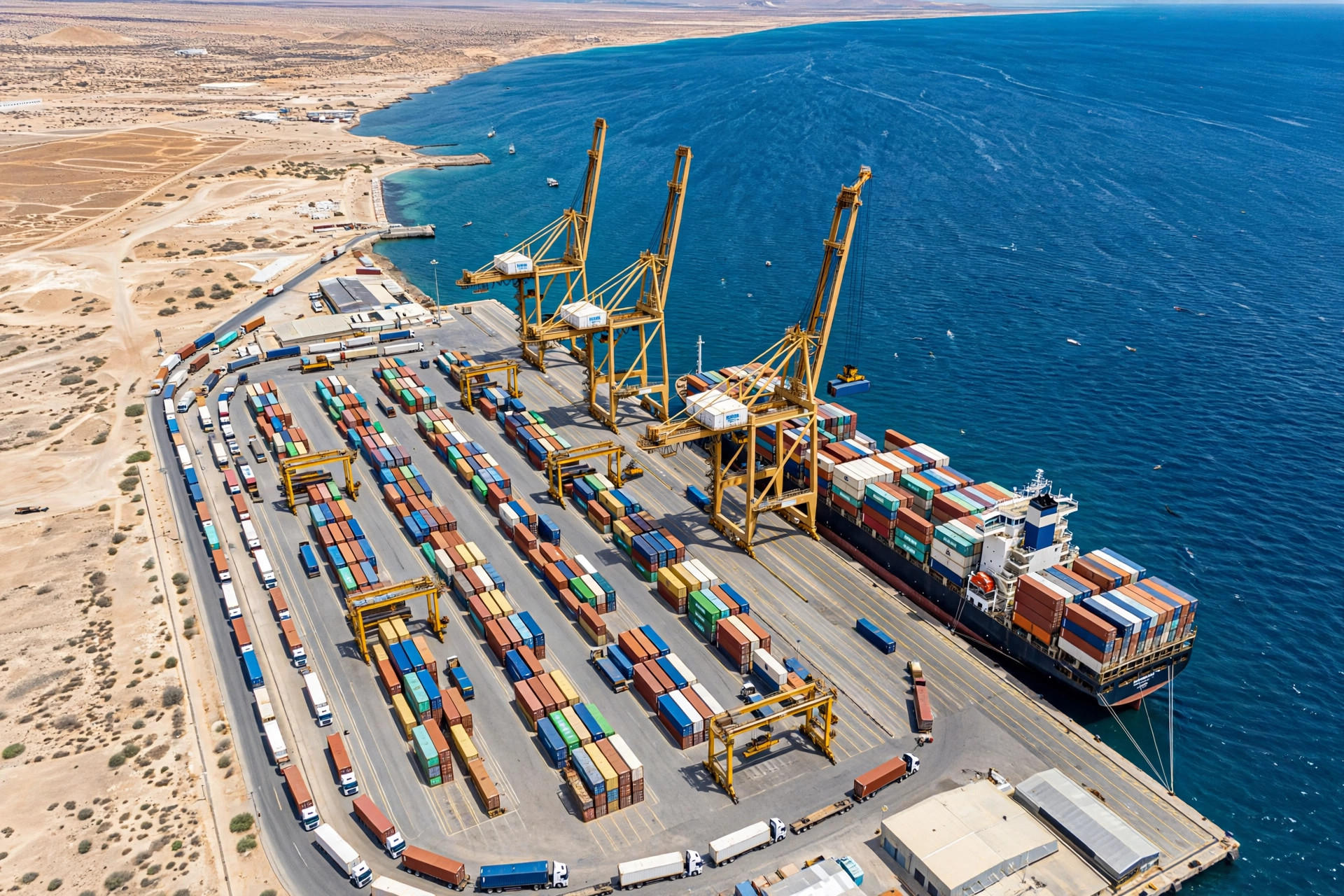
Start with the conclusion: whether a Monterrey nearshoring warehouse pays off does not depend on rent per square foot. It depends on three things holding at the same time: a stable cross-border connection, a workable duty-deferral setup, and a replenishment rhythm matching the production beat of the US plant you serve. If any one fails, the warehouse can sit right next to your customer and still be useless. A Monterrey nearshoring warehouse is a total-cost question, not a single-line saving.
Monterrey, in Mexico's industrial north, concentrates automotive, appliance, and electronics manufacturing, with suppliers, logistics providers, brokers, and trucking firms clustered around its corridors. For a US plant, the appeal is obvious: short distance, overlapping time zones, and a deep local base, so a site problem can get a person on site the same day. But projects that chose the location for closeness to the border alone often discovered after opening that border flow, duty-deferral bookkeeping, and system alignment with the US customer's ordering rhythm were what actually decided whether the site survived.
Why a Monterrey Nearshoring Warehouse Is Worth Pricing: Certainty, Not Just Rent
The value of Monterrey's corridor starts with support, not square footage. When auto parts, appliance, and electronics suppliers sit in one region, packaging, pallets, forklift service, temporary labor, and brokerage are all local. A new warehouse rarely suffers from too few orders in its first month. It suffers from small things with nobody to fix them: a broken printer, an empty label roll, a driver who cancels at the last minute. Local support solves those the same day.
I worked with a supplier feeding southern US plants that used to ship direct from Asia, where every shortage became an air-freight rescue. After opening in Monterrey, routine replenishment moved to short-haul ground transport, urgent orders could be answered the same day, and the customer's line stopped going down for want of a single part. The counterintuitive lesson is that the largest saving was not freight. It was the trust and order stability that came from never stopping the customer's line. Freight savings showed up on paper as a modest line. Keeping the customer from switching suppliers was the real number.
The reverse case is just as instructive. I have seen this pitfall three times: a company rushes into Monterrey for the city's reputation, opens the warehouse, and then finds that its own product line has no local supplier base, so key consumables still have to be hauled in from elsewhere. The cluster advantage never lands on that company. Before choosing Monterrey, list your top twenty materials, confirm for each one whether local supply exists, what the lead time is, and what the minimum order looks like. If those answers do not hold up, the hottest industrial corridor in Mexico does you no good.
Setting Up Under a Duty-Deferral Framework: Compliance First, System Second
Operating under Mexico's IMMEX-style duty-deferral framework for manufacturing and warehousing raises questions that must be answered before the warehouse opens. Which model applies, what registrations and filings are needed, and what bookkeeping is required all depend on current policy and on the customs broker's confirmation. Policy changes, and port enforcement practice changes with it, so the first step of any project is to get the broker and local counsel to confirm the applicable model, the filing checklist, and the record requirements in writing, rather than relying on a verbal "it should be fine."
A practical sequence:
- Confirm the business model: duty-deferral manufacturing, bonded warehousing, or general trade plus local distribution each carry different registration, bookkeeping, and system requirements.
- Name the compliance owners: broker, tax adviser, and warehouse manager each own a defined segment, and the handover of shipping documents, inventory records, and declaration data is assigned and reviewed, not left to habit.
- Design the inventory ledger: bonded materials, domestic materials, finished goods, and scrap get separate accounts, with batch, bonded status, and validity visible in the system and reportable at stocktake.
- Map the cross-border document flow: packing lists, declarations, bills of lading, and origin-related documents need defined fields and transfer points in the system, so a port inspection can pull them in minutes rather than hours of searching.
- Run a small pilot: move one or two full shipments through the entire chain, from receiving and bonded registration through picking, declaration, cross-border transport, and signed delivery at the US plant, before scaling volume.
I have seen this pitfall three times: a system goes live with an ordinary ledger, bonded status lives in an outside spreadsheet, and declaration data is assembled by hand. One error means rework across the filing. In a WMS implementation, bonded fields are not a later enhancement; they are master data on day one. When bonded records and physical stock disagree, the result ranges from delayed declarations to compliance exposure, and that gap cannot be patched after the fact.
Tariff and USMCA origin questions follow the same rule: confirm with current policy and a licensed broker, and never invent a rate or promise a duty outcome. Origin turns on material sources, processing steps, and regional value content, and differs by product. Get a professional assessment product by product in planning, and file it as a project input, not a surprise after opening. Treat official updates as the only source on timing, and keep project language flexible.
A Monterrey Nearshoring Warehouse Decision Framework: Border, Monterrey, or the US Side
Suppliers serving US plants usually choose among three locations, and none of them wins on every dimension. The right answer follows your order pattern.
| Location | Best fit | Main cost | Key risk |
|---|---|---|---|
| Border warehouse near Laredo or Colombia crossing | Urgent, small, frequent orders needing fast border response | Border segment still needs coordination, and port congestion creates swings | Queues and inspections break delivery promises |
| Monterrey local warehouse | Local production, assembly, or processing with heavy local support needs | Still a land leg to the border, and bonded bookkeeping is complex | Local support does not match your product line |
| US-side warehouse | Customers requiring domestic stock, next-day delivery, or US returns handling | Different labor, rent, and compliance cost structure | Looks closest to the customer, but replenishment still crosses the border |
Score the choice on four questions: how urgent are the orders, are they large planned replenishments or small frequent ones, does the product need processing or assembly inside Mexico, and how demanding is the customer on inventory visibility and returns? Urgent and small points toward the border. Local processing points toward Monterrey. A hard customer requirement for domestic stock and returns points toward the US side, even when its cost structure is higher.
Cross-border connection is the gate every option must pass. Operating rhythm, inspection likelihood, holidays, and border control changes at Laredo and Colombia all move delivery dates. Confirm the normal time range and its volatility with your broker in advance, and build buffer into the delivery promise rather than quoting best-case crossing time. Every shipment needs a visible status chain: dispatched, in transit, declared, crossed, delivered. When the chain breaks, customer service and the customer call at once, and the warehouse becomes a fire brigade.
The Pre-Opening Checklist: Failures I Keep Seeing
- Counting rent only: rent, labor, cross-border transport, brokerage, system implementation, compliance advice, and exception handling together are the real cost, and rent alone understates it badly.
- Promising best-case crossing times: one border delay breaks the promise, and rebuilding customer trust costs far more than the buffer you skipped.
- Adding bonded records after go-live: no bonded fields at launch means spreadsheet bookkeeping, and filing season becomes rework season.
- A system that takes orders but not border status: when US customers cannot see transit and crossing status, they call the warehouse, and the warehouse answers from memory.
- Assuming local support: without checking suppliers against your material list, key consumables arrive by long haul after opening.
- No returns design: whether a US return goes to the Mexico warehouse or a US warehouse, with what paperwork and ledger treatment, must be decided before the first return arrives.
One more trade-off: more automation is not automatically better. Local labor versus equipment costs, order volatility, and changeover frequency decide the automation payback pace. Stable, high-volume steps justify it; volatile steps slow when over-automated. Run process and system first, then automate bottleneck by bottleneck.
Back to the conclusion: a Monterrey nearshoring warehouse succeeds not on the city's reputation but on whether order pattern, duty-deferral model, border connection, and system records form one closed loop. Confirm the model, build the ledger, leave border buffer, pilot small before expanding. For policy questions, get professional confirmation at project start and follow official updates, rather than discovering the answer with freight at the border.
By Lin Xiao, WMS Implementation Consultant