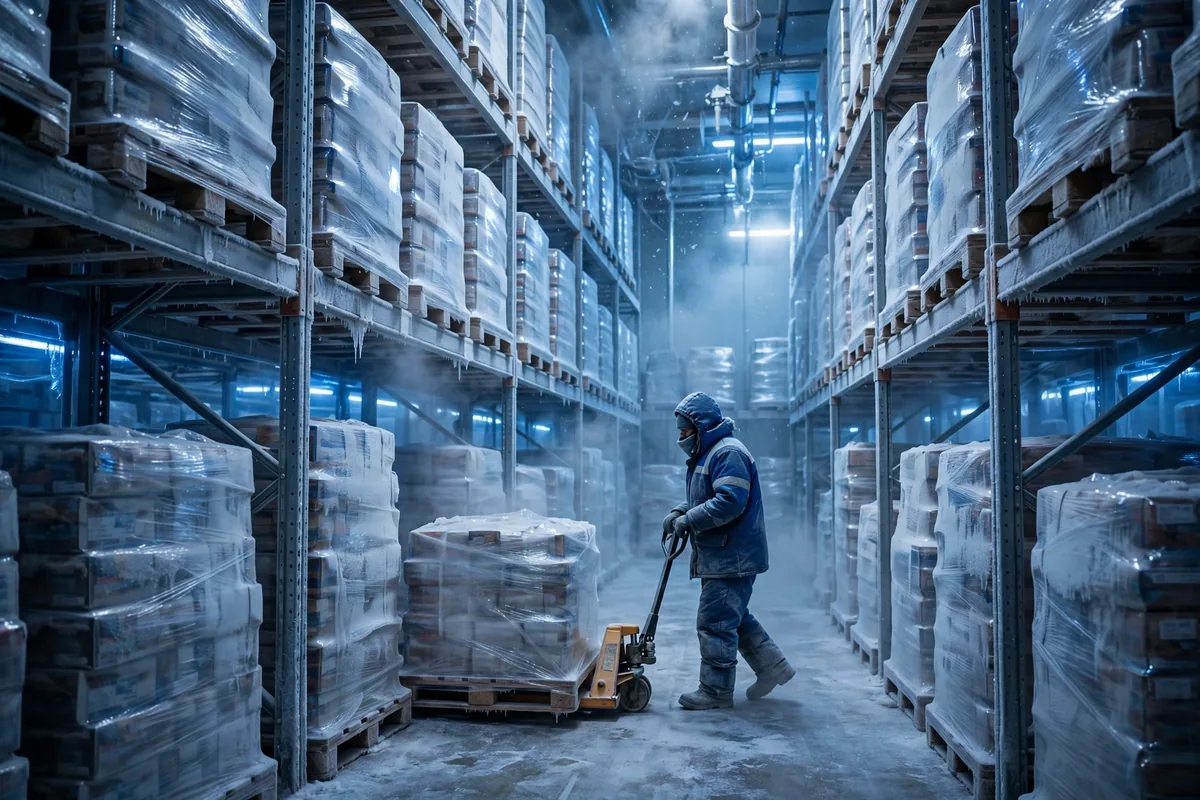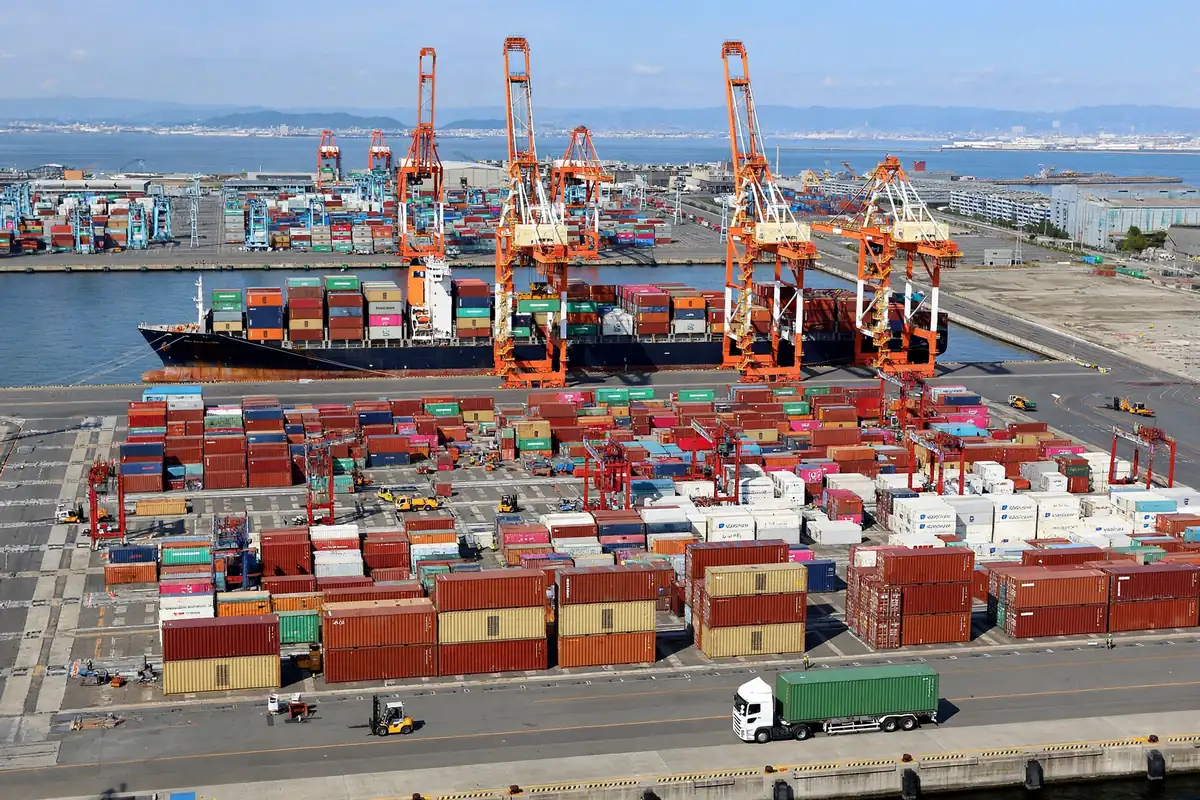
At 5:40 in the morning, the truck queue outside the Honmoku D4 gate is already forming. I am standing at the warehouse door with today's pickup slips in my hand, doing a different kind of math: this load of auto parts from Shanghai has to be in the warehouse and broken down by eight, sorted and split by noon, and on a truck to Nagoya by three. Yokohama port warehouse logistics is not about muscle. It is about the timetable. Let me be straight with you: the port statistics can look as good as they want. Down here in the warehouse, everything comes down to one question — when the ship arrives, can your cargo get in and get out on time?
First, the lay of the land. Yokohama is Japan's second-largest container port. Tokyo is number one. In 2024 Yokohama handled 3,075,370 TEU, up slightly from 3,020,999 TEU in 2023, of which foreign trade accounted for 2,755,211 TEU. Japan as a whole handled 21.89 million TEU in 2024. Those numbers do not look dramatic, but here is the thing: Yokohama's job is not volume. It is being the smoothest Japan–China gateway in Tokyo Bay. A lot of cargo from China lands in Yokohama first, then gets split and sent on to Nagoya, Kansai, Kyushu and beyond.
How Close to the Dock Should a Yokohama Port Warehouse Be?
Our warehouse is a twenty-minute drive from Honmoku. I have thought about that distance a lot. Any closer, and the rent is frightening and the building is too small to turn around in. Any farther, and each pickup run takes forty extra minutes, which costs you a full truck run a day — in peak season, that will drive you mad. Here is the first trap in Yokohama port warehouse logistics: people look at rent per square meter and forget the round-trip time of a truck.
We learned that one the hard way last peak season. We rented a cheap overflow warehouse forty minutes from the port, and then a 15,000 TEU CMA CGM vessel made its first call at Honmoku D4 in January 2026 — the largest vessel on a regular Japan service. One big ship, and the pickup queue stretched out past the gate, every appointment slot full. Our trucks waited outside the gate for over three hours while the breakdown crew inside stood around with nothing to do, and then we paid overtime to catch up that night. The overtime and the delay cost more than three months of the rent we had saved. Since then we have a hard rule: for Japan–China relay work, the warehouse must be within thirty minutes of the dock, one way. Farther than that, we do not take the job. Better to take one order less.
Honmoku D4 has an annual capacity of over 550,000 TEU. That sounds comfortable. But capacity belongs to the terminal. Time belongs to everybody. Whether your box gets out on schedule depends on appointments, on the trucking fleet, and on the receiving rhythm at the warehouse door — not on the terminal's nameplate.
The Yokohama Port Relay Trade Gets Stuck in Three Places
The first is breakdown and sorting speed. Auto parts come in dozens of part numbers and batches, one container holding maybe a dozen part numbers headed for different plants in Nagoya, Kansai and Kyushu. Sort one part number wrong and a production line downstream has to wait. Our rule now: we get the packing list before the ship berths, print the sort sheets in advance, and the breakdown crew sorts by the sheet, not from memory. It sounds clumsy. The error rate dropped the moment we did it.
The second is cold chain. Reefer boxes are a real share of Yokohama port warehouse logistics — food, pharma — and when a reefer lands it needs power and a cold room fast. Plug capacity in the yard is limited, and in peak season there is a queue. We once had a reefer load sit in the yard for half a day because every plug was taken, and the cargo owner called my mobile directly. Since then, before we accept any cold-chain order, we ask one question: are the plugs booked? If not, we would rather push the job a day than take it and hope.
The third is keeping up with the sailing schedule. Japan–China services are frequent, which looks convenient — but it also means that if your cargo misses one sailing, the next one exists, yet your customer's production line cannot wait. And here is the counterintuitive part, the one people argue with me about: Yokohama is not Japan's biggest port, and for Japan–China relay work that is exactly why it works better than Tokyo. Tokyo is bigger and busier, but also more congested and more expensive, and pickup queues run longer. Small batches, high frequency, tight windows — that kind of cargo moves more reliably through the number two port. Bigger port does not mean your cargo moves faster.
How We Run It Now
Here is what we actually do, the routine that is now fixed in our warehouse. Every morning at six, dispatch checks three things: which ships arrive today, which pickup slots are booked, and which dock doors are free. The shift board goes on the office door — who arrives when, which truck goes to which terminal, all visible. Night shift keeps two people on, watching for late vessels and the next morning's pickups. When a veteran trains a newcomer, the first lesson is not how to drive a forklift. It is how to read a packing list and check a part number.
The money side matters too. Here is how a typical Japan–China relay shipment pencils out for us. All figures below are a scenario illustration / hypothetical example, not a quotation:
| Option | Distance to dock | Cost per container, all-in | What on-time feels like |
|---|---|---|---|
| Near-port warehouse (Honmoku area) | 20 minutes | Higher rent, lower trucking | Breakdown done the day the ship arrives |
| Far suburban warehouse | 50 minutes | Lower rent, higher trucking | In peak season, slips to the next day |
| Ad-hoc overflow space | Varies | Luck of the draw | One mistake wipes out the savings |
Run the numbers and the near-port warehouse is not actually expensive. Rent is higher, yes, but trucking, overtime and delay claims add up fast at the far warehouse. When you rent a warehouse, do not look only at the price per square meter. Look at what one shipment costs from the ship's side to your outbound door, in money and in hours.
One last reminder for anyone in this trade: before you take on Yokohama port warehouse logistics work, go stand at the terminal gate one morning. Watch the queue, watch the pickup rhythm, then decide. Port data on paper never beats what you see at 5:40 a.m. outside the gate. In this business, one morning on site tells you more than ten pages of reports.
By Chen Feng, Warehouse Operations Manager