Here's my verdict up front, no fluff: if your yard sees more than 40 truck moves a day, or you keep 100-plus trailers sitting in the yard year-round, a standalone YMS is not optional — buy it early and it pays for itself. If you're running a mid-size site, squeeze everything you can out of the yard module that ships with your WMS before shopping for anything standalone. And the yard features your TMS vendor throws in for free? The weakest of the three, every time. Treat them as a bonus, not a plan.
Let me put it plainly: picking a YMS is not about picking features. It's about picking which bill you're willing to pay. I've watched all three routes work, and I've watched all three blow up. Every option has two sides.
Two expensive lessons I've watched up close
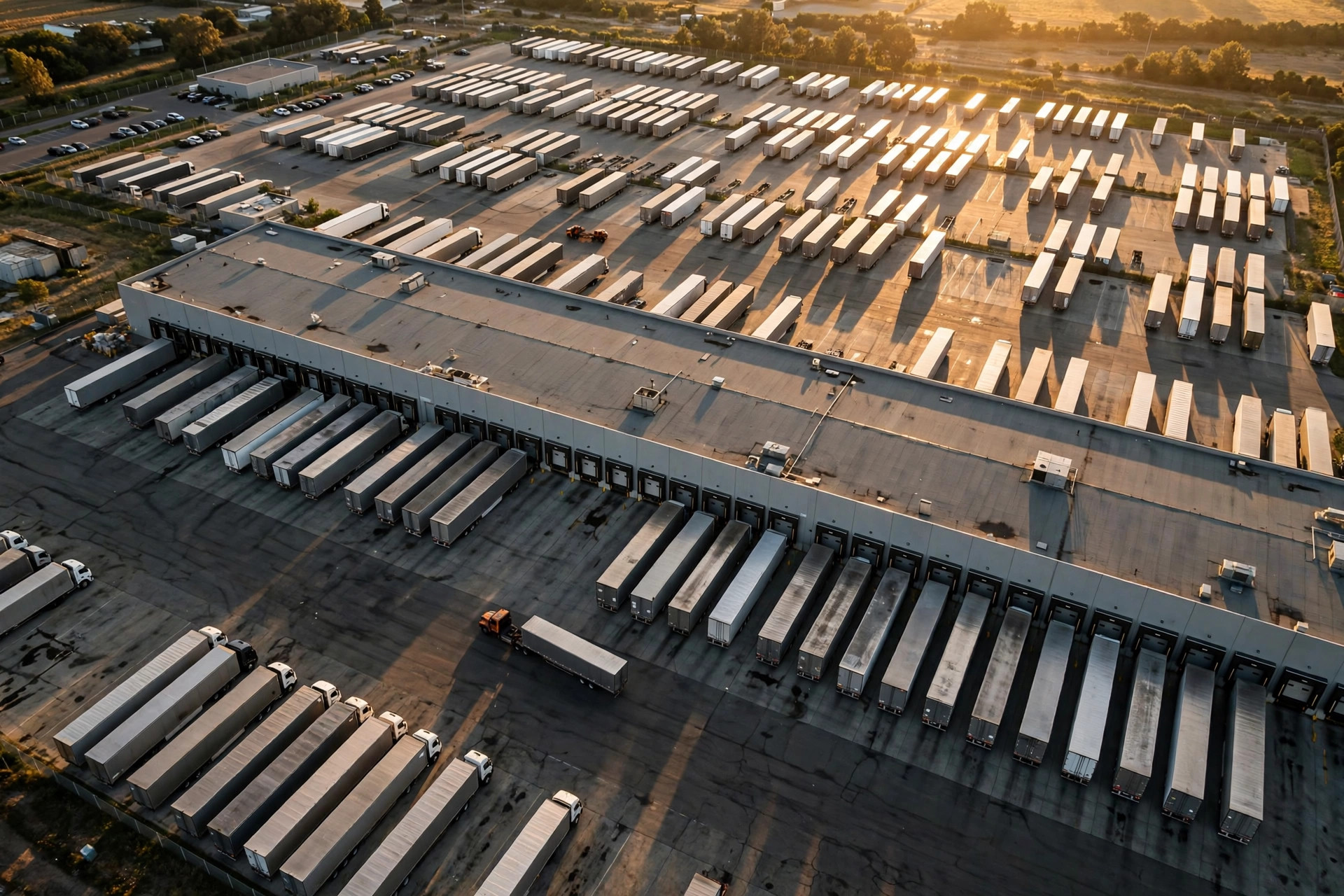
Lesson one: Fontana, California, 2023. A 3PL doing e-commerce fulfillment — 60-plus dock doors, 120-plus truck moves a day at peak, 200-plus trailers parked in the yard at any given time. The owner wanted to keep life simple, so he bought the yard module from his WMS vendor. One vendor, one invoice. What could go wrong?
Three months later he called me, furious. Appointments worked. Gate check-in worked. But the real problems were untouched: drivers burned an average of 40 minutes per visit hunting for trailers inside the yard (industry-experience magnitude), and trailer moves were dispatched over a two-way radio until the yard coordinator's voice gave out. The module had no in-yard move scheduling and no real-time trailer position. What he'd bought was an electronic logbook — it recorded what crossed the gate and left everything else to human memory.
So he bought a standalone YMS on top of it. Integrating the two systems — interfaces plus implementation — ended up costing more than the standalone software itself. A year lost, several hundred thousand dollars burned (experience-magnitude figures). Classic case of "the easy choice turned out to be the most expensive one."
Lesson two is the mirror image. A small warehouse in Rialto: 14 doors, fewer than 20 truck moves a day. A good salesperson sold them a full standalone YMS. The problem? The yard was so small the coordinator could see the whole thing from his office window. Entering move tasks into the system felt like busywork, so he kept using the radio. Three-year contract, tens of thousands of dollars a year, and the most expensive paperweight in the company. Being able to afford it is not the same as being able to use it.
Same lesson from both: don't size a YMS by its feature checklist. Size it by your yard's actual bottleneck.
Where the money really goes
Here's the honest comparison. The numbers below are experience-magnitude ranges for the U.S. market in recent years — actual quotes swing with vendor and scale, but the order of magnitude holds:
| Standalone YMS | WMS yard module | TMS bolt-on | |
|---|---|---|---|
| First-year total cost (experience magnitude) | $80K–$200K incl. implementation & integration | $20K–$60K | Bundled, low marginal cost |
| Implementation (experience magnitude) | 3–6 months | 1–2 months | Weeks |
| Appointment scheduling | Strong | Strong | Present but shallow |
| Gate check-in & automation | Strong | Medium | Weak |
| In-yard trailer move dispatch | Strong | Weak or absent | Absent |
| Real-time trailer tracking | Strong (needs hardware) | Basically absent | Absent |
| Integration with WMS inventory | Requires interface work | Native | Requires interface work |
| Biggest weakness | Expensive, and needs a dedicated owner | Low ceiling — loses control once the yard gets complex | Only answers "where's the truck," not "where's the trailer and who moves it" |
| Right for | 60+ moves/day or 100+ trailers in the yard | Mid-size sites where the WMS is already running well | Private fleets that only care about arrival times |
See the trade-off? The standalone does the most, but you pay for integration and you need at least a half-time person to own master data and interfaces. The WMS module integrates beautifully and talks to inventory natively, but hits a ceiling fast once the yard gets complicated. The TMS add-on solves a transportation problem, not a yard problem — it can tell you a truck arrives in two hours, but once that truck crosses the gate, it has nothing to say about where the trailer goes or who moves it.
Now the contrarian take most people don't want to hear: in any YMS project, the most expensive line item is never the software license — it's the integration and the change in how people work. I've seen too many go-lives where drivers still call the gate asking "where's my trailer" and coordinators still use the radio. The system becomes decoration and the money might as well have been set on fire. Before you sign anything, ask yourself: will the crew on the ground actually work the way the system wants? If not, no product on earth will save the project.
One more line item people forget to budget: real-time trailer position doesn't fall from the sky. It means GPS units on trailers or readers at the gate — tens to a few hundred dollars per trailer in hardware (experience magnitude). Multiply by 200 trailers and it's real money. Sales reps won't volunteer that number. Put it in your budget yourself.
The decision framework: three questions
Stop comparing feature lists. Answer three questions and the answer picks itself.
Question one: is your bottleneck at the gate or inside the yard?
Trucks queued for two hours outside the gate — that's an appointment and gate-automation problem, and a WMS module mostly solves it. Drivers spending 30 minutes hunting for trailers inside the fence, moves dispatched by shouting — that's an in-yard dispatch problem, and only a standalone YMS handles it. Put the money where the bottleneck is.
Question two: whose trailers are they?
The bigger your owned trailer pool, the higher the ROI of a standalone YMS — every point of trailer utilization and every wasted empty move is your own money. If it's all drop-and-hook with common carriers, the trailers leave with the driver; manage the gate and the appointments and don't over-invest in the yard.
Question three: can you staff a system owner?
A standalone YMS doesn't run itself. Someone has to maintain appointment rules, gate master data, and the WMS/TMS interfaces — at least a half-time dedicated role. Without that person, the data goes stale in three months, the field stops trusting it, and the system dies quietly. No owner available? Stick with the WMS module. Fewer features, but at least someone can keep it alive.
Run the three questions and the verdict is usually obvious: big yard, heavy in-yard work, lots of owned trailers — go standalone. Mid-size site, gate is the pain — use the WMS module. The TMS bolt-on? Make the decision as if it doesn't exist. If it comes free, play with it. Just don't bet your yard operation on it.
One last piece of advice: before you buy anything, spend an afternoon standing at your own gate and count what the drivers are actually waiting for. The answer isn't in the sales deck. It's in that line of idling trucks.
By Lao Mi, Supply Chain Veteran (20 yrs)