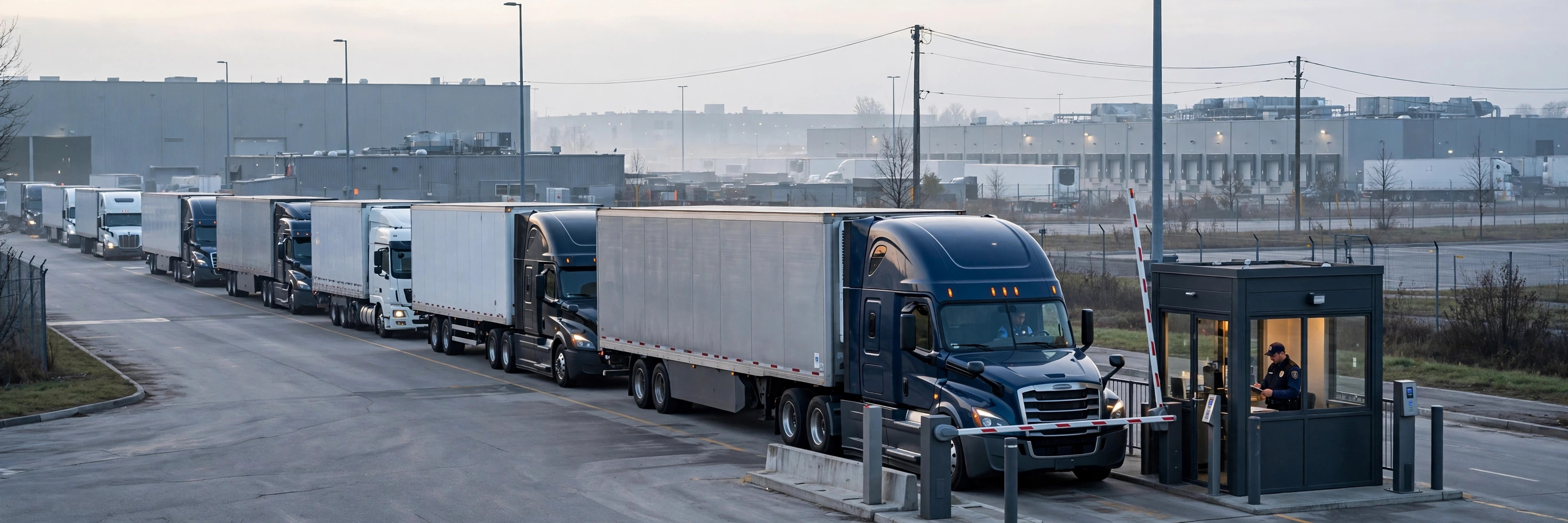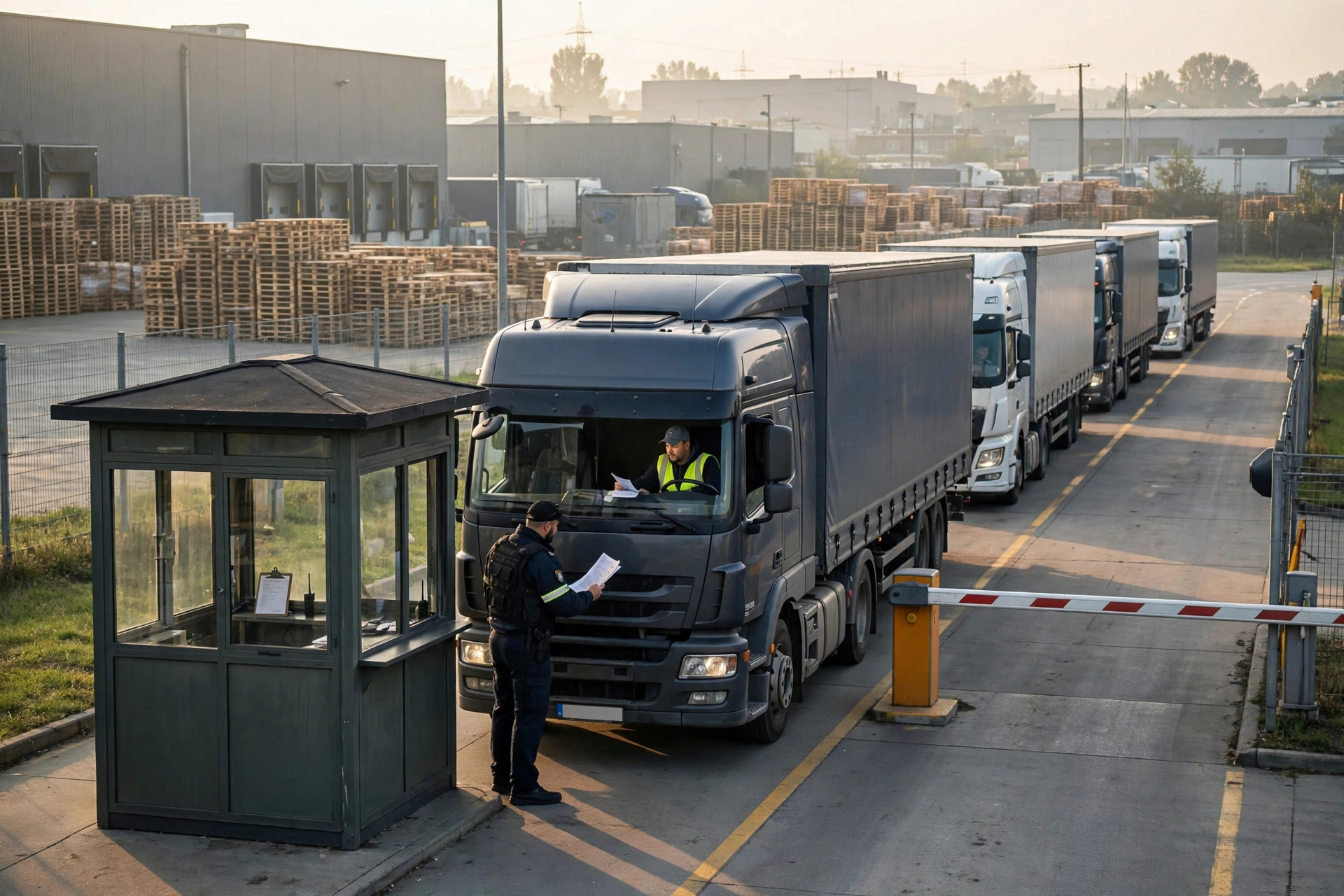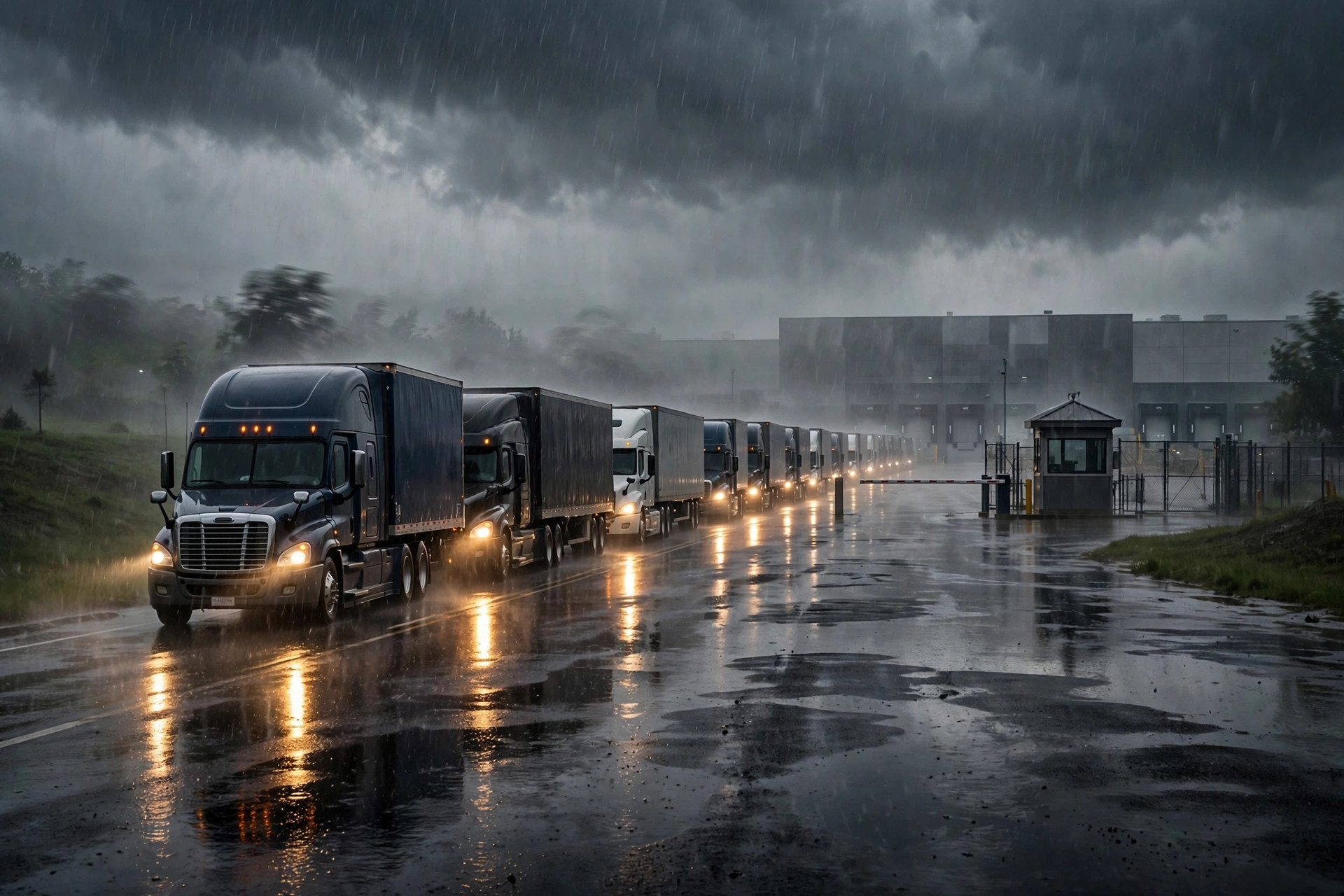
Let me tell you something — after fifteen years behind the wheel, the thing I dread most in hurricane season isn't the road. It's the appointment sitting pretty in the YMS, then getting wiped out by the wind, with trucks lined up out the gate.
Back in August 2021, Hurricane Ida was bearing down on Louisiana. I was hauling a load of household goods from Houston to New Orleans, less than 200 miles out, when dispatch called: the warehouse had canceled my appointment for the next day. The whole dock was shutting down. I swung the rig around and sat out three days at a truck stop outside Baton Rouge. When I finally rolled back after the storm, the line stretched around the block — dozens of trucks, one guard shouting into a dying radio. Some drivers had slept in their cabs for two nights; a few just deadheaded out empty. The shipper was furious, the warehouse blamed the carriers for no-shows, the carriers blamed the warehouse for changing the rules overnight. I ended up delivering five days late and took a hit on the pay. A hurricane is an act of God — but the appointment mess? That one was on us.
December 2022, that monster blizzard — I happened to be near a DC in Ohio. The snow hit right before Christmas, the warehouse's appointment system went dark, and forty-some trucks jammed the access road so bad the plows couldn't get in. The kid at the gate was working off a paper list, stamping his feet to stay warm. That's when it hit me: when extreme weather arrives, the first thing that breaks isn't the road — it's the schedule. Every neat slot in the YMS goes out the window. And if nobody has a plan for reshuffling appointments, the gate turns into a parking lot, and drivers, warehouses, and shippers all lose.
Your Extreme-Weather Appointment Reshuffle Starts With Tiered Warnings
The good warehouses I've worked with all run the same play: a 72 / 48 / 24-hour countdown, built right into the YMS as an emergency template.
72 hours out: watch the forecast, start cutting. The moment the hurricane track comes in, the warehouse should pull up every appointment for the next three days and take a hard look. Forget "maybe it'll turn" — plan for the worst. Carriers do the same: dispatch pulls the trucks headed into the danger zone, gives the drivers a heads-up, and marks backup parking along the route.
48 hours out: cut appointments, save what you can. The storm's path is set. Cancel what needs canceling, move up what can move up. This is the step that gets you yelled at — but hear me out, cutting early beats cutting late by a mile. Do it in bulk in the YMS; don't call truck by truck. And don't fear the angry calls — after the storm, drivers remember that you warned them, not that you canceled.
24 hours out: lock the doors, notify everybody. The warehouse stops receiving. Flip the YMS to "weather hold" with one click, then hit every driver with text, phone, and push. The nightmare scenario is a driver fighting the wind to reach your gate and finding it chained shut. That's not just an inconvenience — that's dangerous.
Three Ways to Reshuffle Appointments, Each With a Catch
Once the storm passes, you've got a mountain of backed-up appointments to reschedule. In my experience there are three ways people do it:
| Approach | How it works | Upside | Downside |
|---|---|---|---|
| Blanket shift | Push every appointment back 2–3 days in order | Fair — nobody feels jumped | The dock can't absorb the pileup; the backlog just slides |
| Priority re-slot | Perishables, pharma, out-of-stock loads jump the line | Saves the freight that can't wait | Drivers at the back raise hell; you explain it one by one |
| Cancel and rebook | Wipe the board, shippers rebook from scratch | Cleanest system state | Too many deadhead runs; carriers blow up |
My rule of thumb: cold-chain warehouses should use priority re-slotting, dry-goods DCs should use the blanket shift, and you only go nuclear with cancel-and-rebook when the mess is beyond saving. Write the rule into the YMS before storm season. The one thing you never do is mix all three — shift today, re-slot tomorrow, cancel the day after. Drivers can't plan around chaos on top of chaos.
The Counterintuitive Part: Canceling Early Saves More Money Than Hanging On
Plenty of folks think every load you can still take is money earned — don't cancel unless you absolutely must. I get the instinct. It's wrong.
Do the math with me. A truck sitting at your gate for a day burns a few hundred dollars easy — fuel, driver pay, depreciation, the whole lot. Now look at the warehouse side: dozens of trucks clogging the entrance, the guard playing traffic cop, forklifts that can't get in or out, half the yard frozen. Add both sides up and one lost day costs more than a month of boxed lunches.
Flip it around: cancel half your appointments 48 hours early and protect the other half. The canceled drivers reroute and don't burn a trip for nothing. The protected half moves in and out on time, and the warehouse never stops. It looks like less work. It's the cheapest total bill. Fifteen years taught me this much: in extreme weather, the most expensive thing you can do is wait and see. The 24 hours you spend "deciding" cost more than the boldest early cancellation.
Stranded Drivers: Who Houses Them, Who Pays
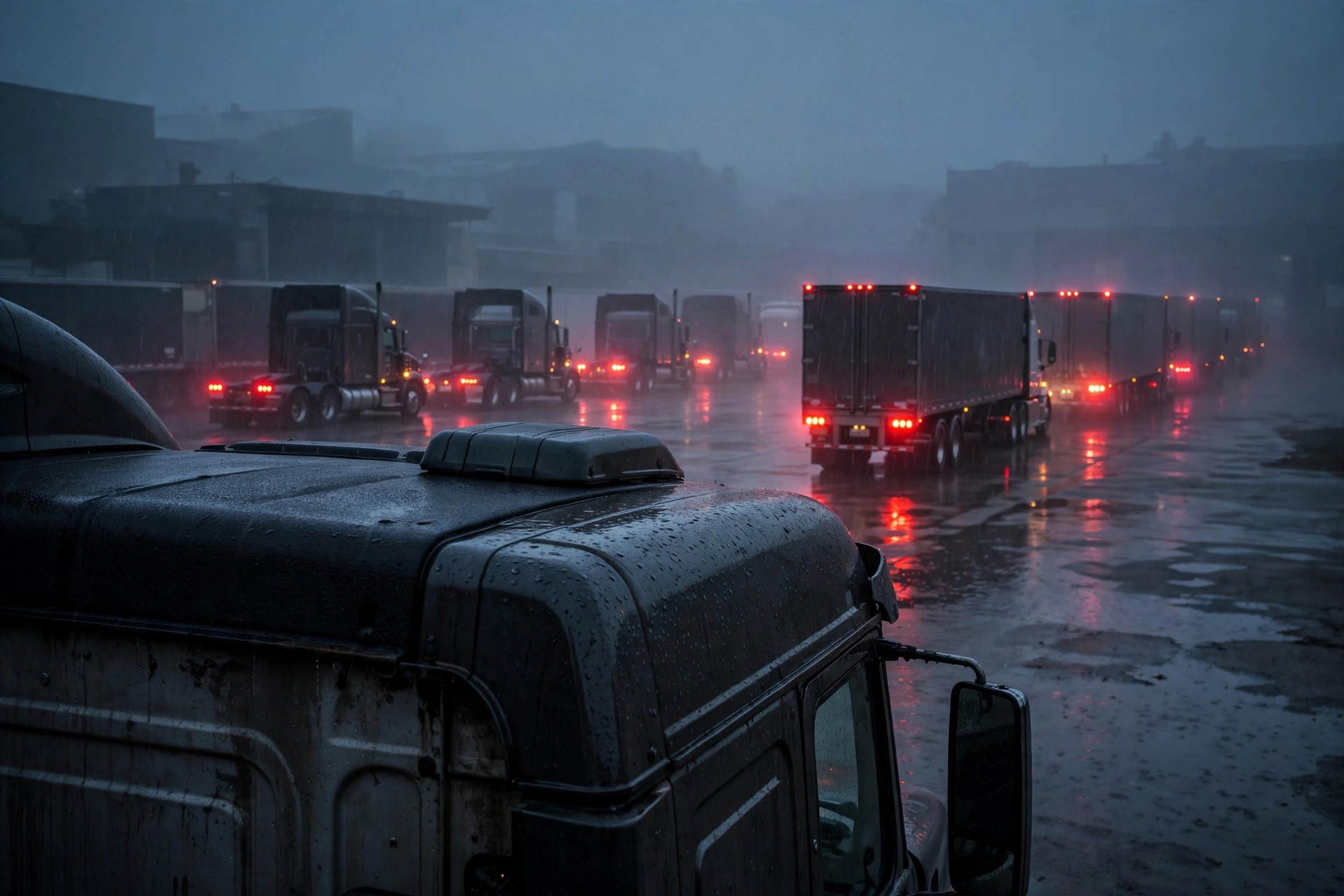
Drivers stuck on the road in a storm have it the worst — eating and sleeping in the cab for days. Decent warehouses and shippers show some humanity here:
- Don't chase trucks out of the lot. Keep the restrooms and drinking water open — that's the bare minimum.
- Stranded over 24 hours? Pay the driver a per-day layover fee. Put the amount in the contract ahead of time, not after the argument starts.
- Give stranded trucks their own "weather hold" status in the YMS. Don't let them clog up the normal appointment slots, or your reshuffle falls apart.
Who pays — shipper or warehouse? Settle it before storm season. My suggestion: whoever canceled the appointment foots the bill. Simple, fair, and it ends the argument before it starts.
After the Storm: Turn This One Into Next Time's Rulebook
Every time extreme weather passes, the warehouse and the carriers should sit down and review three things:
- Did the tiered warnings fire on time? Which stage lagged?
- Which reshuffle approach did we use? How did it work? Change it next time?
- How much did stranded-driver costs run? Any disputes?
Write the answers into the YMS emergency template. Next storm, open it and follow it — no reinventing the wheel. A playbook written once serves for years. The danger is never writing one at all.
One more thing from the driver's seat — how I read a storm myself. I don't just watch wind speed. I watch two things: whether the county issued a mandatory evacuation order for the warehouse area (if yes, I turn around, no debate), and whether the warehouse has updated its status in the system in the last 24 hours (dead silence for a day usually means chaos inside — better to call than to keep rolling). Old hands know: in a storm, information is worth more than horsepower.
Two-way advice, saving the best for last:
For warehouses: build a "weather mode" into your appointment system — one click to pause, one click to shift everything, one click to notify all drivers. It sits unused all year, then saves your life in a storm. And replace the guard's radio if it's dying — don't discover it's dead with forty trucks at the gate. Also, your YMS appointment statuses need more than "booked / arrived" — add "weather hold" and "rescheduled" so dispatch can see the whole yard at a glance.
For carriers: dispatch needs a "storm parking" list — where rigs can park along the route, where there's food, marked ahead of time. When a driver gets a cancellation notice, call back and confirm immediately — don't just keep rolling. And keep the phone on. Going dark in a storm is the most dangerous thing a driver can do.
There's an old saying where I come from: it's not slowness you fear, it's standing still. In extreme weather, the one who moves early always beats the one who waits. Appointments getting scrambled isn't the scary part — the scary part is nobody having a plan for when they do.
By Shifu Zhao, Trucking Veteran (15 yrs)