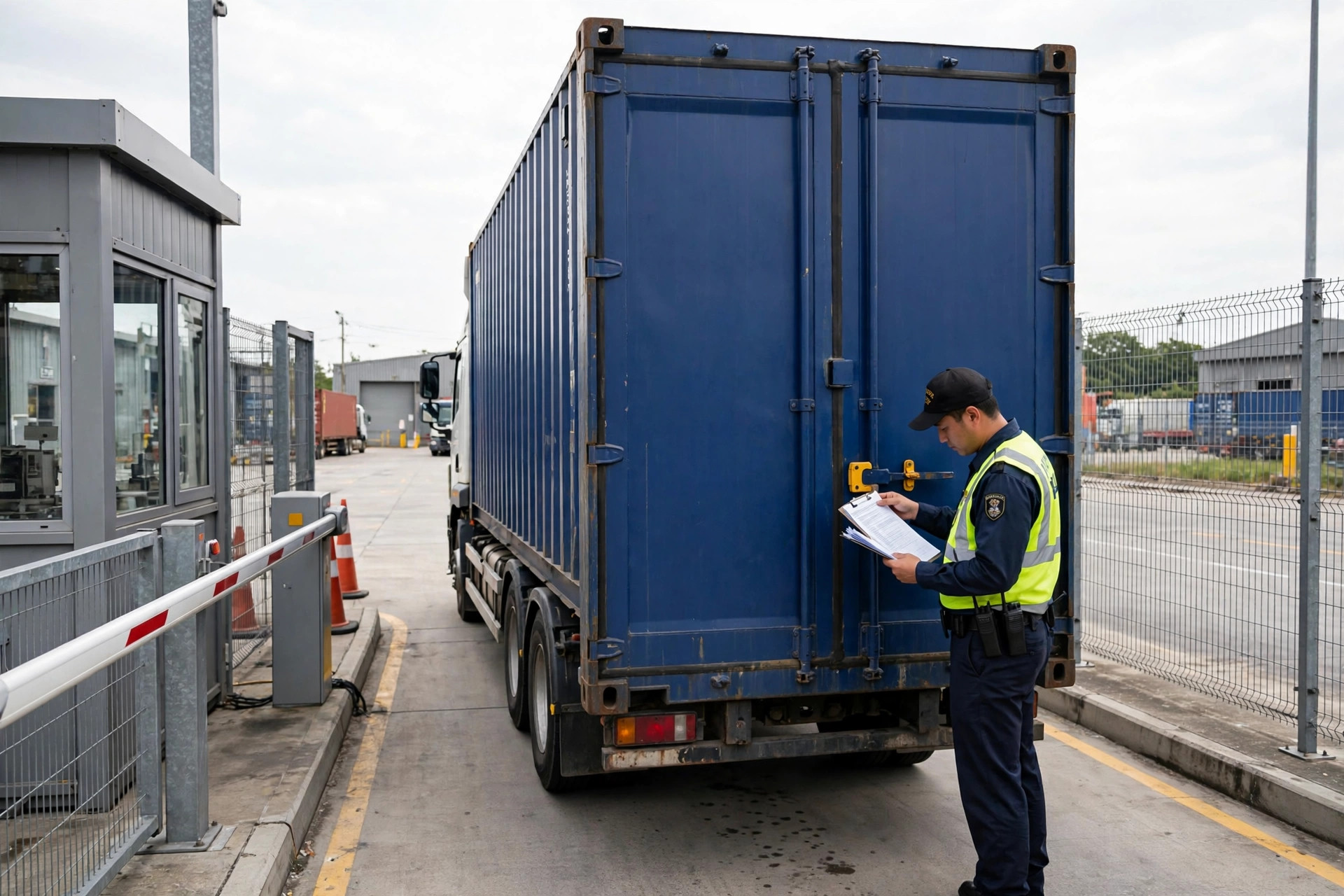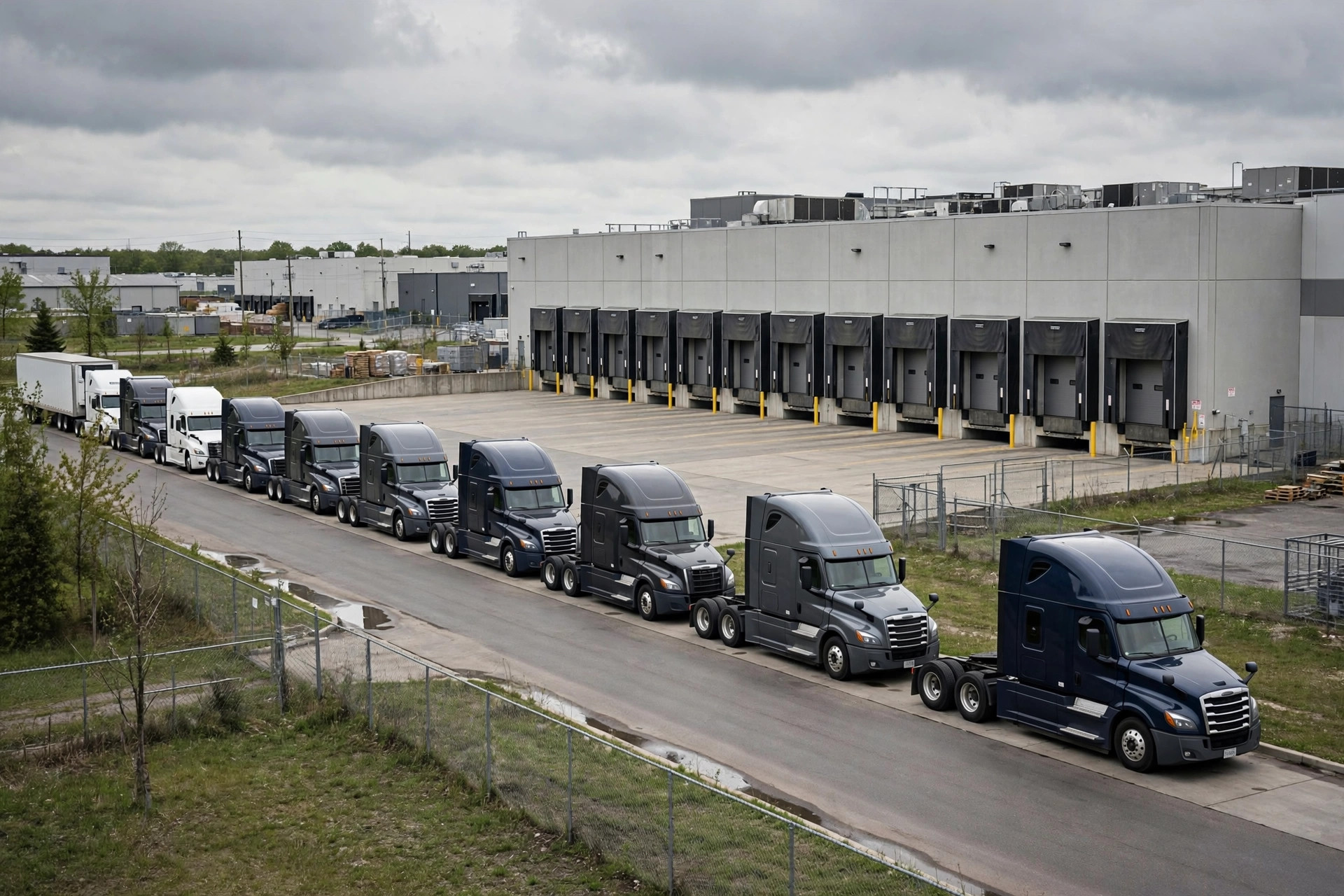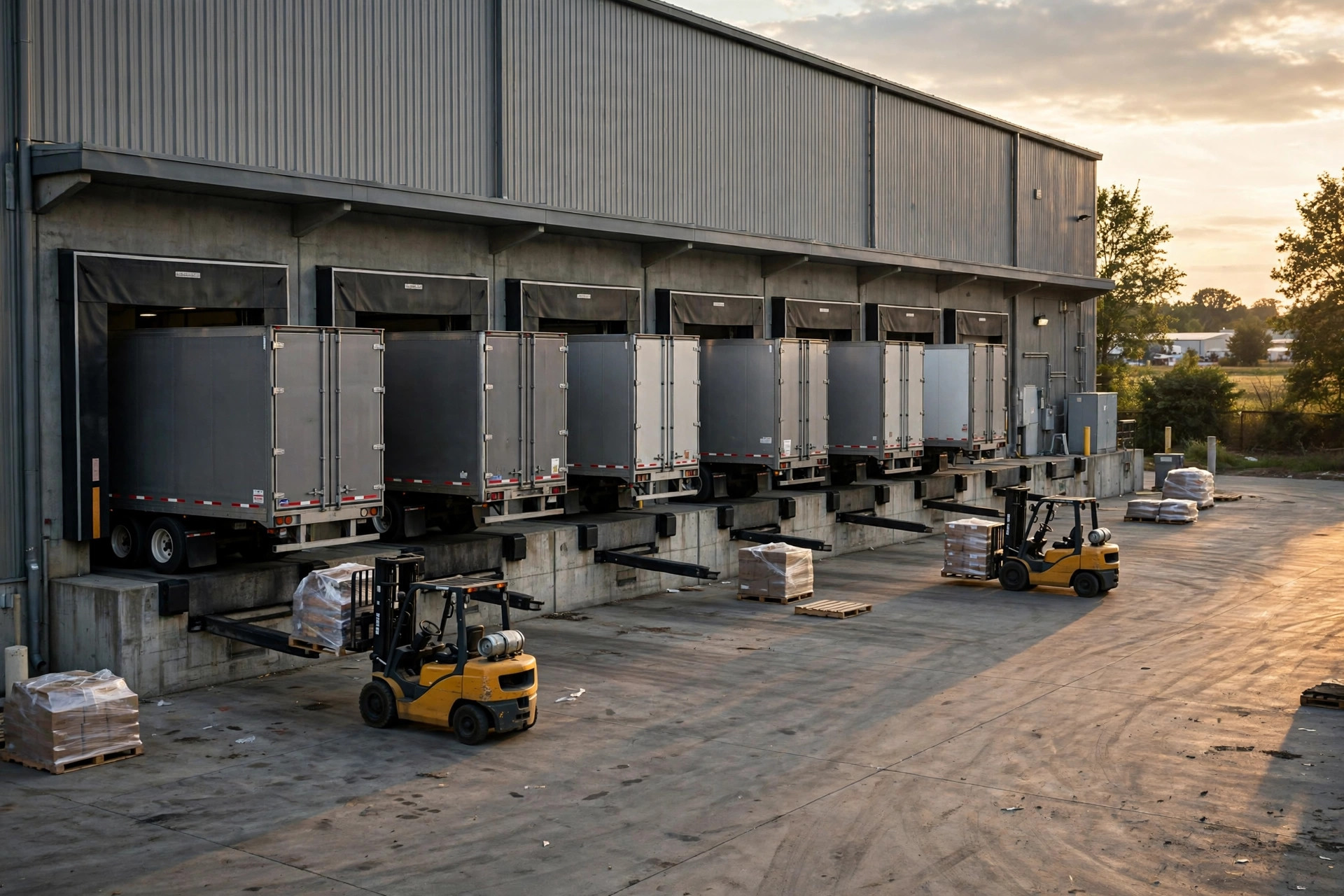
One wrong door costs a truck 20 minutes. Forty trucks a day, that's 800 minutes — more than 13 labor hours burned on forklifts driving in circles instead of doing real work. I ran those numbers in 2019 at a 30,000-square-foot cold chain facility in Rancho Cucamonga. Sixty-plus doors, and the whole dock schedule ran on a two-way radio: whoever showed up first grabbed whatever door was open. Reefers ended up parked at the far end from the cooler, forklifts hauling freight across half the building, trailer doors hanging open, product sitting on the dock catching a breeze. By month's end, the detention invoices from carriers were climbing faster than the rent.
Dock door assignment looks like the most boring configuration screen in a YMS. It's actually the pacemaker for the whole yard. Get the doors right and trucks, freight, and people each move on their own lane. Get them wrong and you get three problems at once — forklift detours, broken cold chain, yard congestion — and no software rescues you from that. What follows is the logic I've pieced together from facilities I've worked in over the years. It works for small operations too.
Reefers always get the doors nearest the cooler
Temperature-controlled freight doesn't fear slow. It fears a break in the chain. The moment a reefer backs into a door and that trailer door opens, product is exposed to ambient air. The longer the run from door to cooler, the longer the exposure, the faster shrink risk climbs. So rule number one is non-negotiable: reefer appointments get first pick of the doors closest to the cooler or temperature-controlled staging. First-come, first-served is void here.
There's an exception worth building into the rules. Some reefers haul ambient supplies — cartons, pallets, packaging. Reefer trailer, room-temperature freight. That truck has no business occupying the prime doors by the cooler, so the rule needs a "commodity overrides trailer type" escape hatch: assign by what's inside, not by what pulls it. I've seen a site hard-code "reefer equals cooler door" and end up with ambient cartons sitting on the best doors while frozen product queued at the far end. Pure waste.
How to configure it: build a profile for every door with three attributes — distance to the cooler, whether the door can take a reefer (seal condition, height clearance), and which temperature zone it serves. When an appointment comes in, filter by commodity first and trailer type second.
One more thing that's easy to miss: before a reefer takes a door, dispatch should confirm the trailer is already pre-cooled. An empty trailer fresh off a long haul is still warm inside, and docking it hot just pumps the cooler's cold air out the door. This doesn't need to live in the YMS rules — put it on the dispatcher's arrival checklist instead: ask the driver whether the box is down to the shipper's required temperature. If not, let it sit in the staging area and pull down longer. Don't rush it onto a door.
Flatbeds and dry vans don't share a lane
A 53-foot dry van backs in, squares up, and the forklift works straight through the rear door. One clean line. A flatbed is a different animal: side loading, forklifts approaching from the flank, a wider turning radius, a bigger staging footprint. Squeezing flatbeds into the van door lineup is like asking a truck to turn around in an alley — awkward for everyone, and somebody is going to scrape something.
In 2022 I walked a furniture 3PL in Fontana that lived on flatbeds, lumber bundles coming off the side. Their fix was to dedicate the six end doors to flatbeds, paint a separate staging zone in front of them, and split the forklift lanes off from the van area entirely. Dock door damage claims dropped to near zero after that; the year before, they'd spent tens of thousands of dollars just repairing door seals.
The rule: group doors by trailer type. Vans and reefers on one run, flatbeds on another, overwidth and overlength get their own treatment. Separate the zones with floor markings and physical barriers — don't count on drivers to self-organize. In the YMS, manage doors as groups and let appointments fall into groups by trailer type automatically; dispatchers handle only the exceptions.
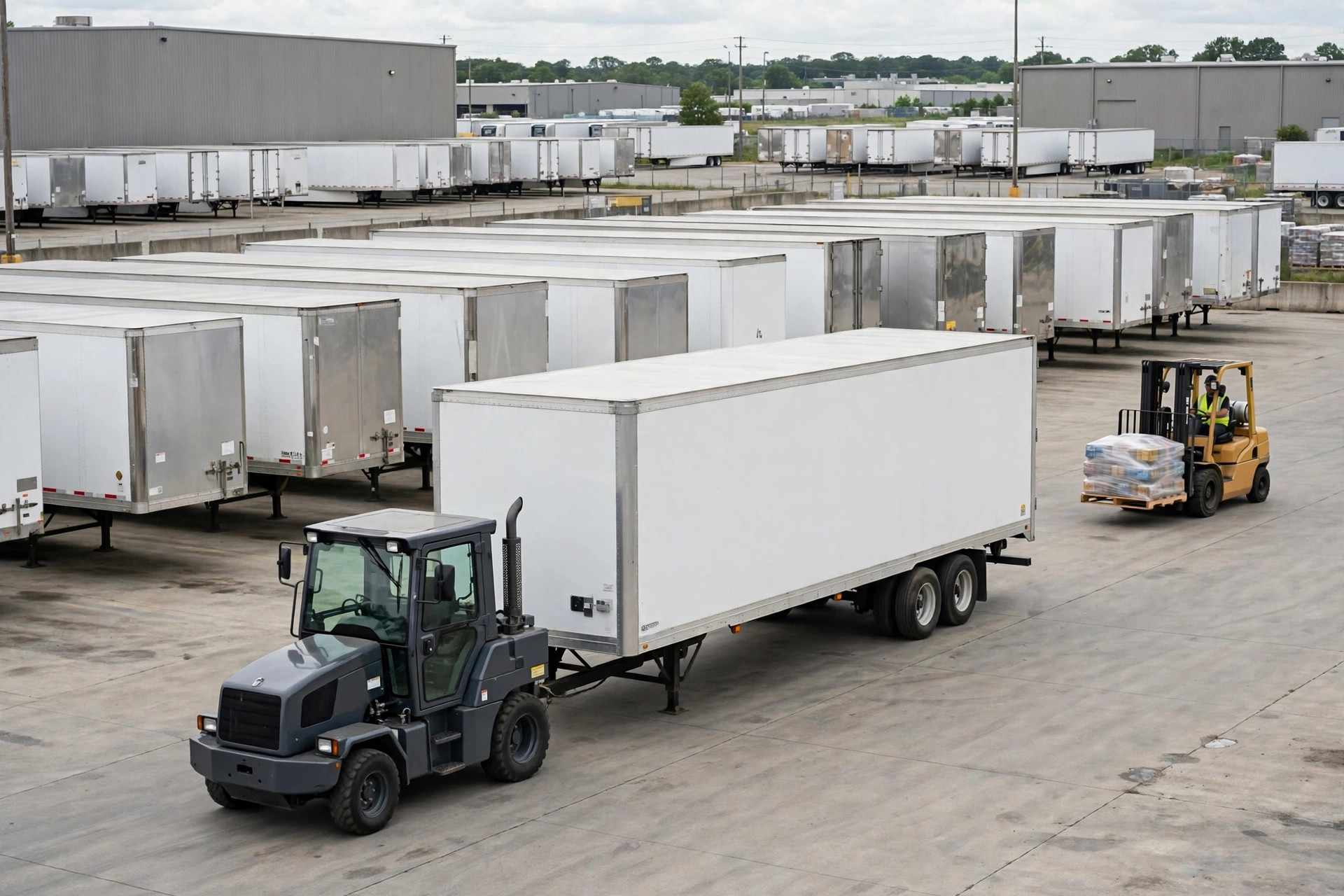
Receiving doors and shipping doors should mind their own blocks
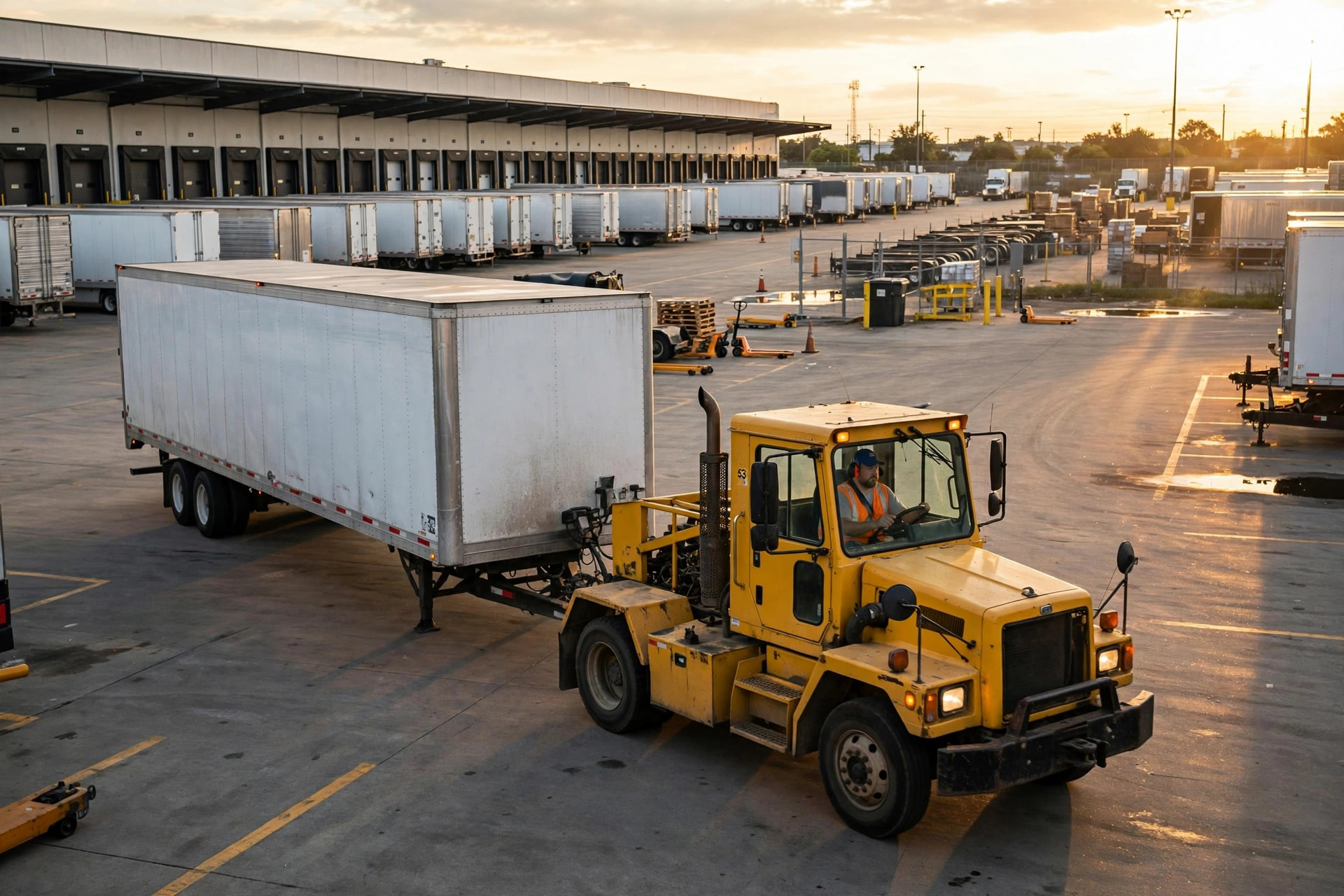
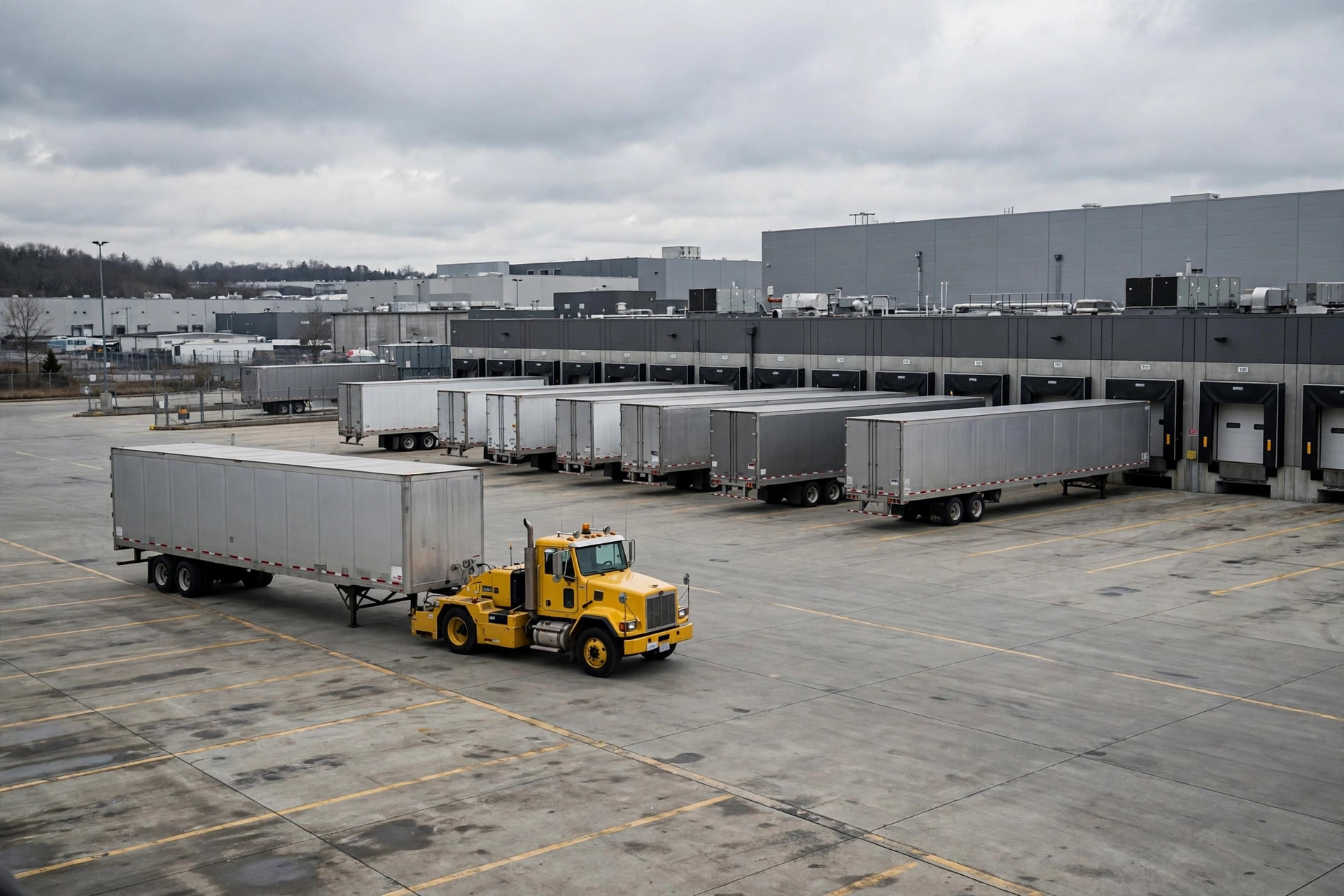
Mixing inbound and outbound on the same door run is congestion's number one source. Receiving trucks wait on QC and putaway; shipping trucks wait on waves and loading. The two rhythms don't match. Mix them and you get empty trailers waiting on loaded ones, loaded ones waiting on forklifts, forklifts waiting on hostlers — the whole dock apron turns into a parking lot. The two Ottawa yard tractors in the yard can only do so much when traffic crosses itself at every door.
Short on doors? Split by time instead of space. Mornings for receiving, afternoons for shipping, and flip each door's inbound-outbound attribute in the YMS by time block. That's far better than mixing, because at any given hour the traffic flows one way. Bigger sites with enough doors should just draw the line: a receiving block, a shipping block, and a few buffer doors in between for the inevitable squeeze-ins.
One more detail: keep returns and exceptions off the main doors. Carve out a door or two for returns and problem freight, so one trailer of returns doesn't camp in front of a shipping door while the whole outbound line waits behind it. I've watched too many operations grind to a halt over a returns trailer, all because nobody reserved it a door.
Your fastest freight lives closest to the door
The last layer of door logic has nothing to do with trucks. It's about how hard the freight works. Your highest-frequency customers, your fastest-turning SKUs — they deserve the doors nearest the pick zone and outbound staging. Every forklift trip that runs shorter, a few hundred trips a day, and the labor savings are real money.
It's not complicated to run: pull three months of outbound data, rank customers and categories by frequency, lock the nearest doors for the top 20 percent, and let the rest float. Product mix changes for peak season? Re-rank. In the YMS this can be a rule that recalculates on a schedule instead of something a dispatcher babysits daily.
There's also a hidden cost of bad door assignment that most people leave out of the math: detention. Every extra hour a truck sits in your yard is another line on the invoice. Doors that flow keep trucks turning, and carriers will happily take your loads; doors that jam mean daily queues, and the good carriers quietly stop accepting your freight until only the ones who charge a premium are left. That cost never shows up in a YMS report, but it shows up in the monthly transportation spend.
Once the doors are set, somebody has to watch the cost of getting them wrong. Three things, checked weekly: are forklifts detouring (has average door-to-staging distance crept up), has the cold chain broken anywhere (door-to-cooler time on temperature-controlled freight), is the yard jamming (hostler queue time). Ugly numbers mean the doors need re-dealing.
A short checklist for the dispatch office wall: are the reefers actually at the cooler doors? Do flatbeds have their own door block? Are inbound and outbound separated? Do the high-frequency shippers hold the nearest doors? Are the hostlers queuing anywhere? If you can't answer two of the five, the door rules need rewriting.
One thing you can do tomorrow: print the dock door layout and tag every door with three labels — what trailer it takes, what freight it moves, inbound or outbound. Run it for a week, and every time dispatch overrides an assignment, mark it on the map. After seven days, look at the doors with the most override marks: the rules are wrong there. Start with those. That marked-up map will tell you more truth than any YMS configuration manual.