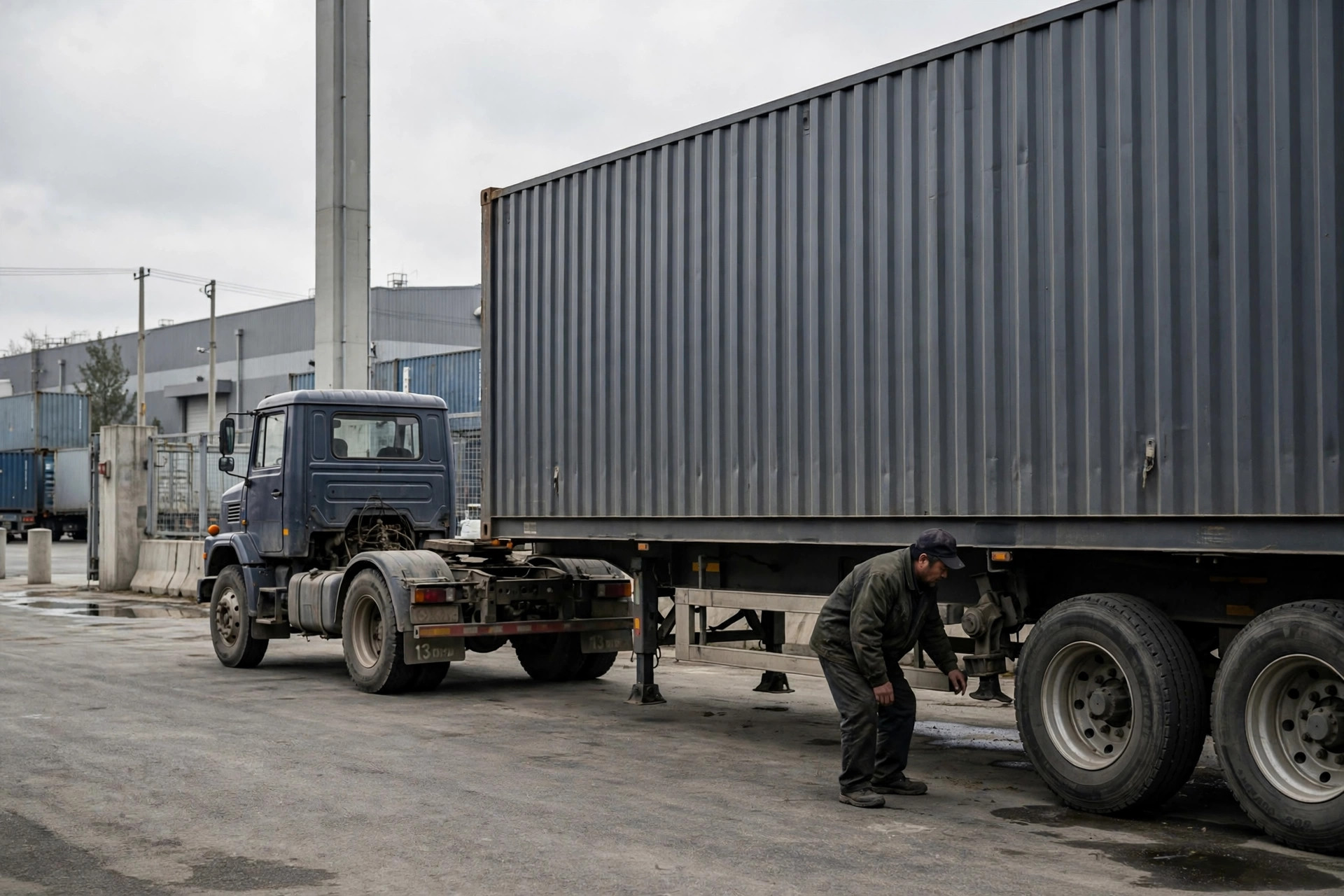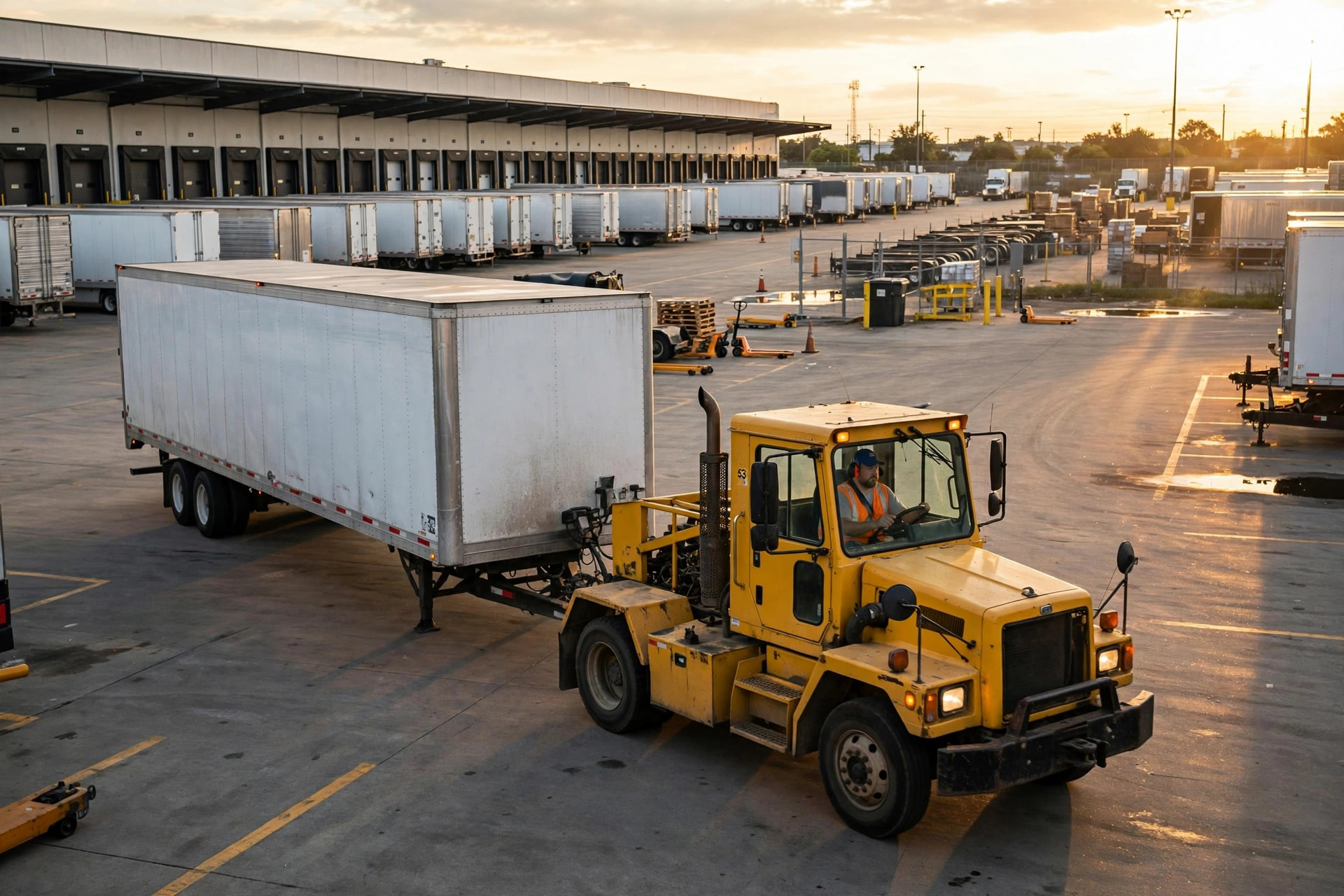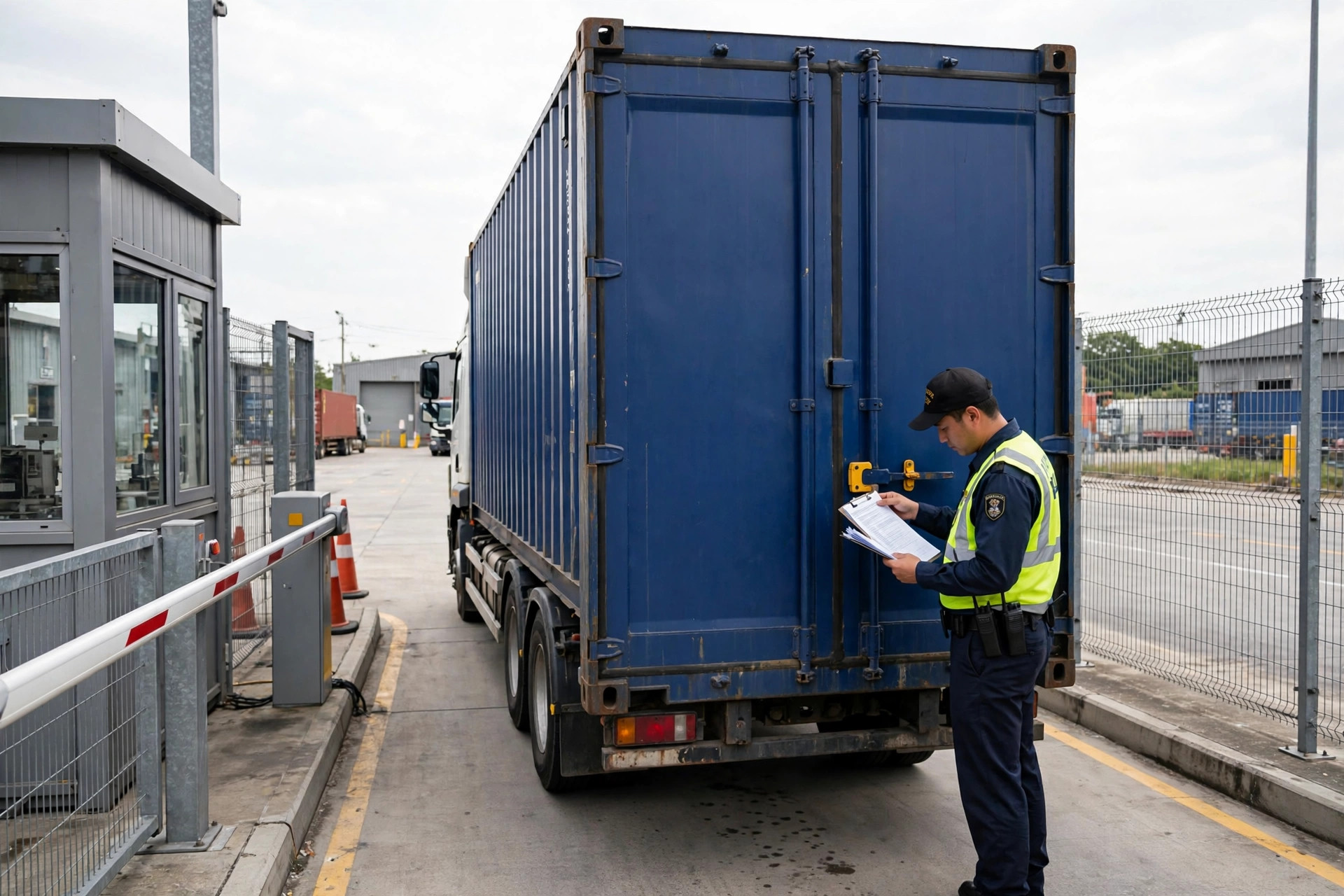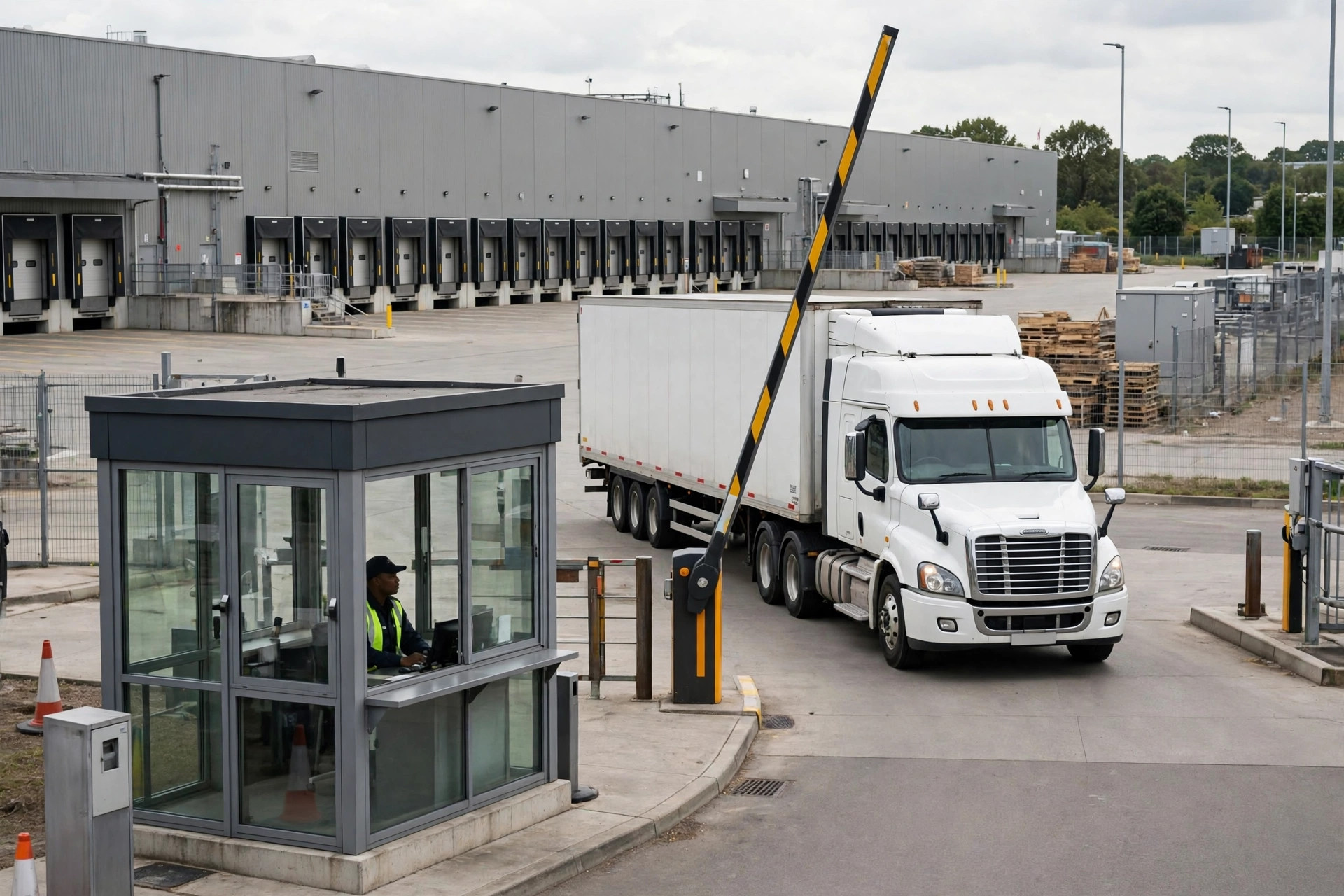
Doubling your YMS appointment slots costs nothing — a few mouse clicks. A 40-door distribution center outside Chicago tried it last fall: twelve slots became twenty-four, hoping to chew through a peak-season backlog. Within a week, nine trailers were stacked in the yard, three drivers left after waiting six hours, and the receiving team was still unloading at 11 PM — with forty pallets untouched the next morning. The extra twelve slots were not capacity. They were a queue.
I walked them through the math: appointments doubled, headcount didn't, doors didn't, and the number of trailers one door can turn in a day didn't change either. Those twelve extra slots weren't capacity. They were a queue.
Slots are free. Dock doors are not.
Adding slots in a YMS costs a few mouse clicks. The three hard constraints on receiving didn't move an inch.
First, doors. One door fits one trailer at a time — that's physics. Twelve doors, ten hours a day, ninety minutes average unload: one door turns six or seven trailers on a perfect day. The theoretical ceiling for the building is in the seventies, and that's before anything goes wrong.
Second, the receiving crew. A seasoned receiver processes twenty to thirty pallets an hour, counting, labeling, logging exceptions. Six people, ten hours: 1,500 to 1,800 pallets on a heroic day. A full trailer holds twenty-six pallets, so the crew tops out around sixty trailers a day. Doors without people are just expensive architecture — and people without doors are worse, standing around while trailers can't get in.
Third, floor space. Unloaded freight needs somewhere to go. In peak season the building is already full, and when the staging area fills up, unloading stops mid-trailer. In 2023 I walked a food importer's warehouse in Los Angeles — twenty-eight doors, sensibly scheduled appointments, but only three hundred staging pallet positions. Two hundred pallets backed up behind the dock with nowhere to go, and receiving sat idle for half a day waiting for putaway to clear space. Doors free, crew free, freight frozen.
Three warnings your YMS gave you first
The yard didn't explode without warning. The signals were in the YMS all along — nobody was reading them.
First, on-time arrival rate. Normally 90% of trucks hit their window; the week everything broke it fell to 60%. Pack slots too tight and one truck running an hour late cascades into the next three. On-time rate is always the first metric to fall.
Second, average wait time. Driver arrival to unload start should be under thirty minutes. Past two hours, you have a queue at the dock. Past four hours, walk-away rates climb steeply — a driver who burns half a day in your yard takes that freight somewhere else next week, and the hole in this week's inbound plan becomes next week's expedite, at double the cost.
Third, no-show rate. Ten to fifteen percent is normal life. Past twenty percent, your appointment discipline has collapsed and carriers are voting with their wheels: why bother booking when booking means nothing? That's how the death spiral starts.
All three live in standard YMS reports. What's missing is someone looking at them. My rule: every Monday morning, the receiving supervisor spends fifteen minutes on these three numbers, and any red one means no new slots that week. I once advised a 3PL in the Inland Empire where the sales team kept adding slots every Monday to promise carriers "flexibility." By December, fourteen trailers were sitting in the yard overnight, the city threatened a citation for trucks idling on the street, and two anchor carriers moved their freight to a competitor across the freeway. Flexibility without capacity is just a longer line.
Doing the math backwards from the door
The formula is simple: daily appointment cap = trailers turned per door per day × usable doors × 0.85. The 0.85 is a buffer for late arrivals, nasty freight, and equipment breakdowns. Don't call it conservative — holding 85% steady through peak season is excellent. Anyone claiming 100% is measuring a queue, not throughput.
The key input — trailers per door per day — must be measured, not guessed. Pull two weeks of history: total arrivals ÷ doors ÷ days. The Chicago site measured 4.2 per door per day. Not the theoretical six or seven. Twelve doors × 4.2 × 0.85 ≈ 43 trailers a day.
Wait — they were only booking 24 slots, well under 43. So what broke? Distribution. All twenty-four slots were crammed between 8 AM and 2 PM: four trailers an hour for six straight hours. The crew could genuinely process three to four at a time, and after 2 PM the doors sat empty. Slots aren't just a daily total; they're a shape across the day. Spread them against real crew capacity, hour by hour.
Slot granularity matters too. Full truckloads get one-to-two-hour windows; LTL consolidations get thirty minutes. Too fine and dispatchers can't manage it — drivers can't remember it either. Too coarse and one difficult trailer blocks three hours while everyone behind it idles. Start at one hour, run two weeks of data, then tune.
Should you overbook for no-shows? Yes, but with a number attached. Fifteen percent no-show history earns ten percent overbooking, not thirty. And only for carriers with stable histories — new carriers book at face value. Overbooking is a bet on history repeating; don't bet big.
Finally, put a valve between appointments and receiving: when more than five trailers are waiting in the yard, the YMS stops releasing slots until the queue clears. Plenty of operations skip this, worried about "customer experience." Honestly now — which is worse for the driver, waiting six hours at your dock or rebooking for tomorrow? A driver who walks away once will no-show your slots next time. Trust leaks out exactly this way.
Before you add a single slot next peak season, ask your team one thing: how many trailers can one door actually turn in a day — measured, not guessed? Get that number right, and everything else is arithmetic.