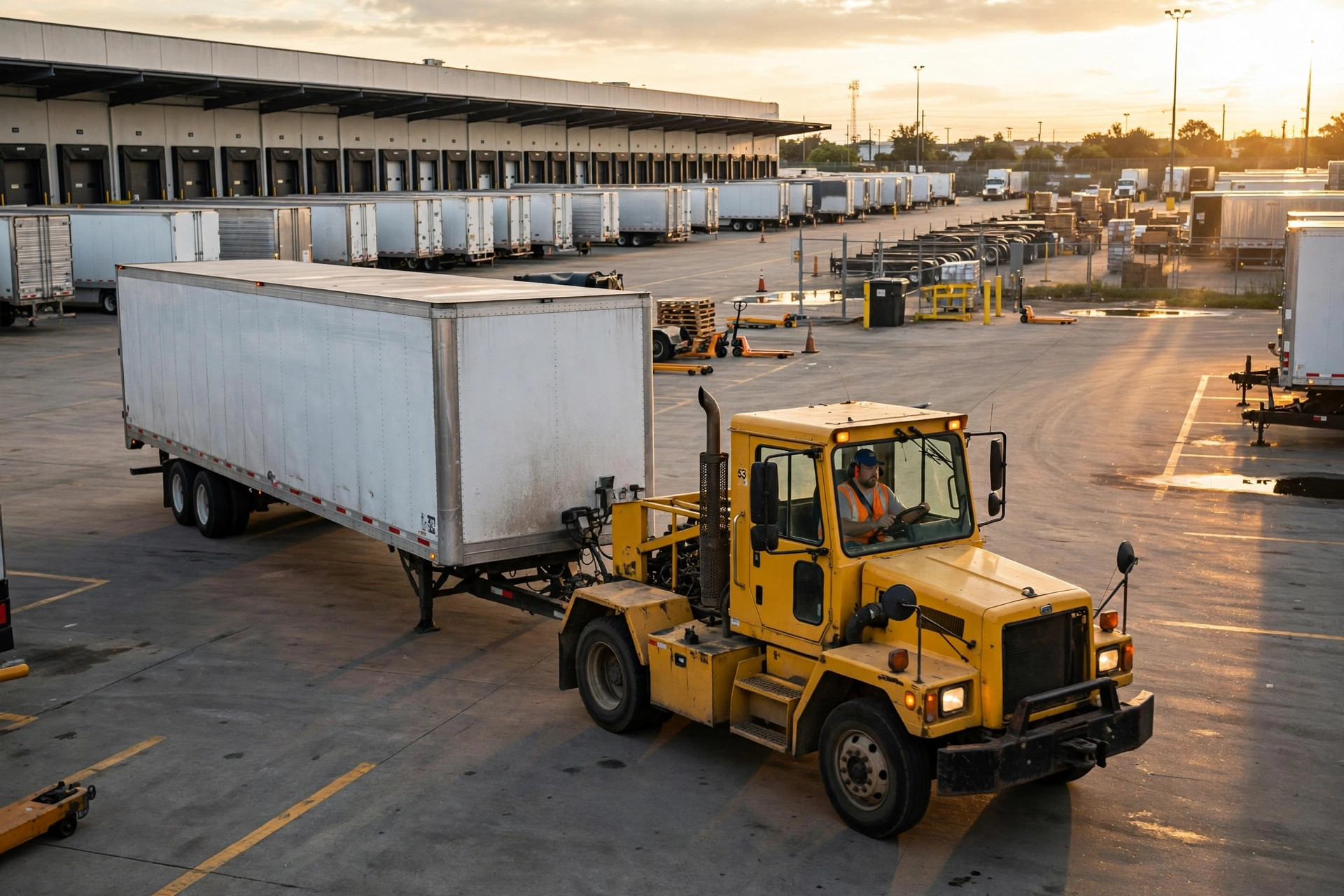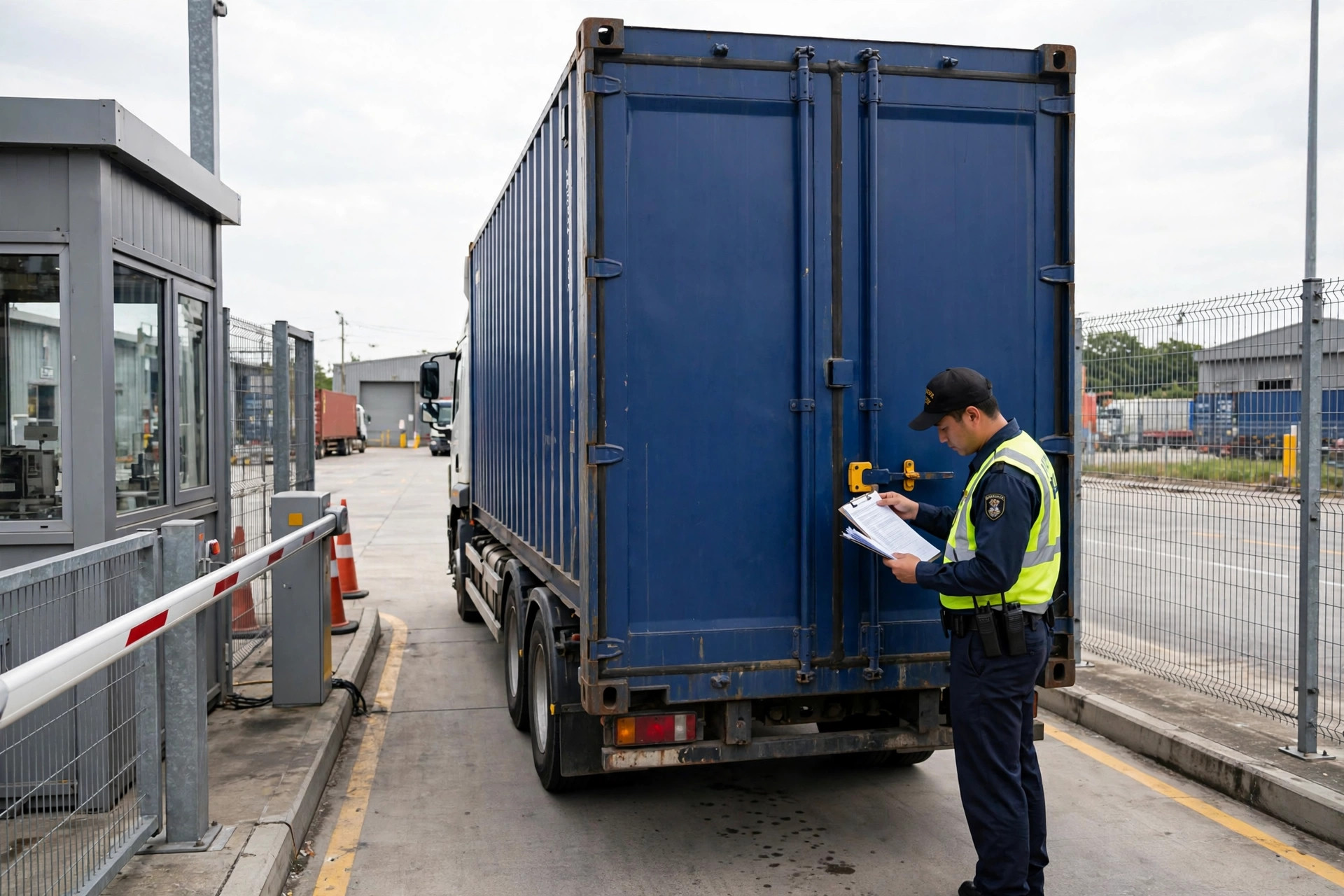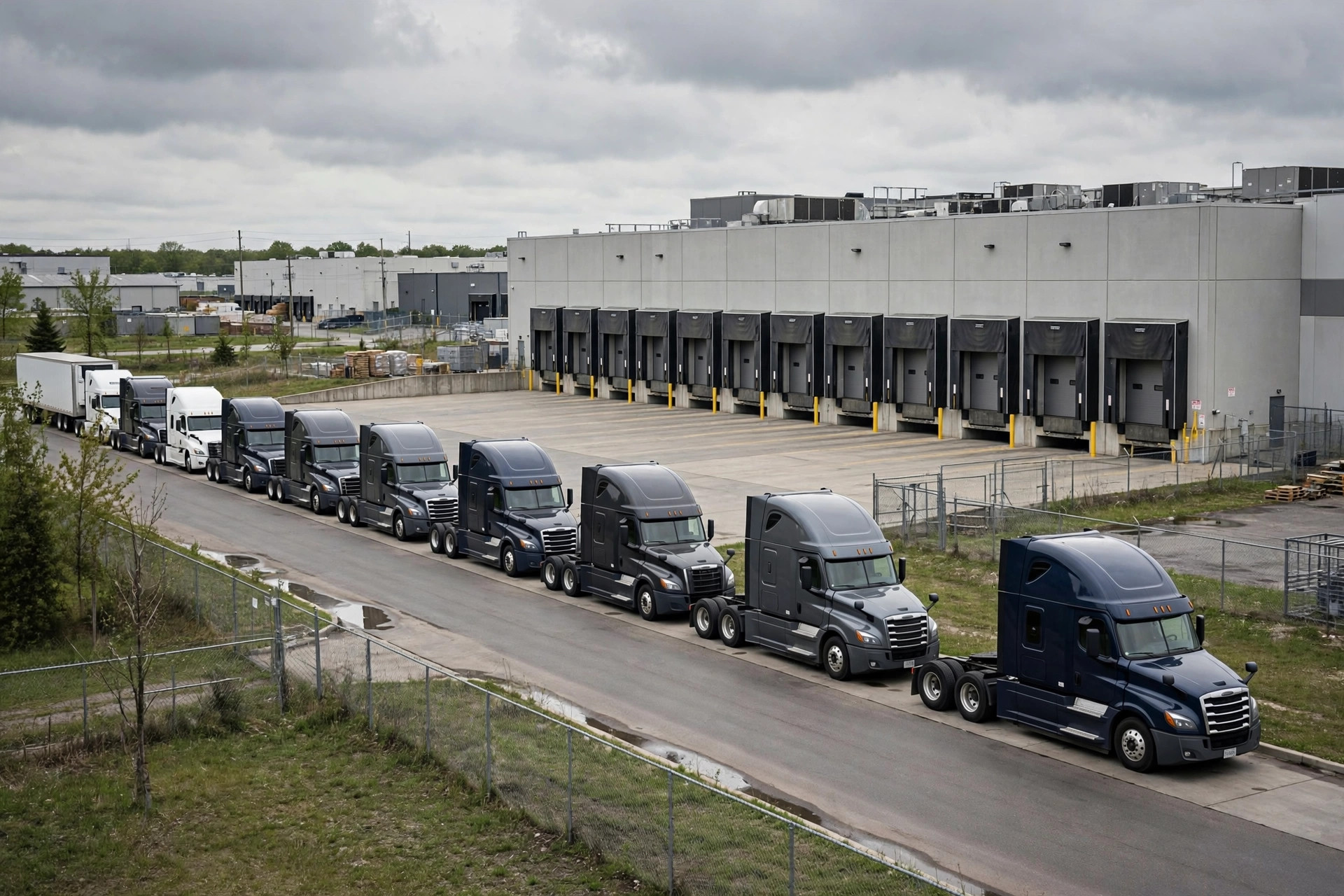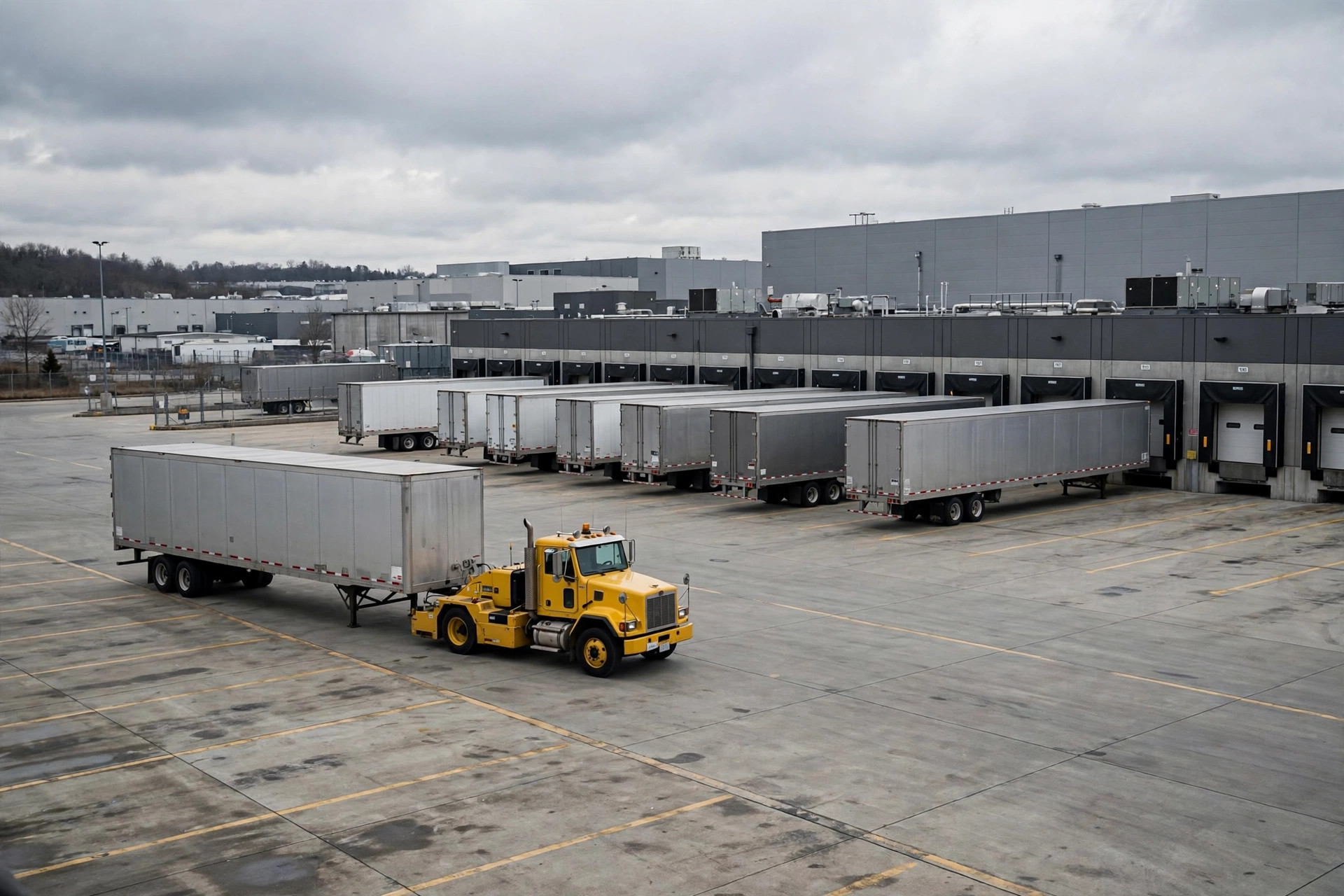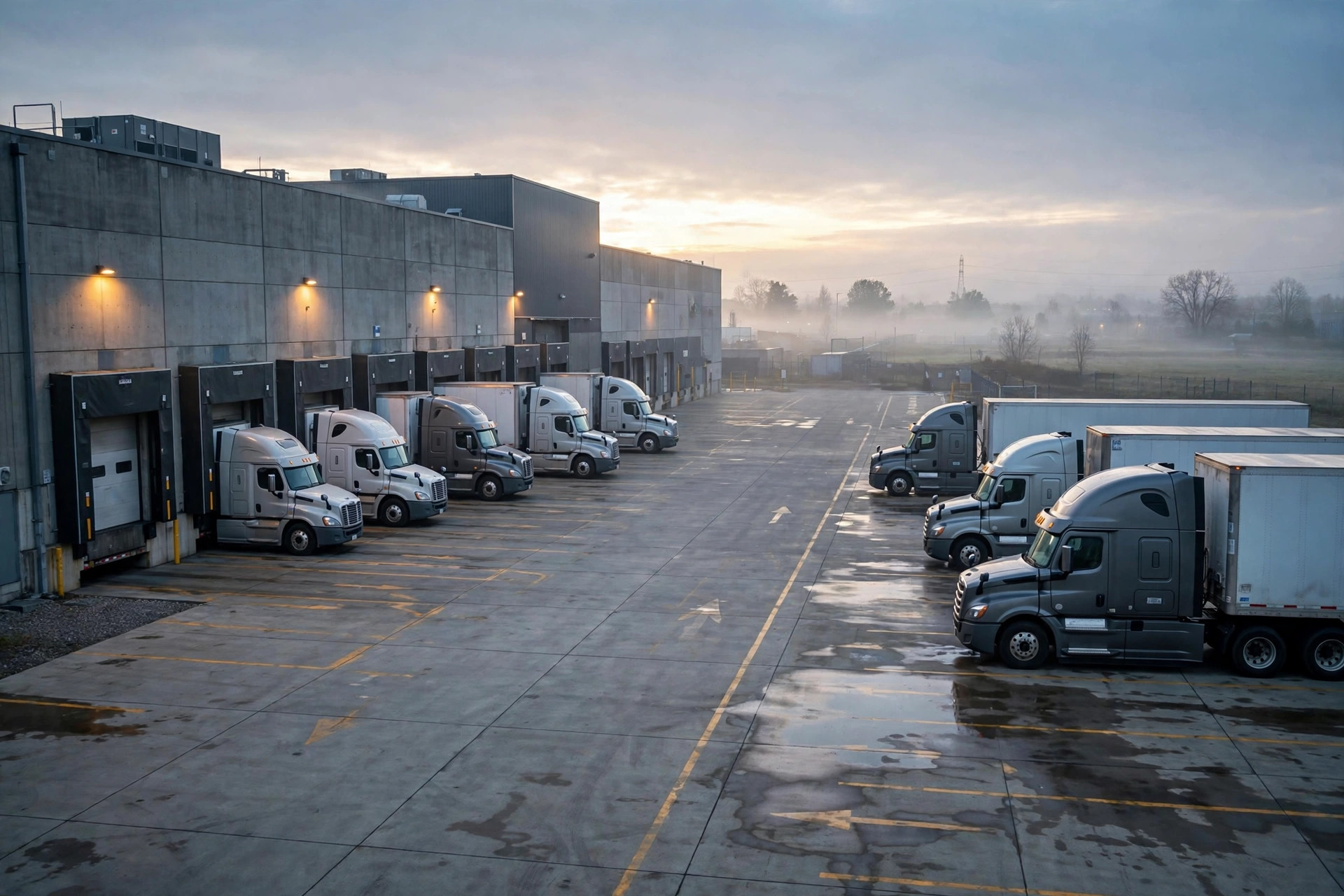
Same 12 dock doors. Warehouse A runs 30-minute slots — 96 slots a day. Warehouse B runs one-hour slots — 48. The result? A's dispatcher spends the whole day on the phone, because one driver running five minutes late wrecks the entire afternoon. B's yard, meanwhile, has a line of trucks at the gate at noon while half the docks sit empty. At the end of the day, both warehouses get about the same number of driver complaints.
Slot size is never a right-or-wrong question. It's a fit question. That default slot duration in your YMS — 30 or 60 — decides what kind of headache you inherit for the next three months.
Measure First
Before picking a slot size, answer one question: how long does one truck actually take, from check-in to gate-out? Not the standard time in the system. The measured time.
In 2019 I worked on a project at a 180,000-square-foot food distribution warehouse outside Chicago. The YMS was set to 30-minute slots because a consultant had called it "industry best practice." Week one was a disaster: a truck with 22 pallets of frozen goods took 47 minutes on average to unload and inspect, and the next truck was already blocking the lane. The dispatcher ended up manually booking every truck for two slots — which was just the one-hour schedule again, with a more complicated system on top.
The opposite happened in Ohio in 2021, at an auto-parts cross-dock with 22 doors. All 53-foot trailers, all full-pallet moves, measured turn time of 18 to 25 minutes per truck. They'd started with one-hour slots, and at midday every door sat idle about 20 minutes on average — the equivalent of losing more than 60 truck visits a day. Switching to 30-minute slots with a five-minute buffer cut driver wait time by roughly 40 percent within a month.
The rule is simple: pull last month's dock-in to gate-out times for every truck and look at the distribution. Not the average — the 80th percentile and the vehicle mix. If 80 percent of your trucks finish inside 25 minutes, 30-minute slots are your answer. If drop trailers, floor-loaded containers, and reefers are all mixed in, with turn times anywhere from 15 to 90 minutes, start with one hour and don't fight yourself. Without measured data, any slot-size recommendation is a guess — feel free to quote that line in your selection document.
The Cost of Going Too Fine
Thirty-minute slots look efficient. The costs come in three flavors, and each one stings.
First: lateness. A driver five minutes late is a non-event on an hourly schedule; on a 30-minute schedule it's an incident. The next truck is already there, the door isn't free, and the dispatcher starts calling. In peak season with 40 inbound trucks a day, let the on-time rate slip to 80 percent and your dispatcher does nothing but firefight all day. I once watched a dispatch supervisor put his phone on vibrate and leave it in a drawer during peak — not negligence, just triage.
Second: vehicle mix. Fine slots assume your trucks are all alike. The moment a short box truck with a liftgate shows up, or a mixed-SKU load that needs manual sortation, turn time doubles. It overruns its slot while the system still shows "on time," and two trucks are now queued behind it. The more varied your equipment, the less forgiveness fine slots give you.
Third: people. Fine slots need the receiving team to run like an assembly line — this truck done, the next one already spotted. Any dip in labor flexibility — lunch breaks, shift changes, a call-out — and the fine-slot rhythm is the first thing to break. A warehouse with plenty of doors and thin staffing is winding its own clock too tight with 30-minute slots.
The Cost of Going Too Coarse
So one-hour slots are the safe choice? Not quite. Coarse slots cost you too — quieter, billed monthly.
The biggest cost is idle doors. A truck unloads in 25 minutes and leaves; the next appointment doesn't arrive for 35. Those 35 minutes are dead. Ten slots a day, 20 to 30 minutes leaking out of each one — across 12 doors that's the equivalent of three or four doors sitting unused all day. Do the math that way, and coarse slots aren't cheap at all.
The second cost is the illusion of congestion. With coarse slots, drivers all show up on the hour — a line at the gate at 9, 10, and 11 — and the guard thinks it's a busy day. But the doors aren't actually full. The queue is a scheduling rhythm problem, not a capacity problem. Drivers don't see it that way, and neither do carrier scorecards.
The third cost shows up in peak season. Off-peak, the waste is invisible. In peak, trucks are lined up at the gate while doors sit empty waiting for the top of the hour. I've watched that scene more than once, standing on the dock with an owner whose face said everything.
Buffers and Exceptions
The slot size is the skeleton. Buffers and exception rules are what make it move. Whatever slot you pick, these are ready to copy.
Don't bake buffer into the slot — put it between slots. On 30-minute slots, reserve one 10-minute flex slot every four slots; on hourly slots, 15 minutes every three. Don't publish flex slots for booking. The dispatcher holds them to absorb lateness and exceptions. Most YMS platforms support buffer-slot configuration — make it a system behavior, not something the dispatcher keeps in their head.
Write the late rule down, literally. My recommendation: up to 15 minutes late, slide into a flex slot or the next open one. More than 30 minutes late, the appointment is void and the truck re-queues — but give the driver a straight answer about whether they can still get in today. Never leave them idling at the gate. Put the rule in your carrier agreements and configure automatic notifications in the YMS. The worst outcome is a fuzzy rule where the guard and the dispatcher each tell a different story.
Don't reward early arrivals. A truck more than 30 minutes early gets in if there's an open door; otherwise it waits in the staging area. No jumping the line. The moment early arrival becomes the norm, every driver starts showing up an hour ahead and your appointment system exists only on paper.
Adjust for seasonality. Slot size isn't carved in stone. My approach: warehouses on 30-minute slots switch to one hour (or 45 minutes, if the system supports it) two weeks before peak — peak means mixed equipment, temp labor, and wilder turn-time variance — then switch back after. Give regular carriers a week's notice, and bulk-reschedule the next two weeks of appointments in the YMS. The reverse works too: an hourly-slot warehouse can trial 30-minute slots in the slow season to eat the idle time.
Here's a decision table you can lift straight into your SOP:
| Your situation | Recommended slot | Buffer |
|---|---|---|
| 8 doors or fewer, most trucks take 45+ minutes, mixed equipment | 1 hour | 15-min flex every 3 slots |
| 8–20 doors, uniform fleet (full-pallet moves), 20–40 min per truck | 30 minutes | 10-min flex every 4 slots |
| 20+ doors, 80+ trucks/day, dedicated dispatch team | 30 minutes, trial 20 | One flex slot per hour |
| Heavy seasonality (peak volume 2x normal or more) | 1 hour in peak, 30 min off-peak | Double flex slots in peak |
| Inflexible receiving labor (fixed crews, no backup) | Start at 1 hour | Err on more buffer |
Exception checklist (tape it to the dispatch office wall):
- Reefer and hazmat trucks: dedicated lane or fixed windows, excluded from general booking
- Drop trailers: book only the spot-and-drop time, not full unload time
- Repeat-late carriers: three strikes, lose self-booking for two weeks, back to manual review
- System shows "on time" but the yard is jammed: check equipment and freight type first, then adjust slots — don't start by tweaking system parameters
There is no universally correct slot size, only the least-bad one for right now. Measure first, pick the slot, set up buffers and exceptions, and revisit before peak season. Do those four things and dock appointments stop being a recurring headache.