Let me tell you how this usually starts. Not with a budget meeting. With a wet patch on the ground at six in the morning.
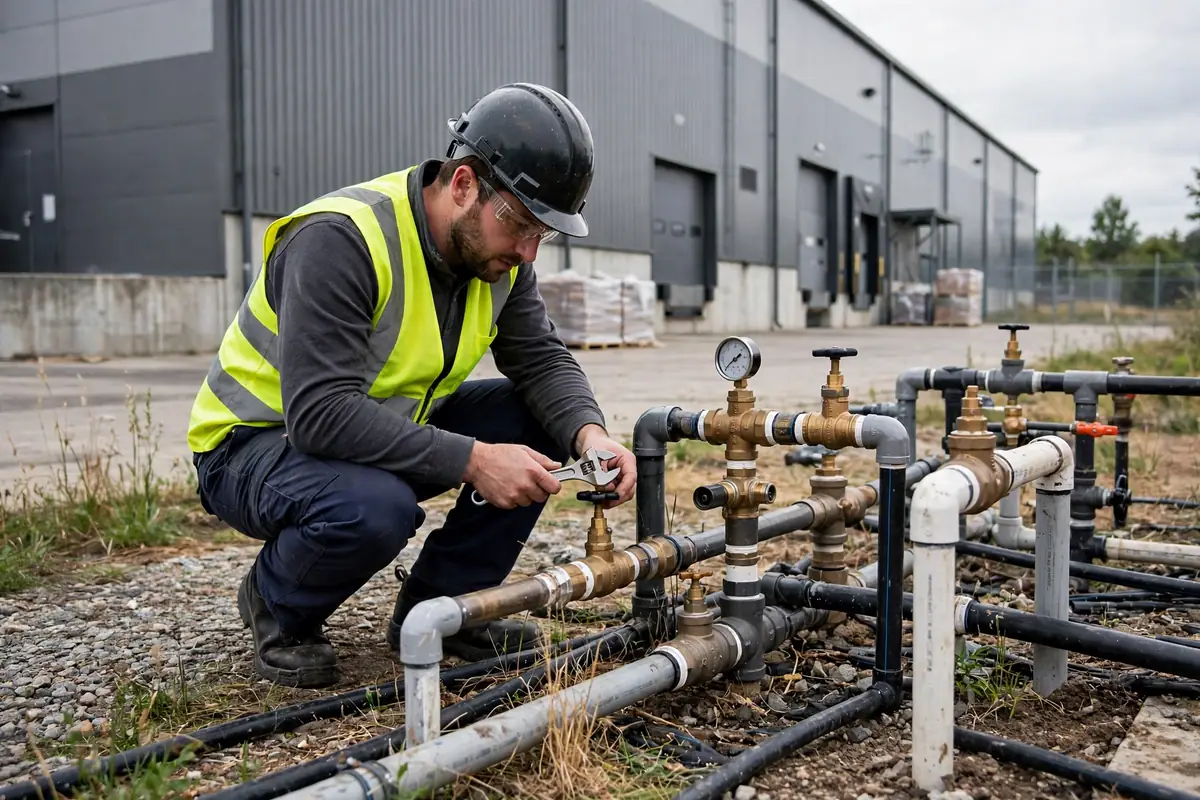
It was the summer before last, just before peak season. Sky was barely light. A valve out by our yard was weeping water onto the concrete. A driver reversing toward the dock almost did not see it, hit the brakes hard, and the load shifted. Nobody got hurt. I crouched down and looked at that valve — rusted badly, gauge needle wandering. Fellas, my first thought was simple: when was the last time anybody actually checked this thing properly?
We pulled the log. The last full inspection record was from more than half a year earlier. The walk-throughs in between? A signature and nothing else. We had been lucky. That is all. If an inspector had shown up that day, or if we had ever actually needed that system in a fire, we would not have been talking about the price of a valve.
What Yard Sprinkler System Inspection Cost Really Includes
Most managers think yard sprinkler system inspection cost means one thing: pay a company, get an inspection, file the report. It does not. The way we budget it now, in our warehouse, it breaks into four pieces. Miss any one of them and you will be pulling money from somewhere else by year end.
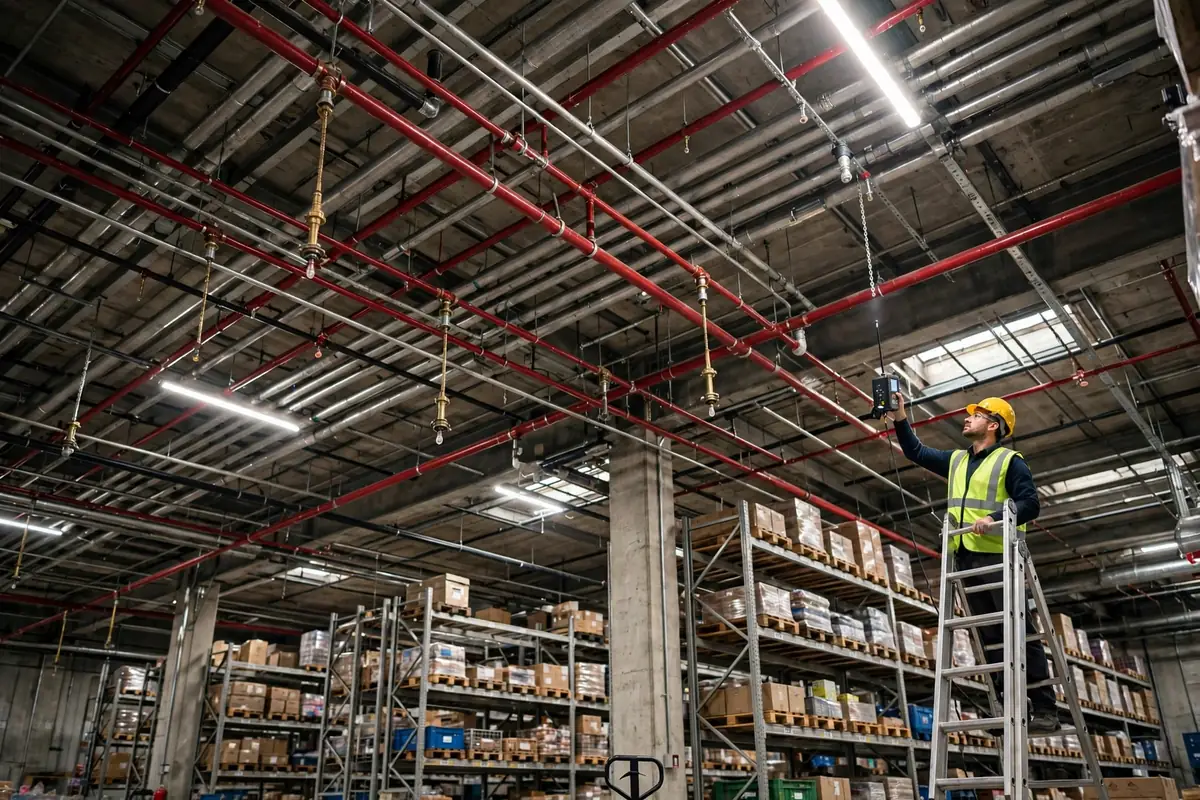
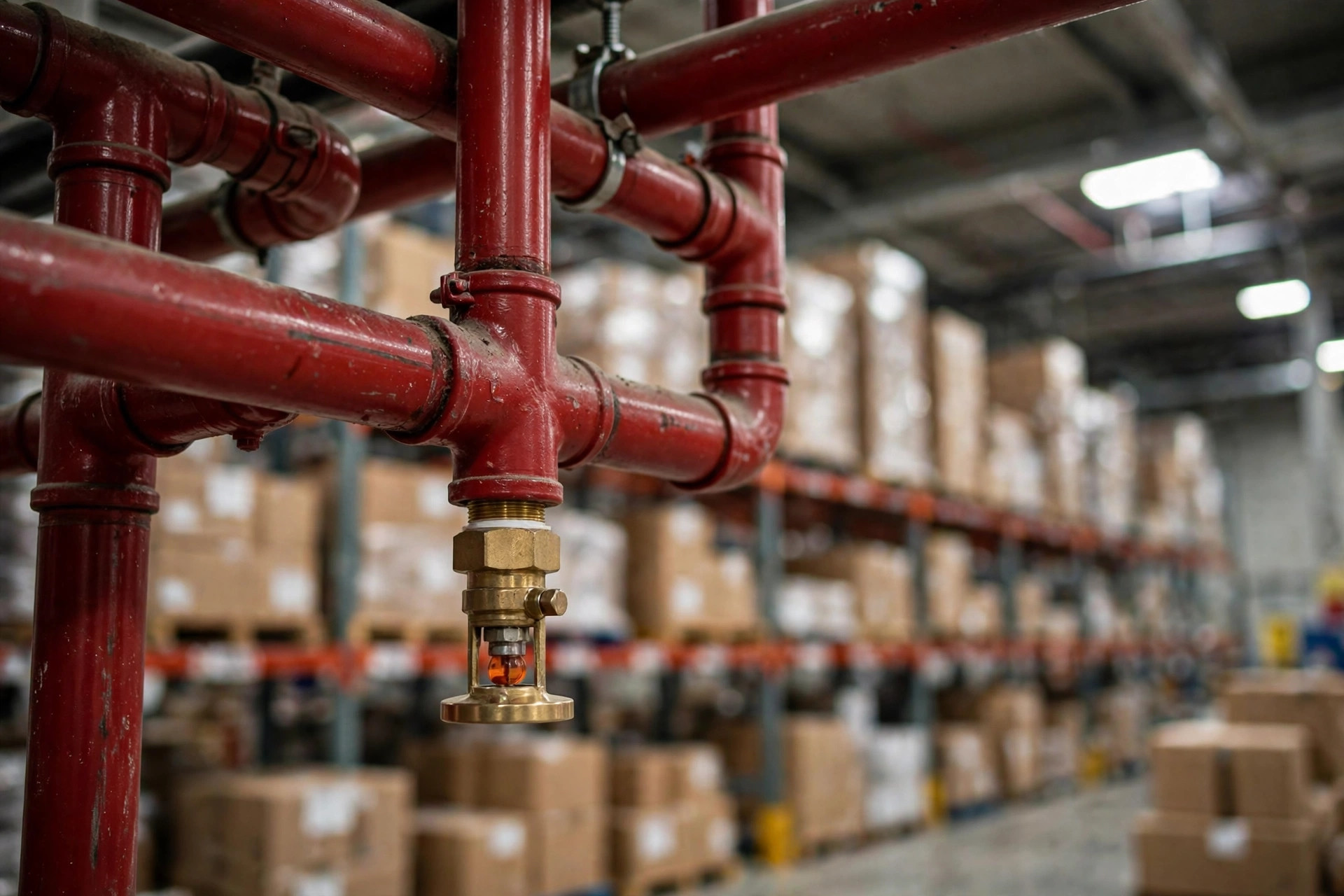
A yard system also takes a harder beating than the one indoors. Pipe runs sit outside in sun and rain. Winter can freeze them, summer bakes them, and valves, fittings, and hangers rust faster outdoors. Trucks and forklifts work right next to them, so knocks happen. A proper check is not just sprinkler heads. It covers the water supply, whether valves actually open and close, whether alarms trigger the way they should, and whether pressure in the network holds steady. For the exact inspection frequencies and tasks that apply to your system, follow the current NFPA 25 requirements and your local fire code. They vary by system type and jurisdiction, so do not copy another warehouse's schedule onto your building — check the latest requirements from the official source and your local authority.
| Cost block | What it covers | How we budget it |
|---|---|---|
| Routine inspection | Scheduled walk-throughs and formal inspections, with records | Bundle it annually instead of calling someone ad hoc each time |
| Testing and functional checks | Valve operation, pressure testing, alarm linkage testing | List it separately, and never skip the pre-peak test |
| Small repair reserve | Heads, gaskets, gauges, short pipe sections, rust treatment | Set a rolling reserve based on your own past work orders |
| Major component reserve | Valve assemblies, pump-related parts, freeze-damaged pipe runs | You may not spend it every year, but it has to exist on paper |
| Records and follow-up labor | Log upkeep, tag updates, inspector walk-throughs, closing deficiencies | Your own people's hours are a cost too — count them |
Notice there are no hard numbers in that table. That is on purpose. Labor rates, system size, and pipe length vary so much by site that a precise figure from me would mislead you. Pull your own last two years of inspection contracts and repair orders and fill the table with those. That number will be real. For any fee schedule or required frequency, use the latest official and local fire code requirements as your source.
Two Warehouses, Two Ways to Spend the Money
First, one that got it right. Last year I visited a regional building-materials warehouse — a peer site, not ours — with a big yard and long outdoor runs. Their manager had inspections on an annual calendar, not in somebody's memory. A full functional test before peak season. Routine walk-throughs by their own shift team using a checklist. Formal inspections by an outside provider on schedule. On one test they found outdoor insulation split open with moisture already inside the pipe run. They replaced that section before the cold set in. Small money. That manager told me something I still remember: I would rather see this line in my budget every year than write it in an incident report once.
Then the other way. A couple of years ago, a warehouse up north had an outdoor branch line freeze and split in winter. It was not bad luck. An earlier inspection had already flagged weak insulation on that exact section. A deficiency was written up. Nobody followed it through, and then winter arrived. Water spread into a staging area by the yard, outer packaging on a batch of goods got soaked, and between the emergency repair and dealing with the damaged freight, they spent far more than the follow-up they had skipped — I will not invent an exact figure, because it differs by site, but the order of things never changes: emergency work always costs more than prevention, and it disrupts shipping on top of it. Our night crew friends at sites like that end up pumping water at 2 a.m. Honestly? They are right to be angry. That is not a frontline failure. That is a management loop nobody closed.
Here is the counterintuitive part. The most expensive part of inspection is not the inspection fee. It is the deficiency nobody closes. Find ten problems, fix nine, and the one small item left open is usually the one that causes the next incident. Plenty of warehouses spend the money, have the reports on file, and look compliant on paper — while the problem is still sitting on the pipe. So now, when I walk another warehouse, I do not ask about their contract price first. I ask to see whether last round's deficiencies are all closed.
For the detailed frequencies, tasks, and maintenance requirements, I covered that in our NFPA 25 sprinkler inspection and maintenance guide for warehouses. This piece is only about the money and the workflow. Do not work from memory on the clauses themselves — use the latest official and local requirements.
How We Run It Now
This is just how we do it in our warehouse now. First, inspections go on a fixed calendar. Which check happens in which month is decided in advance, with a functional confirmation before peak season and before extreme weather. Nobody relies on remembering. Second, the walk-through checklist lives at the site, not in an office drawer. Whoever checks takes photos on the spot and writes down what they found. No signature-only inspections. Third, every deficiency gets a named owner and a due date. I ask about open items in the weekly morning huddle, and if one is not closed, we say why, out loud, that day. Fourth, the budget has two layers. Routine inspection is a fixed annual line. The repair reserve is separate, protected money. If we do not spend it by year end, we do not rush to spend it — it rolls forward.
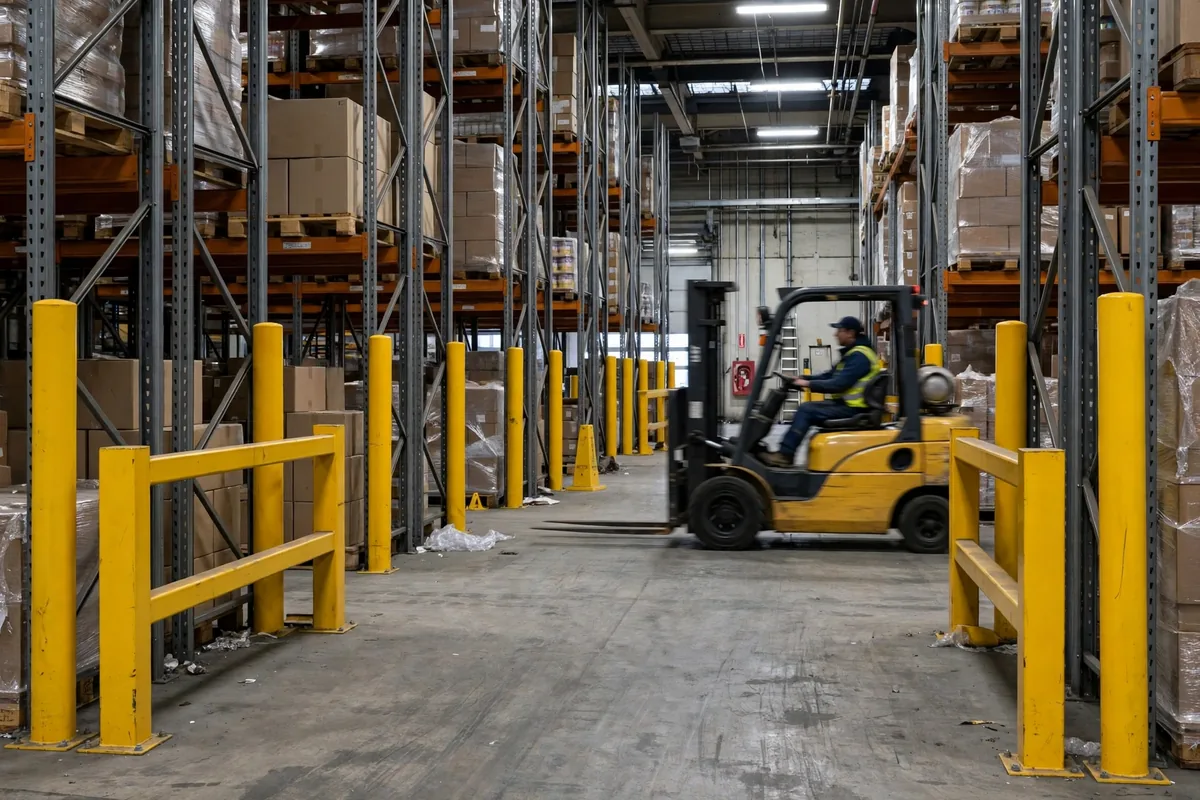
When I train new leads, I tell them this: a sprinkler system looks like nothing. Some pipe, some valves, quiet, out of the way. But it is the last line of defense this building has. Drivers reversing in the yard and forklifts turning near those runs can hit it without ever noticing. One extra look at a hanger or a guard during your round is worth more than any report you write afterward.
A reminder for fellow managers before you build next year's budget. Do not just fill in the inspection contract line and call it done. Add the small-repair reserve, the labor to close deficiencies, and that pre-peak functional test. Then go pull last round's deficiency list and check whether every item on it is actually closed. That list — not the invoice — tells you whether this money was well spent.
By Chen Feng, Warehouse Operations Manager