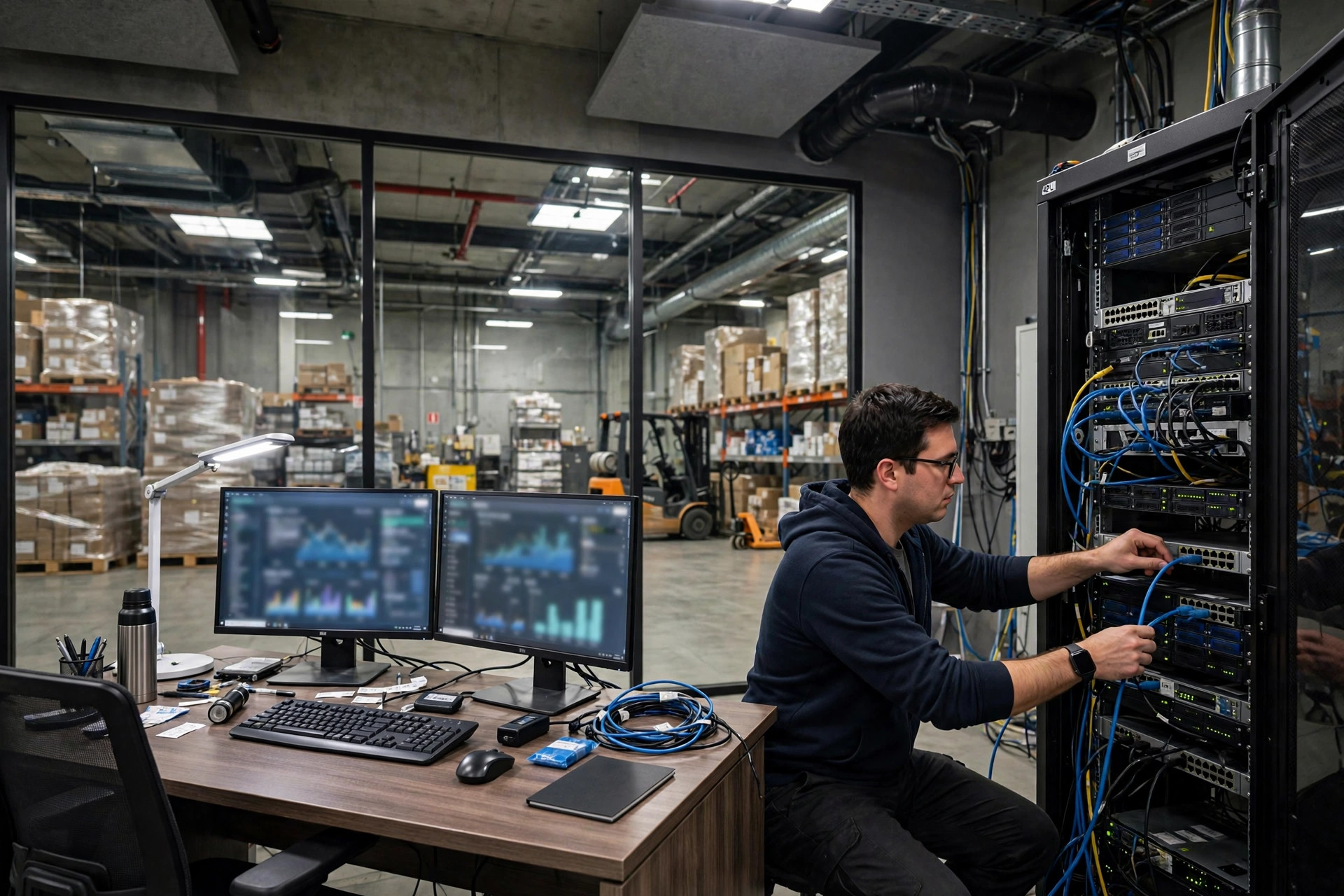
Folks, before we talk about the yard appointment no-show rate, let me take you to a night shift. It was a Tuesday night in peak season, in a warehouse I was running. We had forty trucks booked, thirty-two dock doors open, and by eleven at night only twenty-seven trucks had arrived. A dozen people stood on the dock waiting, forklifts idling, lights on, freight not moving. I did not chew out a single driver that night, because I knew in my gut the problem was mostly in the schedule we had written ourselves.
To be honest, the worst part of appointment scheduling is not having too few trucks. It is having the plan fall apart. Doors open, crew in place, freight staged, and the truck never shows, and the whole night shift loses its rhythm. The next morning everyone has a clean story: dispatch says the appointment went out, the dock says the crew was waiting, the carrier says traffic was bad. Nobody is lying, but the numbers do not add up. That gap is the thing to fix first.
How we measure the no-show rate without fooling ourselves
We use exactly one definition now: among booked appointments, the share that actually arrived. Appointments we cancelled ourselves do not count. Reschedules made more than a day ahead do not count. What counts is a truck that was booked and then never appeared, or arrived past its grace window. And we never look at the blended average alone. We split it by carrier, by time slot, and by day of the week, because a blended average is the best liar in the building.
Here is an example. One month our overall figure looked fine, better than eight out of ten. But once we split it, Tuesday nights were running barely above six out of ten while Friday days were close to nine out of ten. The problem was not every carrier. It was a handful of Tuesday night slots packed too tight, with too few doors, so trucks that did arrive could not get unloaded. After a carrier got burned twice that way, the third booking quietly went to the bottom of their list. The yard appointment no-show rate, measured this way, stopped being a mystery and started pointing at specific slots on specific nights.
One more split matters: late is not the same as absent. A truck that arrives within an hour and still gets unloaded counts as inside the grace window. A truck that never appears, or arrives hours past its window, counts as missed. We used to lump late trucks in with missed ones, and carriers felt cheated, which made every conversation about the number go nowhere. Get the definition straight first, or nothing else you do will stick.
Why carriers miss appointments, and it is usually not the driver
The first reason is double booking. In peak season a carrier has more loads than trucks, and one truck may be promised to two warehouses on the same day. The warehouse that unloads fast and keeps waiting short gets the truck first. Our building once kept a truck waiting six hours to unload, and after that we slid down that carrier's priority list. That is not a driver breaking a promise. That is a dispatcher doing arithmetic.
The second reason is a slot plan that cannot work on paper. I have seen a warehouse book eight trucks into one hour with four doors, where each unload takes more than an hour. The math never closes. A plan like that forces carriers to be late, then marks them down for being late, and after a while they stop accepting that slot altogether. Packing slots tight is not efficiency. It is digging your own hole.
The third reason is nobody confirming anything. The appointment goes out and then silence. The driver changes, the truck breaks down, the previous load runs long, and we only find out an hour before the truck is due. To be honest, dispatch owns half of that failure. A missed truck rarely comes out of nowhere. The warning signs were there days earlier, and nobody called to ask.
Four fixes that moved our no-show rate
What we run now is four moves, written on the scheduling wall so every shift follows them. First, a buffer: we overbook popular slots by about ten percent, but never beyond the number of free doors, because doors are a hard constraint and booking past them helps nobody. Second, two confirmations: one the day after booking, one more on the morning of arrival, so a changed driver or a broken truck surfaces in time to rebook instead of leaving the dock waiting. Third, a grace window of two hours, inside which an arrival is not held against the carrier, so nobody has to drive dangerously to hit an impossible deadline. Fourth, a reliability score: carriers with a strong record pick the good slots first, and a carrier with three straight months of solid attendance gets priority in peak season, while repeat misses slide to later slots.
| Move | What we actually do | What it costs | Where it works best | | Buffer | Overbook popular slots by about ten percent, capped by free doors | An occasional door sitting empty for half an hour | Peak-season popular slots | | Two confirmations | Confirm the day after booking and again on arrival morning | Dispatch makes a dozen extra calls a day | Lanes where drivers and trucks change often | | Grace window | Two-hour arrival window, inside-window arrivals not penalized | Dock staffing needs some flex | Freight with variable unload times | | Reliability scoring | Strong records pick good slots first, repeat misses move later | One scoring pass a month, posted where everyone sees it | Buildings with many long-term carriers |
Here is the counterintuitive part: fines were the least useful tool we tried. We once deducted money for every late arrival, and carriers simply got more careful about accepting our appointments. Good slots went unclaimed, bad slots went emptier, and the yard appointment no-show rate got worse, not better. When we switched to rewarding reliability, giving the good slots to the carriers who showed up, arrivals improved. Carriers are not afraid of penalties. They are afraid of a wasted trip and a half day in a queue. Take away the wasted trip and they come.
There is one trade-off to keep in view. A buffer is not a case of more being better. Ten percent overbooking fits the doors we have. Thirty percent means that if every truck shows up, the yard jams, unloading queues form, and our reputation drops again. The ceiling on the buffer comes from door count and unload speed, not from how brave the scheduler feels. We review it monthly, slot by slot, and adjust for next month.
Folks, one reminder before you go: the next time the yard appointment no-show rate climbs, do not start by calling carriers to complain. Open your own slot plan first and check whether the slots are packed too tight, whether the confirmation calls went out, and whether any grace was given at all. Seven times out of ten, the trucks are just following the schedule we wrote. Fixing the schedule is faster than fixing the carrier. By Chen Feng, Warehouse Operations Manager