Bottom line up front: in the WMS vs WES vs WCS debate, nine out of ten buyers start from the wrong question. The right question is not "which of these is more advanced." It is "what hurts most in my warehouse right now?" Inventory inaccurate and product you can't find? Buy a WMS. Conveyors jamming and equipment fighting each other? Buy a WCS. Waves released at the wrong time, people and machines waiting on each other? Buy a WES. I have watched this exact mistake play out three times, and the script is always the same: the budget goes to automation, but the root cause is management.
WMS vs WES vs WCS in plain English: who does what
After a decade and a half of implementations, I force myself to explain these three systems in the simplest possible terms, because buyers glaze over the moment jargon shows up:
- WMS (Warehouse Management System) = the warehouse's accountant and floor manager. It owns "where is the product, and is the book right": slotting, inventory accuracy, receiving, putaway, picking verification, cycle counting. It commands no equipment. It owns data and process.
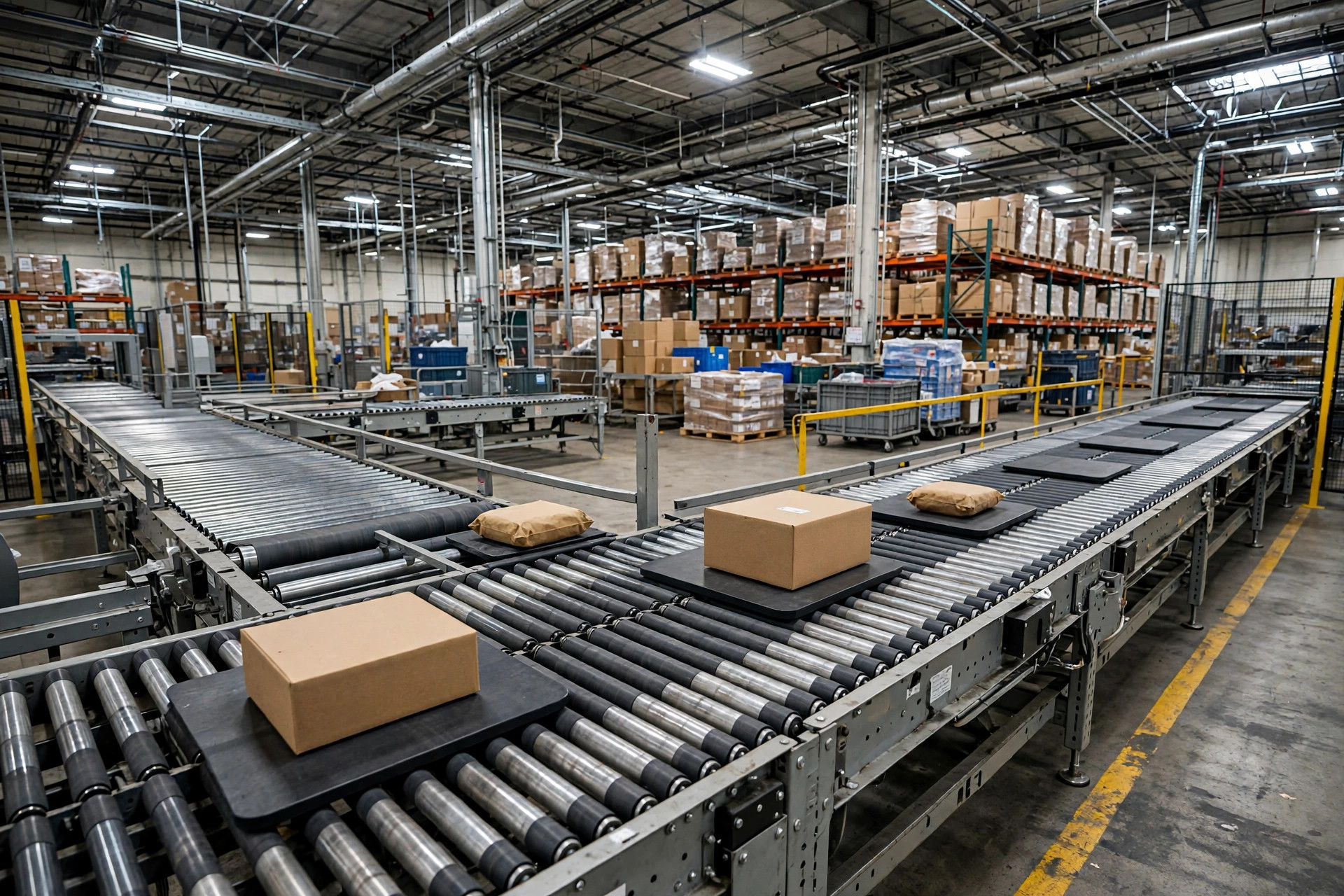
- WCS (Warehouse Control System) = the traffic cop for equipment. It owns "how the machines move": which conveyor segment starts and stops, which chute a sorter diverts to, when a lift goes up or down. It talks directly to PLCs, scanners, and motors in milliseconds. No automated equipment, no need for a WCS.
- WES (Warehouse Execution System) = the strategist for outbound. It owns "when orders drop and who works them": wave release timing, labor-to-machine task allocation, pick pathing and prioritization. It sits between the WMS and the WCS, deciding how today's work gets done in the smoothest order.
One-line memory aid: the WMS owns the books, the WCS owns the machines, the WES owns the rhythm.

A five-step, problem-first selection method
Don't select from a product brochure. Select from your problems. Take a sheet of paper and walk these five steps:
Step 1: Write down your three most painful problems, specific to the scene. Not "low efficiency" — write "every day at 3 p.m. the wave drops, and pickers stand around waiting on each other in the aisles" or "cycle count variances run over 2% a month and nobody can explain why." If you can't name a concrete scene, don't buy anything yet. What you're missing might be management discipline, not software.
Step 2: Map each symptom to its owner.
| Your symptom | Root cause | Buy |
|---|---|---|
| Inaccurate inventory, lost product, big count variances | Nobody owns the data and process | WMS |
| Conveyor jams, sorter mis-diverts, equipment conflicts | Nobody coordinates the machines | WCS |
| Waves released too early (pickers idle) or too late (missed cutoffs), AMRs running empty | Nobody owns outbound strategy | WES |
| You installed conveyors and sorters but throughput didn't move | Your slotting and processes probably broke first | Fix the WMS first |
Step 3: Count your moving machines. Conveyors, cross-belt sorters, AS/RS cranes, AMRs, vertical lifts — if the answer is zero, start with a WMS, full stop. A WCS is standard equipment for automation; buying one with no machines is like hiring a traffic cop for an empty road. I've seen this mistake three times. In 2022, a Florida auto-parts 3PL running 8,000 orders a day invested in conveyors and a sorter, with a "free" WCS thrown in that could only start and stop its own vendor's equipment. Three months after go-live, the line jammed daily. The audit found the truth: slotting was drawn on paper, waves were released on gut feel. They spent automation money on what was actually a WMS slotting problem and a WES wave-strategy problem. They went back and implemented a WMS properly, at the cost of nearly a year.
Step 4: Look at order volume and wave complexity. Under ~2,000 orders a day with two or three waves, the wave tools built into most WMS platforms are enough. Past ~10,000 orders with rolling waves and hourly cutoffs, a WES starts earning its keep. In 2021, a small Ontario, California warehouse doing 1,500 orders a day asked me whether they needed WES. I told them not yet — tighten the WMS wave rules, fix ABC slotting first. Three months later pick productivity was up 18%. WES solves a complexity problem. Without complexity, it is an expensive ornament.
Step 5: Get the implementation sequence right, because the wrong order doubles the rework. The standard sequence is WMS, then WES, then WCS. The WMS is the foundation — without accurate inventory and slotting, every strategy and every machine above it is a tower on sand. In 2023, a Dallas beauty e-commerce warehouse running 20,000 orders a day had 40 AMRs with no central brain, colliding at intersections daily. They implemented WCS for unified dispatch, conflicts dropped to zero, throughput jumped — but only because their WMS inventory accuracy was already above 99%. Right sequence, and every system pays for itself. Wrong sequence, and every system feels like a scam.
WMS vs WES vs WCS price magnitudes: what each system actually costs
Caveat first: these are order-of-magnitude figures. Pricing varies wildly by vendor, and SaaS billed annually vs. per-order can differ by multiples. Treat vendor quotes as the source of truth.
| System | Typical magnitude | Pricing model | Notes |
|---|---|---|---|
| WMS (SaaS, small/mid warehouse) | Hundreds to low thousands USD/month | Monthly or per-order | Implementation usually a separate low-five-figure spend |
| WMS (enterprise tier) | Implementation from ~$100k up | License + implementation | Multi-site operations always involve customization |
| WES | Often sold as an advanced WMS module | Module fee or per-order | Few standalone WES vendors; usually part of a suite |
| WCS | Rarely quoted standalone | Bundled in the automation integrator's turnkey project | Travels with the conveyor/sorter project; six figures is normal |
See the pattern? A WCS is never really "buying software" — it is part of an automation project. Anyone offering you "a standalone WCS for twenty grand" is almost certainly selling a crippled version that only drives their own brand of equipment. I've seen that trap three times: the equipment vendor's "free WCS" goes blind the moment you add another vendor's machine.
Three go-live traps: my pre-launch checklist
Run these before you sign anything:
- Buying a WCS thinking it is a WMS. The equipment vendor says "our WCS handles inventory." It sees product passing its own machines and nothing else — product in the AS/RS or on racking is invisible to it. Ask before go-live: does this WCS recognize other vendors' equipment? If not, don't expect it to do a WMS's job.
- Wave logic fighting between WES and WMS. Many WMS platforms ship basic waving; the WES brings advanced waving. Run both, and the same orders get released twice while pickers receive two sets of tasks. Get "which system owns wave logic" into the statement of work before signing. Not one word of ambiguity.
- Nobody owns the interfaces. WMS-to-WCS, WES-to-AMR-fleet-manager: who builds the interface, who tests it, who fixes it when it breaks? Unanswered at contract time, it's a three-way blame game after go-live. My checklist now requires a signed interface matrix at blueprint stage. Not a day later.
One counterintuitive closing thought: of the three, the WMS usually has the most certain ROI — not the flashiest, most expensive WCS. Automation solves "not enough hands." A WMS solves "chaotic management." And most warehouses I walk into are chaotic long before they are short-handed. Get the order backwards and you've put a bigger engine on a leaking boat.
Something you can use tomorrow: get warehouse ops, IT, and leadership in a room for 30 minutes and map your three most painful problems against the symptom table above. Once the mapping is right, what to buy becomes obvious. If the mapping won't come together, don't spend the money yet.
By Lin Xiao, WMS Implementation Consultant