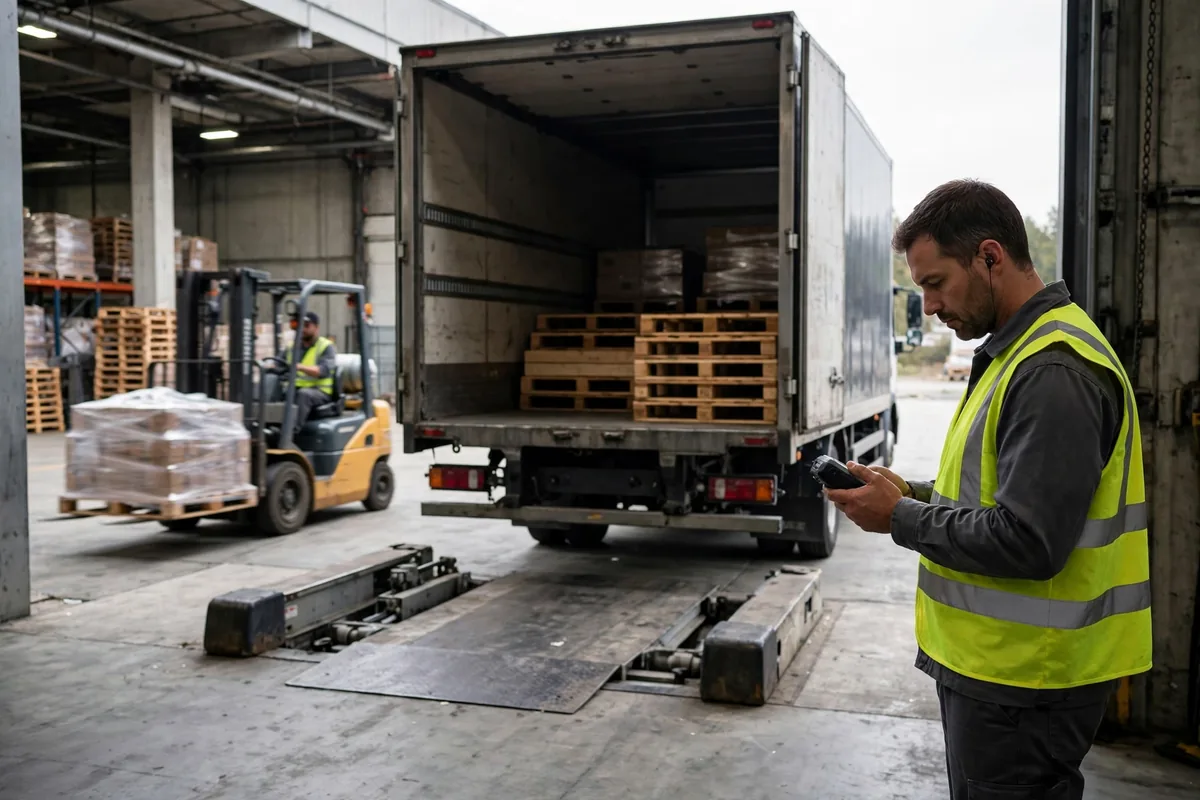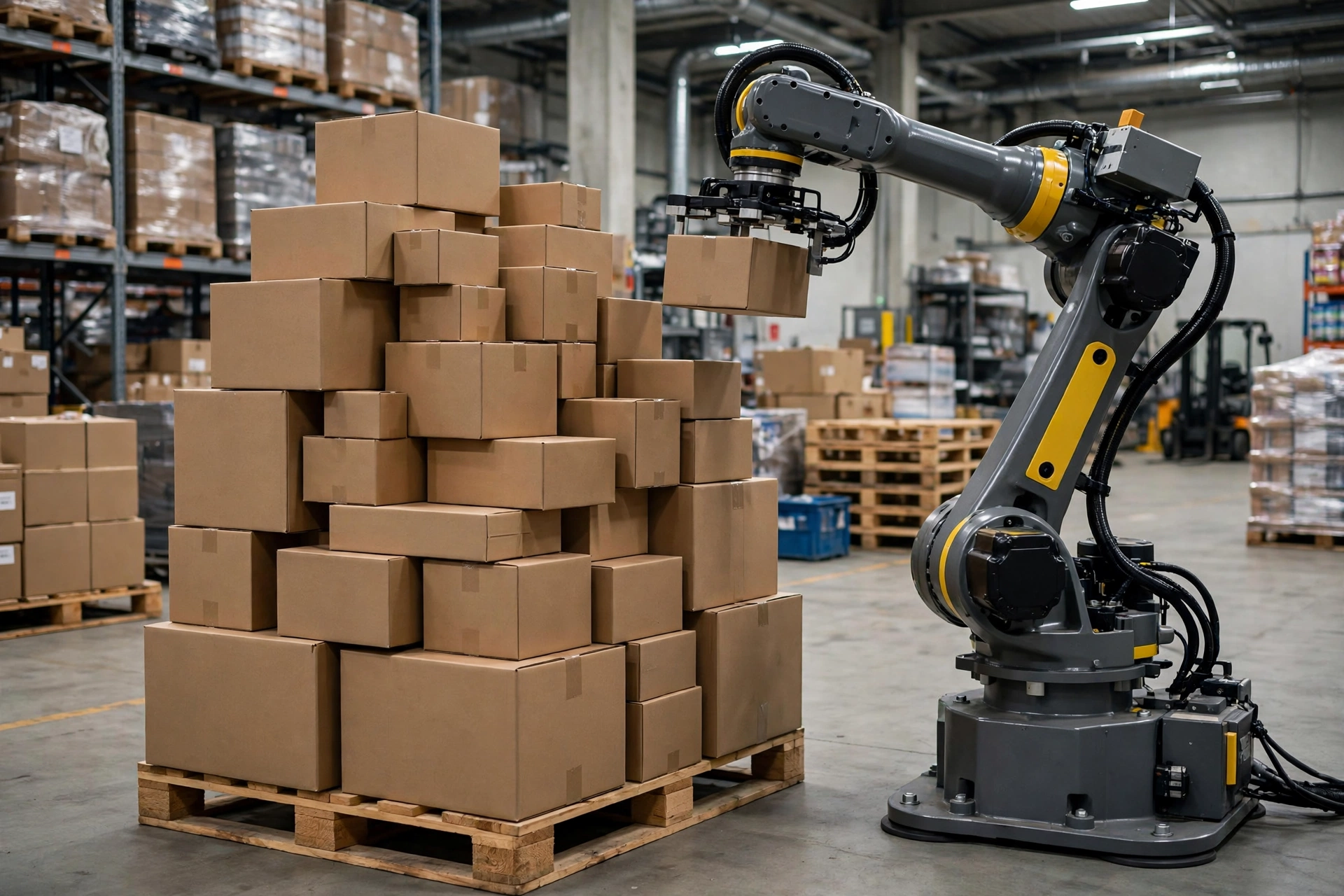
Bottom line up front: when the WMS–TMS integration breaks, keep shipping first and fix the data second. A dead shipment status feed does not stop the warehouse — the freight still has to leave. In November 2024, at peak season, a client's TMS callback feed went dark for six hours. More than 400 orders had already shipped, and every one of them sat stuck at "awaiting shipment" in the WMS. That night we held the line with a paper log: zero lost orders, zero mis-shipments.
I have seen this exact failure three times. The three deaths were different. The way through was the same every time.
When the WMS–TMS Integration Breaks, Protect These Three Things
First, freight cannot stop. Outbound is the warehouse's main line; status sync is the side line. When the side line breaks, the main line keeps running. Anyone who halts outbound to wait for the feed to recover has just turned a small problem into a big one.
Second, data cannot be lost. For every order that leaves, write down four things on the spot: tracking number, carrier, ship time, piece count. Miss one, and the backfill later will not reconcile. A manual log tracks exactly these four — more is useless, fewer is not enough.
Third, customers cannot be left guessing. When the feed stops, all the customer sees is "awaiting shipment," and the phone calls start within half an hour. Announce first, then answer one by one — do not wait for them to call you. Customers can live with "status updates are a few hours behind." They cannot live with "nobody knows whether my order shipped."
Why It Breaks: Three Ways I've Seen It Die
The most common death: the carrier's API token expired. In March 2025, a client's carrier token expired on a Friday night, and nobody noticed until Monday morning — more than 900 shipment statuses piled up, unsynced. The expiry date was written in the integration document. Nobody set a reminder. Nobody owned it.
The second death: the carrier upgraded its API without telling anyone. Field names changed, response codes changed, and the WMS kept parsing the old format. Failed parses were silently dropped — no error, no alert. This is the nastiest kind: the system looks perfectly healthy while nothing moves.
The third death: lost callbacks. The TMS sent the status, the WMS never received it, the TMS believed it delivered, the WMS believed nothing was sent. Neither side had a retry mechanism, so the status died halfway. The six-hour outage in 2024 was this one — the logs showed "sent" on the TMS side and nothing at all on the WMS side.
Twice out of three, the fault was not on the warehouse side. But the customer only sees the warehouse: you shipped it, you owe them the status. Whose API it is does not matter to them.
The First 90 Minutes: Five Steps to Stay Standing
Step one, within 10 minutes: find the break. Check three places — the WMS integration log, the TMS send log, and the carrier's own tracking page. In most cases, ten minutes is enough to pin down which leg is dead. Before you locate it, do not let anyone restart a service; a restart wipes the live logs.
Step two, within 20 minutes: switch to the manual log. Print an outbound register, or open a shared sheet with four columns: tracking number, carrier, ship time, piece count. Every order out the door gets one line, and the supervisor reconciles it once an hour. Messy handwriting is fine; correct numbers are what count.
Step three, within 30 minutes: tell the customers. The notice needs three sentences: status updates are paused, freight is shipping normally, expected recovery time. Skip the empty "system upgrade" line — what the customer wants to know is "where is my order."
Step four, within 60 minutes: give customer service a list they can actually check. When the phone rings, the agent looks at the manual log and answers — no more running to the warehouse to ask. That night we cut call volume by more than half; the service lead later told me it was her quietest peak-season night shift for "has my order shipped" calls.
Step five, within 90 minutes: agree on the recovery plan. The integration owner gives a fix time; the warehouse agrees on the backfill: statuses from the outage window get pushed back in chronological order, then checked one by one. Write the plan down and send it to everyone involved — not just a verbal promise.
I have written these five steps into the go-live night checklist for three clients. Every time, the client said "we'll probably never need this." Every time they needed it, they were glad it was written down.
After the WMS–TMS Integration Recovers: Backfill, Reconcile, Prevent
Recovery is not the end — it is the start of the second half of the work. Backfill: push the outage window's statuses back in time order, ticking each one off the manual log; a ticket is done only when ticked. Reconcile: after the backfill, match WMS outbound records against TMS delivery records order by order, and chase down every mismatch — no spot checks to save time. Prevent: three things — an automatic reminder seven days before token expiry, retries plus a dead-letter queue on the integration, and a monthly outage drill that runs exactly these five steps.
Drills are not theater. Once a month, on a Tuesday afternoon, we simulate an outage for one hour: callbacks off, paper log on, real calls to customer service. Afterwards we review three numbers: time to locate the break, lines missed on the manual log, minutes until the customer notice went out. If the numbers improve each time, the drill is working.
Here is the counterintuitive part. Most people treat a paper log as a step backward — proof the system failed. I see it the other way around: an integration with no manual fallback was never finished. The more automated the system, the more the fallback for the day it breaks needs to be written in advance. Automation handles the normal days. The manual plan handles the day things go wrong.
At the next go-live night, print the manual fallback sheet and tape it at the outbound dock. I hope you never use it. But on the day the feed dies, that sheet is your system.
By Lin Xiao, WMS Implementation Consultant