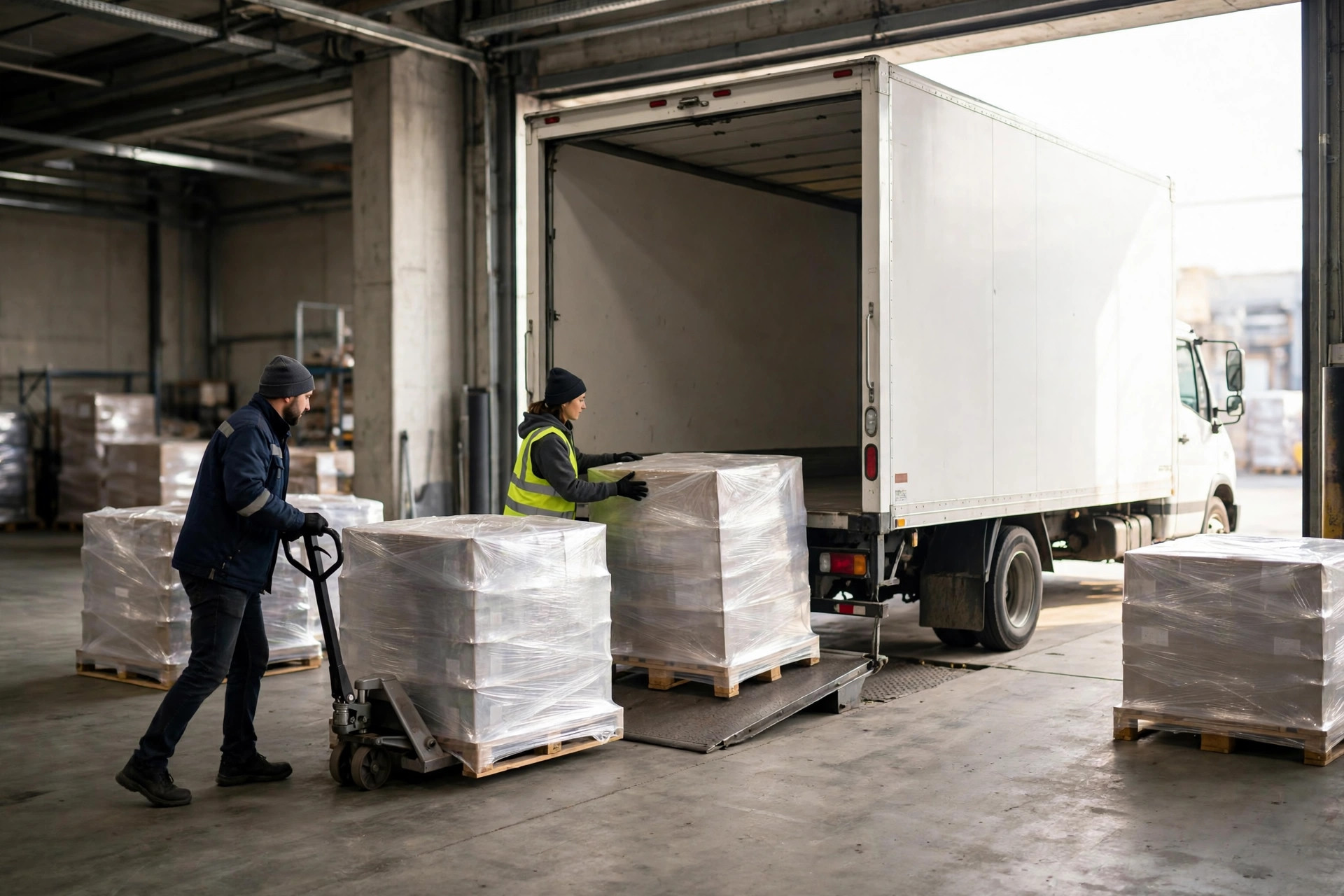
7:40 in the morning, dock door 3. An LTL driver leans out of his cab and yells: "Hey Chen, when's my freight ready? I've got two more pickups after this."
I glance at the staging area — his load is three lonely pallets. Honestly, I see this three or four times a week: nothing but small-batch orders, two or three pallets a shipment, each one tendered separately as LTL. Then the freight invoice lands at month-end and finance comes looking for me.
People in transportation talk about how to consolidate LTL shipments in terms of rates and lanes. From the warehouse side, it's a different set of books: dock congestion, who eats the damage claim, and whether we can beat the carrier's cutoff. Here's what our building learned the expensive way, and what we do now.
LTL consolidation breakpoints: get these wrong and nothing else matters
Here's the cheat sheet taped to our dispatch office wall:
- Single pieces under 150 lbs, not many of them: small parcel. The 150-lb per-piece limit on UPS and FedEx Ground is public policy — nothing to memorize.
- 1–6 pallets, 150–15,000 lbs: LTL territory. This is where LTL shipment consolidation pays best.
- 7–11 pallets: the gray zone. Don't guess. Get an LTL quote and a truckload quote side by side and take the cheaper one.
- 12+ pallets or over 20,000 lbs: price it as a truckload. A 53-foot dry van holds 26 standard pallets, and at this volume a flat truckload rate often beats LTL's weight-based math.
Note the counterintuitive bit between lines two and four: a lot of people assume "doesn't fill a truck, ship LTL." Wrong. Back in 2024 we had a 14-pallet load going to Chicago — the LTL quote came in nearly 20% above a truckload. Ever since, 12 pallets is our hard line, and nobody in dispatch is allowed to freelance past it.
The transit-time side of LTL shipment consolidation
The consolidation logic is simple: pool several small shipments headed the same direction, build a fuller load, and the per-unit rate drops. We run two standing consolidation lanes out of our building: Texas (Tuesday/Friday) and the East Coast (Monday/Thursday).
But there's a cost, and it's called waiting.
November 2025, peak season. We'd built a nice six-pallet Texas consolidation — freight was ready, but staging ran late and the pallets didn't hit the dock until 2:40 p.m. Our carrier's cutoff was 2:00 p.m. Every carrier sets its own cutoff, so check the latest policy with yours — ours just happens to be 2:00. The driver had three more pickups on his route and wasn't waiting. The freight sat in our building an extra day, the customer nearly stocked out, and sales got chewed out by the customer, then came and chewed me out.
After that we made it a hard rule: our internal cutoff for consolidated freight is two hours ahead of the carrier's cutoff. Carrier cuts at 2:00, we're staged, wrapped, and labeled at the dock by noon. Anything not ready by noon doesn't get forced on — it rolls to the next consolidation departure. Sounds rigid, but we haven't missed a carrier cutoff since.
So do the transit-time math this way: freight savings minus the day or two of waiting. What's waiting is inventory dollars and customer patience. Some freight can't wait — promo inventory, stock-out replenishment — ship it direct, don't consolidate. Consolidation is a tool, not the goal.
The uncomfortable truth about LTL consolidation: the priciest line isn't on the freight bill
Real story. August 2024, a patio-furniture client shipping out of our California building: 20-plus orders a day, 2–4 pallets each, headed to Texas and Florida. They used to tender every order as its own LTL shipment — $1,000-plus per bill was routine. We started pooling a Texas lane three times a week, and per-shipment cost dropped roughly 30%. The client was happy.
For two months. Then a forklift at a carrier hub punched straight through a pallet's packaging — two pallets of rattan chairs, total loss, $2,000-plus claim. One month of savings, wiped out in a day, and then some.
That's the structural problem with LTL: your freight gets loaded and unloaded multiple times at carrier hubs — several times the handling of a truckload. A truckload goes from our dock straight to the customer's dock, door to door. LTL goes through break-bulk terminals, gets reloaded onto linehaul, broken out again. Damage odds track handling count directly. It's not about which carrier is "better" — it's baked into the model.
So now we run two sets of books before consolidating: the freight book and the damage book. Fragile, high-value, weakly packaged freight — glassware, rattan furniture — either doesn't consolidate, or gets its packaging upgraded first (crating, corner boards), and that packaging cost goes into the consolidation math. Only consolidate if it still pencils out.
One more thing: LTL damage claims are notoriously hard to win. Our standing practice is six-sided photos at load time — every face of every pallet, filed by bill of lading number. In a claim fight, that's the only evidence that talks. No photos, and the carrier's "it shipped that way" ends the conversation.
Four warehouse practices that make LTL consolidation work
Consolidation dies without warehouse cooperation. Here's our fixed routine:
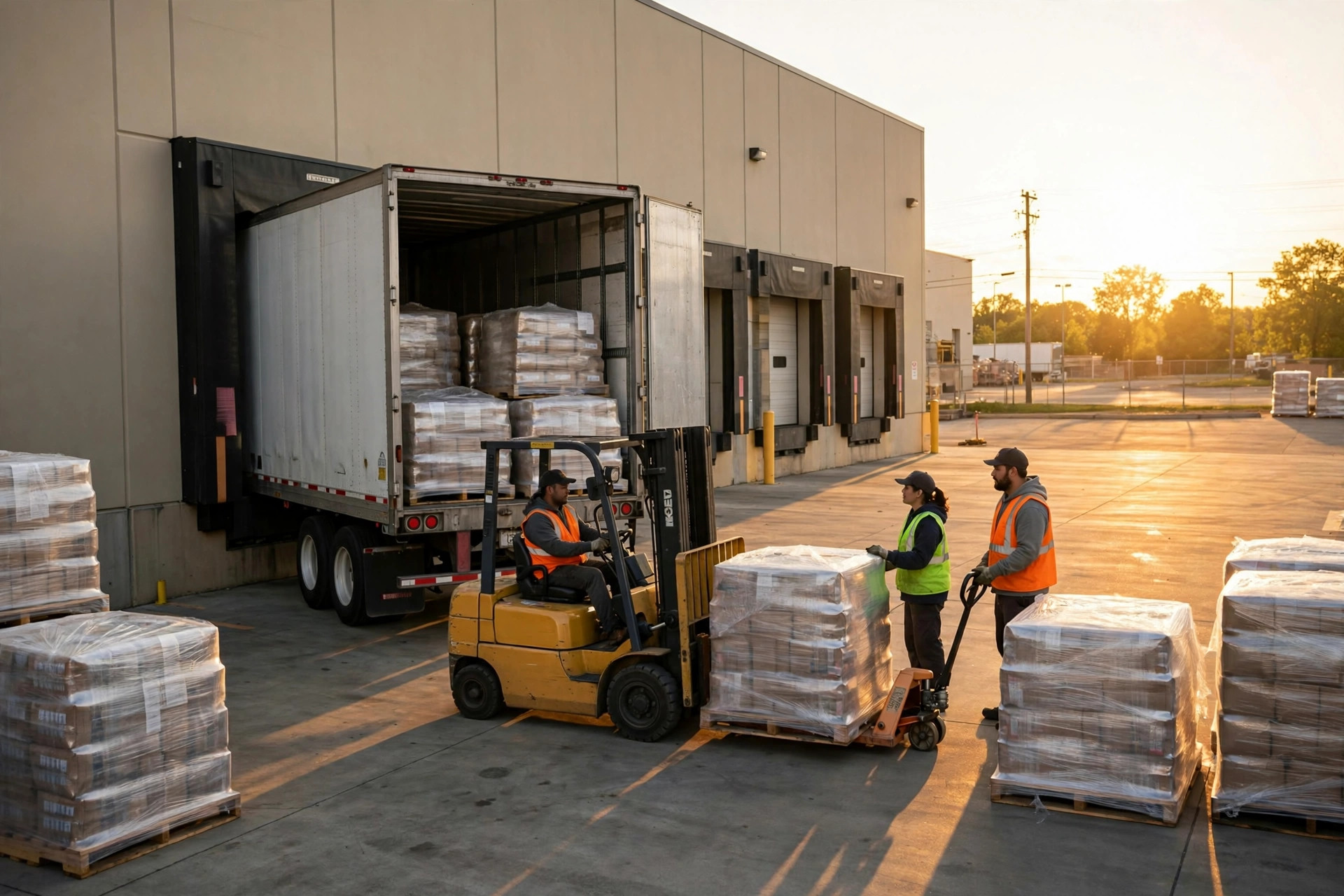
Zone the dock. The LTL consolidation staging area is separate from the full-truckload direct-load area, and the consolidation zone is split by lane: Texas freight here, East Coast there. Sounds trivial — until peak season puts fifty pallets on the floor and a forklift driver burns twenty minutes hunting one shipment. Zones plus floor markings, and a new hire is productive in half a day.
Standardize the pallet build. Uniform pallet sizes, minimum three wraps of stretch film, color-coded printed labels by destination. Remember: nobody at the break-bulk terminal knows your customer — they only read labels. A lost or smudged label can park your freight an extra day. We learned that one the hard way; labels are printed now, never handwritten.
Work backward from the cutoff. Covered above: carrier cutoff minus two hours is our internal deadline. The lane schedule — which lane departs which days, what time it cuts — is posted on the dispatch wall where everyone can see it.
Photograph at load time. Six-sided photos, filed by BOL number. And have the paperwork ready before the driver arrives — LTL drivers run tight schedules, and making one wait at your dock means rushed loading, which means more damage.
A few reminders for fellow warehouse folks
LTL shipment consolidation is three sets of books, not one: freight cost, transit time, and damage. People who only run the freight math always end up paying tuition on the other two.
Three reminders, all bought with real money:
Align on the service promise before you consolidate. Check with sales and customer service first: can this freight wait three days? What can wait gets pooled; what can't ships direct. One stock-out costs more than a month of freight savings.
Twelve pallets is a hard line. At that volume, price the truckload first — don't default to LTL.
Damage is structural, not bad luck. Packaging, labeling, photos — get those three right and consolidation actually holds together.
That's how we run it in our building. How are your consolidation lanes set up — and are your cutoffs holding?
By Chen Feng, Warehouse Operations Manager