Here is the conclusion up front: WMS TMS integration is never really about the interface. It is about whether order information is still alive after the order leaves the warehouse. The day the interface tests pass, the project team pops champagne. Too early. The real acceptance test comes in the second week after go-live, when a driver arrives at the dock and the order has to still be in the system.
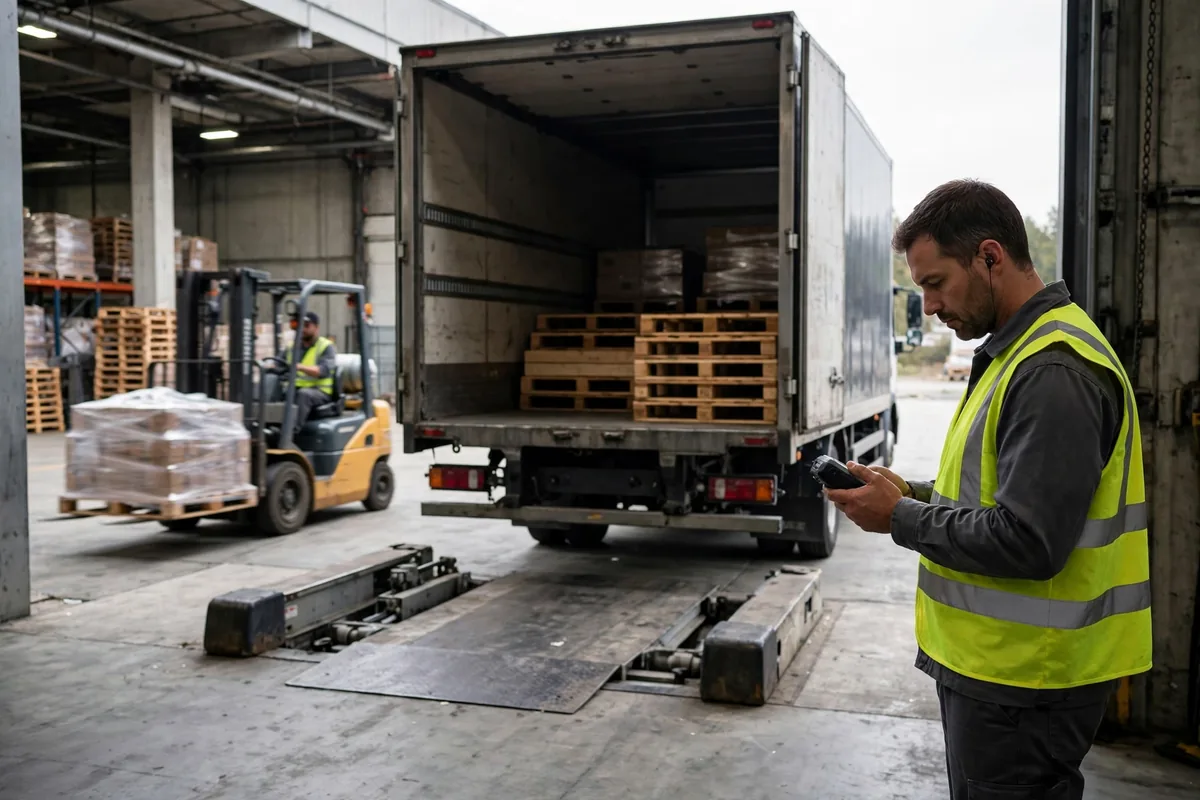
I have seen this failure three times. The first was an auto parts client in East China. In the second week after go-live, a pickup truck arrived at the dock and the driver gave the order number. The warehouse team checked the system: the order still showed "awaiting dispatch," even though the goods had been loaded half an hour earlier. The driver waited at the door while the warehouse called dispatch, and dispatch said the system showed nothing shipped. In the end the warehouse supervisor dug out the paper dispatch note and let the truck go. What went wrong? Status updates only flowed one way. The warehouse system pushed "picked" to the transport system, but the transport system never pushed "loaded" or "departed" back. The information left the warehouse and died at the dock door.
WMS TMS integration: align first, then integrate
Most projects start by talking about the interface: fields, formats, call frequency, argued in great detail. I always stop them there. Talk about the business first, then the technology. If the two systems understand the same order differently, the prettiest interface in the world is worthless.
Align on five things before writing any code. Does the order carry the same number in both systems, or does each system number it separately with a mapping? How many order statuses exist, who changes each one, and how soon does the other side see the change? Who generates the tracking number, when does it come back, and who owns it if it goes missing? When the estimated arrival changes, who tells whom, and how? And the one that gets missed most often: when the integration breaks, does it retry automatically or wait for someone to fix it by hand, and does freight stop or keep moving meanwhile?
Writing code before those five are settled is building on sand. Interface testing looks perfect, because test data is made up and arrives in order. Real orders arrive with statuses jumping out of sequence, times out of alignment, numbers that do not match, and every problem surfaces at once.
Here is a counterintuitive call: more fields is not better. At the start, five key fields are enough: order number, tracking number, carrier, estimated arrival, and status. Get those five running solidly, then add more. Trying to connect dozens of fields at once means three months of integration testing that never ends. Five fields can be live in two weeks. Get it running first, then make it complete. That is the pace of a real go-live project, and that is what WMS TMS integration actually means in practice: shared meaning first, messages second.
Where order information dies after the dock door
The first break is the loaded status. The goods are on the truck, the warehouse system considers the job done, and the transport system still thinks the goods are in the building. The driver has left, the order still shows "awaiting dispatch," a customer calls to ask where the shipment is, and service tells them it has not gone out. The customer is furious, the warehouse is wronged, and the whole problem is that nobody sent the "loaded" status back.
The second break is the tracking number. The carrier changes, and the new tracking number lives only in the transport system. The warehouse system never sees it. A customer asks where their goods are, service cannot find a tracking number in the warehouse system, so they go digging in the transport system and paste the number across by hand. In peak season, with thousands of orders a day, pasting tracking numbers by hand, a mistake is only a matter of time.
The third break is the estimated arrival. A traffic jam pushes arrival back by half a day. The transport system knows, the warehouse system does not, and the receiver knows least of all. The truck arrives, nobody is there to receive it, the truck waits at the door, and what arrives is not unloading but a detention charge. This break is the most hidden, because on a clear day nothing goes wrong at all, and the first traffic jam exposes everything.
The second client fell on the tracking number. A fast-moving consumer goods warehouse, thousands of orders a day in peak season, switched carriers at short notice and the tracking numbers never came back. The service team spent a whole week manually looking up orders and pasting numbers, and complaints climbed sharply. In the post-mortem, the technical gap was one missing return message. The business gap was that nobody had specified how soon after departure the tracking number must be back in the warehouse system. Nobody specified it, so nobody did it.
Run this WMS TMS handoff table the night before go-live
My go-live night checklist always requires the project team to walk through the table below, item by item, tested for real. The test is not whether the interface connects. It is whether the information survives.
| Information | From | To | When | Who notices first if it breaks |
|---|---|---|---|---|
| Order number | Warehouse system | Transport system | At order creation | Transport dispatcher |
| Loaded status | Warehouse system | Transport system | Immediately after loading | Warehouse supervisor |
| Departed status | Transport system | Warehouse system | Immediately after departure | Customer service |
| Tracking number | Transport system | Warehouse system | Immediately after departure | Customer service |
| Estimated arrival | Transport system | Warehouse system | Immediately on change | Receiver contact |
There is a trick to running this table: do not run it with made-up test orders. Take one real order and follow it from creation to signed delivery. Only a real order runs into a carrier switched at the last minute, an arrival time that changes, a status that jumps backward. Test orders always follow the script, and scripts never reveal a break.
Three more failure points go on the go-live checklist. First, when the integration breaks, is there an alert, or does it fail silently for three days before anyone notices? Second, does a retry create a duplicate order, because the same order appearing twice wrecks inventory. Third, do the two systems agree on the time, because a few minutes apart is harmless and a time zone apart is an incident.
An order leaves the warehouse, and its information must not die at the dock door. A working interface is only the beginning. The WMS TMS integration is done when information follows the order from creation to signed delivery without breaking. Run this table the night before go-live, and only open the champagne once it passes.
By Lin Xiao, WMS Implementation Consultant