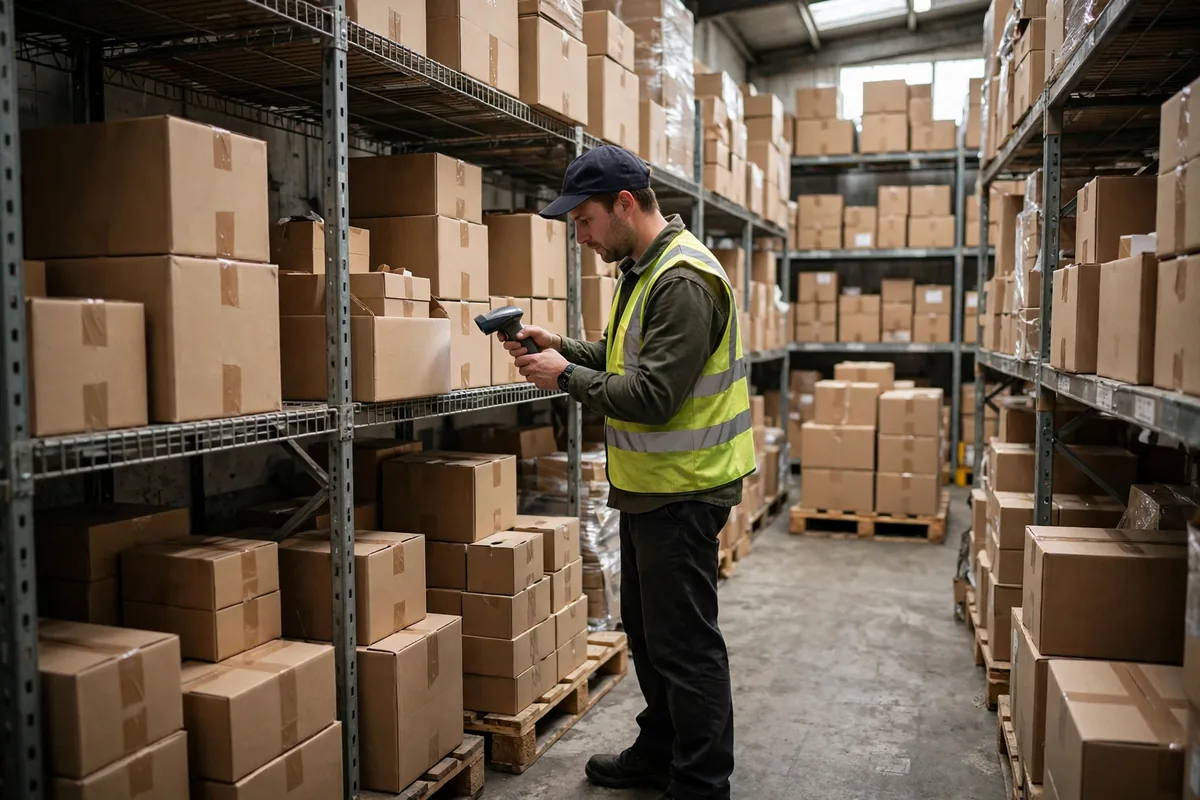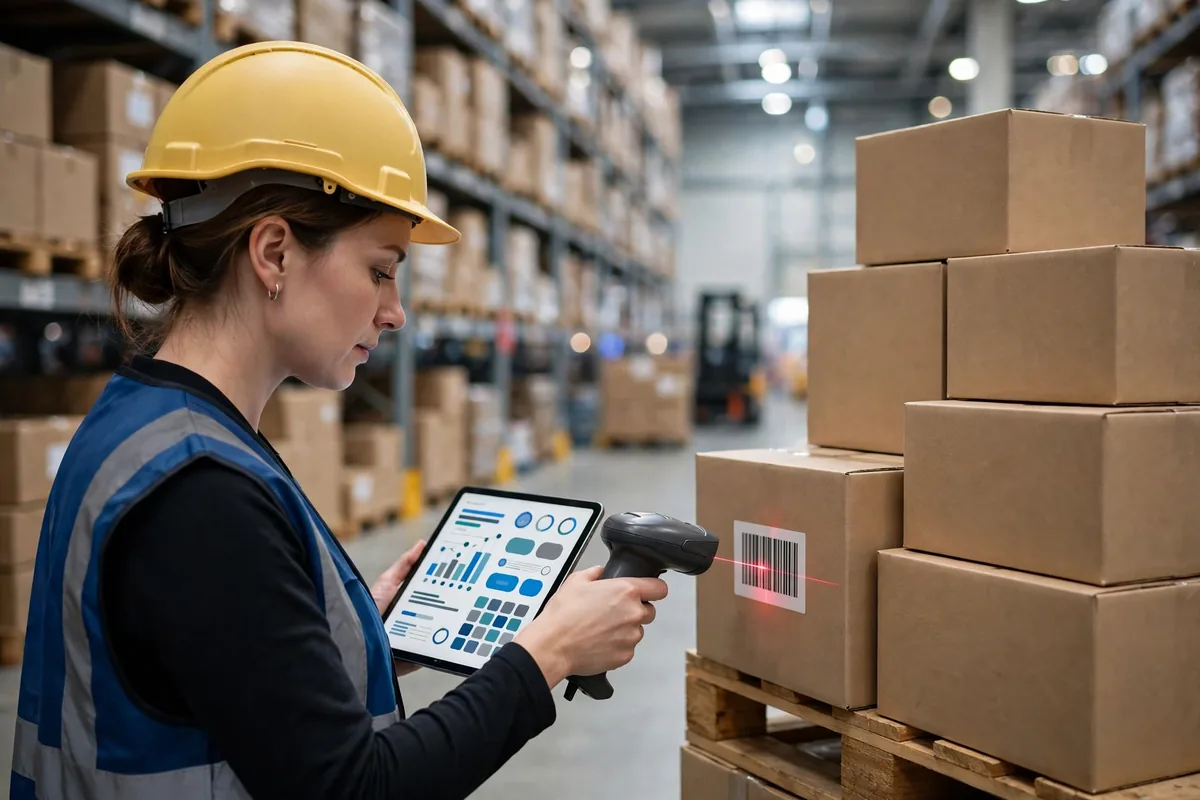
Here's the verdict up front: WMS lot traceability doesn't depend on how expensive your system is. It depends on the 30 seconds at receiving when lot number, quantity, and location get tied together in one scan. When a recall notice lands, a warehouse that can point to every pallet of the affected lot — which locations, which outbound orders, which customers — within a few hours is doing it right. A warehouse that has to walk the floor and open boxes is not.
I've led 30+ WMS implementations, and the recall drill is the item most often cut from the go-live night checklist. The client always says they'll add it once things settle down. Then the day a real recall arrives, there is no "once things settle down."
The US has traceability record requirements for certain foods, and the exact scope and timing change — check the regulator's current published guidance before quoting it to anyone. What doesn't change is what the warehouse has to do, and that's what this article covers.
Whether a Recall Works Comes Down to 30 Seconds at Receiving
In the fall of 2023, a frozen-food 3PL east of Los Angeles, roughly 60,000 square feet, got a call first thing in the morning: a supplier suspected contamination in one lot of frozen shrimp and wanted it recalled. The warehouse manager typed the lot number into the WMS. Four hours later she handed the customer a list: 37 pallets of that lot across three zones, 12 of them already shipped to five customers, with order numbers, case counts, and ship dates attached. The recall that day covered those five customers. Not one extra pallet got quarantined.
I've seen the opposite version of the same story. In 2022, a dry-goods distributor with no lot traceability got a similar notice. Lot numbers lived on paper receiving slips; locations lived in people's heads. Two staff spent two days digging through files, came up with four possibly related lots, and quarantined all of them to be safe. The extra stock they locked up came to roughly a fifth of that month's outbound volume, and shipping stopped for two days while customers called nonstop.
The difference wasn't the price of the system. It was whether three things — lot, quantity, location — were bound together at receiving. Miss one, and a recall turns into manual labor.
Six Steps: WMS Lot Traceability from Labeling to Shipping
The method isn't complicated. The hard part is that no step can be skipped.
Create the lot before the truck arrives. Lot number, production date, and expiry go into the system at appointment time; receiving only verifies them. Entering lot data live at the dock is the number one source of errors. I once watched a driver wait 40 minutes at the dock because a lot number had been handwritten and nobody could read it.
Label at receiving. Every pallet gets a pallet label, and the label must carry the lot number. A product barcode with no lot on the label is the same as no traceability at all. Put the label printer at the receiving door, not in the office — every trip to fetch labels is a chance to skip one.
Scan to the location on putaway. The forklift driver scans the pallet label, then scans the location code, and only then does the system confirm the putaway. "Drop it now, scan it later" means it never gets scanned. I've seen that shortcut three times, and it broke traceability three times.
One lot per location. When space gets tight, take an extra location rather than stacking two lots in one slot. Mixed lots get settled at recall time, all at once: two pallets you can't tell apart get quarantined together.
Pick by system-assigned lot, first-expired first-out. The pick task names the lot; the picker doesn't get to choose. A warehouse where pickers can swap lots by hand effectively has no expiry control.
Write lot and customer back to the outbound order. Every order records which lot shipped, how many cases, and to whom — automatically. When the recall notice arrives, that record is what you query. You don't go looking in the warehouse.
Once those six steps run, a recall is a single query: type the lot number, get the location list, the shipment list, and the customer list. Put the drill on the go-live night checklist: pick a lot at random, start the clock when the "recall notice" arrives, and stop it when the list is in hand. Longer than four hours is a fail.
The Same Break, Three Times
The first break is returns. In early 2025, a supplements warehouse ran a recall drill and the lot they drew had 800-plus cases of returns sitting in it. The returns had gone back to stock without new labels, so the system showed no lot for them at all. The drill located about 80 percent of the lot; the rest took manual searching. Returns must go through a fresh receiving flow — new label, new location, same treatment as new stock.
The second break is break-bulk. Once a full pallet is split for piece picking, the lot information dies with the pallet label unless it travels with the cases. Either label cases as you split, or let the system inherit lot quantities by split ratio. A warehouse that loses lot identity at the split has to quarantine whole pallets at recall time, and the loss multiplies.
The third break is off-system transfers. Two sites moving stock by phone call and spreadsheet, with no transfer order in the system, lose the lot in transit. Cross-site transfers must run on system documents, with the receiving site accepting against the order and the lot carried over intact.
All three breaks share one trait: none of them is a missing system feature. Each is a process that lets people route around the system. Traceability breaks where the process has a bypass, not where the software lacks a field.
The Math: How Granular Should Lot Traceability Be?
Here's the counterintuitive call first: finer traceability is not better traceability. Item-level tracking sounds safest, and for most warehouses it's a waste of money.
| Granularity | Extra time at receiving | What a recall locks | Best for |
|---|---|---|---|
| Pallet level | One extra scan per pallet, about 10 seconds | Whole pallets | Most food and consumer-goods warehouses |
| Case level | Scan per case at split; receiving labor up roughly a fifth | Individual cases | High-value lots where mixing is costly |
| Item level | Scan per unit; labor more than doubles | Single units | High-value items and tightly regulated goods |
The math is simple: compare the value of stock you'd over-quarantine in one recall against the daily cost of extra scanning. At the frozen-food warehouse above, pallet-level tracking cost under one labor-hour a day, and one recall that quarantined a dozen fewer pallets paid for it. Item-level tracking there would have added three-plus labor-hours a day — over a year, more than the value of several pallets wrongly quarantined.
One more cost people miss: when a recall notice arrives, the highest-value move isn't querying the system. It's freezing outbound shipments of that product first. Lock every lot of the item in the system — a ten-minute job — and nothing else ships while you work out the list. You can take your time on the query. Once product leaves the dock, getting it back costs many times what holding it in the warehouse would have.
Run a drill next week. Take half a day, draw a lot at random, and time the whole thing from the "recall notice" to a list of locations, shipments, and customers in hand. If it takes more than four hours, fix the 30 seconds at receiving before you shop for a new system. And ask yourself this: when did your warehouse last run a recall drill?
By Lin Xiao, WMS Implementation Consultant