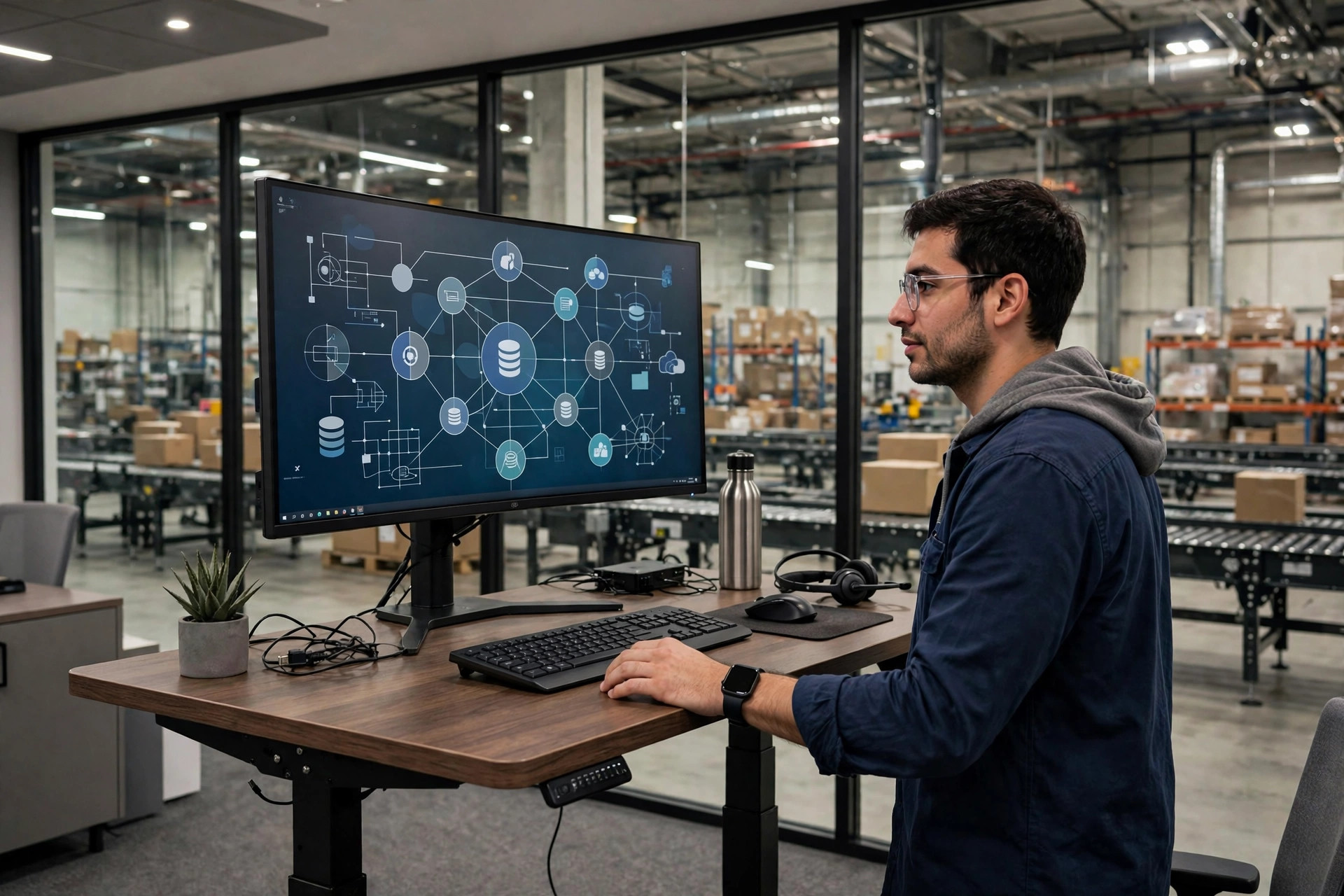
It's like a marriage where one speaks Chinese and the other German. You need a translator in the middle. Between the WMS and the conveyor line, that translator is called the MFC.
MFC, the Material Flow Controller. Think of it this way: the WMS does the thinking (which order, which location to pick from), the PLC does the moving (motors turning, cylinders pushing), and the MFC sits between them translating thought into motion, breaking WMS task orders into control commands the conveyor, lift, and sorter understand, then reporting equipment status back up to the WMS.
I've watched too many projects where the WMS vendor and the conveyor integrator throw blame across a conference table: "My interface is fine, you configured it wrong." "My equipment is fine, your commands are wrong." When you hear that, you know an MFC is missing.
The Four Layers, Each With Its Job
The principle first. Modern automated warehouse software stacks in four layers:
- WMS: owns inventory, orders, tasks. Granularity: orders and locations.
- WCS (Warehouse Control System): dispatches the equipment fleet. Granularity: tasks, e.g. "move pallet A from induction 1 to divert 3."
- MFC: real-time material-flow control. Granularity: actions, e.g. "start conveyor 2, swing divert 3."
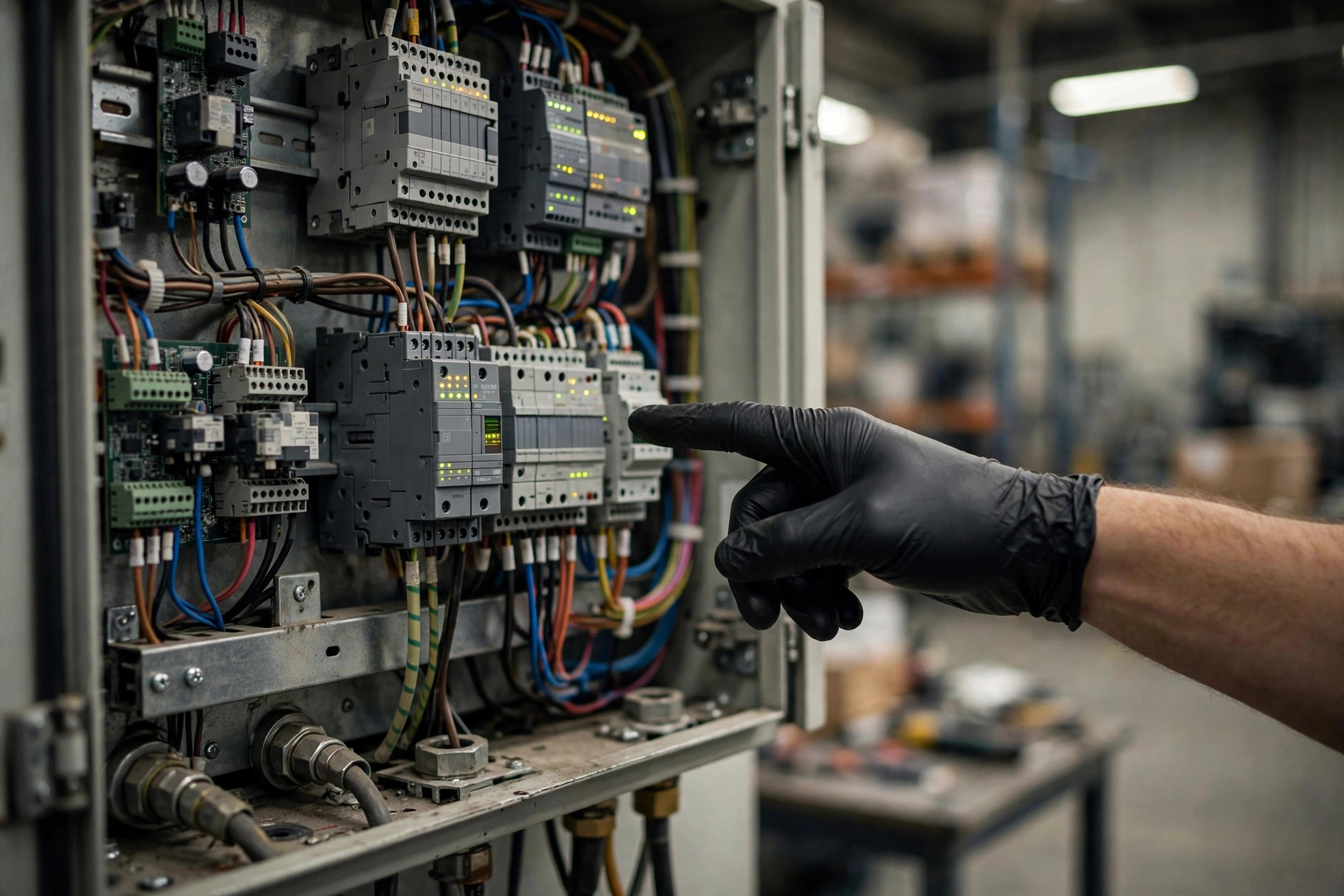
- PLC: single-device electrical control. Granularity: signals, motor direction, sensor blocked or clear.
Think of it as: WMS is the brain, WCS the dispatcher, MFC the foreman, PLC the crew.
The Selection Line: When You Need a Standalone MFC
The most-asked question. The answer comes in three tiers:
Tier 1: single conveyor, simple flow, e.g. one straight line plus a scan point. The WCS can drive the PLCs directly here; a standalone MFC is overkill, a pseudo-requirement, and I'll say so bluntly.
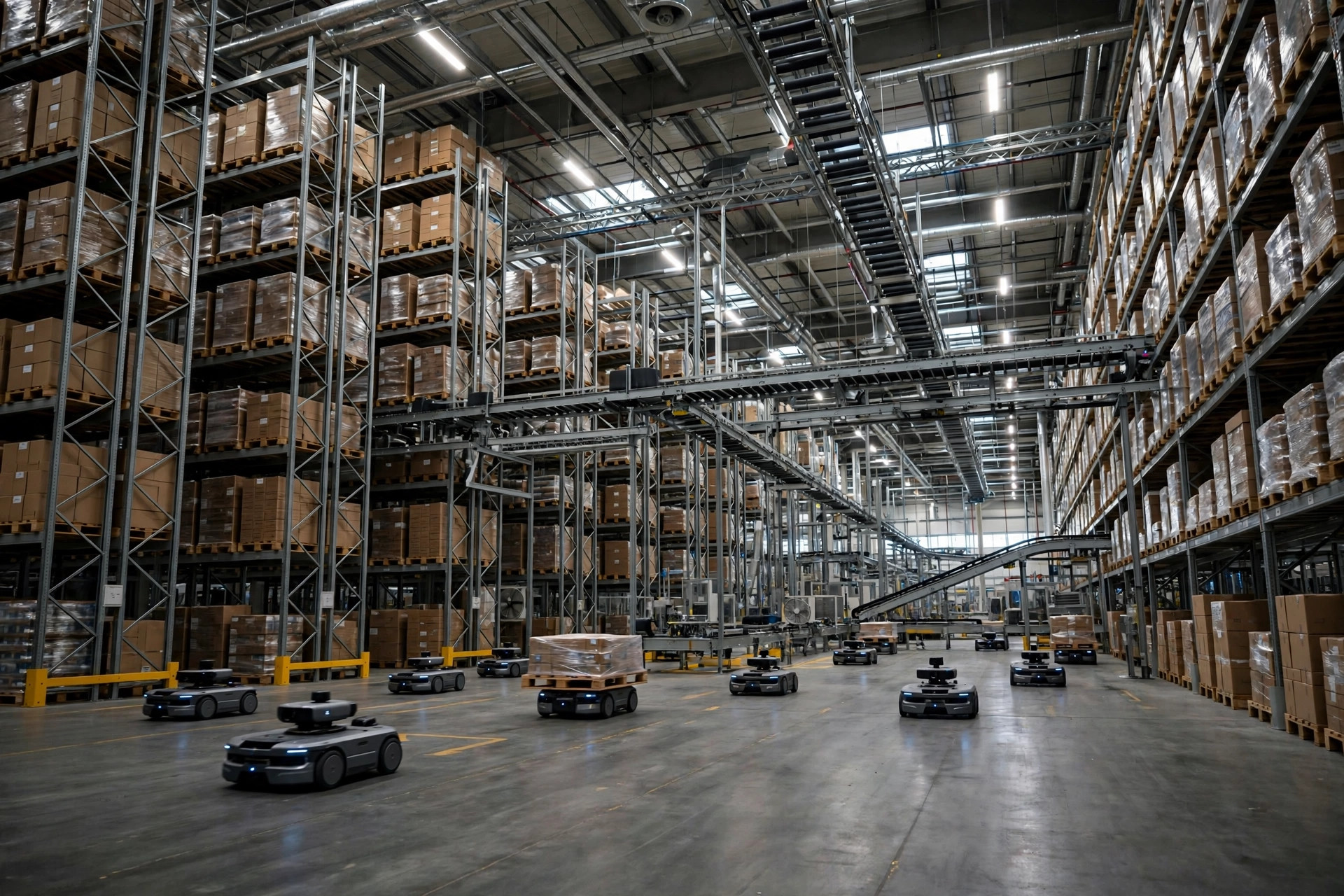
Tier 2: multi-device coordination, medium complexity, conveyors plus lifts plus sorters, with merges, diverts, and reject handling. This is where the MFC earns its keep on real-time flow control. The signal you've crossed the line: half the WCS task queue is handling equipment exceptions instead of business tasks.
Tier 3: multi-vendor equipment, conveyor from vendor A, sorter from B, lift from C, each with its own PLC protocol. Having the WCS talk to all of them directly is like learning three foreign languages. The MFC plays universal translator here, hiding device differences below and offering the WCS one standard interface above.
The Maintenance Traps
Trap 1: the MFC/WCS boundary was never drawn. Who owns task dispatch? Rule of thumb: business logic lives in the WCS (wave priorities), pure device-state reactions live in the MFC (photo-eye triggers). Write the boundary into the contract appendix, not into a verbal promise.
Trap 2: the exception chain is too long. A jam travels PLC → MFC → WCS → WMS, and the operator learns about it five minutes later. Requirement: the MFC layer must have a local HMI so the floor sees and acts within 30 seconds.
Trap 3: no spares, no people. An MFC is typically an industrial PC plus licensed software; it doesn't swap out like a PLC module. Keep a whole spare unit, or sign a 4-hour on-site SLA with the integrator. Don't discover this during a line-down.
Worth It or Not? Watch This One Number
Add it up: how many line-downs per year come from the WMS and the equipment "not speaking the same language," how long each lasts, what each hour costs. Many warehouses get a scare from this math: one year of downtime losses buys two MFCs.
The MFC isn't a cure-all; on simple projects it's waste. But past the complexity line without one, you're gambling the whole line's stability.
Worth it or not comes down to one number: what you pay per year in "interface blame games" and exception downtime.
By Da Liu, Automation Engineer