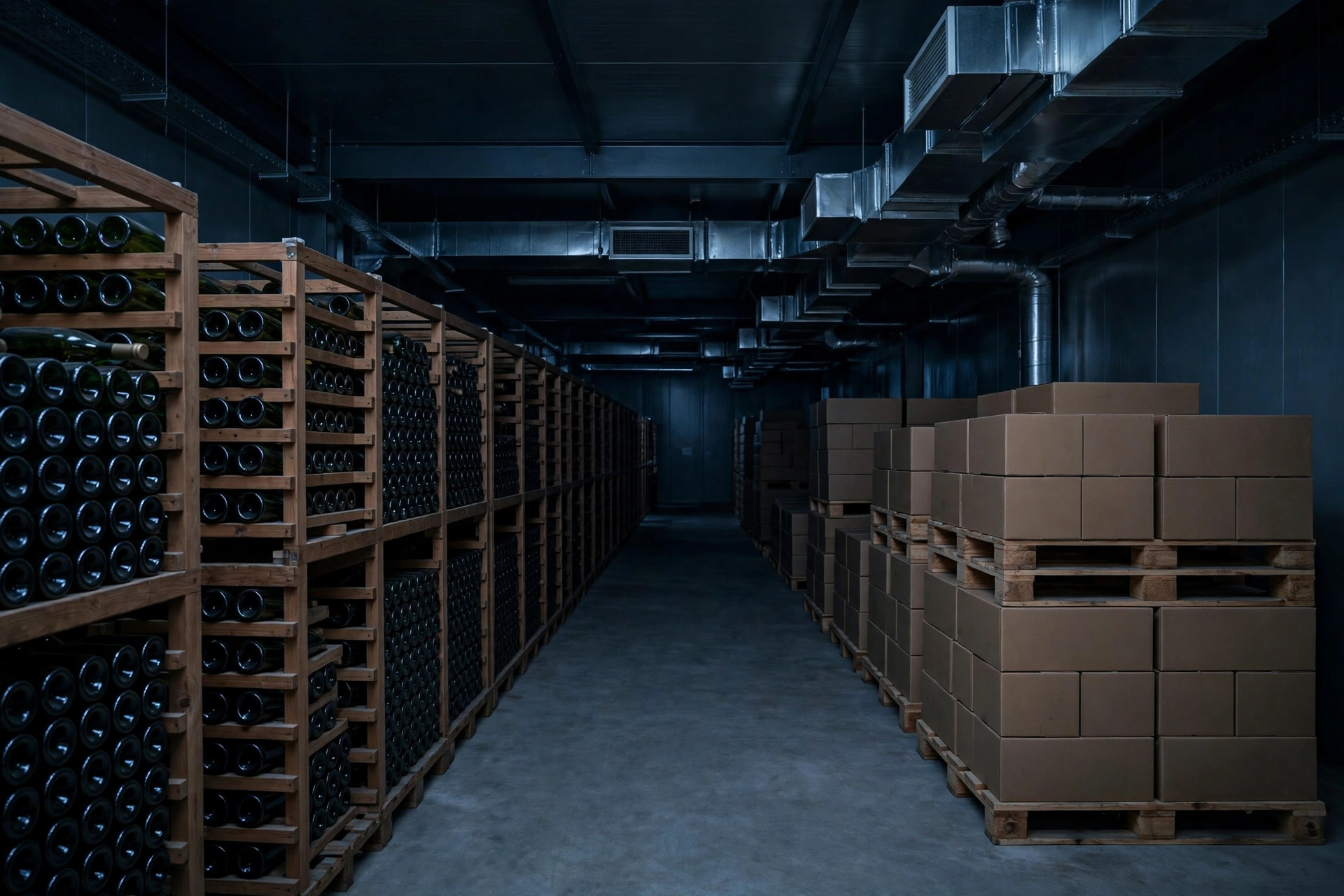
Last July, a friend who imports red wine called me up: "Ma, can I park 400 cases of red at your warehouse for the summer?"
My heart jumped — off-season business! "No problem," I said, hung up, and started reading. Then the sweat started. My little 3,000-square-meter warehouse hits 38°C at noon in summer and 5°C at night in winter. Park those wines here, and by autumn my friend would be picking up 400 cases of vinegar — and I'd lose the friend too.
What wine importers call "cellar-grade" boils down to four numbers. If you can't hold those four numbers, don't take the job.
Memorize these four numbers first
Temperature: 12–14°C is ideal, 7–18°C is acceptable. The most-quoted figure in the cellar world is 55°F (about 13°C) — but stability beats precision. A cellar that sits at 16°C all year is far better than one swinging between 13°C and 17°C. Wild swings make the wine expand and contract, pushing the cork loose and letting wine seep out. Slow death.
Humidity: 60–70% is ideal, 50–80% is the safe band. Below 50%, corks dry out from the outside in, air sneaks in, and oxidation speeds up. Above 80%, mold throws a party — labels rot first, then the corks grow fuzz. Most professional cellars aim around 70%.
Darkness: the darker the better — UV is a silent killer. Light damage is irreversible. UV breaks down the aromatic compounds in wine, and the bottle opens up smelling like wet dog or cooked cabbage. That's called "light strike," and nothing can fix it. Keep the wine zone pitch dark; switch on a dim light only when someone walks in, off when they leave.
Stillness: keep it away from anything that shakes. Constant vibration stirs up sediment and speeds up chemical reactions inside the bottle. Don't put the wine zone next to the forklift highway, the AC condenser units, or a busy road. Old vintages suffer most — stir the sediment and the texture is gone.
The biggest trap: never shove wine into a cold storage room
I almost did exactly that. Old Wang next door runs a 2–4°C cold storage and thumped his chest: "Put it with me, totally safe!" For a second I thought — hey, a cold room is temperature-controlled, right? Good thing I asked the importer first. He just shook his head.
A cold storage room and a wine cellar are two different animals:
| Wine cellar | Regular cold storage | Ambient warehouse | |
|---|---|---|---|
| Temperature | 12–14°C, stable | 0–10°C, frozen goods −18°C | 5–38°C with the seasons |
| Humidity | 60–70% | 85–95%, or dried out by refrigeration | Whatever the weather |
| Light | Dark / dim | Lights on 24/7, constant traffic | Windows |
| Vibration | Kept from vibration sources | Forklifts in and out all day | Depends on location |
| Typical failure | High upfront cost, slow payback | Dried corks, tartrate crystals, moldy labels | Summer "cooks" the wine, big swings |
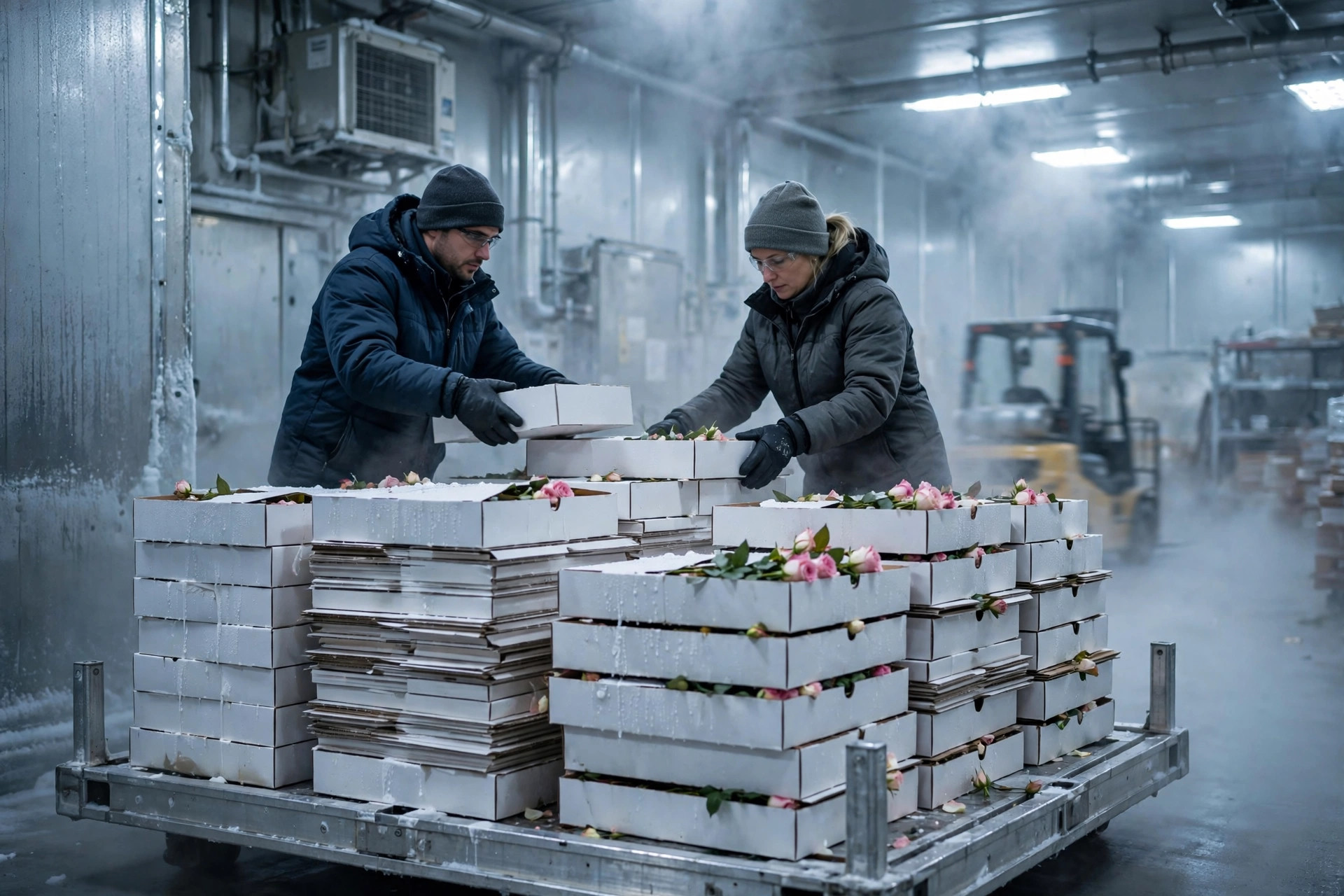
See it now? Cold storage is too cold for wine. Below 8°C for long stretches, aging basically stalls and tartrate crystals precipitate out. Near freezing, the wine expands as ice and can push the cork or crack the bottle. Humidity is wrong too: refrigeration strips moisture from the air (hello, dried corks), while defrost cycles leave condensation that molds the labels. Add lights blazing around the clock and forklifts roaring in and out — light and vibration both check out. It's basically torture for red wine.
Here's the contrarian takeaway: wine doesn't fear "not cold enough" — it fears swings and dryness. Everyone who believed "colder is safer" has paid tuition.
The small-warehouse playbook: zone it off, spend little, deliver big
Standards understood — next came the retrofit. I shopped around first: a proper wine-cellar build-out abroad runs US$8,000–20,000 all-in for a small room in 2026 (cooling unit, insulation, vapor barrier, racking included). One look at that number and I gave up — we small warehouses can't burn that kind of money.
But "can't burn big money" doesn't mean "can't take the job." My low-budget playbook is a zoned cellar — six moves:
One, partition. Insulated sandwich panels to wall off a corner of the warehouse into its own little room. Insulation is the foundation — get the walls right (R-19 and up is the reference standard used for wine cellars abroad) and a modest cooling unit can carry the load while the power bill stays sane. Money saved on insulation beats money spent on equipment.
Two, cool. One wine-cellar air conditioner sized to the room. Domestic brands cost a fraction of the imported names. Don't oversize it — an oversized unit short-cycles and the temperature swings more, which is exactly what we're trying to avoid.
Three, humidify. The step everyone skips: air conditioning dehumidifies as it cools. Temperature comes down, humidity crashes with it. So add a standalone industrial ultrasonic humidifier on a humidity probe. An integrated temperature-humidity unit is convenient but pricey; splitting it into "AC + humidifier" does the same job for a friendlier price.
Four, darken. The little room's windows got sealed with insulation boards — done and dusted. Dim lights inside, on when someone enters, off when they leave. The wines sit in cartons anyway, which adds another layer of cover.
Five, stabilize. Pick the corner farthest from the forklift lanes and the loading docks. Anti-vibration rubber pads under the pallets. "Handle with care, no throwing" goes into the SOP, posted on the door.
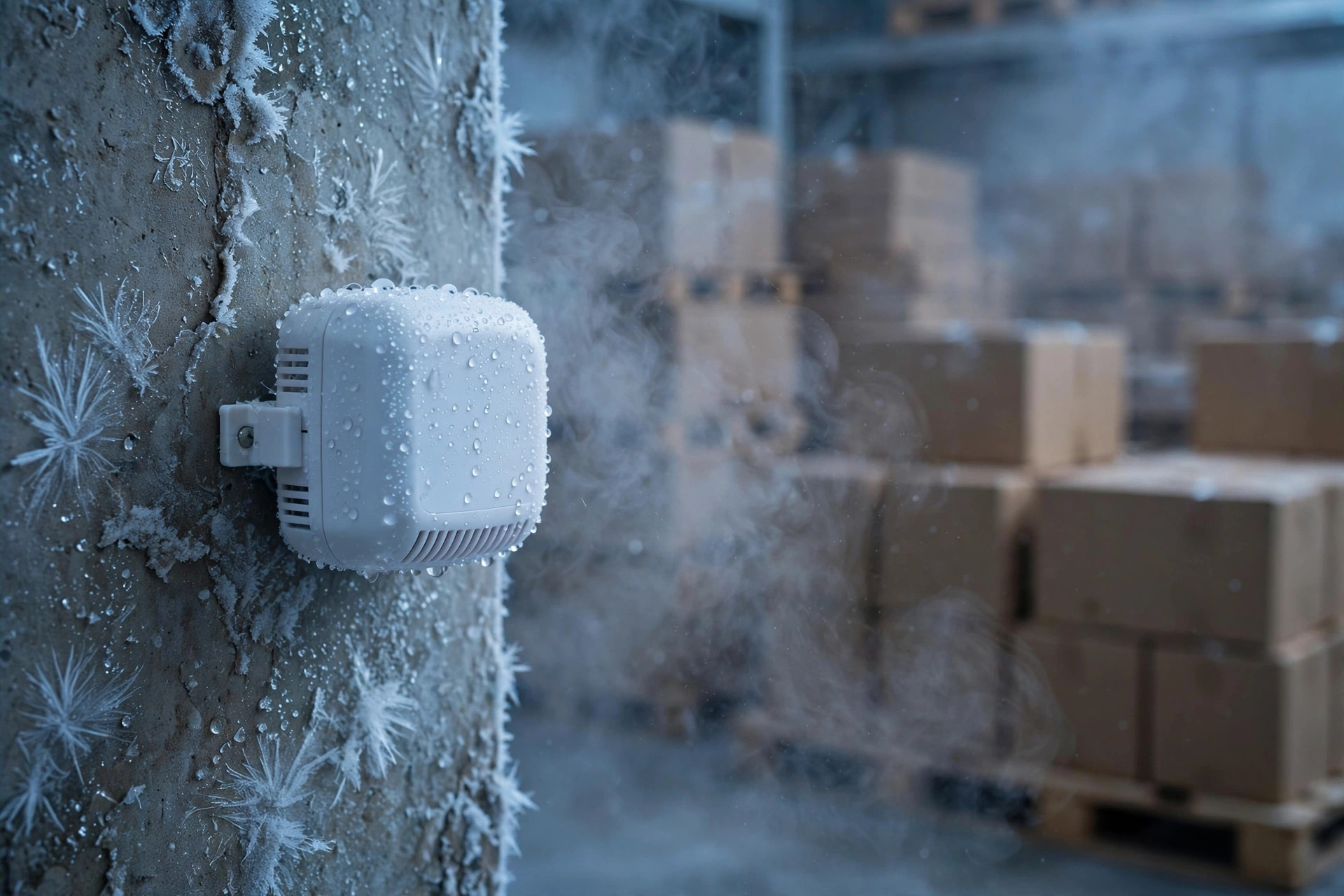
Six, log. A temperature-humidity data logger is non-negotiable — what the importer wants to see isn't your verbal promise, it's months of continuous curves. Set alarm thresholds; if it goes out of range, your phone buzzes, and yes, you get up at 3 a.m. to check.
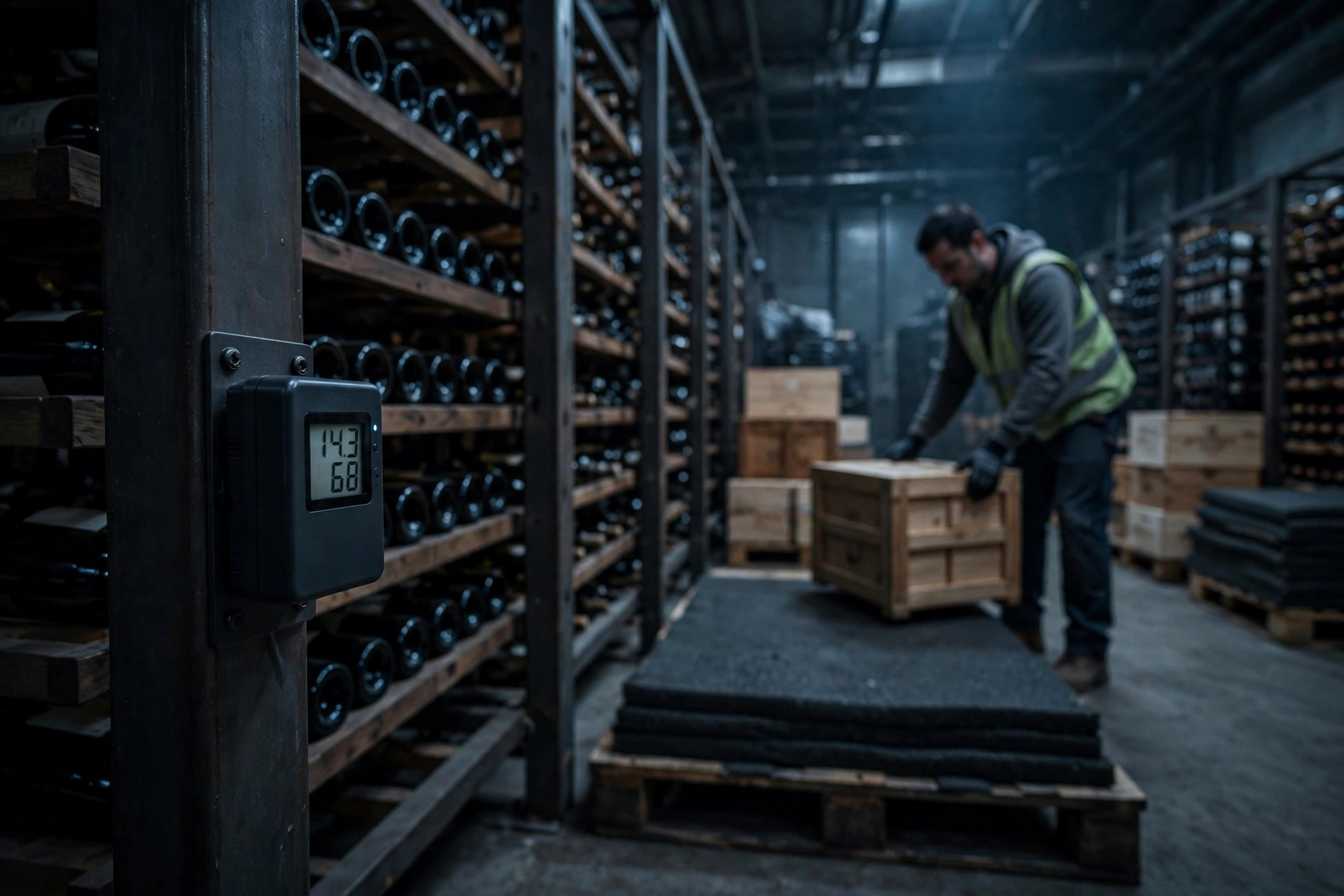
The retrofit was done last August; my friend's 400 cases moved in that September and stayed four months. On handover day I exported the logs and sent him the curves — flat as a healthy heartbeat. He renewed for next year on the spot. "Ma," he said, "you small guys actually take this seriously."
The daily checklist, and what it takes to win wine clients
The retrofit isn't "set and forget" — someone has to watch it. My checklist is taped to the door:
- Daily: glance at the logger curves for abnormal jumps;
- Weekly: check the humidifier water level, clean the filter;
- Monthly: export and archive the data, send the importer a copy;
- Quarterly: recalibrate the temperature-humidity probes;
- Emergencies: power outage or equipment failure — have a backup relocation plan ready within two hours. Line up the fallback before trouble hits.
People ask me: do you need some special certification to store wine? As far as I know, there's no mandatory "wine warehouse certification" where I operate. What importers actually check is four things: continuous temperature-humidity records, a written SOP, insurance and compensation terms, and a dedicated zone with dedicated handling. Imported wine touching bonded storage or food-business licensing is a separate regulatory matter — check your local rules first.
One last honest word: big companies have their playbook — integrated climate units, full building automation, money solves everything. We small warehouses can't play that game, and we don't need to. The importer doesn't care how expensive your equipment is; he cares that his wine sleeps soundly at your place. Hold the four numbers, show the records — that beats any advertising.
Small warehouses have their own way to survive.
By Xiao Ma, Small Warehouse Owner