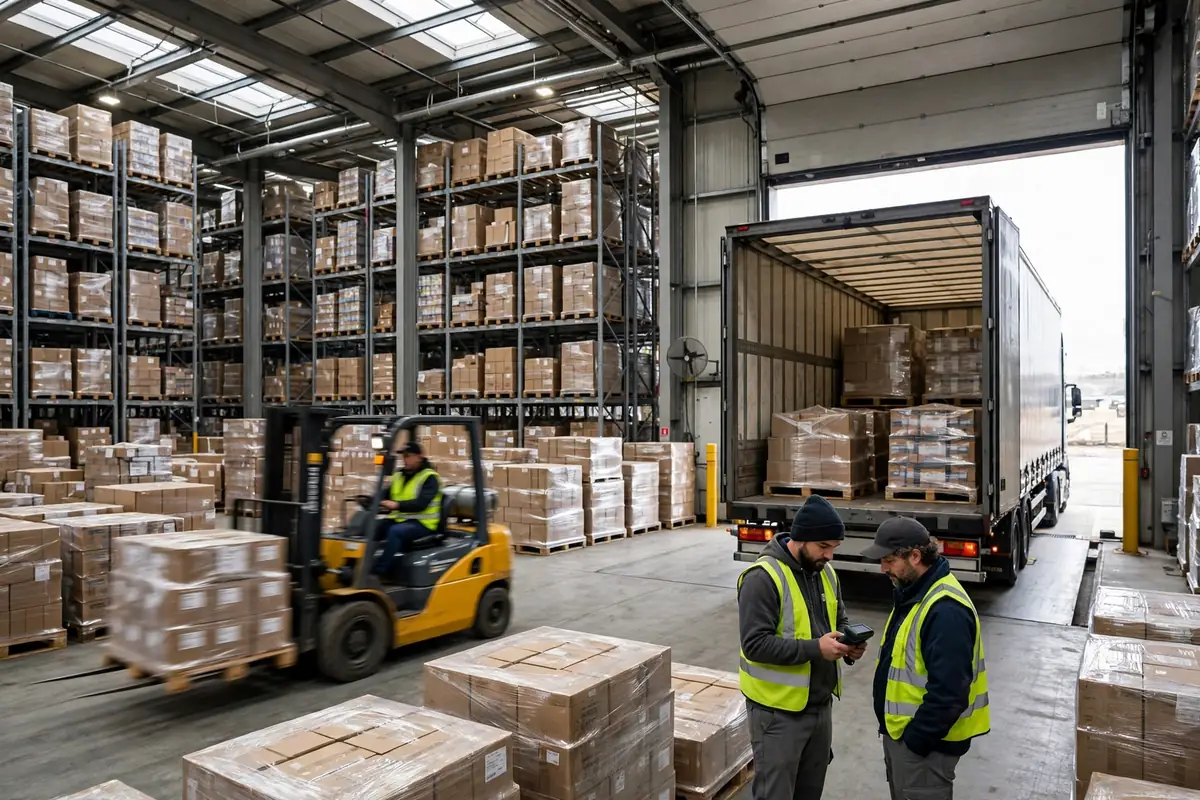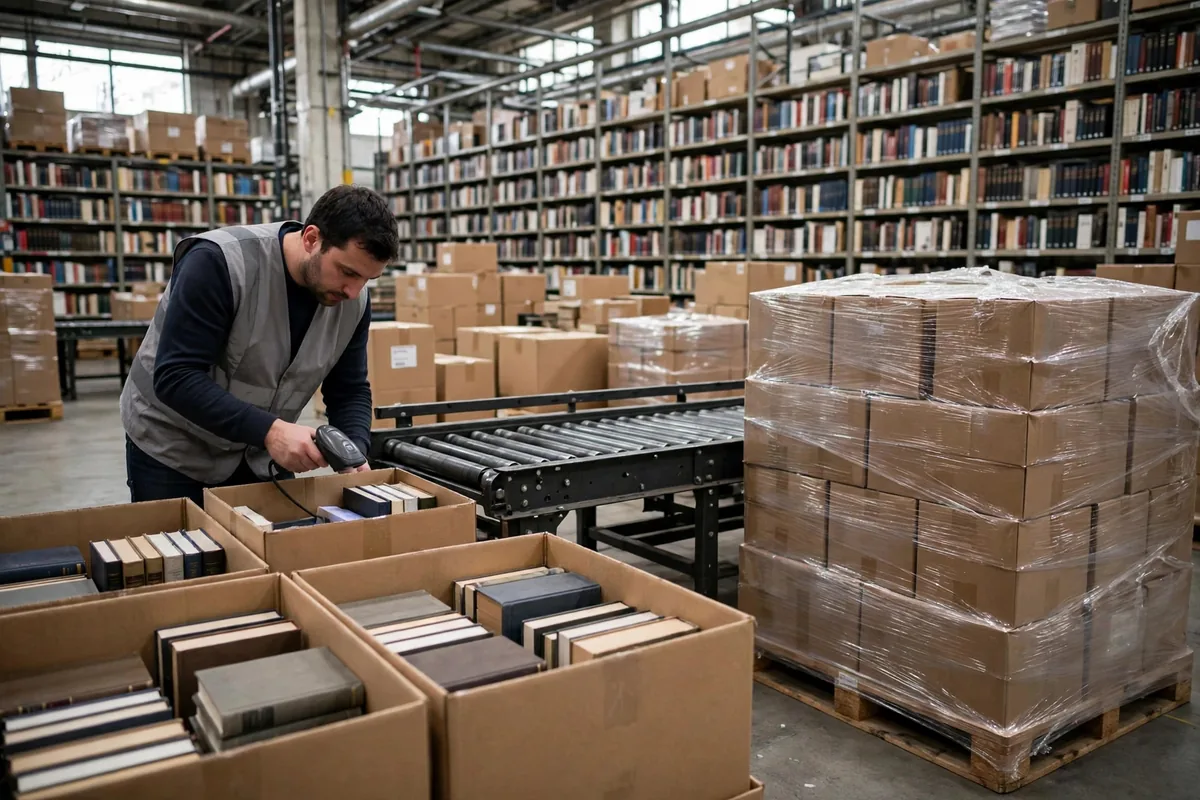
Here is the short version: transferring books between warehouses is only half done when the truck leaves. What decides whether those books can actually be sold is what happens after arrival: counting every copy, sorting out in-transit variances, putting stock away, and correcting the numbers in the system. The quantity on the transfer order is only "in transit" until the receiving warehouse has physically counted the books, cleared the in-transit balance, and added the stock to available inventory. Most inventory mismatches I have seen in book warehouses were born in that half hour to two hours after the truck arrived.
Books are not ordinary goods. The same title in paperback, hardcover, revised edition, or boxed set carries a different ISBN each time. ISBN-13 has been the standard since 2007: 13 digits, a 978 or 979 prefix, and a final check digit calculated from the other twelve. Scanning checks the ISBN, not the title. Two identical-looking stacks can be two editions, two prices, and two inventory records. Receiving a book transfer without checking ISBNs is barely receiving at all.
After Transferring Books Between Warehouses, Do These Three Things First
Do not rush to unload. Run three steps in order: paperwork, carton count, and sample opening.
Start with the paperwork: the transfer order, the carrier's delivery note, and the shipping warehouse's packing list. Total cartons, total copies, and the ISBN breakdown must match across all three before unloading starts. Note any mismatch now, not after the truck is empty. The quantity on the transfer order means "the shipping warehouse says it sent this many." That is not the same as "the receiving warehouse received this many." In the system, those are two different fields, and mixing them up is how trouble starts.
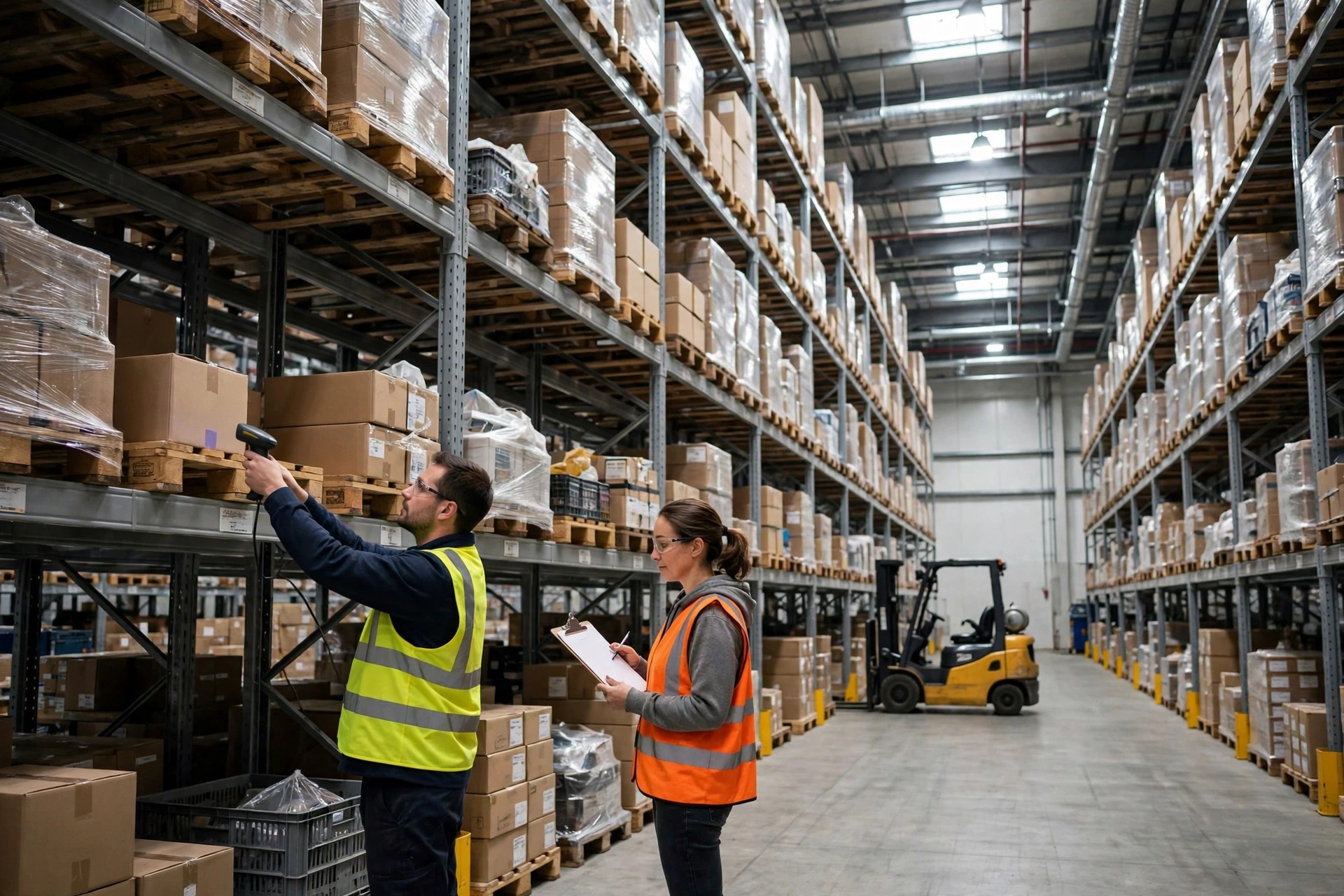
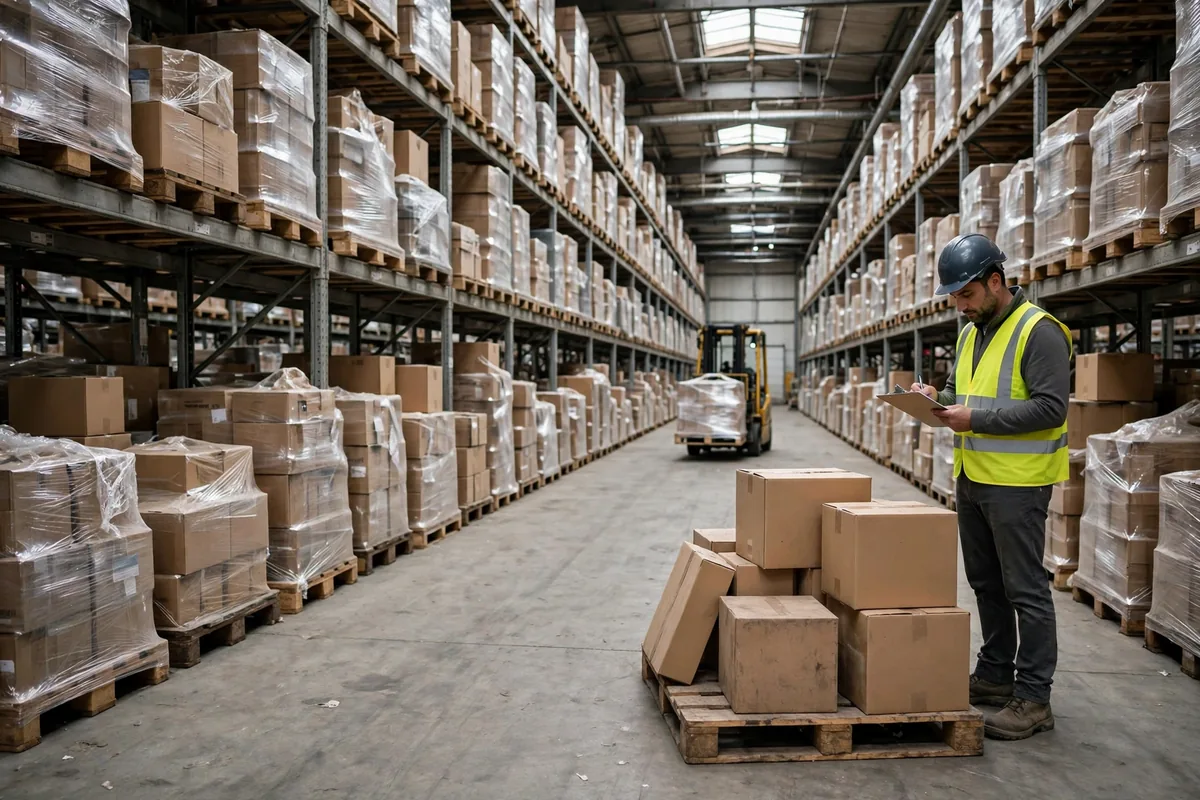
Next, count cartons. Scan carton labels and count boxes without opening them. This step answers one question: how many cartons came off the truck, and how does that compare with the paperwork. Cartons with torn wrapping, broken tape, or unreadable labels go to one side. Photograph them before opening, not after tearing them open.
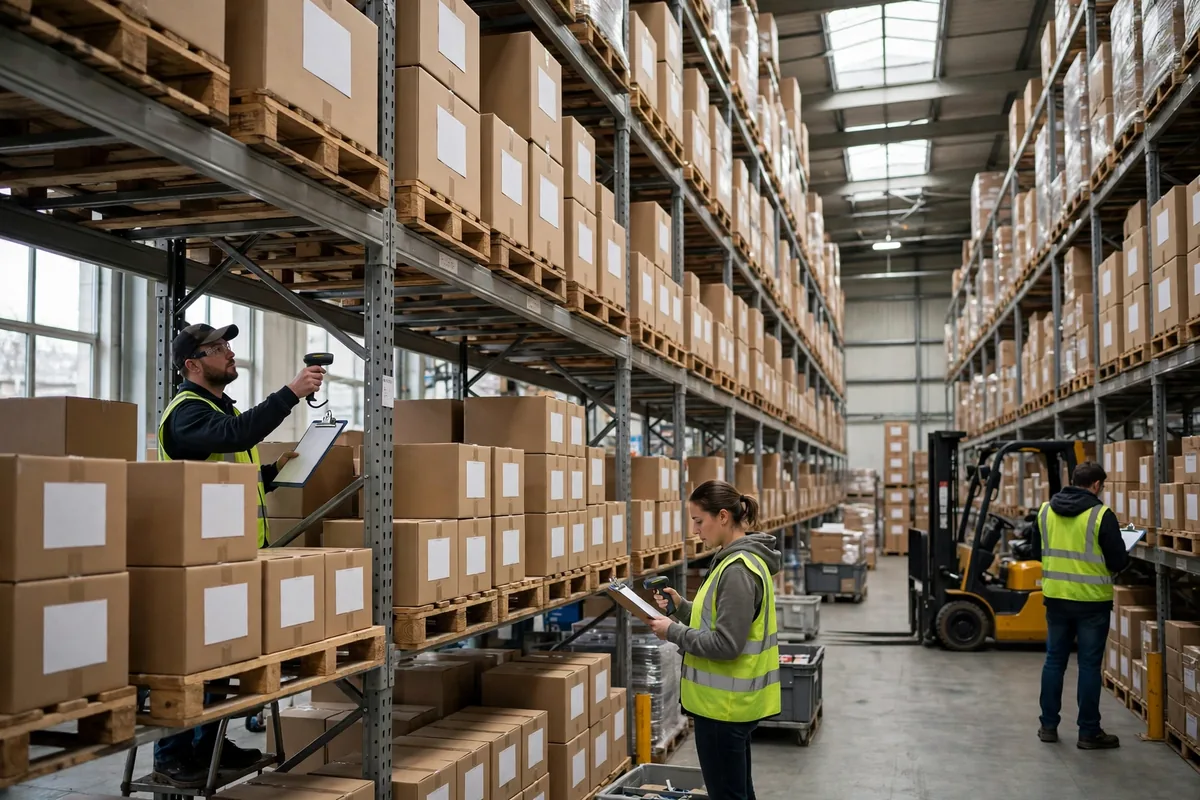
Then open and sample-check: open cartons by ISBN, count copies, and scan ISBNs to confirm the edition. How much to sample depends on the shipment. For a fixed lane with a familiar shipping warehouse, open 10% to 20% of cartons. For a new lane, a first-time shipping warehouse, or corrected paperwork, check everything. If one carton of an ISBN turns up wrong, open every carton of that ISBN. Do not gamble.
I watched this play out at a book distributor, and the figures below are an illustrative example adapted from a real project. In October 2024, a Wuhan warehouse transferred 12,000 textbooks to Guangzhou in 400 cartons. Guangzhou counted 400 cartons, signed, cleared the in-transit balance, and added 12,000 copies to available stock. Three days later a store order came in and the picker found one ISBN short by 47 copies. Tracing back, the shipping warehouse had loaded two cartons into the wrong transfer. Guangzhou had counted cartons but never opened them to check ISBNs. I have seen this exact failure three times, and the script is always the same: receiving skips the opening check to save time, the variance surfaces three days later, the truck is long gone, and nobody can say whose fault it is anymore.
In-Transit Variances After Transferring Books Between Warehouses Come in Three Types
Variances at receiving are normal. What matters is how you handle them: the three types need three different paths, never lumped together under "put it away and sort it out later."
Quantity variances are the most common: short or over. When short, check three places: the shipping warehouse's packing records, the carrier's handover note, and your own count records. If the three do not agree, raise a variance ticket in the system and freeze that ISBN so pickers cannot pull the disputed stock. Overages need even more care: extra books usually belong to another transfer, and putting them away means swallowing someone else's inventory.
Edition mix-ups are the sneakiest: same title, different ISBN. A hardcover slipped into a paperback carton is invisible from the outside; only scanning the ISBN catches it. When you find one, isolate the whole carton, raise a separate variance ticket, and ask the shipping warehouse to confirm whether the books were shipped wrong or the transfer order was built wrong. For the pre-shipment reconciliation logic, see the guide on multi-warehouse transfer inventory reconciliation and stockout prevention. When both warehouses reconcile with the same method, mix-ups drop sharply.
Damage and condition downgrades get overlooked most often: bumped corners, scratched covers, water-warped pages. Books sell on condition. The same ISBN in new and lightly worn condition cannot share one bin and one sellable quantity. Damaged copies go to a hold area, get photographed for evidence, and wait for operations to decide pricing and disposal. The receiver should never decide alone that a copy is still sellable.
My rule for closing all three types is 48 hours. A variance ticket nobody follows up on leaves in-transit stock hanging in the system, and the longer it hangs, the harder it is to trace. Reconciling inventory before shipment and checking it again after arrival are one closed loop, and the multi-warehouse transfer inventory reconciliation and stockout prevention guide covers the first half. This article covers the second.
Before Putaway, Four Numbers in the System Must Line Up
Putaway comes only after variances are handled. That order cannot be reversed. Putting stock away first means unverified numbers enter sellable inventory, pickers come up short, customer service explains the shortfall, and the cost piles up downstream.
Putaway has its own rules. Shelve by ISBN. Keep different editions of the same title in separate bins, not stacked together to save space. Fast movers go near picking, slow movers deeper in. That is not advanced theory, just fewer steps walked. Loose copies from opened cartons stay separate from full-carton stock, or cycle counts turn into a mess.
Four things in the system must line up before anyone clicks "confirm receipt":
- In-transit quantity goes to zero on the transfer order. No leftover tail, or the system keeps thinking the books are still on the road.
- Available inventory goes up by the actual received quantity, not the planned quantity. The received number is the real one.
- Bin stock is written correctly: the received quantity of each ISBN goes into its own bin, not another edition's bin.
- The transfer order closes only after the whole order is received and variance tickets are raised. Left open for months, it makes in-transit reports permanently wrong.
A quick calculation shows what this is worth; the figures below are an illustrative example. Take a transfer of 12,000 copies at an assumed average price of 38 yuan: the shipment is worth 456,000 yuan. If receiving misses a 1% variance, 120 copies, that is 4,560 yuan. That money does not vanish. It turns into three costs: cancelled store orders, customer service hours, and the labour of digging through discrepancies at the next cycle count. The second kind of loss is worse: an unnoticed edition mix-up, hardcovers sold at paperback prices, 20 to 30 yuan per copy, means 2,000 to 3,000 yuan gone on 100 copies. Spending 40 extra minutes opening cartons and checking ISBNs saves days of labour and arguments later. I run this calculation with the client on every go-live eve checklist.
The Mistake I Have Seen Three Times: Five Ways Book Transfers Go Wrong After Arrival
Here is a closing checklist from the last page of the go-live eve checklist I keep for every book warehouse.
- Counting cartons but never opening them: a carton count cannot replace ISBN checks, and edition mix-ups are only caught by opening boxes.
- Putting stock away before reconciling: reverse the order and unverified numbers enter sellable inventory, with stockouts and mispicks together.
- Shelving damaged copies as new: worn copies mixed with new stock hand customers a reason to return the book, written on the bent corner.
- Raising a variance ticket nobody follows up: close it within 48 hours. After a week, the carrier's and shipping warehouse's records no longer line up either.
- Never closing the transfer order: in-transit balances keep piling up, and three months later the in-transit report has nothing to do with reality. No cycle count saves it.
A book transfer between warehouses may take only a day on the road. The real work of transferring books between warehouses happens in the two hours after arrival. Paperwork, carton count, ISBN check, variance tickets, putaway order: do those five in sequence and the books have truly arrived. When the transfer order goes out, do not celebrate yet. Wait until receiving clicks confirm receipt, then call the job done.
By Lin Xiao, WMS Implementation Consultant