Let me be honest up front: I don't own a WES. A WES — a warehouse execution system, the real-time traffic cop that decides when to release picking waves, how to interleave replenishment with picking, and where to send people and equipment second by second — costs more than my entire warehouse is worth. The big players buy those systems for seven figures and pair them with robots.
Me? I run a 3,000-square-meter warehouse with 12 people, plus 4 temps in peak season. The enterprise playbook is not for us. We couldn't afford it, and frankly we couldn't feed it either.
But here's the thing: the core question a WES answers every day is the same question I answer every day, except I answer it with a whiteboard, a walkie-talkie, and my supervisor's voice. When wave picking, replenishment, and cycle counting collide — who goes first? Get it wrong and your warehouse eats itself alive. I've got the scars to prove it.
The Day Replenishment and Picking Faced Off in Aisle 3
September 12, 2025. A Thursday. Absurd, but true.
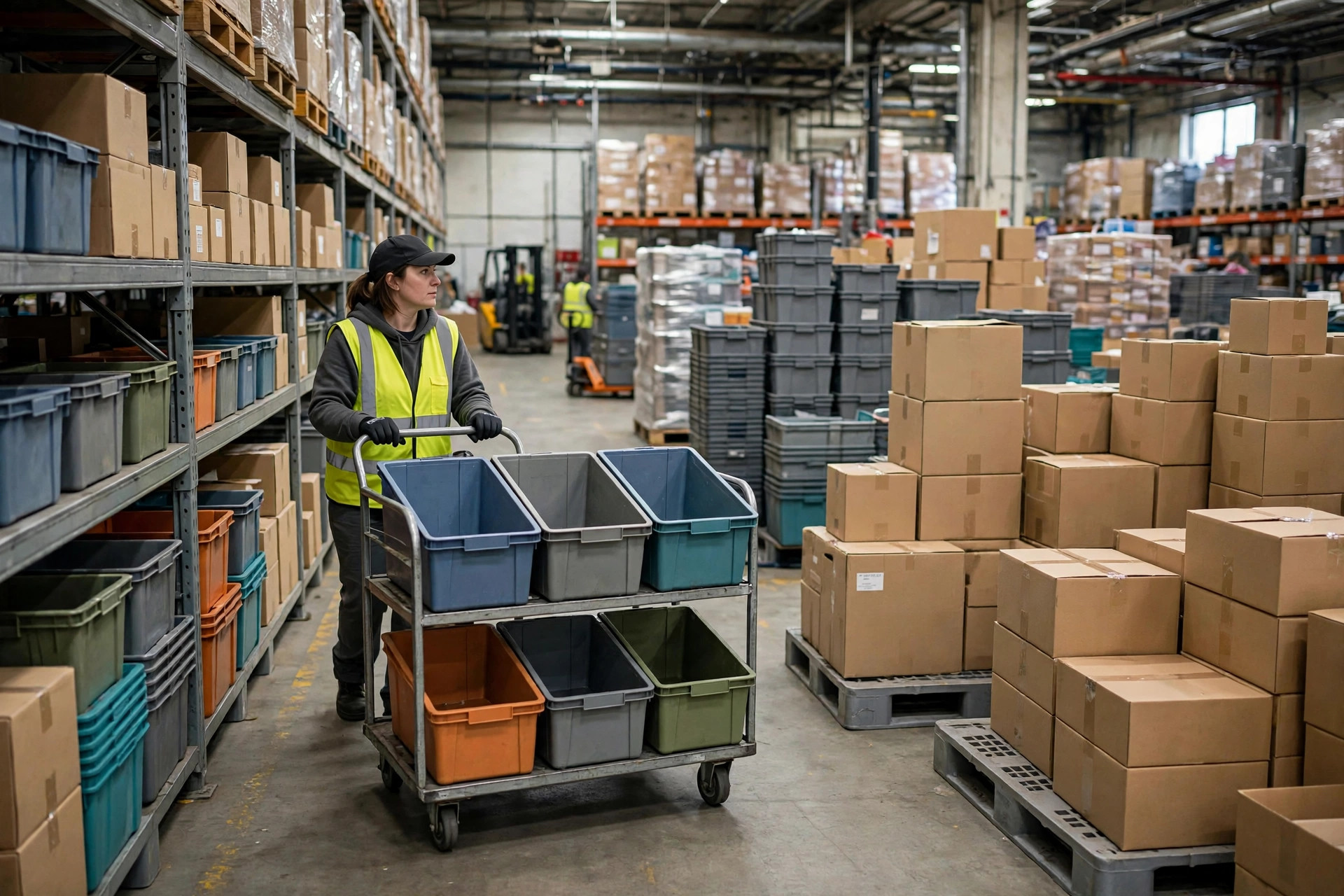
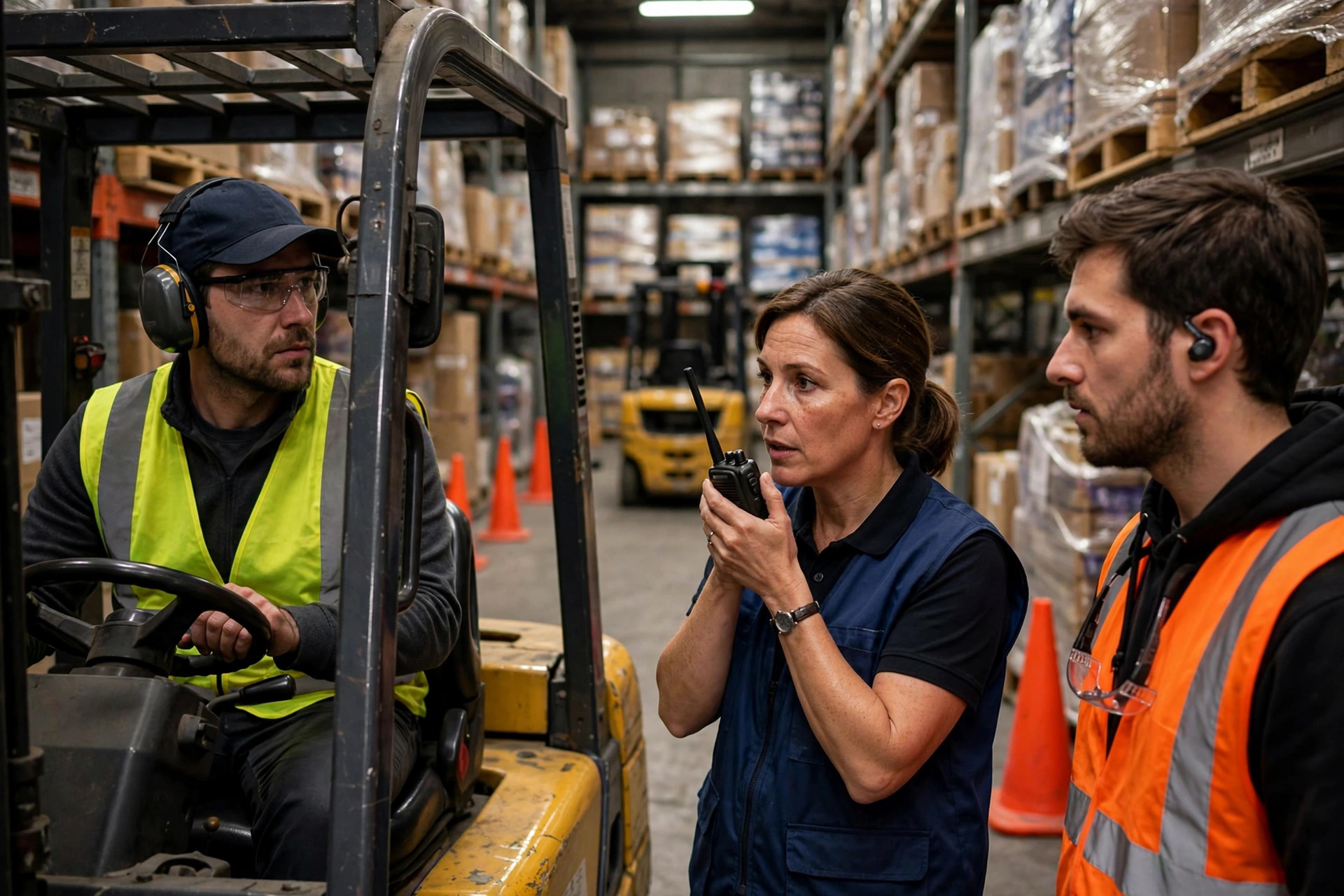
We were clearing the tail end of a promo, order volume running about 30% above normal. Carrier cutoff: 3:30 PM. At 1:40 PM, I'm helping at the packing bench when the walkie-talkie erupts. Xiao Li from replenishment is pushing a full pallet into aisle 3 to restock pick slot A3-05. Old Chen, our shift lead, tells him to wait: "We're mid-wave. You wedge that pallet in there and nobody's cart gets through."
Xiao Li pushes back: "A3-05 has 6 units left. This wave needs 40. If I don't restock, you'll all be standing around in twenty minutes."
"After the wave!" Chen says.
So the wave didn't stop — and A3-05 ran dry at 2:05 PM. Three pickers stood in the aisle with nothing to do while Xiao Li's pallet sat stuck at the aisle entrance, blocked by the very wave it was trying to save. Forty minutes of chaos to recover. Sixty-two parcels missed the 3:30 cutoff. Next morning, customer service drowned in "where's my order" messages, and we had 9 cancellations.
The postmortem taught me one thing: we didn't lack workers, we lacked a rulebook for who yields to whom. Both people were doing legitimate work. Without priority rules, legitimate work becomes internal friction. A WES solves this with real-time orchestration and task interleaving — making sure replenishment and picking never fight over the same aisle. We can't buy that. But we can steal the logic: write the rules down.
Our Low-Tech Fix: One Priority Table, Memorized by Everyone
The next day I sat Chen and Li down and drew a table on a whiteboard by the picking zone entrance. That table is now our warehouse constitution. New hires memorize it on day one.
| Time Window | Priority (High to Low) | How We Actually Do It |
|---|---|---|
| 2 hours before cutoff (crunch time) | Wave picking > Replenishment > Cycle counts | Replenish only slots about to run dry; everything else waits; all counting stops |
| Normal operating hours | Wave picking = Replenishment > Cycle counts | Pickers and replenishers use different aisles; any slot below its safety level triggers an automatic replenishment overtake |
| After cutoff, idle hours | Replenishment > Cycle counts > Wave wrap-up | Restock tomorrow's wave needs first, then put away stray returns |
| Night shift / last hour before close | Cycle counts > Everything | Full quiet count; nobody touches the racks |
A few rules in there were paid for in cash, so let me unpack them:
First, waves win before cutoff — but a stockout warning overrules everything. That's the direct lesson of September 12. Our rule now: when a pick slot's inventory drops to 1.2x the current wave's demand, the replenisher can call a "stockout alert" and pickers must clear half the aisle. It's article one of the constitution. Block it and you buy bubble tea for the whole shift.
Second, keep waves small and leave breathing room. We used to release 120 orders per wave. Carts queued up in the aisles and replenishment couldn't get in at all. Now it's 30–40 orders per wave, with a forced 20-minute replenishment window between waves. In WES-speak that's "wave release pacing." We just call it "catching our breath." Stockout downtime went from 3–4 times a week to basically zero.
Third, replenish in idle hours, count at night, no exceptions. Replenishment dies when it's done "whenever someone remembers." Every day after the 4:00 PM cutoff, Chen pulls a "tomorrow's projected shortfall" list, and Li's crew has everything restocked at pick slots by 5:00 PM. Then 9:00–10:00 PM, the whole floor goes quiet for cycle counts — 40 to 60 locations a night, non-negotiable.
The Counterintuitive One: Cycle Counts Look Optional Until They Detonate
Here's a story to keep fellow small-warehouse owners up at night.
March 2026. We skipped proper cycle counting for three straight weeks. The excuse was perfectly reasonable: spring orders were up 40%, every hand was on waves. Counting? That doesn't ship anything. It can wait.
On March 28 it detonated. A hot SKU showed 480 units on the books. Actual units on the shelf: zero. Where did they go? A late-February replenishment had stashed them behind a similar SKU in the neighboring aisle, and three weeks without a single count meant the system kept believing the lie. Customer service sold 80+ orders against phantom stock. We refunded every one, paid expedited shipping to keep the one-star reviews away, and took a direct hit of over $3,000. The indirect damage — listing weight, review scores — is unmeasurable.
That's the counterintuitive judgment I want to leave you with: waves and replenishment are acute conditions — they hurt loudly when they flare up. Cycle counting is chronic. No symptoms, until it's terminal.
Big warehouses with a WES use "opportunistic counting" — a picker notices a quantity mismatch mid-pick and counts on the spot. We can't automate that, but we can copy the behavior: any picker who spots a book-to-physical mismatch snaps a photo, posts it in the group chat, and it gets reconciled the same day, owner assigned. One crude habit took our inventory accuracy from 91% to 97.5%. Don't laugh at those 6.5 points — last peak season we had zero stockout cancellations.
Three Pieces of Advice for Warehouses Like Mine
- Write the rules before chasing efficiency. Don't start by copying enterprise wave algorithms. Start by answering "who yields when two tasks collide." One whiteboard, one table, memorized by everyone — that's your human-powered WES. Unclear rules plus more people just means more chaos.
- Give the stockout warning supreme authority. Replenishment is not a second-class citizen; it's the blood supply of the wave. Ten minutes of a dry pick slot costs you the labor of the entire wave. Hand your replenisher a sword they can draw over anything when it matters.
- Never let counting be "when we have time." One fixed hour a day, 40–60 locations, rotating through ABC classes. Inventory discrepancies compound like interest — the longer you wait, the bigger the blast.
One last honest word: strip away the seven-figure price tag and the robots, and a WES is really just one sentence — the right task, to the right person, at the right time, without collisions. The big guys buy software to live that sentence. We do it with a whiteboard and get 80% of the way there. The other 20%? That's automation money, and small warehouses like ours can't burn cash like that.
Which is fine. Small warehouses have their own way of surviving.
By Xiao Ma, Small Warehouse Owner