Let me give you the answer first, then the scars behind it: the WMS is the general, the WES is the chief of staff, and the WCS is the frontline captain. The WMS owns inventory records and orders — it decides what ships. The WES orchestrates tasks — it decides in what order and assigned to whom. The WCS controls equipment in real time — it decides whether this motor runs right now. Each layer owns its slice. The lower you go, the faster it thinks; the higher you go, the more business it understands.
Strip away the marketing decks, and the real difference between WCS vs WES vs WMS is timescale: the WMS thinks in hours and days, the WES in minutes, the WCS in milliseconds. Scramble the chain of command, and the warehouse scrambles with it.
I've seen too many warehouses with two commanders
2019, I was advising an e-commerce fulfillment warehouse on the US East Coast. They'd just installed a cross-belt sorter. The WMS came from a big-name vendor; the WCS came bundled with the sorter's integrator. The fight broke out over chute assignment: the WMS assigned chutes by order wave and handed the plan to the WCS. The WCS had its own optimization logic, decided the WMS's plan "wasn't smooth enough," and quietly re-sorted it.
The result? The WMS believed order A's cartons were at chute 12. The WCS had moved them to chute 17. Operators walked to chute 12 per the WMS instructions and found nothing. The system said "sorted"; the goods said otherwise. For two straight weeks, that warehouse's mis-sort rate tripled, and people spent their days hunting for cartons in the chute field by hand. The fix was brutally simple: disable the WCS's autonomous re-planning. Chute assignment authority went solely to the WMS. The WCS executes, period.
There's two sides to this story. The technical side: two systems can both "compute," but only one gets the final say. The business side: the WMS vendor and the equipment integrator spent weeks blaming each other — "your equipment rewrote my plan" versus "your instructions were unreasonable." The warehouse owner sat through six alignment meetings. Remember this iron rule: for any single decision point, exactly one system holds final authority.
Where the three command boundaries actually sit
Plenty of articles draw WMS/WES/WCS as a pretty pyramid. On the floor, the boundaries blur. Let me draw them by "who has the final say":
Layer 1, WMS: owns the what. Inventory records, orders, wave strategy, slot assignment, billing — that's WMS territory. It doesn't care what speed conveyor 3 is running at. It cares whether today's shipments go out. Decision cycle: minutes to hours.
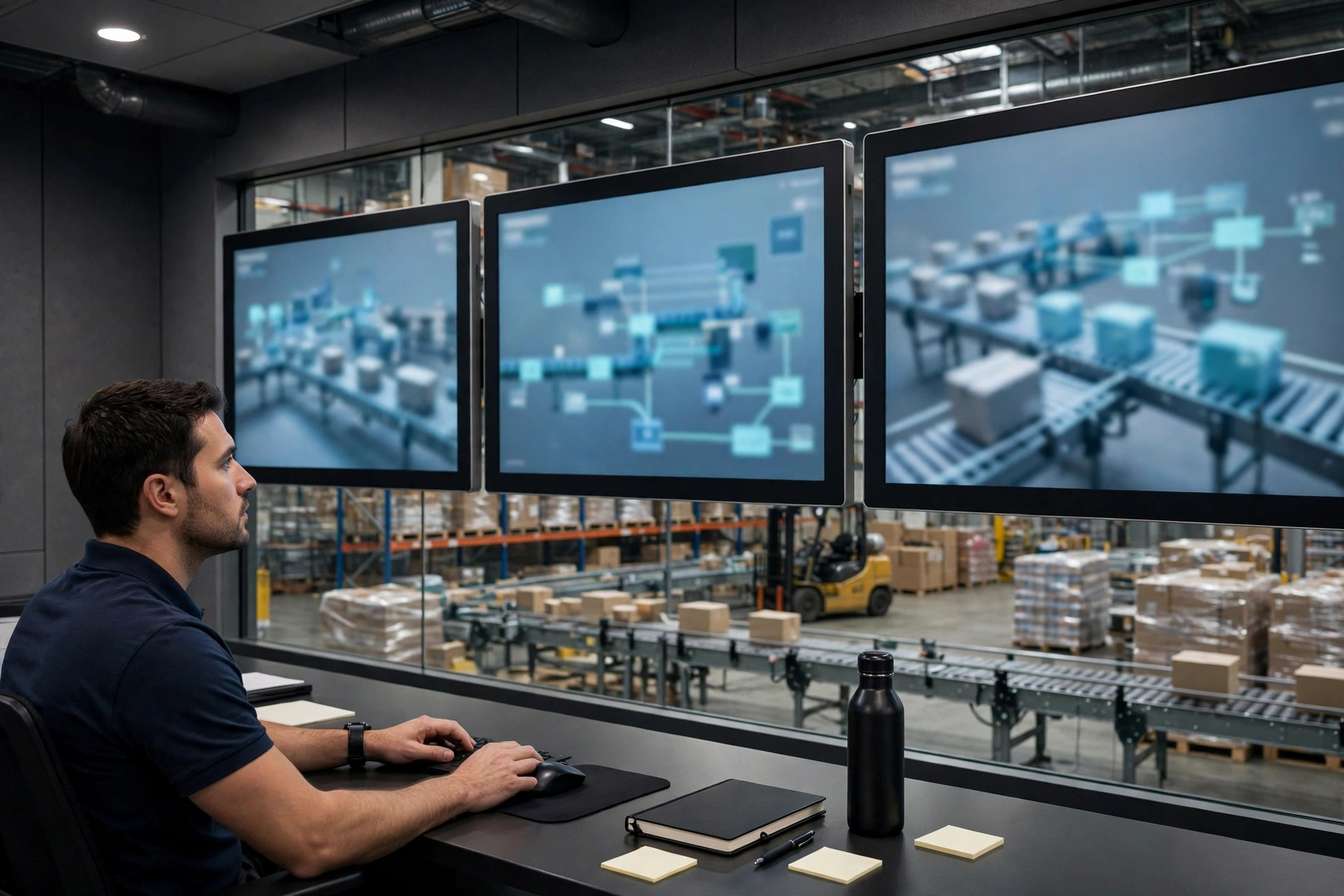
Layer 2, WES: owns the sequencing and assignment. This is the most misunderstood layer. The warehouse execution system's core job is orchestration: 1,000 pick tasks, 20 pickers, 8 AMRs — what combination runs fastest? When do waves release? Do replenishment tasks cut the line? The WES understands a bit of business (order priorities) and a bit of equipment (which AMR is busy), making it the middleman.
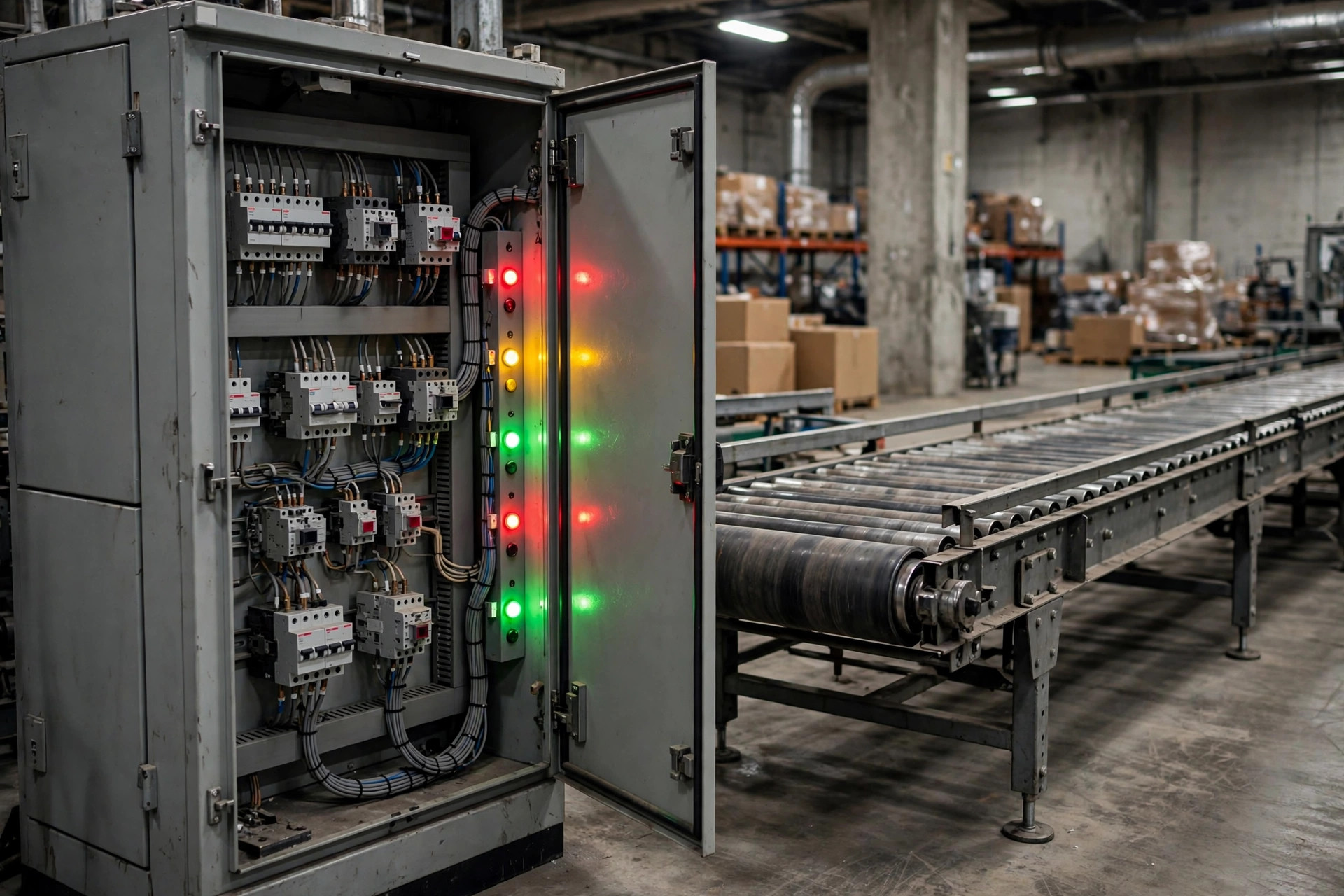
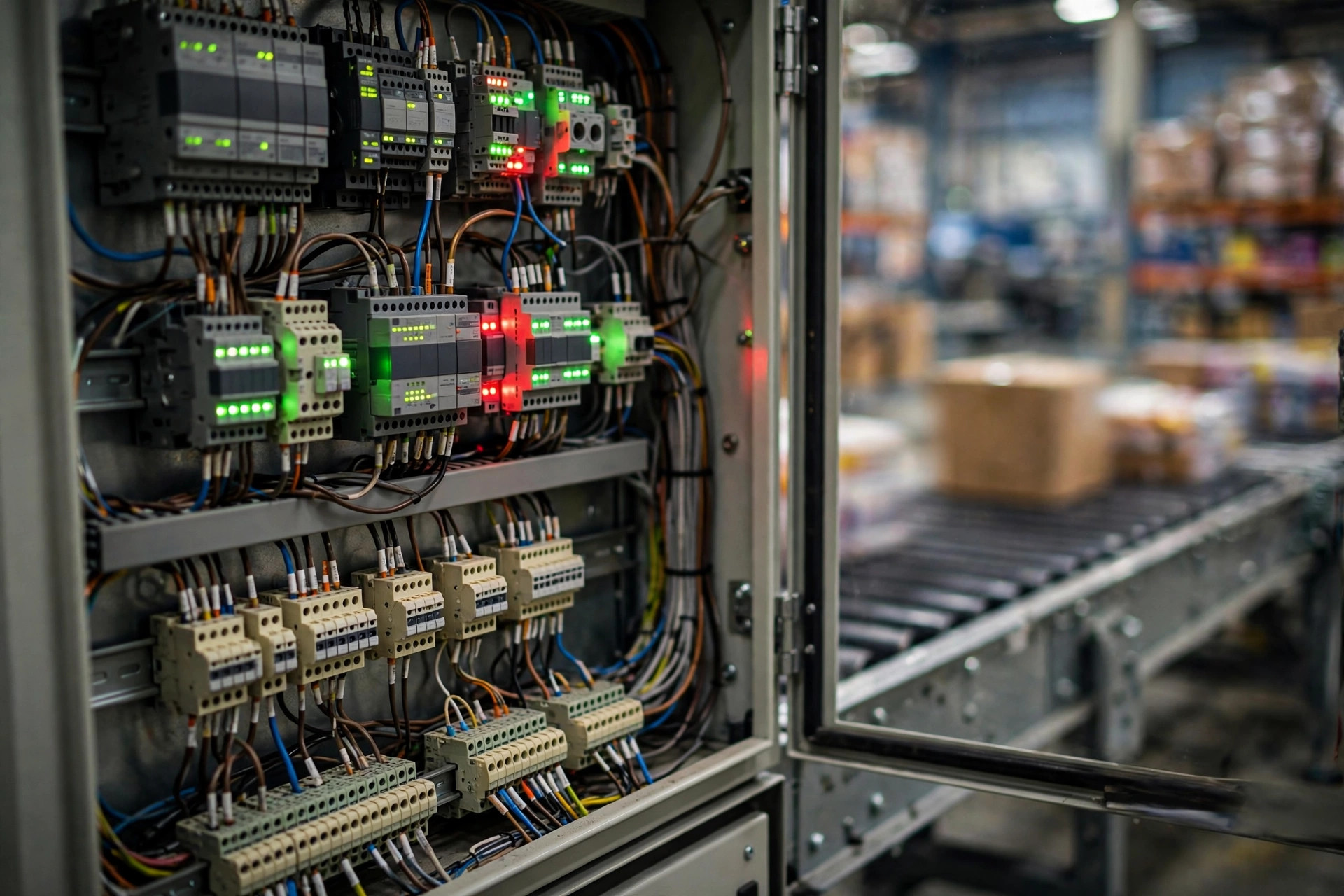
Layer 3, WCS: owns the motion. Conveyor start/stop, lift positioning, sorter divert actions, PLC signals — the WCS talks only to equipment, in milliseconds. It should never know "which customer's order this carton belongs to." It only knows "push the carton with this barcode to chute 17."
The unpopular truth: many warehouses don't need a WES at all
This will offend some vendors, but here it is: at least half the warehouses claiming to "run WES" get nothing real out of it.
A WES only earns its keep in one scenario: task complexity too high for the WMS to schedule, and equipment too diverse for the WCS to coordinate alone. In plain English — tens of thousands of SKUs, thousands of orders a day, multiple AMRs/AGVs plus conveyors plus sorters working together. At that scale, you genuinely need a chief of staff doing real-time orchestration.
But a 5,000-square-meter warehouse with one conveyor line and 20 pickers? The WMS's own wave management plus the WCS's equipment control is plenty. Forcing a WES in there adds a layer of interfaces, a new failure point, and another license fee for near-zero gain. I've watched integrators sell WES as "mandatory for automation," and the thing ends up as a relay station — forwarding WMS instructions verbatim, adding 200 milliseconds of latency.
The decision framework is three questions:
| Question | If yes | If no |
|---|---|---|
| 3+ equipment types that must coordinate? (e.g., AMRs + conveyors + sorter) | Consider WES | WMS + WCS is enough |
| Daily task volume clearly overwhelms manual scheduling / simple waves? | Consider WES | Skip it |
| Real need for live re-planning? (rush orders cutting in, auto re-route on equipment failure) | WES earns its keep | WES is decoration |
Two yeses out of three before you even talk WES. Otherwise, keep the money.
The three traps that bite during implementation
Trap one: no unified interface standard. The task format the WMS sends down and the status codes the WCS sends back were never aligned — tasks go missing daily after go-live. Fix: lock down sample interface messages before signing, written into the technical appendix. Verbal promises don't count.
Trap two: the WCS making business decisions it shouldn't. Some equipment vendors ship WCS with "smart scheduling" enabled by default, quietly overriding WMS instructions — exactly the chute story above. Fix: add a line to your go-live checklist — verify every autonomous optimization feature in the WCS, default all of them off, enable only when needed.
Trap three: buying all three layers from one vendor assuming it's seamless. One vendor's WMS+WES+WCS often turns out to be three acquired products bolted together, with uglier interfaces than best-of-breed. When selecting, don't look at the brand — check whether the three products share one engineering organization and have real joint deployment references.
One last line: system layers don't exist to look sophisticated. They exist so each layer does only what it's best at. A warehouse with a clear chain of command stays calm no matter how much equipment you add. A warehouse with a muddled one can start a two-generals war over a single conveyor. If you're the latter, don't add equipment — fix the chain of command first.
By Lao Mi, Supply Chain Veteran (20 yrs)