In the fall of 2023, I noticed a small but telling change in the proposal documents coming out of several logistics integrators: the chapter on the control layer was being written differently. For a decade, that chapter had a standard answer — hardware PLCs, pick one of three brands, with I/O counts, scan times, and redundancy configurations laid out in neat tables. Now, a single warehouse might call for three different answers at once: hard PLCs on the sortation loop, soft PLCs on the shuttle fleet, and a cloud-edge architecture for the cross-site data platform. The control layer has gone from a single-choice question to a multiple-choice one. Behind that shift sits a restructuring of the landscape itself — and to understand it, you start with the numbers.
The numbers: the fastest grower is not the incumbent base
According to Mordor Intelligence, the European PLC market was worth roughly $3.52 billion in 2024 and is projected to reach $4.14 billion by 2029, a CAGR of about 3.29%. The installed base remains enormous and keeps growing gently — that is the hardware PLC's fundamental picture: unshaken, but no longer the whole story.
The other half of the story sits on the software side. Dataintelo's PLC programming software report puts that segment at roughly $3.29 billion in 2025, growing to $6.71 billion by 2034 — a CAGR of 8.2%, well above the hardware base. One signal worth noting: Beckhoff, the company most associated with soft PLCs, is growing at about 15.3% a year, versus 7–9% for the traditional majors (same report, same methodology). A separate PLC market outlook carried by GlobeNewswire puts soft-PLC growth at roughly a 7.22% CAGR, driven directly by advances in hypervisor technology.
The share structure tells the same story from the other side: in programming-software terms, Siemens holds about 28.3%, Rockwell about 16.8%, and Schneider about 14.2% (Dataintelo). The top three still command over 60% combined — but the fastest growth belongs to the challengers. The classic early warning of a landscape shift is rarely the overnight collapse of the leader's share; it is the quiet redirection of where incremental investment flows. Right now, the increment is flowing toward the software-defined side.
Three architectures, each born of a different demand
The divergence starts on the demand side. Over the past five years, warehouse automation has produced three mutually conflicting requirements that no single architecture satisfies well — so the technology roadmap forked.
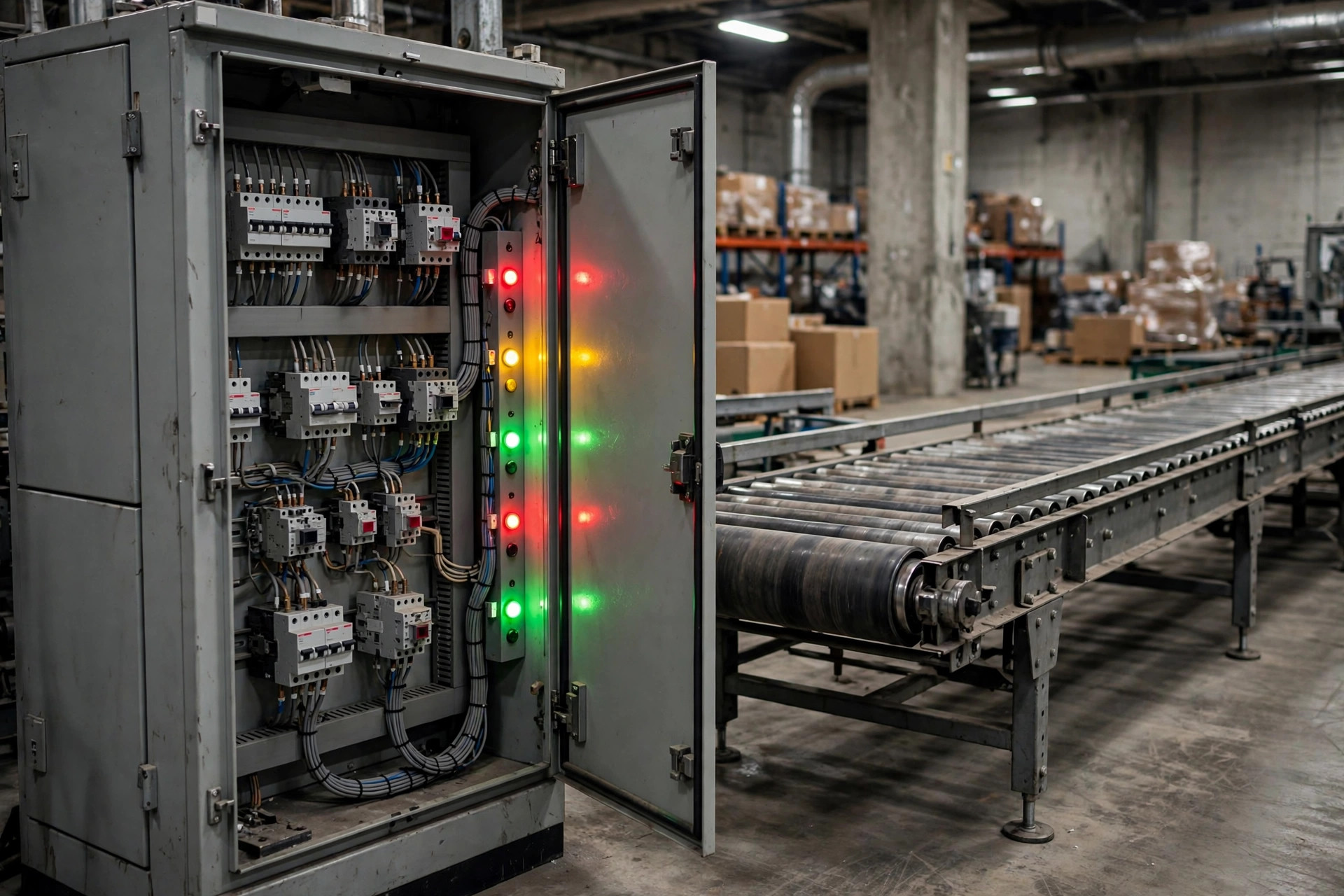
The first requirement is determinism. High-speed sorters, conveyor merges, and vertical lifts demand control commands delivered within milliseconds, with near-zero tolerance for jitter, and downtime measured in dollars per minute. This is the hard PLC's home turf: dedicated hardware, scan cycles typically in the 1–10 ms range (typical values; check vendors' latest datasheets), mature safety certification, and a deep global ecosystem for spares and maintenance. Its price is rigidity: adding an I/O point means adding a module, changing logic means a re-download, and getting data to the cloud usually means bolting on another gateway.
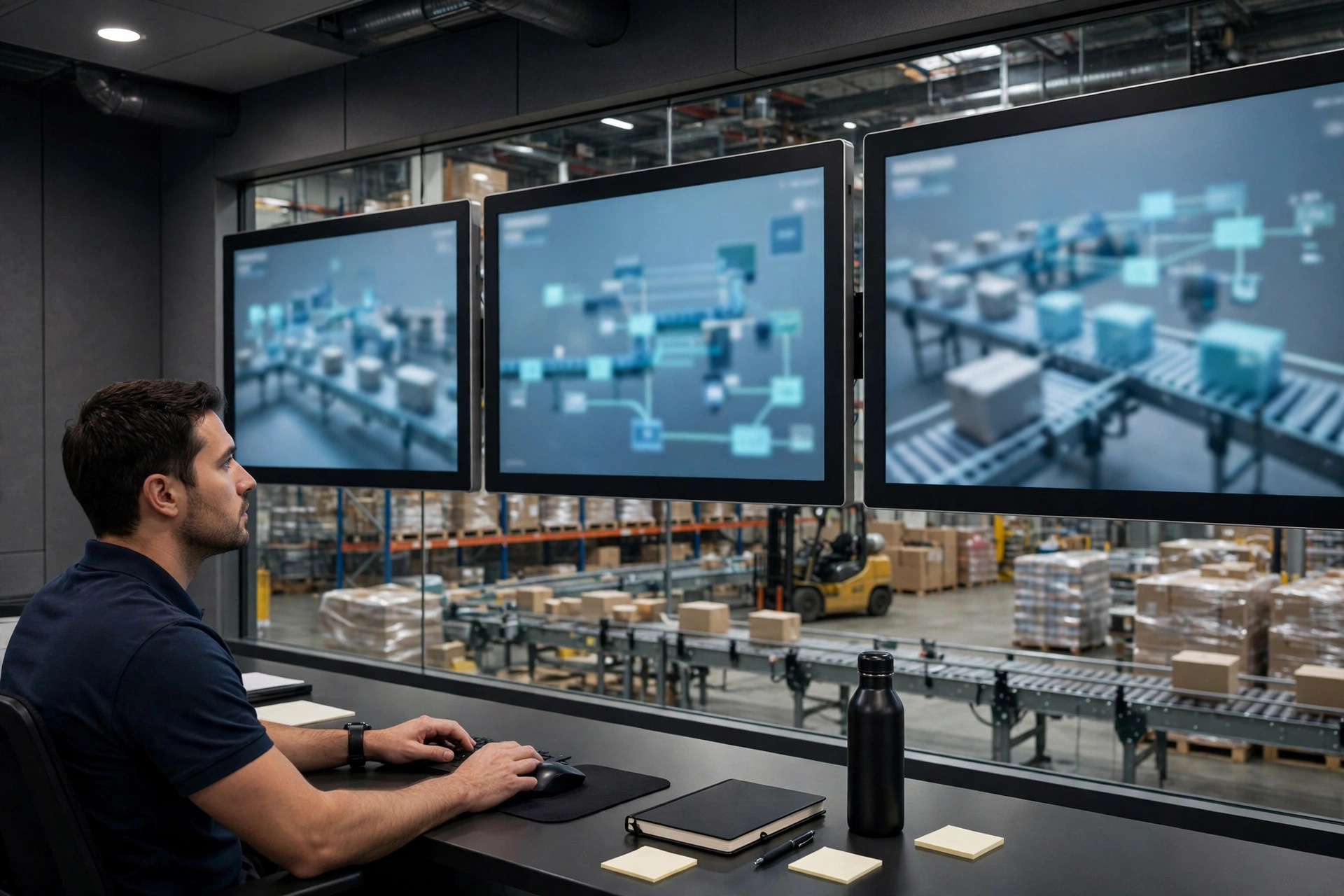
The second requirement is the speed of change. Four-way shuttles and AMR fleets compete on scheduling algorithms, and algorithms need rapid iteration. A soft PLC runs a real-time control kernel on standard industrial PCs or embedded computers, folding control logic, motion control, vision, and even the HMI into a single engineering project; changing requirements often means editing code, recompiling, and pushing an update — without touching a single wire. Real-time industrial Ethernet has pushed communication cycles down to the 50-microsecond range with synchronization accuracy around ±1 microsecond (per the relevant vendors' official technical documentation), so bus latency is no longer soft PLCs' bottleneck. Its price is talent: troubleshooting demands people who understand both control logic and operating systems, and real-time kernel tuning is not a skill every integrator has in-house.
The third requirement is cross-site data intelligence. For network 3PLs and parcel carriers, what really matters is not how fast one warehouse runs but whether wave planning, labor, and linehaul can be optimized across dozens of sites. Cloud-edge architectures decouple "execution" from "decision-making": the edge keeps a local real-time loop that runs autonomously even when disconnected, while the cloud handles cross-site optimization, model training, and digital twins. Its price is the highest architectural complexity — and the most demanding network and security design, because the threat model changes completely once control traffic touches a public network.
The trade-offs compress neatly into one table:
| Dimension | Hard PLC | Soft PLC | Cloud-Edge |
|---|---|---|---|
| Real-time determinism | Strongest, hard real-time in ms | Strong, depends on RT kernel tuning | Strong at execution layer, non-real-time at decision layer |
| Logic iteration speed | Slow, changes often touch hardware | Fast, software-defined, remote deploy | Fastest, cloud models evolve independently |
| Multi-site scaling | Weak, single-machine mindset | Medium, projects are replicable | Strong, built for cross-site |
| Upfront cost structure | Hardware-heavy | Software licenses + commodity hardware | Edge hardware + cloud + integration |
| Maintenance talent | Ladder-logic engineers, mature supply | Control + IT hybrid skills | OT + IT + security |
| Data capability | Weak, needs add-on gateways | Medium, native data interfaces | Strong, cloud-native aggregation |
| Typical fit | High-speed sortation, conveyor trunk lines | Shuttles, AMRs, new smart warehouses | Network 3PLs, parcel hub networks |
Two sites, one counter-intuitive judgment
In 2022, an automotive parts distribution center in Ohio serving an OEM assembly plant commissioned a new conveyor-sortation system with a control layer built on Rockwell's large PLC platform. The decision logic was blunt: the in-house maintenance team knew only ladder logic, downtime cost was counted by the minute, and the owner priced "determinism" far above "flexibility." Three years after go-live, the site has not suffered a single major control-layer failure. What this case really illustrates is the hard PLC's most underrated virtue — where determinism outweighs everything else, "boring" is itself the value proposition.
In 2024, an e-commerce fulfillment campus in eastern China (around 150,000 orders a day) chose a soft-PLC architecture for a new four-way-shuttle dense-storage system, folding control logic, scheduling algorithms, and vision-based verification into one engineering project. Two major wave-strategy changes ahead of the peak season were both delivered as software updates — no wiring touched, each with a downtime window held under two hours (per the integrator's account shared at an industry exchange). Consider the counterfactual: with hard PLCs, each major strategy change could have meant control-cabinet rework and a far longer commissioning window.
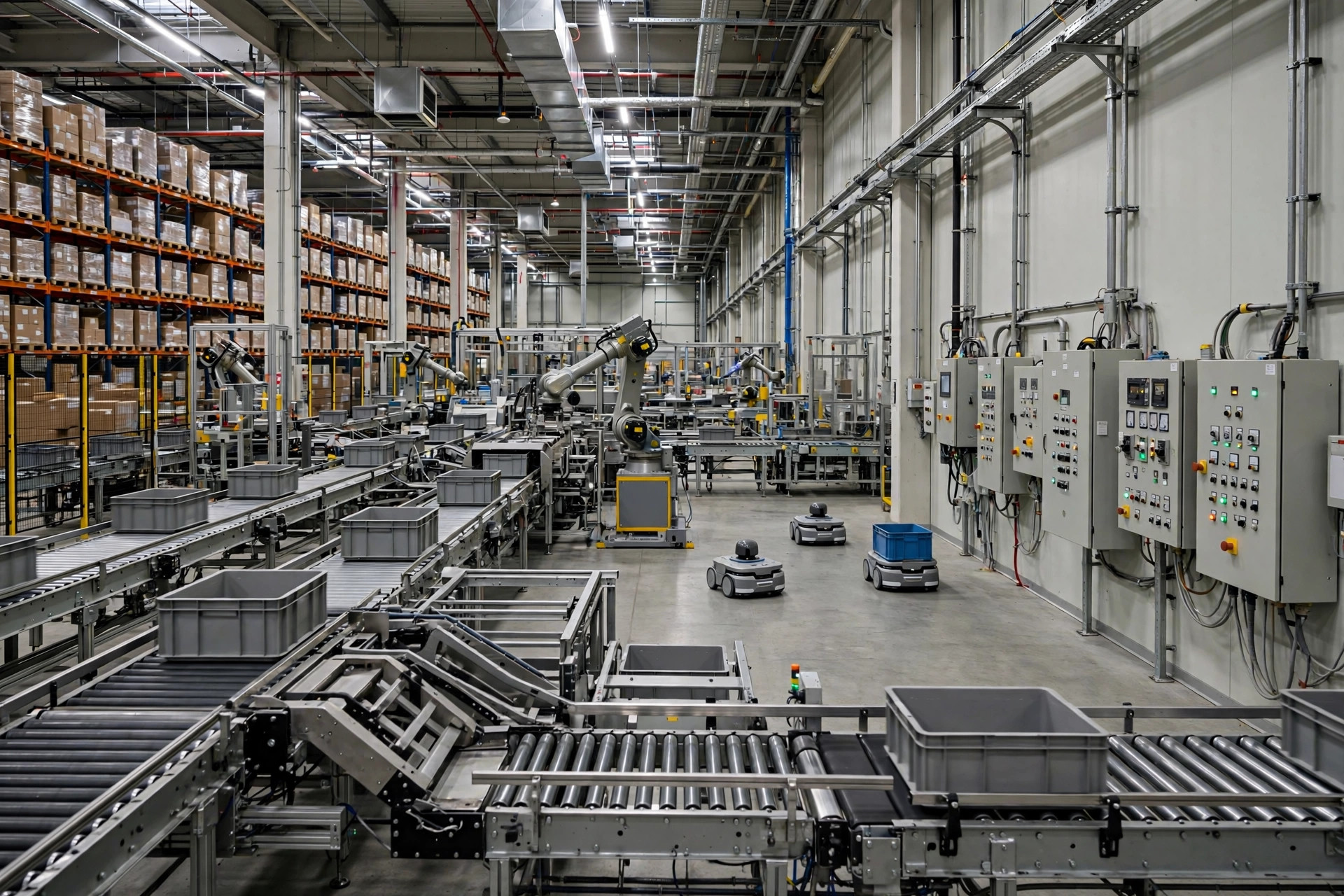
Yet the most popular narrative — "soft PLCs are replacing hard PLCs" — is probably wrong, or at least unsupported by the data. The hardware base is still growing at over 3%, and soft PLCs' growth advantage comes mostly from greenfield scenarios (new smart warehouses, AMR fleets, shuttle systems), not from ripping out existing sorter lines. The real structural change is not substitution but layering: hard PLCs hold the millisecond execution layer, soft PLCs absorb the fast-changing scheduling layer, and cloud-edge takes the cross-site data layer. The three increasingly resemble layers in a protocol stack — not a zero-sum fight to the death.
A second counter-intuitive judgment: the biggest cost of cloud-edge is not the cloud bill — it is organizational. Once "decision" and "execution" are decoupled, every incident starts with the question "is this an OT problem or an IT problem," and the traditional warehouse org chart has no interface for answering it. Technology migrations end up becoming organizational-capability migrations, and that is the part most easily underestimated at selection time.
Five years out: three timelines
Near term (2026–2027), soft-PLC penetration in greenfield projects keeps rising. Two pieces of evidence: the challengers' 15.3% annual growth showing where the increment flows, and the 8.2% CAGR of the PLC software market showing the software-defined tide. The hard-PLC base takes no damage in this phase, because the increment comes from new builds.
Mid term (2028–2030), cloud-edge could become the default for network 3PLs and parcel carriers. The reasoning is economic: past a certain network scale, the returns from cross-site optimization exceed the cost of architectural rework — and leading operators are validating that threshold one by one.
The one true long-term variable: whether the hardware PLC retreats into the role of "execution-layer commodity," the way relays sit in today's control cabinets — indispensable, but no longer deciding who wins the project. I will not call that one now, because it hinges on soft PLCs' failure-rate record in mega-projects over the next three years, and no public, comparable dataset for that exists yet.
One open question to close: as warehouse control logic behaves more and more like software, will control systems one day grow an app ecosystem like mobile operating systems have? And if that day comes, where at the table do the integrators and owner-engineers who bet everything on a single hardware brand stand?
By Dr. Chen, Supply Chain Researcher