
Conclusion first: in WCS selection, the control architecture — PLC or PC-based — matters ten times more than the brand. There is no silver bullet. A dozen conveyors and no electrical engineer on staff? Go PC-based/soft PLC. Dozens of devices with real-time equipment like sorters? Go PLC, no shortcuts. Pick the wrong architecture and you will spend the next three years paying for it. I have watched this exact mistake happen three times.
Why a Wrong Architecture Kills Even the Best WCS
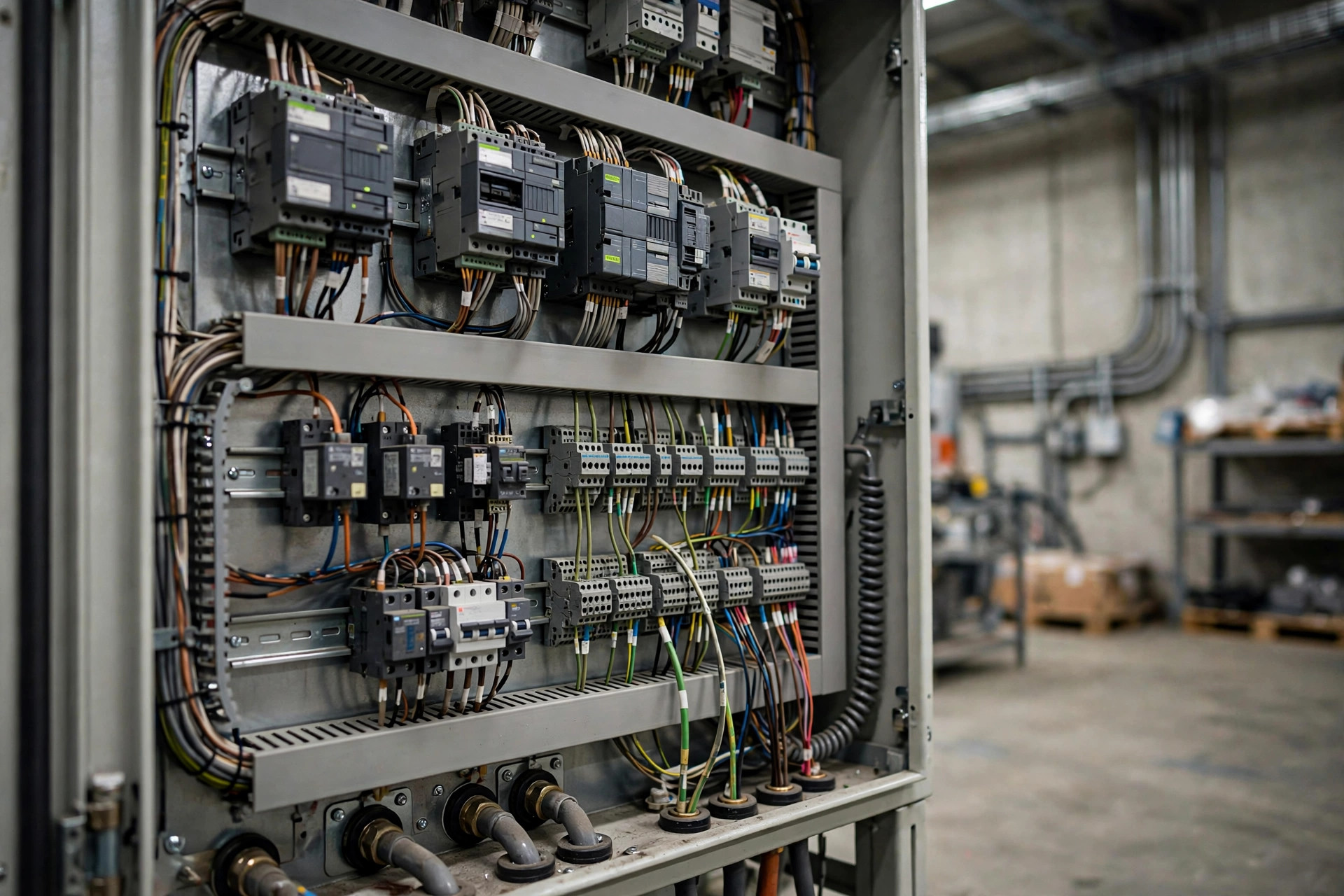
Let me set the terms straight. A WCS — warehouse control system — runs the equipment: conveyors, lifts, sorters, and the interfaces to AMRs. The control architecture is the WCS's hands. A PLC is a hard-real-time controller proven over decades on factory floors: deterministic and tough. PC-based/soft PLC runs the control logic on industrial PCs or servers: flexible and cheaper, but living on a general-purpose operating system.
Too many selection processes score the WCS feature checklist, tick every box, and flip right past the control-architecture slide. Then reality arrives after go-live: changing one divert rule waits two weeks on the integrator's schedule, or a jittery campus network drops sorter signals. No feature list pays down architecture debt.
Here is the counter-intuitive take: the cost tier of the architecture must match the scale of the project — a mismatch costs far more than picking the wrong brand. Heavy PLC architecture on a small project is a sledgehammer for a walnut, and every swing is billed. A cheap PC-based setup on a large project is running freight on a family car. It will break down.
PLC vs PC-Based: One Comparison Table
| Dimension | PLC Architecture | PC-Based / Soft PLC |
|---|---|---|
| Real-time behavior | Hard real-time, deterministic millisecond response, minimal jitter | Soft real-time, depends on OS scheduling, jitters under load |
| Stability | Decades of industrial proof, fast power-cycle recovery, noise-resistant | Depends on the IPC plus OS; patches and crashes are real risks |
| Logic changes | Needs the integrator or an electrical engineer; retest after every change; lead time measured in weeks | Your IT staff can change it; restart the service and go; lead time measured in hours |
| Cost | Hardware + licenses + integrator services — expensive | Cheaper hardware, licenses vary by vendor — lower total by a clear margin |
| Maintenance team | Needs people who read ladder logic and touch PLCs | An IT team can own it |
| Expansion | Add modules — mature but pricey | Change software + add IO — flexible, but tests your design discipline |
| Network dependence | The control layer can run independent of the IT network | Heavily network-dependent; jitter hits the control layer directly |
The Five-Step Selection Checklist (In Order — No Skipping)
Step 1: Count the devices. List everything the WCS will directly control, line by line: conveyor segments, lifts, sorter chutes, any high-speed sorter. A dozen or so devices with no high-speed sorter leans PC-based. Dozens of devices with sorters leans PLC. Device count is the first-principles metric — look at this before anything else.
Step 2: Set the real-time red line. Ask operations one question: what does a single dropped sorter signal cost? If the answer is "a parcel goes to the wrong chute and someone reworks it by hand," PC-based jitter is probably survivable. If the answer is "the high-speed line jams and stops," you need PLC-grade hard real-time. Write the red line down and get the operations lead to sign it. Verbal agreements do not count when something breaks at 2 a.m.
Step 3: Audit your team. Is there anyone on staff who reads ladder logic and dares to touch a PLC on the floor? No? Then do not pick a pure PLC architecture, or every future logic change means paying the integrator. Strong IT team, zero electrical staff? PC-based is the realistic choice. The architecture must match the people you can actually hire and keep — that is rule number one from an implementation consultant.
Step 4: Do the three-year math. Do not compare purchase prices. For PLC, add up hardware + integrator implementation + three years of maintenance + the service fee for every logic change. For PC-based, add up industrial PCs + software licenses + IT labor + network upgrade costs. Then put "cost and lead time of one logic change" on its own row in the comparison — that row dominates everything else, and the purchase-price gap looks trivial next to it.
Step 5: Check the expansion plan. Adding sorter lines, an AS/RS, or AMRs in the next two to three years? PLC expands expensively but stably. PC-based expands fast, but every expansion demands regression testing. If the expansion plan is uncertain, pick whichever is adequate today and cheaper to grow tomorrow.
Two War Stories From the Field
Story one: small project, heavy architecture, two weeks for a logic change. In 2024, an e-commerce warehouse in East China — a few thousand orders a day, about a dozen conveyors and one lift. The integrator specced a full PLC architecture. On paper, flawless. After go-live, operations asked for one new divert rule: oversized parcels to a manual inspection chute. A few lines of logic. Through the PLC process — change request, integrator scheduling, ladder-logic edit, on-site commissioning, go-live — it took two weeks and a service bill in the tens of thousands of yuan that nobody had budgeted for. The warehouse manager told me: "Had I known a rule change costs this much, I would have picked PC-based. Our own IT could have done it in half a day." Small equipment count, no high-speed sorter — PC-based would have been plenty. Pure over-engineering.
Story two: big project, cheap PC-based setup, network jitter drops signals. In 2023, a 3PL warehouse in South China — dozens of conveyors plus a cross-belt sorter, six figures of parcels a day. They chose PC-based soft PLC to save budget, with the control program running on a server in the IT room. The first week of pilot: the campus network jittered during evening peak, sorter signals lagged, mis-sort rates spiked, and the line jammed twice. The forced remediation afterward — physically separating the control network from the office LAN, moving IPCs down to the floor, adding UPS units — cost back everything they had saved, and then some. I have seen this exact failure three times. PC-based is not unusable; the network and operations homework just has to be done up front. On a large project, the network must be designed to control-grade standards. Running it on the office LAN is gambling.
Common Failure Points (Read These Before the Go-Live Checklist)
- Blurring the WCS/PLC boundary. The WCS owns policy — which parcel goes to which chute. The PLC owns execution — motor turns, cylinder pushes. The classic symptom of a blurred boundary: sort rules hard-coded into the PLC program, so every business change means editing ladder logic. Iron rule: business rules live in the WCS layer; the PLC does device motion only.
- No manual takeover. When the WCS goes down, can the conveyor line run manually? PLC architectures usually ship with a manual mode. PC-based designs must have manual takeover specified from day one. Test it on go-live night — I have stood on a floor where a failed WCS upgrade idled an entire line for two hours.
- Bringing IT habits into the control layer. An industrial PC is not a regular server: auto-update off, patches through change control, no bloated antivirus suite. When a PC-based setup crashes, eight times out of ten it is IT habits that did it.
Go-Live Night Checklist (Print It, Check Every Box)
- Architecture matches equipment scale: device list vs. selection rationale reviewed
- WCS/PLC responsibility boundary documented and signed; no business rules in the PLC
- Manual takeover tested: the line runs manually with the WCS down AND with the network down
- PC-based: auto-update off on IPCs, UPS connected, control network isolated from the office LAN
- PLC: program backup archived, integrator response SLA signed (logic-change lead time in writing)
- Real-time red line tested: simulated signal delay/loss behaves as expected
- Three-year cost reviewed: per-change cost and lead time written into the ops manual
There is no universally right architecture — only the one that matches your scale, your team, and your wallet. Count devices first, audit people second, do the math third. Follow that order and you will rarely go wrong.
By Lin Xiao, WMS Implementation Consultant