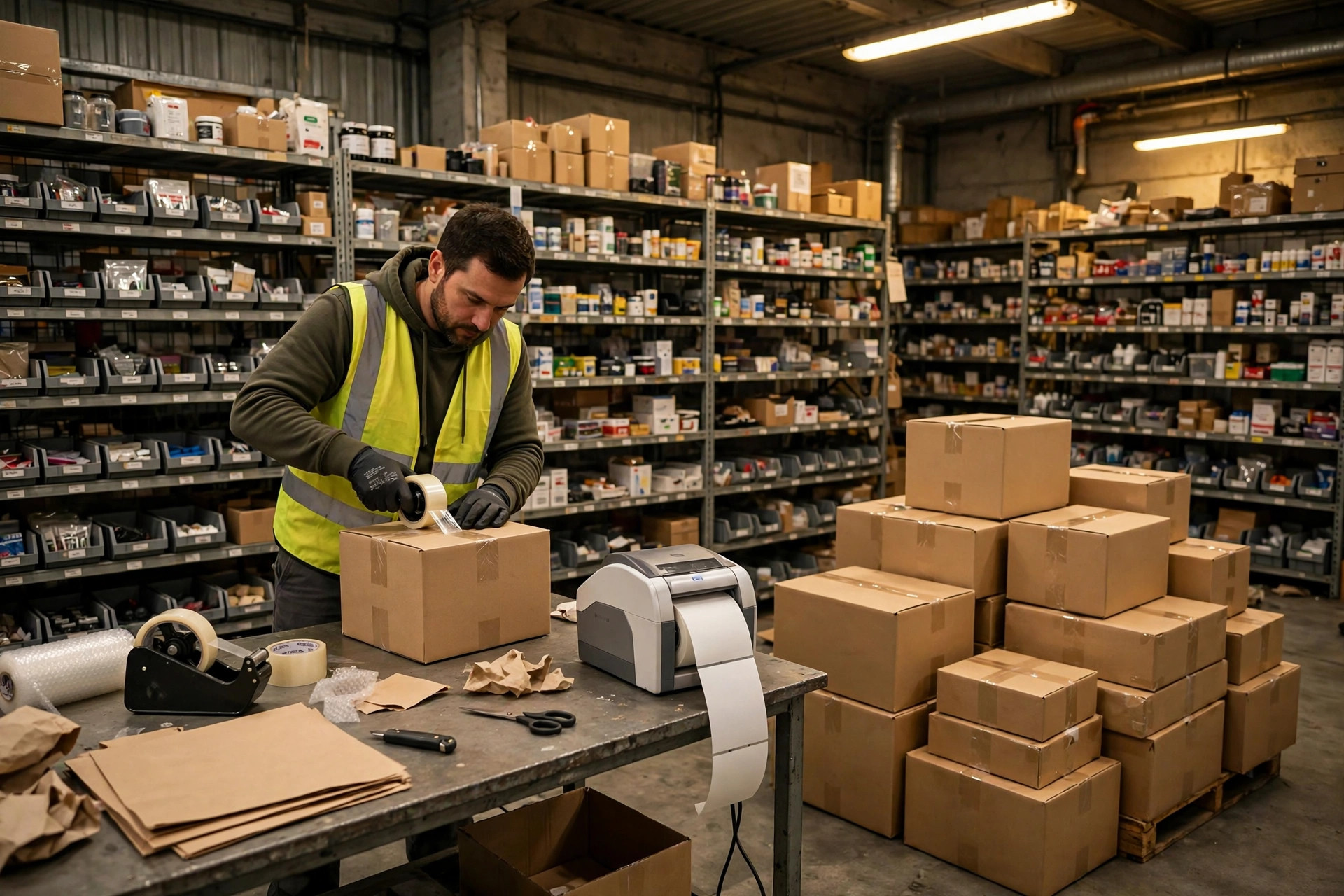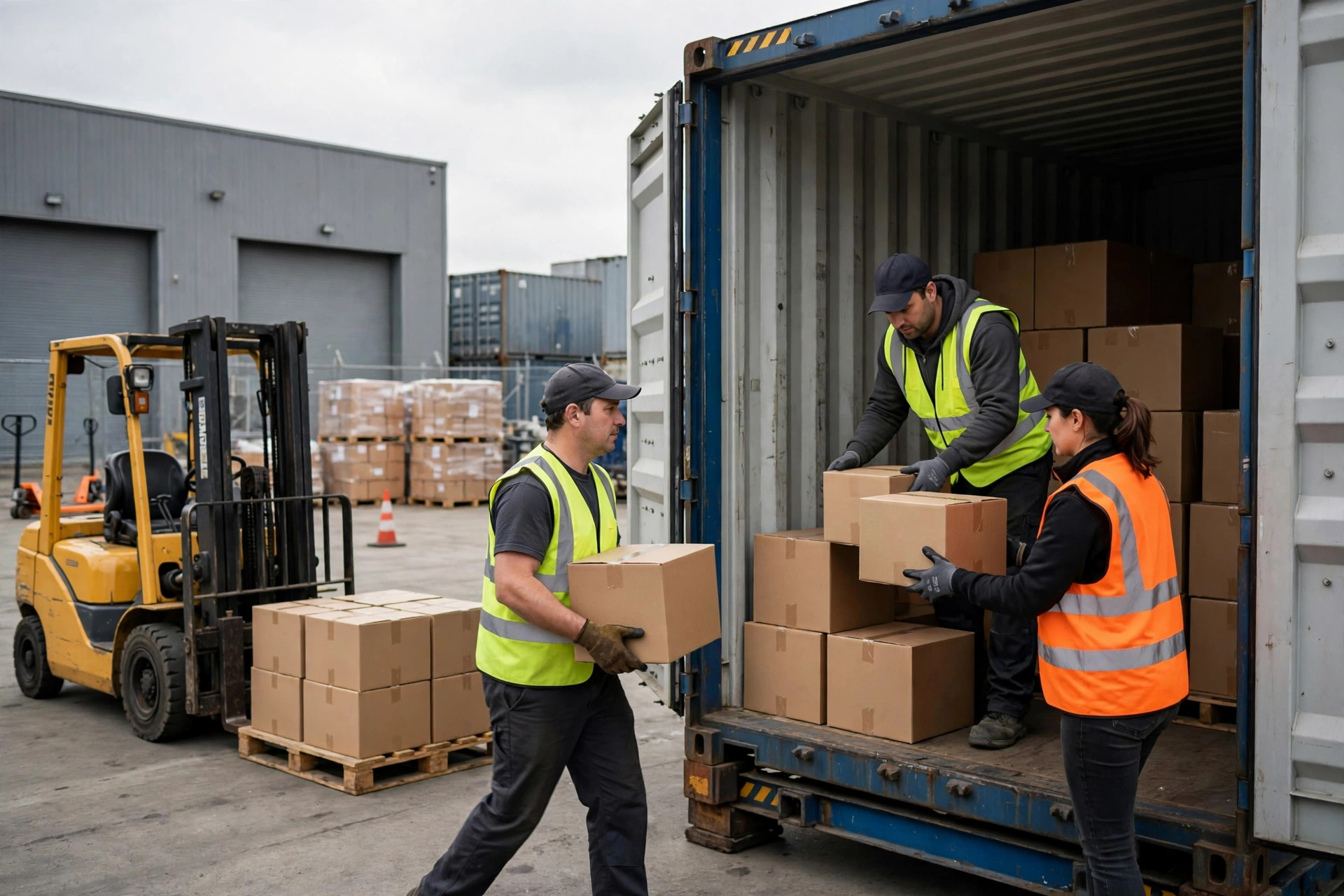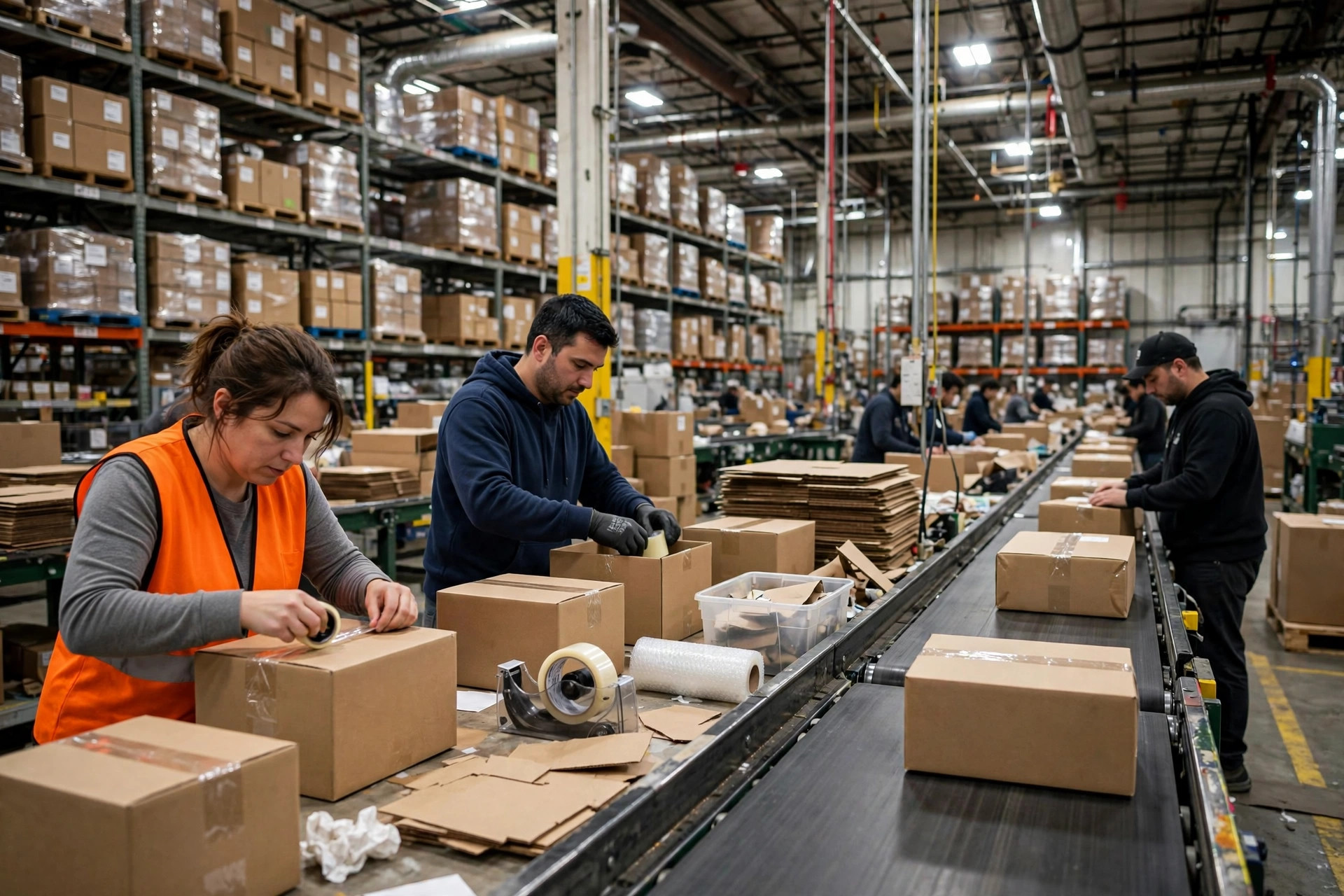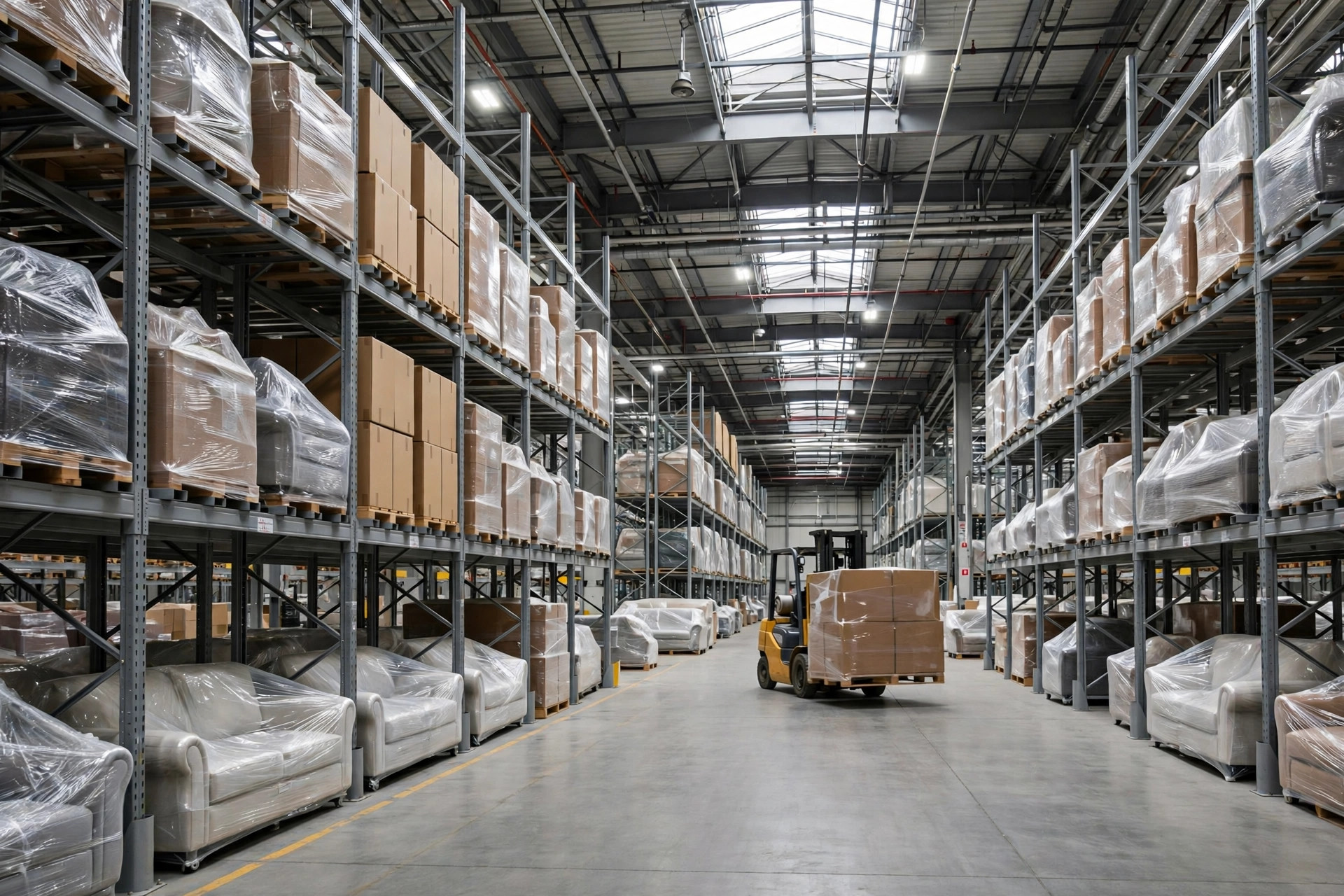
A seven-foot sofa travels through four pairs of hands between your overseas warehouse and the buyer's living room: the pack-out crew, the linehaul carrier, the last-mile truck, and the two-person team that hauls it upstairs. Every one of those handoffs is a place your margin can leak — and on Wayfair, the supplier absorbs the loss.
I've spent twenty years in U.S. warehousing, and oversized furniture has been one of the genuinely attractive categories in recent years: high ticket prices, less cutthroat competition than small parcels. But here's the uncomfortable truth up front: Wayfair plays nothing like Amazon. Bring your Amazon FBA playbook to Wayfair and your first order can go sideways fast. This piece is only about the fulfillment half of the business — how to store it, how to ship it, and how to keep damage and returns from eating you alive.
Wayfair Is a Wholesale Relationship, Not a Marketplace Listing
Wayfair runs on wholesale plus dropship: you set the base cost, Wayfair sets the retail price, and the spread between the two is their money. Put plainly, your margin is locked the moment you quote. When the retail price moves later, that's Wayfair's business, not yours. On Amazon you can reprice and run your own promotions; on Wayfair you're the wholesaler, not the retailer. With pricing power out of your hands, cost control becomes your only profit lever — and fulfillment is the least predictable slice of cost in oversized furniture.
Build payment terms into your costing from day one. Wayfair pays Net 60 — sixty days from invoice. If you need cash sooner, there's Quick Pay: a 2% fee gets you paid within 30 days. On a big-ticket item, a few thousand dollars per order is normal, and 2% of that is real money. Budget for it when you quote, not when your cash flow starts hurting.
There's one more piece of paper in the way: commercial product liability insurance, the COI. No COI, no supplier account.
And the trap most newcomers walk into on day one: to dropship on Wayfair, you need a North American warehouse or a 3PL partner to ship from. You're in China, your goods are in China, and you want to ship Wayfair orders straight from there? That door is closed.
CastleGate or Your Own Overseas Warehouse: The Real Trade-Off
Wayfair's own logistics service is CastleGate, and it comes in two flavors: Forwarding (inbound freight, forward stocking) and Fulfillment (they pick, pack, and ship for you). Forwarding handles inbound: bulk freight from factory into U.S. forward warehouses, stocked ahead of peak season. Officially, CastleGate Fulfillment reaches 97% of U.S. consumers with delivery as fast as two days, per the latest official statement. Order freight sits on Wayfair's dime, billed to Wayfair's carrier accounts — FedEx for parcels, LTL, or White Glove — and the supplier's job is coordinating the pickup.
But CastleGate's inbound standards are famously strict. The classic gut punch is dimension declarations: Wayfair runs new products through a vision tunnel for first-article inspection, physically re-verifying the dimensions you declared. Declare too small and the load plan falls apart — the truck was cubed out on your numbers, the actual freight is bigger, it doesn't fit, and the whole plan gets rebuilt. Last year a client selling solid-wood bed frames was off by a few centimeters between declared and measured dimensions; that inbound load sat outside CastleGate for two extra days waiting for a new slot. A few centimeters, paid for in real warehouse rent and truck detention.
The other path is fulfilling from your own overseas warehouse: your inventory sits in your facility, orders come in, you arrange the last mile yourself. The upside is control — your packaging, your replenishment rhythm. The price is that operations are entirely yours: you source the big-and-bulky linehaul, you schedule the deliveries, and every damage claim and return lands on your desk.
So which one? My advice is blunt: early on, when volume is shaky, go CastleGate and hand Wayfair the warehousing and last-mile complexity. Once volume stabilizes and you've built a feel for oversized operations, shift part of your business to your own overseas warehouse and take back control of packaging and transit times. I've seen plenty of sellers run both legs; the ones who bet everything on one tend to fall harder.
If you choose your own warehouse, there's a second fork in the road: one coast or two? Two warehouses look great on transit time and shorten the last mile, but the same sofa's inventory gets split in half, doubling both stockout and overstock risk. A single warehouse is easy to manage, but shipping to the far coast gets slow and expensive. New sellers should run one warehouse until the process is solid, then think about a second one — don't copy a big seller's network before your volume can support its complexity.
Multibox deserves its own mention: multi-carton items — a bed frame in two boxes — make up roughly a fifth of Wayfair's catalog, and Wayfair has dedicated multibox solutions. If you sell ready-to-assemble furniture, this path is unavoidable; get your carton-split logic and packaging sorted early and save yourself the rework.
The Last Mile Decides Whether You Make Money
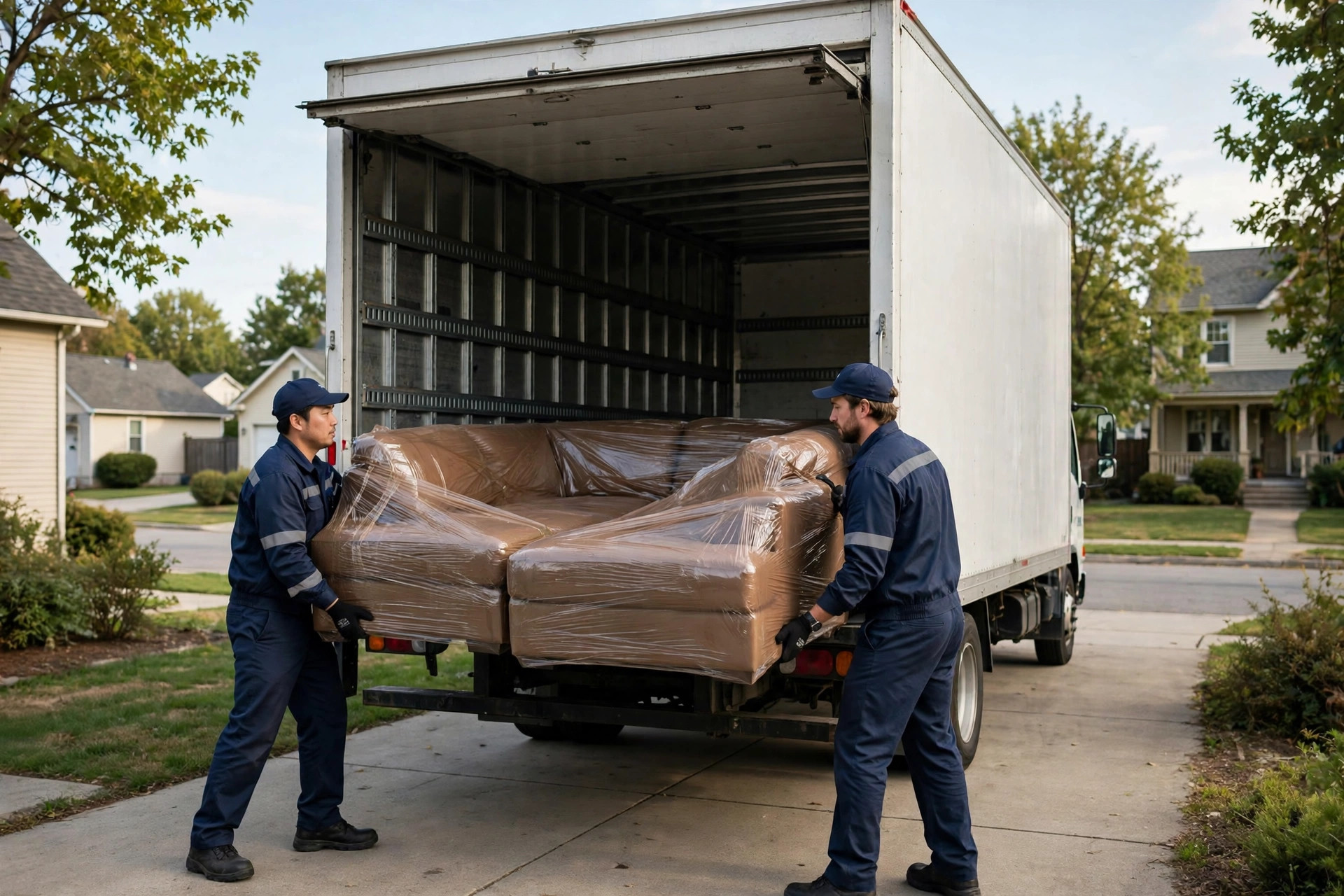
Big-and-bulky last mile is a different world from small parcel: dedicated oversize linehaul, scheduled delivery, threshold drop-off, sometimes full white-glove carry-upstairs-and-install. Every extra step is another place for costs to go wrong.
Scheduled delivery is where many suppliers bleed, and the wound is usually "couldn't reach the buyer." The truck arrives, nobody's home, the delivery gets pushed to tomorrow — and that wasted trip quietly lands in your operating costs. The fix that actually works in practice is embarrassingly low-tech: confirm the delivery window with the buyer before the freight leaves your warehouse, and have the driver call an hour ahead on delivery day. There's no "leave it at the door" in big-and-bulky; if it doesn't reach the buyer's hands, everything you spent upstream was wasted.
Then there are the details that never make it onto the delivery order: walk-up apartment with no elevator, third floor and up, white-glove haul-away of the old piece, packaging debris removal — ask all of it when you schedule, in one pass.
Packaging is the other make-or-break. A sofa leaving your warehouse needs corner protectors, stretch wrap, and a pallet — every time, no exceptions. The most painful order I ever saw: a genuine leather sofa, one missing corner protector on the armrest, a long bumpy last mile, and the buyer received an armrest with the leather scuffed off. Return, claim, repair — by the time that loop closed, the order's profit was gone and then some. Carrier rates and delivery standards change year to year; treat the carrier's latest published policy as your cost table, not last year's rate sheet.
Damage and Returns: Where Oversized Gets Expensive
Returns and damage claims are the daily weather for Wayfair oversized suppliers. You can't avoid them — you can only build a process solid enough to survive them.
A returned sofa isn't over when it comes back: inspect it, photograph everything, and determine whether it was a packaging failure or a transit failure. Fixable units get repaired and relisted; hopeless ones get parted out or scrapped. Returned units occupy rack space and generate zero revenue — if your returns area hasn't moved in a week, your returns process is decorative. What works in practice is grading: Grade A goes straight back to sellable stock, Grade B gets repaired first, Grade C gets parted out or scrapped — each grade with clear criteria and a processing deadline, so returns don't go to your warehouse to retire.
Damage claims are won on evidence: outbound photos, loading photos, exception notes at delivery. Miss one link and the claim gets much harder. That's why outbound photography has to be mandatory in your warehouse SOP — don't count on "remembering" how something was loaded after the fact. My warehouse still runs on one rule: no forklift moves an oversized unit until at least three photos exist — the packed unit, the sealed carton, the pallet label. Photos are cheap; at the right moment, they're money. And settle who pays return freight in the contract, on paper, before the first return ever happens — not after.
If you're already selling oversized on Wayfair, do one thing tomorrow morning: take a tape measure to your top five sellers and re-verify every declared dimension yourself — don't copy the numbers off your supplier's quote sheet. Get dimensions right and half the headaches of CastleGate inbound and last-mile load planning disappear. If you haven't started yet, ask yourself one question first: is your packaging built to survive four pairs of hands, or only two? Answer that before you choose between CastleGate and your own overseas warehouse — pick the right road, and oversized furniture actually makes money.